


The best crypto exchanges in Florida for October 2026 might not be the ones you’d expect. Known for its thriving economy and increasing interest in cryptocurrencies, the Sunshine State offers a range of platforms to suit various trading needs. Choosing the right exchange can be overwhelming, but I’m here to simplify that process for you.
This guide is designed to highlight trusted crypto exchanges that work seamlessly for Florida-based traders. At CryptoManiaks, we take pride in delivering reliable and well-researched insights. That’s why I’ve thoroughly analyzed the market, consulted experts, and gathered real user reviews to create this list.
I have carefully ranked the leading crypto exchanges in Florida by focusing on essential factors like fees, security measures, regulatory compliance, and overall reputation. Additionally, I’ll walk you through important considerations when selecting a platform and provide helpful insights to make your decision easier. By the end of this guide, you’ll have the tools and confidence needed to choose the exchange that suits your goals.
Key Takeaways
- Top crypto exchanges in Florida focus on regulation to provide secure platforms that cater to a variety of trading needs.
- Choosing the right platform involves evaluating fees, security measures, liquidity, and the range of supported cryptocurrencies.
- Compliance with federal and state laws strengthens operational reliability and protects users from financial and legal risks.
Best Crypto Exchanges in Florida 2026 Are…
-
 Coins
Coins




-
-
 PromotionsCoins
-
 PromotionsCoins

-
-
 Coins
Coins

-
 Coins
Coins
-
 PromotionsCoins
-
 Coins
Coins


-
 Coins
Coins
-
 PromotionsCoins
-
 Coins
Coins
-
 Coins
Coins


-
-

-
 PromotionsCoins

-

-
 Coins
Coins


-
 Coins
Coins


Get $10 in Bitcoin when you register through a referral link from an existing member.


Kraken offers over 300 cryptocurrencies with competitive fees starting at 0.25% for makers and 0.40% for takers. The exchange provides advanced features like margin trading and futures contracts, along with a user-friendly interface and mobile app. Kraken's strong security measures, including two-factor authentication and cold storage, are noteworthy.
- Supports hundreds of coins
- High liquidity
- Simple and user-friendly interface
- Good customer support options
- Lots of advanced trading features like margin, futures, and indices trading
- No insurance fund for assets on the platform
- Doesn’t offer a crypto credit card
- No personal wallet service for traders
- Supports only a few fiat currencies
Year Founded
- 2011
Headquarters
- United States
Licenses
- United States (IRS)
- Canada (CRA)
- United Kingdom (HMRC)
-
+7
Cryptocurrencies
- Bitcoin
- Ethereum
- Tether
-
+83
Available countries
- Afghanistan
- Albania
- Algeria
-
+240
Languages
- Chinese (Mandarin)
- English
- French
-
+10
Features
- Cryptowatch
- Forks
-
+29
Receive up to $100,000 worth of exclusive gifts for newcomers upon registration.
Bitunix was founded in Hong Kong in 2021. It was designed to bring a breadth of crypto features to beginner and intermediate traders.
It supports over 700 cryptocurrency trading pairs in more than 100 countries. It offers spot, P2P, and derivatives trading. With copy trading, new traders can copy the trades of successful users, with them earning a cut.
The exchange offers a myriad of new user bonuses and lotteries, letting new traders jumpstart their experience.
Rewards and tournaments are also available for existing users. Bitunix Splash gives rewards for investing in new tokens, while regular competitions in categories like trading volume or monthly profits carry up to USDT 675,000 in rewards.
Licenses
- United States (IRS)
- Canada (CRA)
- Phillipines
Cryptocurrencies
- Bitcoin
- Ethereum
- Tether
-
+78
Available countries
- Albania
- Algeria
- American Samoa
-
+233
Languages
- English
- Uzbek
- Polish
-
+12


Bitget is a reputable cryptocurrency exchange known for its user-friendly interface and advanced trading features. With a focus on security and customer satisfaction, Bitget offers a wide range of digital assets for trading and investment opportunities.
Year Founded
- 2018
Headquarters
- Cayman Islands
Licenses
- United States (IRS)
- Australia (ATO)
- Canada (CRA)
Cryptocurrencies
- Bitcoin
- Ethereum
- Tether
-
+93
Available countries
- Afghanistan
- Albania
- Algeria
-
+246
Languages
- English
- Japanese
- Vietnamese
-
+16
Features
- API Trading
- Vote to List
-
+13


Bitstamp offers over 70 cryptocurrencies with a tiered fee structure starting at 0.30% for makers and 0.40% for takers. The exchange provides a user-friendly interface, advanced trading tools, and 24/7 customer support. Bitstamp's strong security measures include cold storage and crime insurance. However, U.S. traders face limitations, with only 35+ cryptocurrencies available and no access to staking or lending features. Despite these constraints, Bitstamp's transparency and long-standing reputation make it a reliable choice for many crypto enthusiasts.
- An advanced trading platform
- Low fees and high liquidity
- Supports lots of different payment options
- Efficient and dedicated phone and email support
- Lots of charting tools
- No live chat customer support
- Slow verification process
- International wire transfer takes 2 to 5 days to clear
- A few number of coins on offer
- Was hacked in 2015
Year Founded
- 2011
Headquarters
- Virgin Islands, British
Licenses
- Luxembourg
- United States (IRS)
- Spain
-
+1
Cryptocurrencies
- Bitcoin
- Ethereum
- Tether
-
+52
Available countries
- Afghanistan
- Albania
- Algeria
-
+244
Languages
- English
Features
- Institutions
- Pro Traders
-
+4
Enjoy US$50 worth of CRO as sign-up bonus when you sign up with a referral link.


Crypto.com offers over 350 cryptocurrencies with competitive fees starting at 0.25%. The exchange provides a user-friendly mobile app, advanced trading features, and a popular Visa card with cashback rewards. Crypto.com's robust security measures, including multi-factor authentication and cold storage, ensure user asset protection. Notable features include staking options, an NFT marketplace, and earning interest in cryptocurrencies.
- Extensive list of supported cryptocurrencies
- Hardware wallet support
- With its Visa cards, you can spend your crypto and earn rewards
- Easy to purchase NFTs on the platform using either fiat or certain cryptos
- Higher fees for those who don't hold and use CRO
- Poor customer service
- Lack of educational resources
- Slow in-app live support
Year Founded
- 2016
Headquarters
- Singapore
Licenses
- United Arab Emirates
- Brazil
- United Kingdom (HMRC)
-
+19
Cryptocurrencies
- Bitcoin
- Holo
- Litecoin
-
+157
Available countries
- Afghanistan
- Algeria
- American Samoa
-
+200
Languages
- Danish
- Spanish
- French
-
+13
Features
- Supercharger
- Trading Arena
-
+2
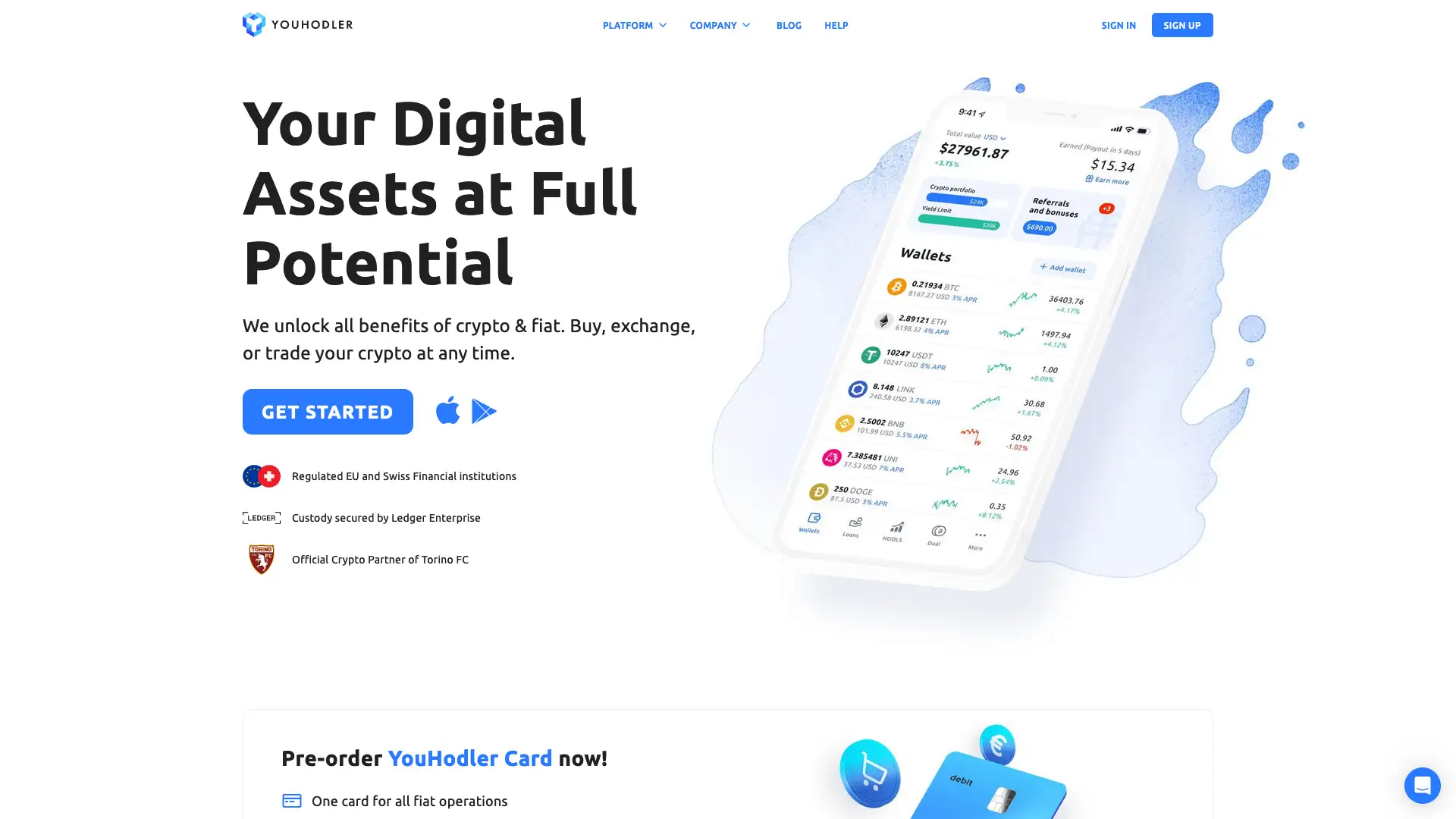
YouHodler Crypto Exchange, launched in Cyprus in 2018, stands as a versatile platform offering a plethora of crypto-fiat financial services including lending, trading, and savings accounts.
Year Founded
- 2017
Headquarters
- Cyprus
Licenses
- Italy
- Switzerland
- European Gaming and Betting Association (EGBA)
-
+2
Cryptocurrencies
- Bitcoin
- Ethereum
- Tether
-
+57
Available countries
- Belgium
- Canada
- Germany
-
+12
Languages
- English
- French
- Italian
-
+3
Features
- Conversion
- Turbocharge
-
+10
Enjoy up to 30,000 USDT Bonus when you sign up and complete tasks. Get a 10 USDT coupon when you sign up, and link your phone number and email.


Year Founded
- 2018
Headquarters
- Singapore
Licenses
- United States (IRS)
- Canada (CRA)
Cryptocurrencies
- Bitcoin
- Ethereum
- Tether
-
+96
Available countries
- Philippines
- United Kingdom
- United States
Languages
- English
- Simplified Chinese
- Chinese (Traditional)
-
+15
Features
- Futures Demo
- Copy Trading
-
+18
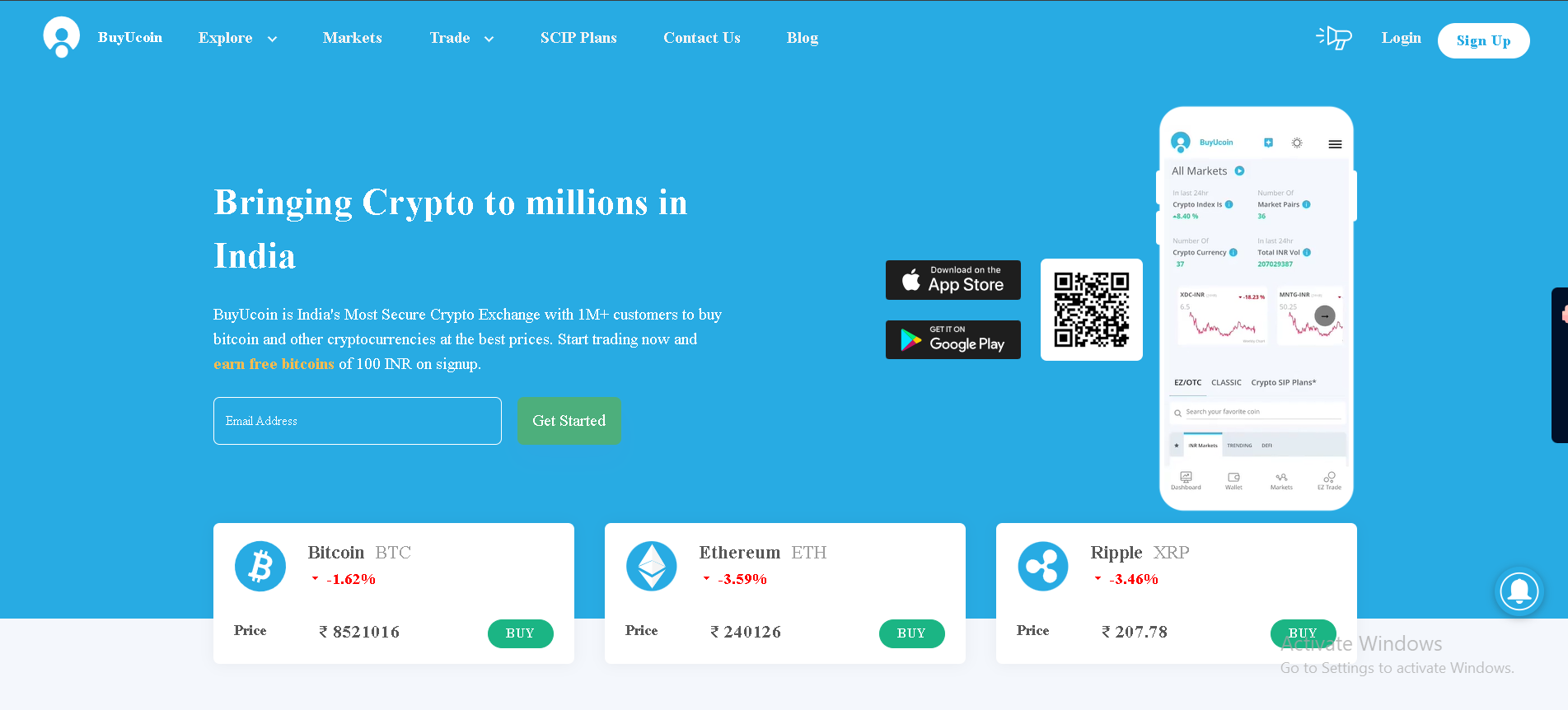
Get Free Bitcoin everyday upto Rs2000 INR on Sign Up, Referral, Deposit & Bitcoin Trading.
Year Founded
- 2025
Headquarters
- India
Licenses
- India
- Estonia
Cryptocurrencies
- Bitcoin
- Ethereum
- Tether
-
+77
Available countries
- China
- India
- Kenya
-
+5
Languages
- English
Features
- Free Bitcoin
- APIs
-
+9
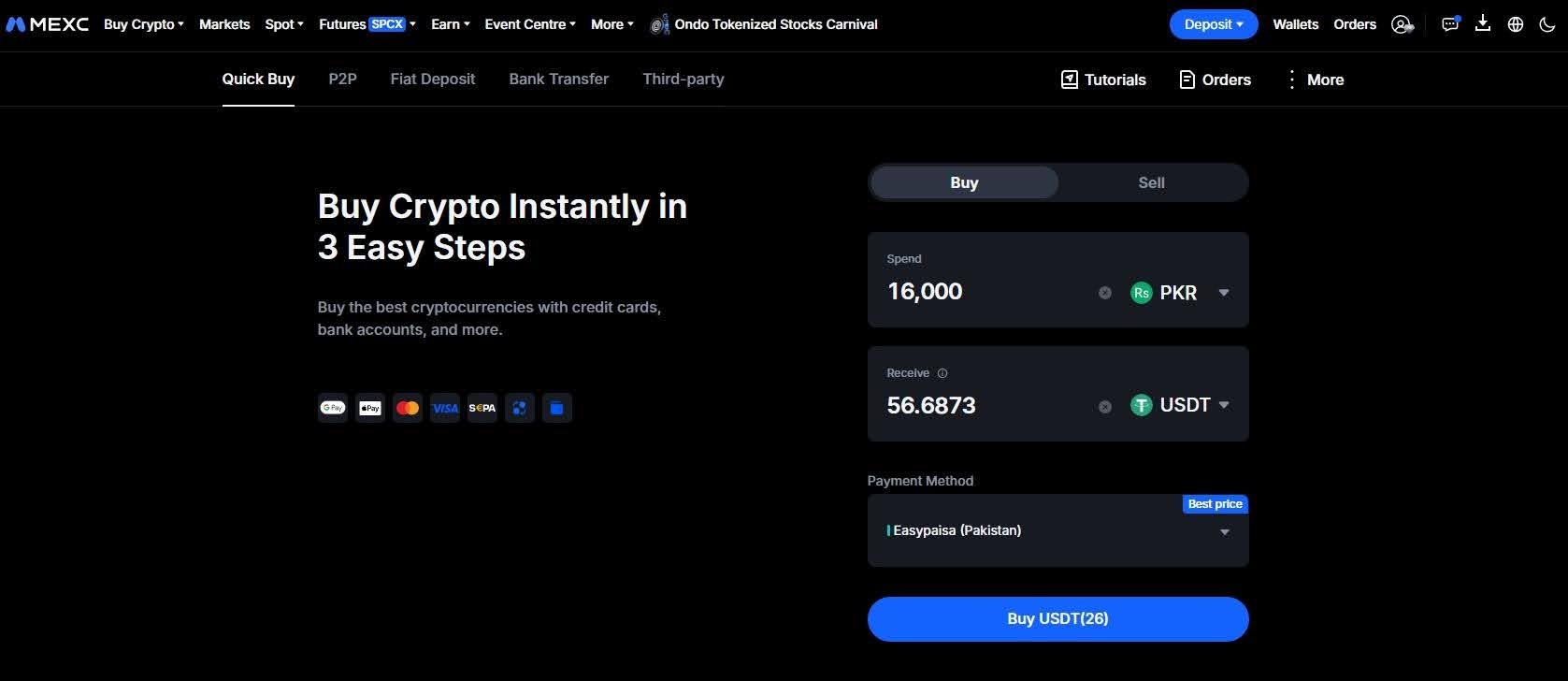
MEXC offers an impressive range of over 2,960 cryptocurrencies and 2,110+ trading pairs. The exchange boasts competitive fees, with 0% maker fees for spot trading on select pairs and futures trading fees as low as 0.01%. MEXC's high-performance trading engine can process 1.4 million transactions per second, ensuring smooth trading experiences. Notable features include futures trading with up to 200x leverage, copy trading, and staking opportunities with potential yields of up to 100% APY.
Year Founded
- 2018
Headquarters
- Seychelles
Licenses
- Seychelles
- Estonia
- Switzerland
-
+2
Cryptocurrencies
- Shiba Inu
- Bitcoin
- PAX Gold
-
+72
Available countries
- Afghanistan
- Albania
- Algeria
-
+246
Languages
- English
- Russian
- Turkish
-
+14
Features
- Leveraged ETFs
- Copy Trading
-
+8
Get up to 1,000 USDC on your Trading Fee Balance when you register, complete identity verification, and place your first spot trade.


Founded in 2013 in London, CEX.IO one of the first crypto exchanges. The global exchange is available in over 200 countries, including the UK, US, Canada, and Australia.
CEX.IO prides itself on being a one-stop shop for all things crypto. It offers spot and margin trading across over 200 tokens, a DeFi wallet, and integrated staking features.
Beyond this, CEX.IO allows you to instantly buy crypto and spend it on the company’s crypto credit card.
Globally licensed and regulated across the EU and US, the platform uses a mix of state-of-the-art security protocols and cold storage to ensure investors’ funds stay safe. This has resulted in a hack-free record over CEX.IO’s 12 years in operation.
Year Founded
- 2013
Headquarters
- United Kingdom
Licenses
- United States (IRS)
- Lithuania
- Spain
Cryptocurrencies
- Bitcoin
- Ethereum
- Tether
-
+81
Available countries
- Australia
- France
- India
-
+5
Languages
- English
- Spanish
Features
- Exchange Plus
- API
-
+9
Alternative Crypto Exchanges in Florida
Most of the exchanges mentioned here are Centralized Crypto Exchanges (CEXs). These platforms offer a user-friendly and secure trading environment.
However, if you are interested in decentralized options, take a look at our page about Decentralized Exchanges (DEXs). These platforms cater to users who prefer full control over their funds and transactions.
For anyone exploring crypto exchanges in Florida, it’s essential to choose based on your trading preferences, whether centralized convenience or decentralized autonomy suits you better.
Here’s How to Choose a Crypto Exchange in The US
Choosing a dependable crypto exchange in the US requires careful consideration of several factors to guarantee a safe and efficient trading experience.
Here are the main points to assess:
- Regulation and compliance
- Security measures
- Low fees
- Liquidity and volume
- Trading interface
- Customer support
- Variety of cryptocurrencies
- Reputation
Let’s break down each of these aspects below!
Regulation & Compliance
Regulation in the US is designed to safeguard users from fraud, theft, and other financial risks.
Crypto exchanges operating legally must follow stringent financial laws, including anti-money laundering (AML) and know-your-customer (KYC) regulations.
These requirements help prevent illicit activities and hold exchanges accountable.
In Florida, cryptocurrency businesses must register as money transmitters and comply with the state’s Money Transmitter Act.
This registration signals that exchanges operate transparently and are subject to oversight.
Using a compliant exchange means your funds are managed securely and disputes can be addressed through legal channels.
Legal compliance is a strong indicator of a crypto exchange’s reliability.
Regulated exchanges show a commitment to following the law and protecting their users.
By implementing strict security protocols and financial practices, these platforms build trust among their customers.
Trust is important when dealing with cryptocurrency, where every decision can have a big impact on your financial future.
Regulated platforms offer transparency, including clear fee structures and secure asset storage.
This transparency gives users confidence that their investments are handled responsibly.
Here are the significant risks of engaging with unregulated or non-compliant cryptocurrency exchanges:
- Security vulnerabilities
- Lack of legal recourse
- Higher likelihood of scams
Security vulnerabilities arise because unregulated exchanges often lack proper cybersecurity measures. This deficiency can expose users’ funds to theft or hacking.
These platforms may not invest sufficiently in protecting digital assets from cyber threats.
Lack of legal recourse means users have limited options to recover funds in case of issues like fraud or insolvency.
Without the protections provided by regulatory frameworks, users are exposed to financial losses with no legal support.
A higher likelihood of scams exists because unregulated platforms often operate deceptively and take advantage of the absence of oversight to engage in fraudulent activities.
Users may fall victim to schemes designed to steal their funds.
These risks underscore the importance of using regulated exchanges, particularly in states like Florida with specific cryptocurrency regulations.
Before committing to a platform, follow these steps to confirm it meets regulatory requirements:
- Check licensing: Verify that the exchange is registered with relevant authorities, such as the Financial Crimes Enforcement Network (FinCEN) and the Florida Office of Financial Regulation.
- Review transparency: Look for platforms that clearly disclose their security measures, fee structures, and legal status. Avoid exchanges that withhold such information.
- Read customer reviews: Research user feedback to assess the platform’s reputation and reliability.
- Avoid unclear platforms: Stay away from exchanges that lack clear licensing or operate in legal gray areas.
By taking these precautions, you can select the best exchange for cryptocurrency in Florida that prioritizes your security and complies with financial laws.
Security Measures
Cryptocurrencies are decentralized, so lost or stolen funds are often impossible to recover. This makes strong security measures essential for protection.
A cyber breach can compromise your holdings and expose sensitive information such as IDs and banking details, which increases your risk.
Weak security exposes you to hacking. Criminals can exploit system flaws to steal funds and create significant financial loss and distress.
Phishing attacks deceive users into sharing credentials through fake emails or websites and allow hackers to gain unauthorized account access.
Likewise, data leaks can expose personal details that may be sold or misused. This exposure increases the risk of identity theft and privacy concerns.
To protect yourself, always choose exchanges with strong security measures and a solid track record of user safety.
Look for exchanges that offer the following security features to safeguard your assets and data:
- Two-factor authentication (2FA)
- Encryption protocols
- Cold storage
- Insurance coverage
- Regulatory compliance
The 2FA feature adds an additional layer of protection to your account by requiring a second form of verification, such as a code sent to your phone or generated by an app.
Even if someone gets your password, they won’t be able to access your account without this second step.
Meanwhile, encryption ensures that all communication between you and the exchange is secure. This means sensitive information, like your login details, is shielded from anyone attempting to intercept it.
Exchanges that use cold storage keep most user funds in offline wallets. These wallets are not connected to the internet, which makes them nearly impossible for hackers to access.
Some exchanges provide insurance to cover losses caused by hacks or system failures.
While this doesn’t stop breaches from happening, it gives you peace of mind knowing you could recover lost funds.
Exchanges that follow US regulatory standards meet strict security requirements.
Adhering to laws like AML guarantees better practices and provides greater protection for users.
You don’t need to be a cybersecurity expert to assess a platform’s safety. Follow these steps:
- Review the exchange’s website for security protocols to confirm it uses HTTPS. Look for the padlock icon in the browser to verify this.
- Research the platform’s security history and avoid exchanges with unresolved incidents.
- Test security features by creating a demo account. Set up 2FA and explore additional protections like withdrawal whitelists.
- Prioritize exchanges that use cold storage and offer insurance policies.
- Look for platforms with independent security audits and publicly available reports, which demonstrate transparency and build trust.
Exchanges lacking strong security measures pose significant risks to your assets.
High-profile cases, like the infamous Mt. Gox breach in 2014, highlight the potential fallout:
- Over 850,000 BTC were lost, leaving users empty-handed
- Public confidence in cryptocurrency security took a severe hit
- Users had no legal recourse or recovery mechanisms
Such scenarios underscore the importance of choosing platforms with proven defenses.
However, even the most secure exchange can’t protect you if you’re careless. To strengthen your personal security:
- Secure your wallets: Use hardware wallets for long-term storage
- Avoid reusing passwords: Create unique and complex passwords for each account
- Recognize phishing scams: Double-check URLs and emails claiming to be from your exchange
By prioritizing security and taking proactive measures, you can engage in cryptocurrency trading with greater peace of mind and reduced risk.
Low Fees
Choosing a crypto exchange with reasonable fees is crucial to maximizing your trading profits.
Fees can quickly add up and eat into your earnings, especially if you’re an active trader or making frequent transactions.
Here’s a breakdown of the key aspects to consider when evaluating fee structures on the top 10 crypto exchanges in Florida:
- Maker-taker fees
- Withdrawal fees
- Deposit fees
- Hidden costs
Maker fees are charged for adding liquidity by placing orders that aren’t immediately matched.
Meanwhile, taker fees apply to removing liquidity by completing existing orders.
Maker fees are typically lower than taker fees. This encourages users to add liquidity by creating orders rather than completing them.
Withdrawal fees vary based on the cryptocurrency being transferred, which can affect smaller transactions significantly.
Deposit fees are uncommon but may apply to specific payment methods, such as credit cards or bank transfers.
Additionally, some platforms impose hidden costs like inactivity fees or charges for premium features, so it’s essential to review the fee schedule thoroughly.
Even small fees can significantly impact profitability, particularly for high-frequency traders.
For instance, a 0.1% trading fee on a $1,000 trade might seem minor at $1. Yet, for someone making 50 trades per month, this adds up to $50 in fees and $600 annually, which is money that could otherwise be reinvested.
For long-term traders, high withdrawal fees can diminish gains when transferring assets to secure external wallets.
Transparency in fee structures is important to avoid unexpected costs that could disrupt your financial strategy.
Exchanges that disclose fees establish trust and help users plan effectively, while hidden or unclear fees can cause frustration and financial setbacks.
So, prioritize platforms that provide detailed cost breakdowns, including maker-taker rates, withdrawal fees, and tiered discounts.
The following are practical ways to minimize trading fees and keep costs low when using cryptocurrency exchanges:
- Compare platforms
- Calculate total costs
- Take advantage of volume discounts
- Use native tokens
- Plan withdrawals
Choosing the right exchange is important, as fee structures vary and some platforms offer lower rates for certain trades or when using native tokens.
Always consider the overall cost by factoring in deposit, withdrawal, and hidden costs to assess the true expense.
High-volume traders can benefit from fee reductions by leveraging tiered pricing structures.
Furthermore, paying fees with an exchange’s proprietary tokens can unlock discounts, but it is important to assess the risks of holding those tokens.
Consolidating withdrawals and transferring funds in larger sums can further reduce excessive withdrawal fees and save money over time.
Therefore, focusing on transparent fee structures and implementing cost-reduction strategies can protect your profits and improve your long-term market success.
Liquidity & Volume
When choosing a crypto exchange in the U.S., understanding liquidity and trading volume is essential to ensuring smooth transactions and optimal pricing.
Liquidity refers to the ease with which an asset can be bought or sold without causing a significant price change.
In the context of crypto exchanges, high liquidity means there are plenty of buyers and sellers. This allows you to execute trades quickly and at a fair market price.
Without adequate liquidity, your trade might not execute immediately or at your desired price. This can lead to missed opportunities or increased costs.
When liquidity is low, buying or selling large amounts of cryptocurrency can significantly affect its price and cause slippage.
High liquidity minimizes this risk and helps you get prices closer to what you see on the platform.
On the other hand, trading volume measures how much of a cryptocurrency is traded within a specific period, typically over 24 hours.
It serves as an indicator of market activity and interest in a particular asset or exchange.
Higher trading volumes indicate a more stable market with fewer price fluctuations.
Low-volume markets can experience sharp price swings that make it challenging to plan trades effectively.
Exchanges with high trading volumes typically have a wide range of available cryptocurrencies and strong market activity. This makes it easier to find buyers and sellers for your chosen asset.
Choosing an exchange with active markets allows you to enjoy competitive pricing and efficient transactions.
Active markets indicate strong user participation, which benefits traders in the following ways:
- Better pricing: The presence of many participants encourages competition, which narrows the bid-ask spread and results in fairer prices.
- Quick transactions: Active markets make it easier to match buyers with sellers and reduce waiting times for order execution.
Here are some tips to assess liquidity and volume:
- Monitor transaction volumes
- Examine market depth
- Choose exchanges with active communities
To assess liquidity and volume, start by checking the reported transaction volumes for the cryptocurrencies you plan to trade. Higher volumes indicate greater liquidity and activity.
Next, examine the market depth, which shows the number of buy and sell orders at various price levels. Deeper markets help reduce slippage.
Finally, opt for exchanges with active trading communities. These platforms have more dynamic and consistent trading activity.
Liquidity and trading volume are essential considerations for all traders.
Short-term traders, such as day traders and scalpers, rely on high liquidity and volume to enter and exit positions quickly without significantly affecting prices.
Long-term investors also benefit from liquidity, as it allows them to efficiently liquidate positions when needed. Meanwhile, high trading volumes help maintain price stability over time.
By monitoring transaction volumes, analyzing market depth, and choosing platforms with active user communities, you can make informed decisions and optimize your crypto trading journey.
Trading Interface
When exploring the best crypto apps in Florida or anywhere in the U.S., the trading interface is one of the most important factors to evaluate.
A good trading interface bridges the gap between complex market operations and the user.
For beginners, simplicity is important, as a confusing platform can lead to costly errors.
Advanced traders, on the other hand, value tools that offer deeper insights and more precise control.
Here are the key features to consider when choosing a cryptocurrency exchange with a good trading interface:
- Ease of navigation
- Customization options
- Charting tools and technical indicators
- Mobile and desktop compatibility
The best apps to buy crypto in Florida provide a seamless experience with easy navigation, clear menus, and organized dashboards. These features make trading accessible for everyone.
They also allow customization, so users can adjust dashboards, notifications, and chart settings to match users’ trading styles.
For experienced traders, these apps include powerful yet user-friendly charting tools and technical indicators for actionable insights.
In addition, compatibility across mobile and desktop platforms guarantees uninterrupted access to the crypto market, no matter where you are.
Before committing to an exchange, it’s essential to evaluate its interface firsthand. Here are some practical steps to take:
- Use demo accounts or free trials
- Compare usability across devices
- Prioritize simplicity for beginners
- Seek reviews and feedback
Start by exploring platforms that offer demo accounts or free trials, as these allow you to practice navigating the interface without any financial risk.
Make sure to compare usability across devices by testing both the mobile app and desktop version for consistency and responsiveness.
If you’re a beginner, look for exchanges with streamlined interfaces that minimize complexity and include helpful onboarding features like tutorials or guided tours.
Moreover, researching user reviews and feedback can provide valuable insights into the platform’s strengths and weaknesses. This information helps you make a well-informed choice.
Trying out the platform’s features is the best way to determine whether its interface meets your needs. Check for:
- Speed and reliability: Does the platform respond quickly, or does it lag?
- Clarity: Are the charts, data, and menus easy to understand?
- Support tools: Are there FAQs, live chat, or help features embedded in the platform?
A poorly designed interface can be frustrating and costly, while a well-designed one can save time and effort.
By choosing an exchange with a user-friendly interface, you’re setting yourself up for smoother navigation, faster execution of trades, and more confidence in your decisions.
Customer Support
Reliable and responsive customer support is an essential factor when choosing a crypto exchange in the U.S.
Accessible customer support is crucial for resolving issues that could disrupt your trading or investment activities.
From locked accounts to discrepancies in balances, problems can arise at any time.
Effective customer support guarantees that these issues are addressed promptly to minimize potential losses and enhance user trust.
Without responsive assistance, you may face prolonged downtime or irreversible financial consequences.
For new users, support is very important, as they often require guidance with account setup, understanding trading features, and interpreting market data.
A supportive exchange can significantly improve the learning curve and provide reassurance when navigating the complexities of crypto day trading.
When evaluating an exchange’s customer support, look for these essential factors:
- Availability
- Communication channels
- Response time
- Knowledgeable representatives
- Language support
Round-the-clock availability means you can access support anytime in the 24/7 crypto market.
Multiple communication channels provide flexibility, with real-time options often being the quickest.
Quick response times demonstrate efficient service and allow issues to be resolved within minutes instead of taking hours or days.
Knowledgeable support representatives can address common problems like transaction delays or platform navigation with clear and accurate guidance.
Lastly, multilingual assistance is essential for non-English speakers as it provides smooth and effective communication.
The absence of reliable customer support can lead to several challenges, including:
- Financial loss
- Increased frustration
- Limited problem-solving options
When customer support is unreliable, users may face financial losses due to delayed responses that result in missed trading opportunities or unresolved withdrawal problems.
This lack of timely assistance can also increase frustration, causing stress and reducing trust in the platform.
Moreover, poor support leaves users with limited options. They are often forced to rely on self-help articles that may not adequately address more complex issues.
Crypto exchanges typically offer several ways to connect with their support teams. Here’s a breakdown of common options:
- Live chat: The most popular channel for real-time problem-solving.
- Email: Ideal for non-urgent inquiries or detailed issues.
- Phone support: This can be valuable for complex problems requiring immediate resolution.
- Social media: Platforms like Twitter are increasingly used for quick updates and addressing user concerns.
- Help centers and FAQs: While not direct support, these resources provide self-service options for common questions.
By testing support channels, prioritizing 24/7 availability, and reading user reviews, you can make an informed decision and trade with peace of mind.
Variety of Cryptocurrencies
When selecting a crypto exchange, one crucial factor to consider is the variety of cryptocurrencies it offers.
A diverse selection of digital assets benefits both traders and investors by enabling flexibility.
It also supports diversified strategies and uncovers new opportunities in the market.
A crypto exchange that provides access to a broad range of cryptocurrencies allows users to have the tools needed to build a balanced portfolio.
For example, popular coins like Bitcoin and Ethereum are essential for long-term stability, while emerging tokens offer the potential for high returns.
Diversifying across different assets reduces risk and allows traders to hedge against market fluctuations.
The ability to explore both established and lesser-known coins creates opportunities for discovering high-growth projects early.
Top crypto exchanges in Florida prioritize offering a mix of widely traded cryptocurrencies alongside newer and niche tokens.
Popular assets like BTC, ETH, and USDT provide liquidity and ease of use.
Meanwhile, access to emerging cryptocurrencies lets users tap into trends such as decentralized finance (DeFi), non-fungible tokens (NFTs), and Web3 innovations.
This variety empowers traders to stay competitive and adapt to evolving market conditions.
A comprehensive crypto exchange also supports a wide range of trading pairs , which adds flexibility to your transactions.
Trading pairs such as BTC/ETH, USDT/ADA, or USD/SOL allow for seamless asset exchanges without the need for multiple conversions.
This feature is beneficial for active traders who need to execute trades quickly and efficiently to capitalize on market movements.
To determine whether an exchange’s variety suits your needs, follow these steps:
- Review the supported coins
- Assess token availability
- Check compatibility with your strategy
Start by reviewing the supported coins on the platform to confirm that it offers a diverse selection of established cryptocurrencies and newer tokens that align with your investment goals.
Next, assess the availability of the tokens you want to trade. Make sure they can be bought or sold without any restrictions.
Be aware that regional regulations or the platform’s partnerships might affect access to certain tokens.
Lastly, consider how the platform’s selection fits with your trading approach.
For long-term investors, focus on exchanges known for listing reliable and stable projects.
If you are an active trader, look for platforms that regularly update their token offerings to stay current with market trends.
By carefully evaluating an exchange’s cryptocurrency selection, you’ll gain access to the resources needed to achieve your trading goals while discovering new opportunities to grow your portfolio.
Reputation
A well-regarded exchange is less likely to engage in questionable practices or compromise the security of your funds.
Established platforms invest in infrastructure, customer support, and compliance measures to build user confidence.
On the other hand, exchanges with a history of controversies or security breaches may expose users to significant risks, including financial loss and data theft.
When choosing a reputable exchange, consider the following key factors:
- Regulatory compliance
- Security measures
- Partnerships and industry relationships
- Operational transparency
Exchanges that follow US regulations, such as registering with FinCEN or adhering to SEC guidelines, demonstrate their commitment to operating legally and transparently. Compliance shows they prioritize accountability to their users and the government.
Reputable platforms emphasize user protection through strong security features like 2FA and cold storage for assets. These safeguards significantly reduce the chances of cyberattacks or theft.
Collaborations with respected financial institutions or blockchain companies often signal that an exchange has earned industry trust. These connections can also indicate the platform’s dedication to upholding quality standards.
Also, platforms that clearly communicate their policies, fee structures, and security protocols inspire confidence. A transparent approach suggests that the platform values user trust and has nothing to hide.
Crypto exchanges with questionable reputations come with various risks, such as:
- Frequent security incidents: A history of hacks or data breaches indicates poor security protocols and exposes user funds to potential risks.
- Withdrawal challenges: Some exchanges with transparency issues may impose unexpected hurdles when users try to access their funds.
- Regulatory trouble: Non-compliant platforms risk shutdowns or fines that can disrupt users’ access to their assets.
- Unresponsive support: Exchanges with poor reputations often fail to provide effective assistance during problems, which increases user frustration.
Here are actionable tips to verify the credibility of an exchange:
- Check user reviews
- Assess security practices
- Look for longevity
- Evaluate transparency
- Avoid known controversies
Start by reviewing user feedback on platforms like Trustpilot or Reddit and pay attention to recurring themes rather than isolated issues.
Verify the exchange’s security measures to guarantee that they meet industry standards.
Opt for platforms with a proven track record, as longevity often indicates reliability.
Transparent exchanges that clearly outline fees, policies, and operations are more trustworthy.
Lastly, avoid exchanges associated with legal troubles, regulatory penalties, or unresolved disputes, as these can signal deeper problems.
By choosing a crypto exchange with a solid reputation, you safeguard your investments and ensure a smoother trading experience.
Comparing the Best Crypto Exchanges in Florida
| Exchange | Fees | KYC | Supported Coins | Trading Types | Security Features | US License | Mobile App |
|---|---|---|---|---|---|---|---|
| eToro | $5 withdrawal fee, 1% crypto trading fee | Required | 100 | spot, CFDs, forex, commodities, indices | 2FA, SSL encryption, segregated accounts | Yes | Yes |
| Kraken | 0% to 0.40% trading fee, free crypto deposits, variable fiat withdrawal fees | Required | 120 | spot, margin, futures, staking | 2FA, cold storage, encryption, ISO 27001 certification | Yes | Yes |
| Binance US | 0.4% taker fee, 0.6% maker fee for Tier 1, free Bitcoin and Ethereum trading on select pairs, 0.5% Instant Buy/Sell fee | Required | 120 | spot, staking | 2FA, cold storage, real-time monitoring, data encryption, withdrawal address whitelisting | No | Yes |
| Crypto.com | 0.04%-0.40% maker fee, 0.015%-0.07% taker fee, 2.99% credit card fee | Required | 365 | spot, futures, margin, OTC, staking, lending, trading bots | 2FA, cold storage, anti-phishing codes, withdrawal address whitelisting, FDIC insurance for fiat balances | Yes | Yes |
| Gemini | 0.03%-0.40% taker, 0.00%-0.20% maker, $0.99-$2.99 for small orders | Required | 80 | spot, futures, margin | 2FA, cold storage, insurance | Yes | Yes |
| Bitstamp | 0.00%-0.40% taker fee, 0.00%-0.30% maker fee, variable crypto withdrawal fees | Required | 80 | spot, staking, lending | 2FA, cold storage, multisig wallets, whitelisting | Yes | Yes |
| Bitflyer | 0.01%-0.15% trading fee, withdrawal fees vary by currency | Required | 17 | spot, futures, margin | 2FA, cold storage, multi-signature wallets | Yes | Yes |
| Deepcoin | 0.1% trading fee for spot, 0.06% taker and 0.04% maker fee for derivatives, variable withdrawal fees | Not Required | 216 | spot, derivatives, margin, OTC | 2FA, cold storage, insurance, SSL encryption | No | Yes |
| Coinbase | 0.6%-1.2% trading fee, $25 wire withdrawal fee | Required | 150 | spot, futures, margin | 2FA, cold storage, insurance | Yes | Yes |
| Phemex | 0.1% spot trading fee, 0.01% maker and 0.06% taker fee for contracts, no deposit fees, variable withdrawal fees | Required | 250 | spot, futures, margin | 2FA, cold storage, Merkle Tree proof of reserves, AWS cloud security, firewalls | No | Yes |
Tips Before Registering on an Exchange
Before registering on a cryptocurrency exchange in Florida, it’s important to understand key factors that can help ensure a smooth and compliant experience.
These points will guide you through the platform’s processes and clarify your obligations:
- KYC requirements and privacy
- Both federal and state-level compliance
- US dollar (USD) deposits and withdrawals
- Tax implications
Let’s explore each of these topics in more detail!
KYC Requirements and Privacy
KYC regulations are mandatory for cryptocurrency exchanges operating in the United States, including Florida, due to strict AML laws.
These measures aim to prevent fraud, money laundering , and other illicit activities.
Verifying user identities helps exchanges guarantee accountability and create a safe trading ecosystem.
For traders seeking the best crypto exchanges Florida, compliance with these regulations often indicates a trustworthy platform.
Most exchanges follow a structured KYC process that usually includes the following steps:
- Submitting identification documents: Users are required to upload a government-issued ID, such as a driver’s license or passport.
- Proof of address: This step involves submitting a utility bill or bank statement to verify residency.
- Additional documentation: Some platforms may request extra documents, such as a selfie or video verification, to confirm identity.
The approval process can vary, but it’s designed to be thorough to meet regulatory standards.
While KYC enhances security, it also raises valid privacy concerns.
Users often worry about how their personal data is stored and protected.
Data breaches or misuse of sensitive information are potential risks if the exchange does not have adequate safeguards in place.
To reduce privacy risks when completing KYC verification, consider the following actionable tips:
- Choose platforms with comprehensive privacy measures
- Understand data usage policies
- Opt for clear data protection policies
- Limit information sharing
Choosing platforms with strong privacy measures helps safeguard your personal data using advanced security protocols such as encryption and 2FA.
Likewise, reviewing data usage policies helps you understand how your information will be stored, used, and shared by the exchange.
Opting for platforms with clear data protection policies demonstrates their commitment to compliance with regulations such as GDPR or CCPA.
Additionally, providing only the required documents and avoiding oversharing sensitive data minimizes exposure to potential risks.
By choosing a secure exchange and taking steps to protect your personal information, you can trade with confidence while adhering to regulatory requirements.
Both Federal and State-level Compliance
Cryptocurrency exchanges operating in the United States must comply with several federal financial regulations. These include:
- AML regulations
- KYC procedures
- FinCEN registration
Exchanges are required to monitor transactions to prevent illicit activities, such as money laundering and terrorism financing, by implementing systems to detect and report suspicious activity.
They must also verify user identities through KYC procedures. In addition, registration with the FinCEN is mandatory, along with compliance with reporting requirements to promote financial transparency.
In addition to federal laws, Florida has its own set of rules for cryptocurrency exchanges. These include:
- Money Transmitter License (MTL)
- Florida securities laws
- Consumer protection measures
Crypto trading exchanges operating in Florida must obtain a MTL from the Florida Office of Financial Regulation (OFR) to meet state-level operational and security standards.
They may also need to comply with Florida securities laws based on the types of digital assets they offer to guarantee investor protection.
Furthermore, the state enforces consumer protection measures requiring platforms to maintain transparent fee structures and uphold ethical business practices.
Choosing a non-compliant exchange poses significant risks, including:
- Legal penalties: Trading on unregulated platforms can result in legal consequences for users, including fines or other liabilities.
- Loss of funds: Non-compliant platforms are often unregulated, which makes it difficult to recover funds in the event of fraud, insolvency, or cyberattacks.
- Data security breaches: Platforms that fail to comply may lack proper security measures, which leave your sensitive personal and financial information vulnerable.
To guarantee a secure and lawful trading experience, follow these steps:
- Verify Florida-specific licensing
- Check federal registration
- Prioritize transparency
- Research user reviews and history
First, confirm that the exchange holds a valid MTL by checking the OFR’s database for approved platforms.
Ensure federal compliance by verifying the exchange’s registration with FinCEN and its adherence to AML and KYC requirements. Compliance certificates or disclosures on the platform’s website can often validate this information.
Prioritize transparency by choosing platforms with clear terms of service, straightforward fee structures, and accessible compliance documentation while avoiding those with vague or missing regulatory information.
Lastly, research the platform’s user reviews and operational history to confirm its reputation for adhering to regulations and avoiding legal issues.
Exchanges that meet both federal and Florida-specific requirements offer several advantages:
- Enhanced security: Compliance guarantees that your funds and data are protected by strong legal and technical safeguards.
- Regulatory oversight: Platforms that comply with regulations are subject to audits and inspections. This reduces the risk of malpractice.
- Trustworthiness: A compliant exchange demonstrates its commitment to ethical practices and establishes itself as a reliable choice for long-term trading.
The following checklist highlights essential actions to verify an exchange’s compliance:
- Verify the platform’s Florida MTL.
- Confirm federal registration with FinCEN.
- Ensure the exchange adheres to AML and KYC protocols.
- Review the platform’s transparency and user feedback.
- Prioritize exchanges with a history of compliance and security.
By taking these steps, you can safeguard your trading activities and enjoy a secure experience on cryptocurrency exchanges in Florida.
US Dollar (USD) Deposits and Withdrawals
When choosing the best crypto exchange Florida, understanding how to deposit and withdraw USD is crucial for seamless trading and effective fund management.
Below, I break down the common methods, their benefits, potential drawbacks, and actionable tips to help you optimize your transactions.
Cryptocurrency exchanges provide several options for depositing USD. The following methods cater to various user preferences and transaction requirements:
- ACH transfers
- Bank wire transfers
- Credit card payments
- PayPal deposits
- Prepaid debit cards
ACH transfers are one of the most commonly used methods because they are convenient and typically free or low-cost. However, they can take 3–5 business days to complete, which makes them less suitable for time-sensitive transactions.
Bank wire transfers are ideal for depositing large amounts of money. They are faster than ACH and typically complete within 1–2 business days, but they usually involve higher fees.
Credit card payments offer instant funding, which is great for quick access to funds. On the downside, these transactions often carry high fees. Some banks may also treat them as cash advances, which can result in additional charges.
PayPal deposits are another fast and user-friendly option. They allow instant transfers, though they may have transaction fees depending on the exchange.
Lastly, prepaid debit cards are a convenient choice for those who prefer not to link their primary bank account. These cards provide flexibility but may come with usage or reloading fees.
Understanding these methods helps you choose the best approach based on your transaction needs.
The time required to withdraw USD varies based on the method and the platform’s policies. Here are the common methods and what to expect with each one:
- ACH withdrawals
- Wire transfers
- Debit card withdrawals
- Crypto-to-USD conversions
- PayPal or other e-wallets
ACH withdrawals are a popular choice for their low or no fees. However, they often take 3–5 business days to process, which can be inconvenient for urgent transactions.
Wire transfers are much faster and usually completed within 1–2 business days. Yet, they come with higher fees and are less ideal for smaller amounts.
Debit card withdrawals provide instant access to your funds but often involve moderate fees. The fees vary based on the platform.
Crypto-to-USD conversions allow users to sell cryptocurrencies directly and withdraw the proceeds in USD. Still, these conversions can be subject to processing delays or additional fees if the platform requires multiple steps.
PayPal and other e-wallets are becoming more widely available for USD withdrawals and provide fast processing as well as convenience. Even so, they often come with transaction fees or limitations based on account integration.
Understanding fee structures is essential for minimizing transaction costs.
Deposit fees often vary depending on the method used. For example, ACH transfers are typically free, while credit card deposits may come with fees ranging from 3% to 5%.
Similarly, withdrawal fees tend to be higher for wire transfers, whereas ACH withdrawals are usually low-cost or free.
To make the most of your deposits and withdrawals, consider these practical tips:
- Use bank transfers for large transactions:
Bank wire transfers may have higher fees, but they are often more cost-effective for large transactions due to their reliability and speed. - Check withdrawal limits before registering:
Ensure the platform’s withdrawal limits align with your needs. Look for exchanges that offer higher limits or flexibility once KYC verification is complete. - Choose platforms with transparent fee structures:
Avoid surprises by selecting an exchange that clearly outlines its fees for both deposits and withdrawals. Transparent platforms help you better plan your transactions. - Monitor transaction delays:
If delays occur frequently, consider reaching out to customer support or switching to a platform known for faster processing times.
By understanding your options for USD deposits and withdrawals, you can select an exchange that aligns with your financial goals and minimizes unnecessary costs.
Tax Implications
Cryptocurrency transactions are subject to both capital gains and income tax under U.S. law.
The IRS treats cryptocurrencies as property. This means the same rules that apply to assets like stocks or real estate also apply to digital currencies.
The classification as property impacts how transactions are taxed, whether they involve selling, trading, or earning cryptocurrency.
When you sell or trade cryptocurrency for more than you originally paid, you incur a taxable capital gain.
Conversely, if you sell or trade at a loss, you may offset other gains or even deduct up to $3,000 against ordinary income annually.
There are two types of capital gains:
- Short-term gains apply to assets held for one year or less and are taxed at your ordinary income tax rate.
- Long-term gains apply to assets held for more than one year. These gains are taxed at a lower rate that ranges from 0% to 20% based on your income.
On the other hand, income generated through cryptocurrency activities is considered taxable under U.S. law.
Rewards earned from staking are treated as taxable income at their fair market value when received.
Similarly, free tokens obtained through airdrops are also taxed as income at the time you gain control over them.
Other forms of crypto earnings, such as mining rewards, referral bonuses, or payments received in cryptocurrency, are taxed as ordinary income based on their value in USD at the time they are received.
Meanwhile, accurate record-keeping plays an important role in complying with IRS regulations and ensuring accurate tax reporting.
It is essential to document every cryptocurrency transaction. Proper tracking helps calculate capital gains, losses, and taxable income while reducing the risk of errors during tax filing.
Here are the key details to record:
- Date of each transaction
- Fair market value in USD at the time of the transaction
- Cost basis (the amount you originally paid for the crypto)
- Gains or losses from trades
- Type of transaction (buy, sell, trade, earn, or spend)
Staying compliant with cryptocurrency tax regulations doesn’t have to be complicated. The following steps can make the process easier:
- Use tax software
- Stay updated on IRS guidelines
- Consult a tax advisor
- Keep records organized
- Set aside funds for taxes
Using tax software like CoinTracking or Koinly can streamline tax reporting by automatically importing data from your wallets and exchanges to calculate gains, losses, and taxable income.
It’s essential to stay updated on IRS guidelines by regularly checking the IRS website, as these guidelines are periodically revised.
For complex transactions involving multiple exchanges, DeFi, or NFTs, consulting a tax professional can provide clarity and ensure compliance.
Furthermore, organizing your records with spreadsheets or financial software will help keep all transactions logged accurately.
In addition, setting aside a portion of your earnings for taxes is important since crypto earnings aren’t taxed at the source.
To guarantee compliance with crypto tax requirements, consider the following:
- Track all cryptocurrency activities, including buying, selling, trading, staking, and airdrops
- Record the USD value of transactions at the time they occurred
- Calculate capital gains or losses for taxable events
- Report income from staking, mining, and other crypto earnings
- Use trusted crypto tax software for easier reporting
- Stay updated on IRS cryptocurrency tax guidelines
- Consult a tax advisor for complex scenarios
- Keep transaction receipts and supporting documents
- Reserve funds for tax payments
Here are common types of cryptocurrency transactions and their corresponding tax treatments:
| Transaction Type | Tax Treatment | Reporting Requirements |
| Buying cryptocurrency | Not a taxable event unless fees are paid in crypto | Keep records of purchase prices and fees. |
| Selling cryptocurrency | Taxable event – subject to capital gains tax | Report proceeds, cost basis, and calculate gains/losses. |
| Trading crypto-to-crypto | Taxable event – treated as selling one asset and buying another | Record the fair market value of both assets at the time of the trade. |
| Staking rewards | Taxable as ordinary income at the fair market value when received | Report the value of rewards on income tax returns. |
| Airdrops | Taxable as ordinary income when you have control of the tokens | Record the value of tokens at the time they are received. |
| Mining rewards | Taxable as ordinary income based on fair market value at receipt | Report as self-employment income if mining is a business activity. |
Therefore, understanding and adhering to these tax obligations will help you remain compliant with IRS requirements while trading cryptocurrencies.
Why Trust Us?
At CryptoManiaks, we base our recommendations on a combination of expertise and real-world insights to guarantee accuracy and reliability when identifying the top crypto exchanges in Florida.
Our team’s extensive knowledge in the crypto industry allows us to identify platforms that offer exceptional value. By staying updated with market trends, we make sure Florida traders get the most relevant and practical options.
Input from thousands of crypto enthusiasts helps shape our rankings. So, we prioritize exchanges with proven track records and strong user satisfaction to ensure our insights are both reliable and community-driven.
You May Also Like
Frequently Asked Questions
-
01.
Is Florida a crypto-friendly state?
Yes, Florida is one of the most crypto-friendly states in the U.S. It offers a supportive environment for cryptocurrency businesses and investors. The state has no income tax, which means crypto profits aren’t subject to state-level capital gains taxes. Florida’s regulations favor innovation, such as exempting crypto businesses from money transmission licenses and introducing a Financial Technology Sandbox to test new products. Legislative support includes laws simplifying crypto transactions and a pilot program for paying state fees in crypto. With initiatives like the Blockchain Task Force and strong backing from cities like Miami, the state of Florida continues to attract crypto enthusiasts and businesses.
-
02.
Is Coinbase available in Florida?
Yes, Coinbase is available in Florida and allows residents to buy, sell, and trade cryptocurrencies. It operates legally with a Money Transmitters license issued by the Florida Office of Financial Regulation. Users can purchase Bitcoin and other cryptocurrencies using various payment methods, including debit cards, bank accounts, PayPal, and Apple Pay. The platform offers a user-friendly experience for beginners and advanced traders, with secure storage for digital assets. It also adheres to Know Your Customer (KYC) and Anti-Money Laundering (AML) laws. For support, Florida users can contact Coinbase customer service or file complaints with the Florida Office of Financial Regulation.
-
03.
Is Binance illegal in Florida?
Binance Global, the international cryptocurrency exchange, is illegal in Florida and across the U.S. However, Binance.US, a separate entity designed for U.S. users, is legal in Florida. On May 22, 2024, the Florida First District Court of Appeal overturned the suspension of Binance.US’s money-services business license, which had been issued in November 2023. The court found the suspension lacked legal justification, ignored less severe alternatives, and could have caused financial losses for over 170,000 Florida users. Binance.US can operate in Florida, but new user onboarding remains temporarily paused while existing customers continue using the platform.


 You’re in. Thanks for joining our newsletter.
