


 4 min read
Little Pepe: Is The LILPEPE Presale Legit Or A Scam?



 AI Overview
A critical review flags Little Pepe’s presale as high-risk: an anonymous team, token-only audits, no Layer‑2 code or testnet, and insider‑friendly tokenomics collectively signal a strong likelihood of a rug pull rather than a delivered network.
- Transparency risk: Anonymous team, privacy‑protected domain and no verifiable developers leave investors with no recourse.
- Technical risk: Audits cover only the ERC‑20 token; no public code, testnet, or infrastructure audit for the promised Layer‑2.
- Economic risk: Long presale vesting, unclear insider restrictions and off‑chain contributions create high dump and rug‑pull potential.
 DON’T GET REKT
Curated drops, testnets and red flag alerts straight to your inbox ✌️
 You’re in. Thanks for joining our newsletter.

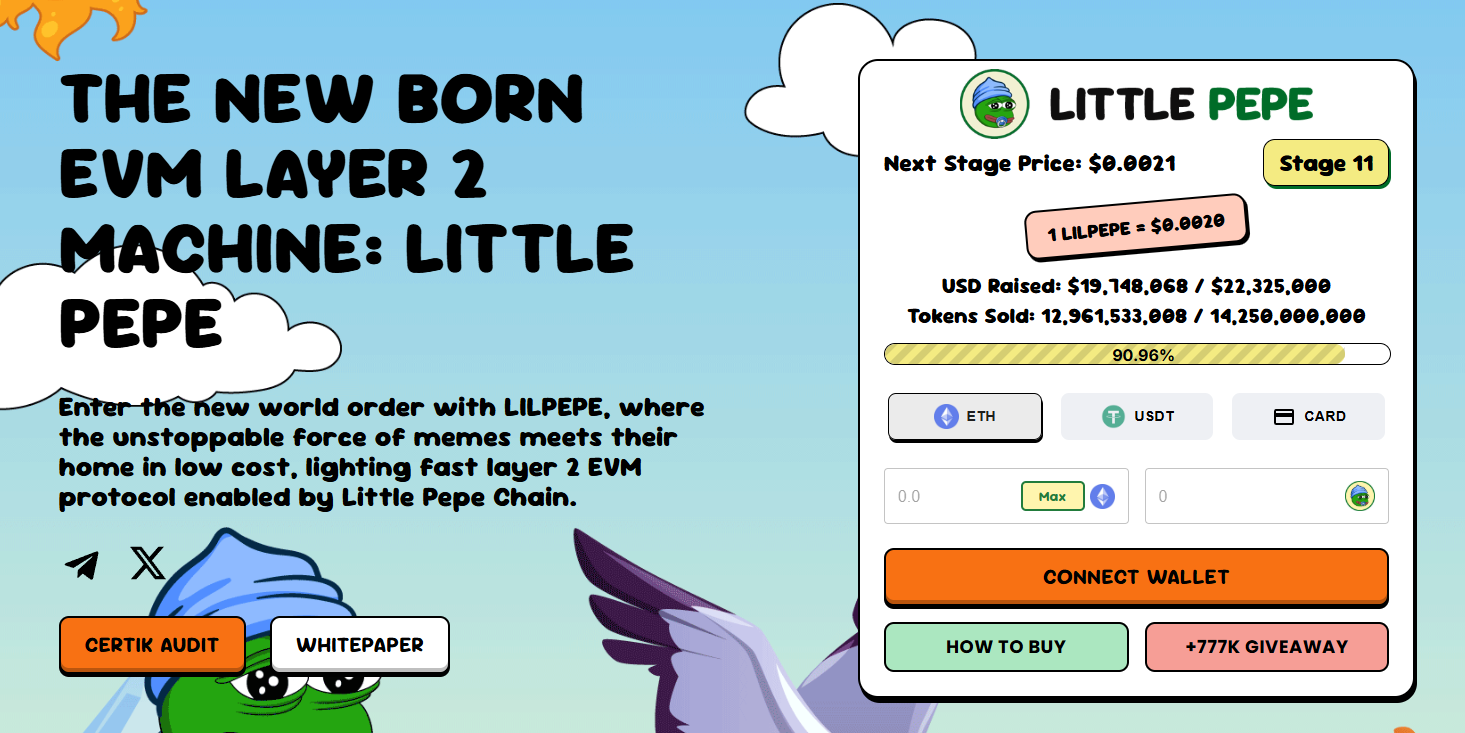
The crypto world has no shortage of meme coins promising explosive returns. Little Pepe, a self-described ‘Layer-2 meme blockchain’ project, claims to have raised over $1.9million in its presale — and says it’s building a new network with ultra-low fees. But behind the hype and frog memes, serious questions remain about whether this is a groundbreaking opportunity or just another rug pull waiting to happen.
This analysis breaks down the key factors you should consider before investing.
Anonymous team and zero accountability
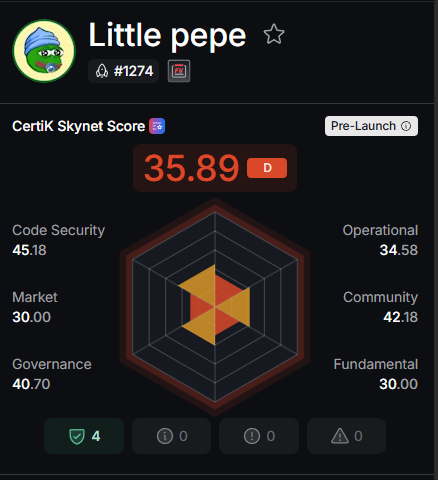
The most glaring red flag: no one knows who runs Little Pepe. The website, white paper, and press releases list no founders, developers, or advisors with verifiable experience. CertiK, which audited the project’s token contract, also confirms the team has not undergone its identity verification process.
Anonymous teams aren’t inherently scams — but they leave investors with no recourse if funds vanish or promises go unfulfilled. Without a track record, there’s no way to assess the team’s credibility.
Audits aren’t the whole story
Little Pepe’s smart contract has been audited by FreshCoins and CertiK, with no critical vulnerabilities reported. This means the ERC-20 token code is functional and secure — at least in isolation.
However, the audits only cover the token contract. The promised ‘Little Pepe Layer-2 blockchain’ doesn’t exist yet, and there’s no public code, testnet , or independent audit of any actual network infrastructure. Passing a token audit is not proof that the wider project will be delivered.
Risk-loaded tokenomics
The project’s 100 billion token supply is split into allocations, including 26.5% for presale buyers, 30% for a ‘chain reserve’, and 10% for marketing.
The presale has predatory vesting terms:
- Presale tokens are locked for three months after launch.
- Only 5% unlock each month thereafter.
- It would take nearly 20 months for investors to access their full allocation.
At the same time, it’s unclear whether team-controlled tokens have similar restrictions. If insiders can sell immediately while presale buyers are locked, the risk of a dump is high.
Another concern: all presale contributions go through the project’s own website, not an on-chain escrow. This means funds are under direct team control from day one.
Hype-driven marketing and questionable community health
Little Pepe has built a large online following — over 25,000 on Twitter and thousands in Telegram. It has run massive giveaways, such as a $777,000 prize pool for holders, and issued dozens of upbeat press releases.
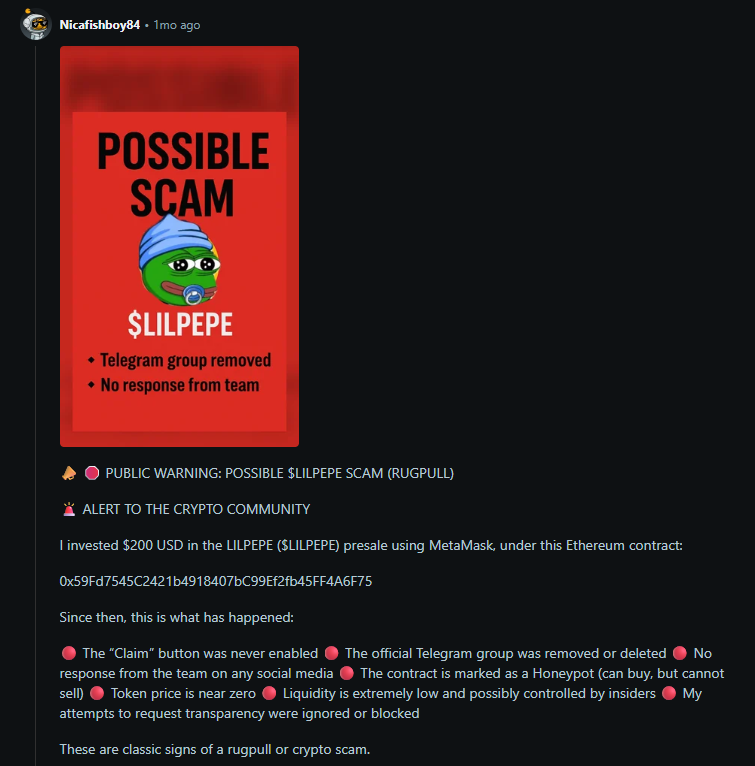
But much of this engagement appears incentivized rather than organic. Multiple users report being banned from Telegram for asking critical questions. External crypto communities, including Reddit’s r/CryptoScams, have repeatedly flagged the project for:
- Banning dissenting voices.
- Over-promising returns (claims of 8,000%+ gains).
- Having no real product or code to show.
Website and domain checks
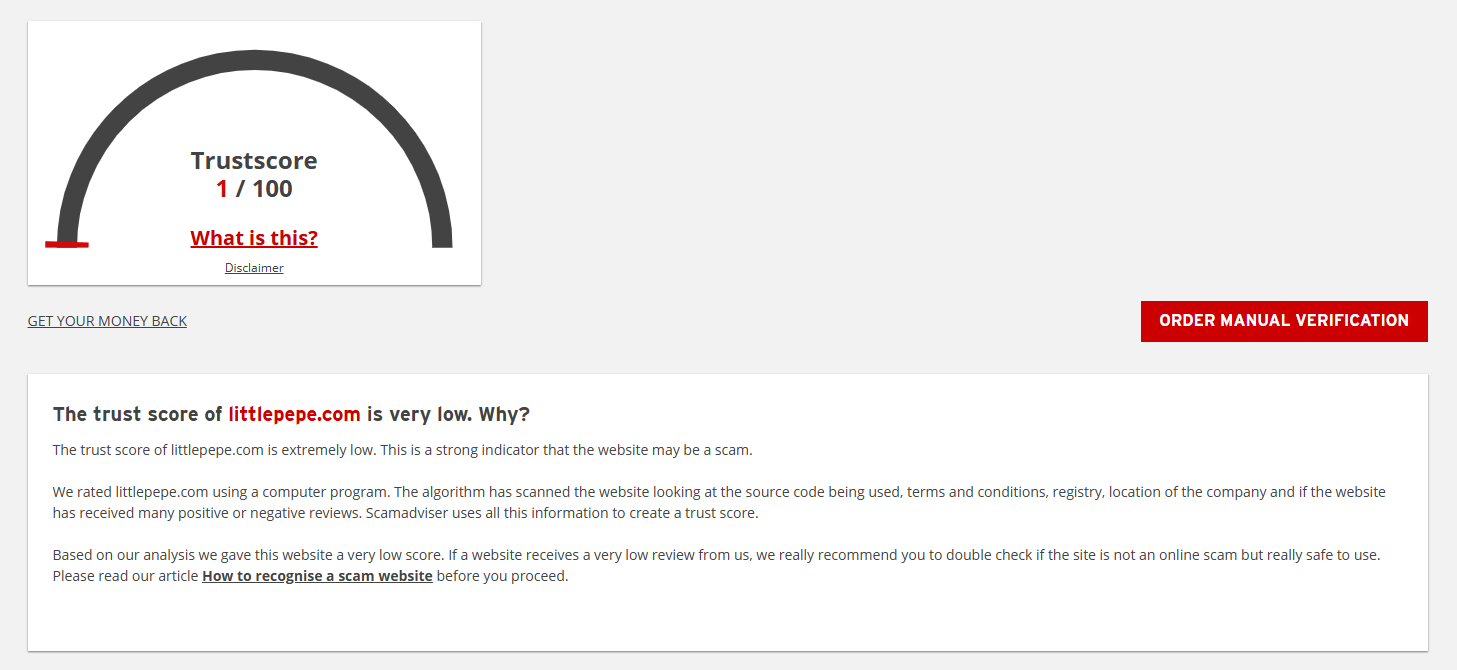
The website is professionally designed but offers no verifiable company or developer information. The domain’s ownership is privacy-protected, and third-party site trust tools like Scamadviser rate it ‘very low trust’.
The presale dashboard requires wallet connection, but there’s no open-source verification of what permissions it requests or how contributions are handled. While there’s no confirmed malicious code, investors are advised to revoke permissions after use.
White paper and roadmap
The 12-page white paper is heavy on meme lore and light on substance. There are no technical details about how the Layer-2 will function, what consensus mechanism it will use, or how it will achieve its promised performance.
The roadmap uses vague language like ‘coming soon’ and ‘community hype’ without specific delivery dates. The claimed Q1 2026 mainnet launch has no visible development progress to back it up.
Third-party reviews lean negative
Independent crypto analysts and scam-watch communities have given Little Pepe poor credibility scores. Common criticisms include:
- Raising huge sums without a working product.
- Copying patterns from past meme coin presales that later crashed.
- Using vesting structures that protect insiders at the expense of retail buyers.
While the project has paid for media coverage on major outlets, no respected blockchain developers or known crypto thought leaders have publicly endorsed it.
Final verdict
On paper, Little Pepe offers a fun concept: a meme coin with its own blockchain. In reality, almost all key trust indicators are missing:
- No identifiable team.
- No working product.
- Aggressive, insider-friendly tokenomics.
- Marketing over substance.
The audits confirm that the token contract works, but they don’t prove that the project’s grand plans will materialize or that the presale funds will be used as promised.
Until Little Pepe’s team provides transparency, delivers actual technology, and aligns token release schedules between insiders and the public, it should be treated as a high-risk, possibly fraudulent venture.
For potential investors, the safest move is to stay on the sidelines. In crypto, it’s better to miss a moonshot than to fund the next rug pull.



 Thank you for your feedback! We’re glad you found this article helpful.
 An error occurred while sending the form, please try again.
 We are sorry. You've already sent a message within the last 60 seconds. Please wait before sending another.
 Thank you for letting us know! Our team will review your feedback to help improve our content.
We're sorry you did not find what you were looking for. Please select the reason this article was not helpful.