


 5 min read
How To Earn DeFi Passive Income Using Auto-Compounding Vaults



 AI Overview
Auto-compounding vaults are smart contracts that automatically harvest and reinvest crypto rewards, delivering continuous compounding across yield farms, LPs, and staking. They make passive income simple across chains but require careful platform and risk management.
- Automates compounding: Vaults harvest and reinvest rewards on a schedule, boosting effective yield while saving time and gas fees.
- Risk and asset selection: Smart‑contract bugs, volatility and impermanent loss vary by vault; single-asset stablecoin vaults are typically lower risk.
- Platform strategy: Prefer well-audited, battle-tested protocols, start small, diversify across chains and check live APYs and fees before depositing.
As the crypto ecosystem evolves, decentralized finance (DeFi ) protocols are introducing newer tools and features to make passive income easier. One of the most effective tools available today is the auto-compounding vault.
These vaults automate the process of reinvesting rewards, allowing users to grow their crypto assets without needing to manage them actively.
In this guide, we’ll explain what auto-compounding vaults are, how they work, and highlight the most beginner-friendly platforms to use across major blockchain ecosystems as of 2025.
What are auto-compounding vaults?
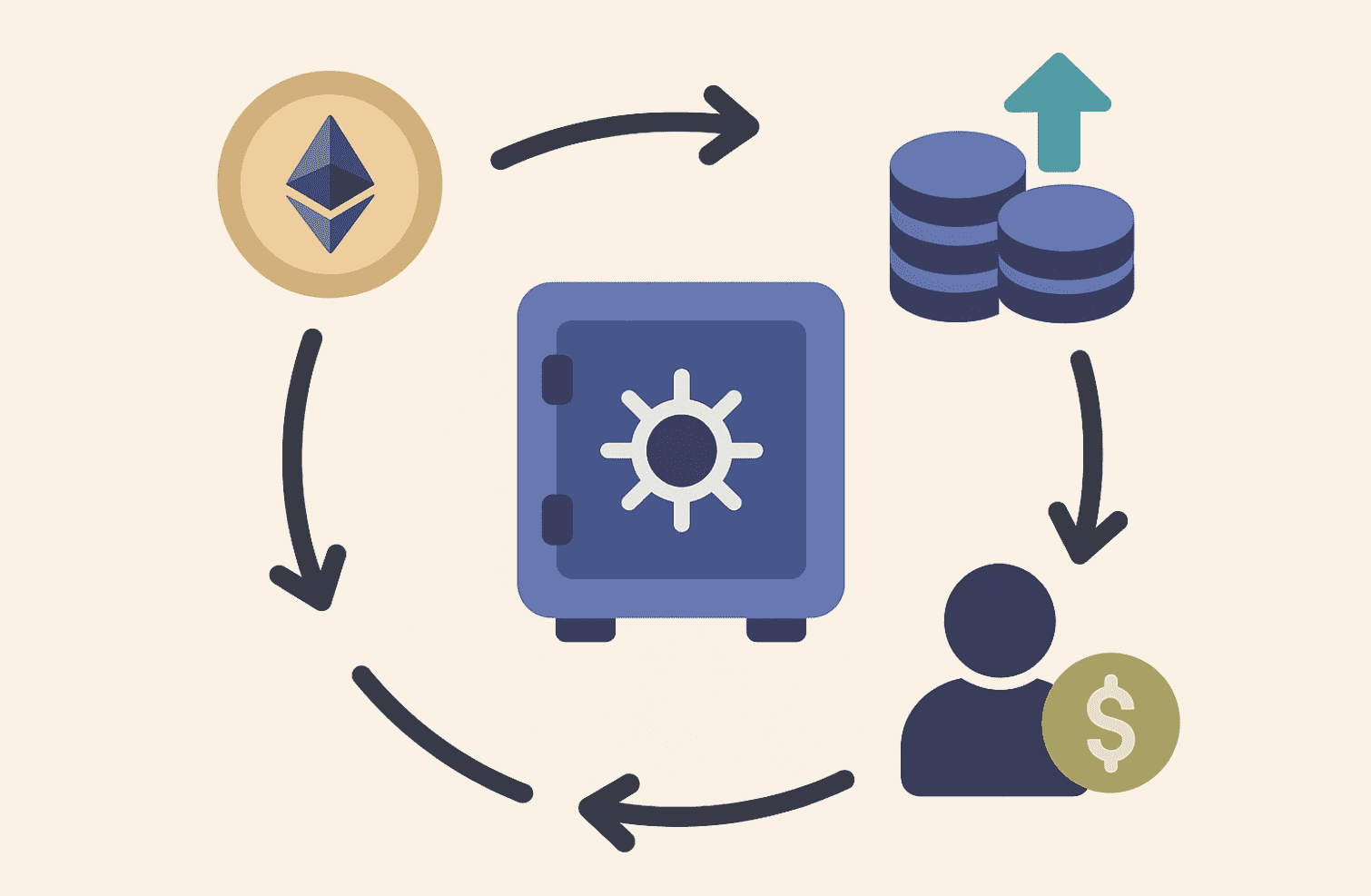
Auto-compounding vaults are smart contracts that automatically reinvest the rewards generated by your crypto assets. Instead of manually harvesting and re-staking your rewards (which can be time-consuming and costly due to gas fees), vaults do this for you on a regular basis. The result is continuous compounding, which boosts returns over time.
These vaults are popular in yield farming, liquidity provision, and lending. They can accept single assets (like USDC or ETH), LP tokens, or staked tokens from DeFi platforms.
Why they are ideal for passive income
- Automation: No need to manually claim or reinvest.
- Efficiency: Frequent compounding increases yield over time.
- Ease of use: Many platforms offer a one-click deposit experience.
- Chain flexibility: Available on multiple blockchains including Ethereum, BNB Chain, Solana, and Base.
How risk levels vary
Auto-compounding vaults aren’t risk-free. Risk depends on:
- Smart contract vulnerabilities
- Volatility of underlying assets
- Impermanent loss (for LP tokens)
- Protocol risk (especially on new chains or low-liquidity DEXs)
In general, single-asset stablecoin vaults carry the least risk, while leveraged or high-APY LP vaults are riskier.
Best auto-compounding vault platforms by chain
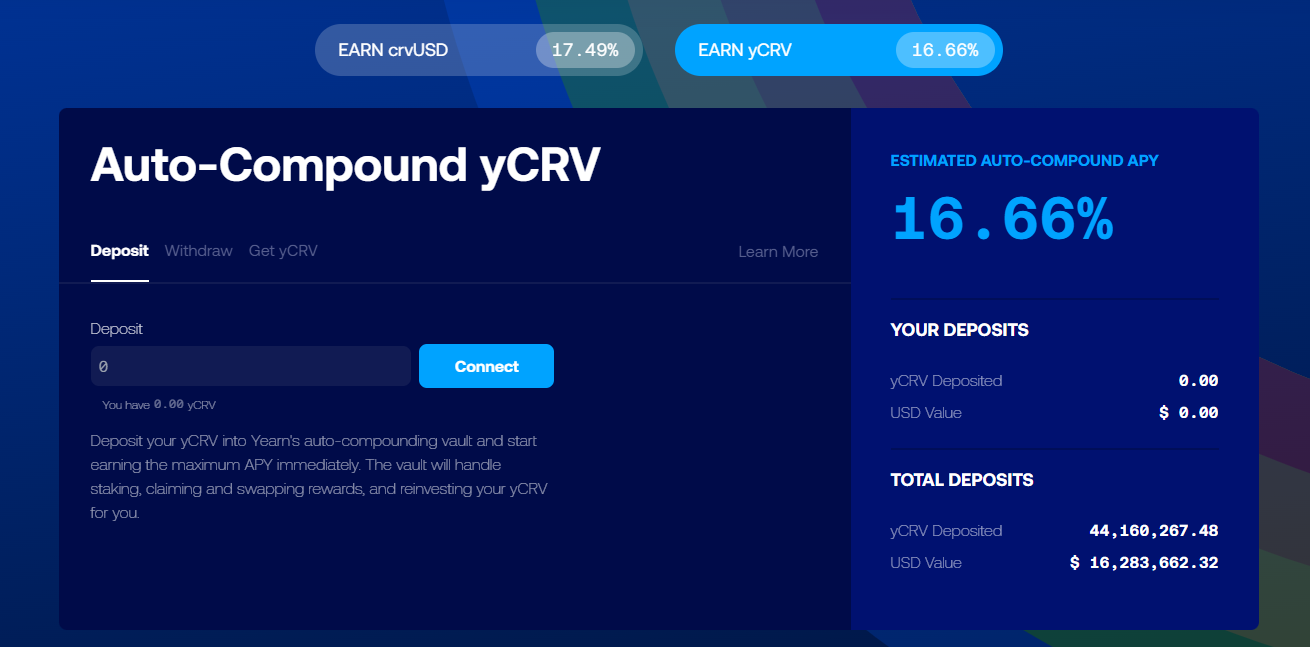
Ethereum and Layer-2s: Yearn Finance and Convex
Yearn Finance is one of the original vault protocols. It offers auto-compounding vaults for stablecoins (DAI, USDC), blue-chip tokens (ETH, WBTC), and LP tokens (Curve). Yields typically range from 5–10% for stablecoins and higher for incentivized pools.
- Risk: Medium. Yearn is well-audited and battle-tested but still carries smart contract and strategy risk.
- Ease of use: Good. The UI is basic but functional. Network fees are lower on Arbitrum or Optimism.
Convex Finance is focused on maximizing Curve yields. It auto-compounds CRV and CVX rewards from Curve LPs.
- Risk: Medium. Built on Curve’s infrastructure with active governance.
- Ease of use: Requires understanding Curve LPs, so slightly more complex.
BNB chain: Beefy Finance and PancakeSwap
Beefy Finance supports multiple chains but started on BNB Chain. It offers vaults for LP tokens, single assets, and staked tokens.
- APY: 5–20% on stablecoin vaults; higher for LPs.
- Risk: Low to high, depending on the vault.
- Ease of use: High. Clean UI with safety scores. WalletConnect supported.
PancakeSwap Auto CAKE Pool is a native vault where you deposit CAKE and earn compounded CAKE.
- Risk: Low to medium (based on CAKE volatility ).
- Ease of use: Very high. Ideal for new users.

Polygon and Avalanche: Beefy, Harvest, Yield Yak
Beefy on Polygon supports vaults for stablecoin pools and LP farms on QuickSwap and Curve.
- APY: 5–20%, depending on incentives.
- Risk: Medium.
- Ease of use: High. Low transaction fees.
Harvest Finance offers beginner-friendly vaults with a focus on sustainable yields.
- APY: ~6% average across all vaults.
- Risk: Low to medium. Audited and conservative.
- Ease of use: Very high. Simple UI and no-frills deposit.
Yield Yak is Avalanche-native and compounding yields from Trader Joe and Benqi.
- Risk: Medium.
- Ease of use: Good. Optimized for Avalanche wallets.
Solana: Kamino Finance and Yulip Protocol
Kamino Finance is built for passive income. It offers single-asset auto-compounding vaults for SOL and USDC.
- APY: 8% (USDC), 15% (SOL).
- Risk: Low. No leverage or liquidation.
- Ease of use: High. Simple UX and Phantom wallet support.
Tulip Protocol (formerly SolFarm) auto-compounds LP farms from Orca and Raydium.
- Risk: Medium. No known exploits but subject to IL.
- Ease of use: Moderate. LP tokens require an extra step.
Base: Beefy and Harvest Finance
Beefy on Base offers vaults for stablecoins, LP tokens, and lending markets.
- APY: 5–20%, depending on asset and incentives.
- Risk: Medium.
- Ease of use: High. Works with Coinbase Wallet and MetaMask.
Harvest on Base has grown significantly and focuses on stablecoins and blue-chip vaults.
- Risk: Low to medium. Recently audited.
- Ease of use: Very high. Clean interface and fast onboarding.
Comparison table
| Protocol | Chain(s) | Example APY | Supported assets | Risk profile | Ease of use |
| Yearn Finance | Ethereum, Arbitrum | 5–10% | DAI, ETH, Curve LPs | Medium | Good |
| Convex Finance | Ethereum | 5–15% | Curve LP tokens | Medium | Moderate |
| Beefy Finance | Multi-chain | 5–50%+ | LPs, stables, blue-chip | Varies | High |
| Autofarm | BNB, Polygon | 5–20% | Pancake LPs, stablecoins | Medium | High |
| Harvest Finance | Ethereum, Base | ~6% | Stablecoins, ETH, LPs | Low-medium | Very high |
| Kamino Finance | Solana | 8–15% | SOL, USDC | Low | High |
| Tulip Protocol | Solana | 10–30% | Raydium/Orca LPs | Medium | Moderate |
| Yield Yak | Avalanche | 8–20% | AVAX, stable LPs | Medium | Good |
Tips for beginners
- Start small: Begin with a trusted platform and a stablecoin vault.
- Avoid leveraged vaults: Stick to simple strategies while learning.
- Check audits: Only use platforms with public audits or a strong track record.
- Diversify: Don’t put all funds into one vault or platform.
Final thoughts
Auto-compounding vaults are one of the easiest ways to earn passive income in DeFi. Whether you want stable yields on USDC or to compound SOL rewards, there are beginner-friendly vaults across every major blockchain. Stick with well-audited platforms, understand the risks, and let your assets grow with minimal management.
Always check live APYs and vault details directly on protocol dashboards or DeFi data aggregators like DeFiLlama. With the right strategy, DeFi can offer powerful yield opportunities that rival traditional finance.
-
01.
Do I need to manually reinvest my rewards in an auto-compounding vault?
No. Auto-compounding vaults automatically harvest and reinvest your rewards on your behalf, increasing your yield without any manual action.
-
02.
Are my funds locked when I use an auto-compounding vault?
-
03.
What’s the difference between a regular yield farm and an auto-compounding vault?
A regular yield farm requires you to manually claim and restake rewards. Auto-compounding vaults automate this process, saving time and maximizing compounding efficiency.



 Thank you for your feedback! We’re glad you found this article helpful.
 An error occurred while sending the form, please try again.
 We are sorry. You've already sent a message within the last 60 seconds. Please wait before sending another.
 Thank you for letting us know! Our team will review your feedback to help improve our content.
We're sorry you did not find what you were looking for. Please select the reason this article was not helpful.

 You’re in. Thanks for joining our newsletter.
