


Finding the best Solana wallet in 2026 is trickier than most people expect. Solana is fast, cheap, and built for high-throughput applications, but not all wallets offer the same level of security, transparency, or performance.
Some wallets excel at NFTs, others focus on DeFi integrations, and several prioritize cold storage security for long-term SOL holders. This guide breaks down the key features to look for and explains the precise methodology we use to determine which wallets truly deserve the top spots in 2026.
Key Takeaways
- The best Solana wallets in 2026 combine strong security, seamless usability, and native support for SOL, SPL tokens, staking, NFTs, and dApps. Many wallets now integrate Solana-specific features such as instant token metadata loading, compressed NFTs, and priority fee tools.
- There is no single “best Solana wallet” for everyone. Hardware wallets are ideal for long-term SOL storage. Mobile wallets are better for trading and NFT use. Browser wallets are best for interacting with Solana dApps. The top ground-up Solana wallets blend all three into a unified experience.
- Cross-chain support matters more in 2026 than in previous years. Many Solana users now hold assets on Ethereum, Bitcoin, and even Cosmos. The best wallets enable the management of multi-chain assets without compromising Solana’s speed or UX.
Best Solana Wallets Listed & Ranked
-
 PromotionsCoins


-
 Coins
Coins

-
 Coins
Coins
-
 PromotionsCoins



-
 PromotionsCoins
-
 PromotionsCoins
-
 Coins
Coins
Best Solana Wallets Reviewed


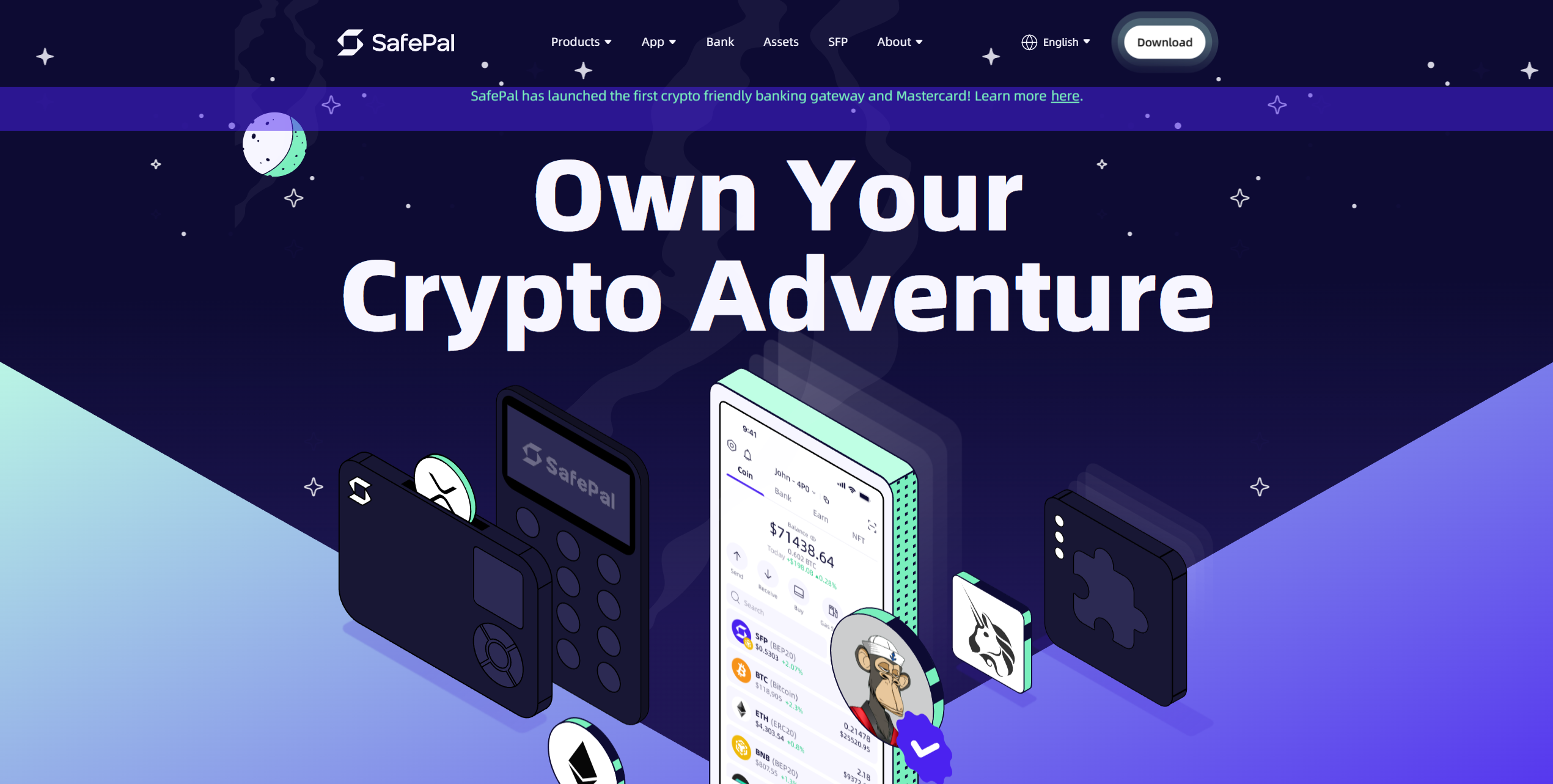
Safepal offers a complete suit of assets operations, with hardware and software wallets that are all multichain and multi-sig in nature. They do not just allow you to store and secure your assets, you can also swap, trade, buy and sell, and above all stake some of your assets to make profits. Safepal is fully anonymous and completely self-custodial, though its source is not 100% open. It supports assets across hundreds of chains and allows integration with lots of DEFIs and DAAPs. Above all, you are allowed to backup your almighty seeds both manually and on the cloud.
Year Founded
- 2018
Cryptocurrencies
- Bitcoin
- Ethereum
- Tether
-
+89
Available countries
- Afghanistan
- Albania
- Algeria
-
+246
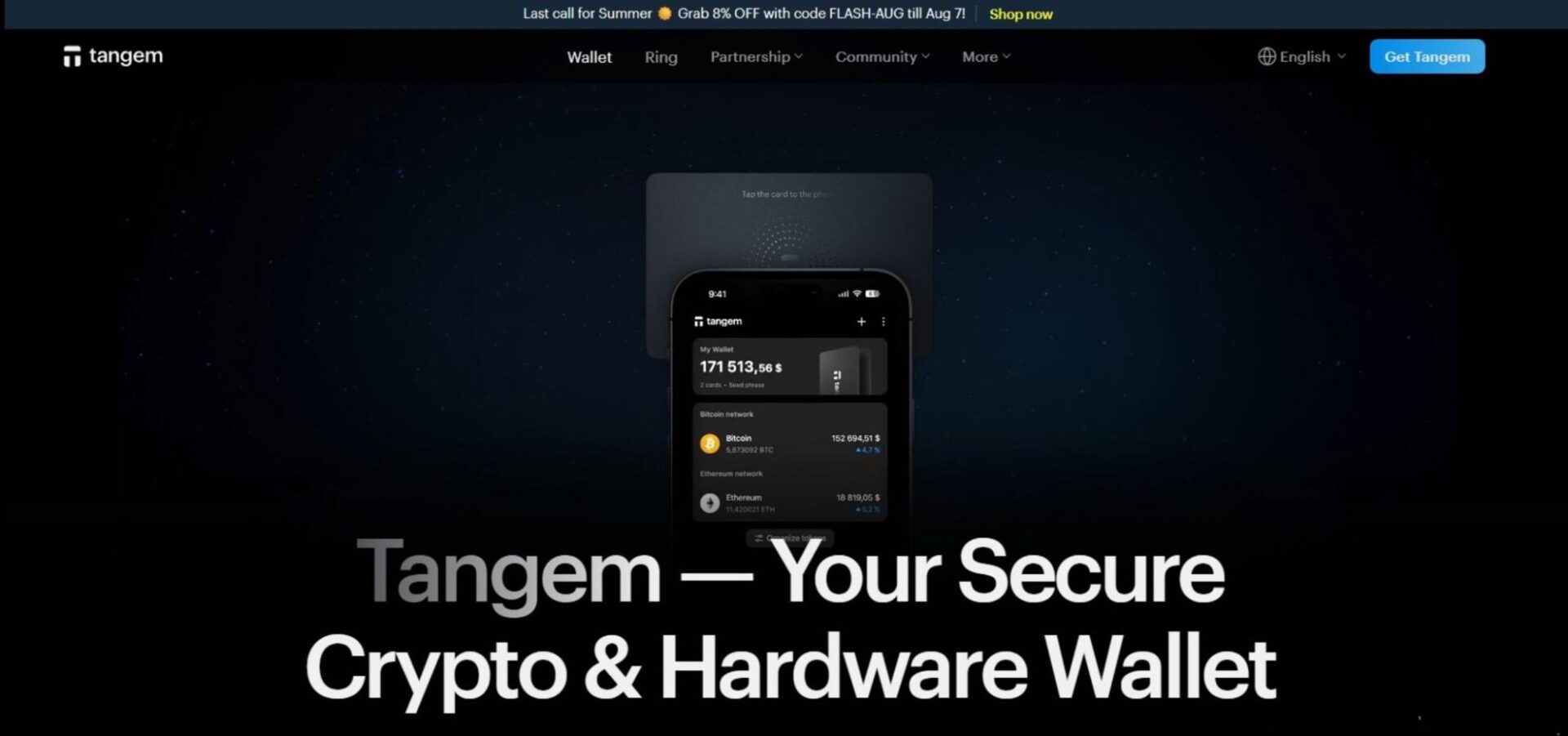
Year Founded
- 2017
Headquarters
- Switzerland
Licenses
- N/A - Not disclosed
Cryptocurrencies
- Bitcoin
- Ethereum
- Tether
-
+70
Available countries
- Albania
- Algeria
- American Samoa
-
+228
Languages
- English
- German
- French
-
+6
Features
- Tangem Pay
- Tangem Academy
-
+11
Get $10 in Bitcoin when you register through a referral link from an existing member.


Established in 2011, Kraken is a trusted cryptocurrency exchange renowned for its longevity and diverse trading interfaces, catering to a broad user base.
- Supports hundreds of coins
- High liquidity
- Simple and user-friendly interface
- Good customer support options
- Lots of advanced trading features like margin, futures, and indices trading
- No insurance fund for assets on the platform
- Doesn’t offer a crypto credit card
- No personal wallet service for traders
- Supports only a few fiat currencies
Year Founded
- 2011
Headquarters
- United States
Licenses
- United States (IRS)
- Canada (CRA)
- United Kingdom (HMRC)
-
+7
Cryptocurrencies
- Bitcoin
- Ethereum
- Tether
-
+83
Available countries
- Afghanistan
- Albania
- Algeria
-
+240
Languages
- Chinese (Mandarin)
- English
- French
-
+10
Features
- Cryptowatch
- Forks
-
+29


Uphold Crypto Exchange, founded in the United States in 2014, is a global digital money platform that enables users to buy, sell, and trade various cryptocurrencies.
Year Founded
- 2015
Headquarters
- Bahamas
Licenses
- United States (IRS)
- United Kingdom (HMRC)
- Lithuania
Cryptocurrencies
- Tether
- TrueUSD
- USD Coin
-
+144
Available countries
- Australia
- Canada
- France
-
+9
Languages
- English
- Spanish
Features
- Metals
- National Currencies (Forex)
-
+5
Don’t invest unless you’re prepared to lose all the money you invest.
Earn $10 in Ethereum (ETH) when you stake $100 in ETH for the first time, up to $30 in rewards


Coinbase, a major player since its inception in 2012, is a user-friendly cryptocurrency exchange offering a secure platform for buying, selling, and managing a variety of digital assets.
- Operating since 2012, listed on Nasdaq, and has a BitLicense from New York State Department of Financial Services.
- Offers a variety of assets
- Fast crypto withdrawals
- Lists smaller assets before other big exchanges
- User-friendly interface with intuitive design
- Coinbase Pro offers much better fees!
- This has been the main complaint against Coinbase, although they have committed to hiring more staff.
- Controls customers' private keys
- Restricted to many countries
- Doesn't offer many advanced services
Year Founded
- 2012
Headquarters
- United States
Licenses
- United States (IRS)
- Canada (CRA)
- United Kingdom (HMRC)
-
+4
Cryptocurrencies
- Bitcoin
- Ethereum
- Tether
-
+68
Available countries
- Canada
- France
- Netherlands
-
+6
Languages
- English
- German
- French
-
+9
Features
- Web3
- Borrow
-
+27
Year Founded
- 2013
Headquarters
- Czech Republic
Licenses
- N/A - Not disclosed
Cryptocurrencies
- Bitcoin
- Ethereum
- Tether
-
+204
Available countries
- Afghanistan
- Albania
- Algeria
-
+246
Languages
- English
- Czech
Features
- Trezor Keep
- Trezor Expert Onboarding Session
Year Founded
- 2019
Headquarters
- Israel
Licenses
- N/A - Not disclosed
Cryptocurrencies
- Bitcoin
- Ethereum
- Tether
-
+68
Available countries
- Afghanistan
- Albania
- Algeria
-
+245
Languages
- English
- German
- Portuguese (Brazil)
Features
- Swap
- Multi-Party Computation (MPC)
-
+15

Disclaimer
The information provided on this website is for informational purposes only and should not be considered as financial, investment, or legal advice. Cryptocurrency investments are volatile and high-risk in nature. Consult with a qualified financial advisor and/or tax professional before making any investment decisions. We are not responsible for any loss incurred due to the use of information on this website. Do your own research and exercise caution. Don’t invest unless you’re prepared to lose all the money you invest.
How We Determine the Best Solana Wallets
Our evaluation process aims to help users with different skill levels choose the safest and most practical Solana wallet for their specific needs.
Some users want:
- a cold storage solution for SOL,
- a daily-use wallet for NFTs and apps,
- a multi-chain wallet for managing a broad crypto portfolio,
- or an institutional-grade wallet with multisig and advanced signing features.
Because the Solana ecosystem continues to grow rapidly, especially with the rise of memecoins, compressed NFTs, and new DeFi protocols, our scoring framework prioritizes the factors that help users avoid loss, confusion, or security mistakes.
Below is the complete methodology behind our rankings.
Security Architecture
Security is the foundation of a trustworthy Solana wallet. It is the primary feature to consider while selecting a wallet, because a wallet can have perfect UX yet still be dangerous if it fails to protect private keys properly.
We evaluate several deep technical layers:
- Secure Element (SE) Presence & Grade: A strong hardware wallet must include a Secure Element, ideally certified at CC EAL5+ or higher. This chip protects private keys from physical extraction attempts, voltage manipulation, glitching, and side-channel attacks (e.g., power analysis). Software wallets are scored based on how securely they isolate keys on the device and whether they support advanced OS-level security such as Secure Enclave (iOS) or hardware-backed keystores (Android).
- True Cold vs. Pseudo-Cold Storage: A true cold wallet means the device never connects directly to the internet, private keys never touch a networked environment, signing happens offline, and firmware updates can be done through offline channels (QR/microSD). Pseudo-cold wallets claim to be secure but still require USB or app connectivity. We mark this distinction clearly.
- Air-Gapping Technology: Air-gapped signing method strength is a major differentiator: QR code signing provides a visual, verifiable transaction flow, microSD signing isolates data movement, NFC signing balances security with convenience. We examine whether these methods can be compromised or bypassed.
- Passphrases, Hidden Wallets & Duress Modes: These features protect users from physical coercion, theft, and border crossings requiring device inspection. A wallet without passphrase support loses major security points.
- Firmware Integrity: We review how the firmware is signed, whether the signing keys are well-protected, and whether firmware images are reproducible.
- Supply Chain & Device Authentication: Counterfeit wallets are a very real threat. Wallets with poor supply-chain controls are ranked lower regardless of feature set. We check for tamper-evident packaging, holographic seals, cryptographic device authentication, and verifiable onboarding.
- Resistance to Physical Attacks: A wallet doesn’t need to be invincible; it simply needs to meaningfully raise the cost and difficulty of extracting keys. We consider secure chip isolation, fault injection protection, and side-channel countermeasures.
Open-source Transparency
Open-source transparency significantly influences our scoring because it allows independent reviewers to verify wallet behavior. We assess:
- Firmware Openness: Fully open-source firmware is ideal. Partially closed firmware is acceptable if audited and well-documented. Fully closed firmware scores lower unless security compensates for it.
- Open Hardware Documentation: Some manufacturers publish PCB schematics, board layouts, and hardware block diagrams. It makes community review easier and improves trust.
- Reproducible Builds: Wallets that allow provable reproducibility score the highest. It prevents supply-chain backdoors, hidden malicious code, and unverified firmware manipulation.
- Third-Party Audits: Wallets with poor audit histories or undisclosed findings drop significantly in ranking. We check who conducted the audit, how recent is it, whether vulnerabilities were fixed, and whether the report is public.
Usability & User Experience
A wallet can have world-class security but still be frustrating or confusing to use. UX is an important feature because most crypto losses result from user error while navigating the interface. We analyze:
- Initial Setup & Seed Generation: A wallet that fails to teach users how to protect their own seed phrase will score lower. We look at clarity of instructions, how risks are explained, whether the wallet warns about phishing or unsafe backups, and whether users are guided in selecting a validator for staking.
- Interface Quality: For hardware wallets, touchscreen responsiveness, button ergonomics, screen brightness and size, and readability of long addresses are important criteria. For software wallets, clear transaction previews, real-time fee display, NFT visualization, and support for recent Solana upgrades are important factors to consider.
- Companion App UX: The more intuitive the companion app, the higher the wallet’s score. We evaluate how the transactions are signed, how frequently the firmware is updated, whether staking is available, and whether dApps are connected via WalletConnect 2.0.
- Beginner-Focused Design: Wallets that implement safety nets such as transaction simulation, contract call warnings, and phishing protection rank highly.
- Failed transaction diagnostics: Wallets should explain why a transaction failed (compute units, account locks, priority fee too low).
- Validator transparency for staking: Commission changes, delinquency flags.
Backup, Recovery & Migration
Because losing access to a wallet can be catastrophic, we evaluate recovery processes in detail such as:
- Seed Format Compatibility: Wallets that lock users into proprietary backups score poorly.
- Backup Methods: We check whether users can back up using paper, metal plates, encrypted backups, microSD key shards, and QR codes for offline redundancy.
- Recovery Flow: We test whether restoring works on other wallets, seed formats are easily portable, and recovery is easily possible for non-experts.
- Migration Between Wallet Ecosystems: The best Solana wallets let users switch providers without friction or proprietary lock-in.
Supported Coins & Chains
Solana is the priority, but real-world users increasingly need multi-chain support. We evaluate support for smooth SOL transfers, SPL token recognition, compressed NFT support, reliable metadata indexing, and staking flows.
-
- Cross-Chain Compatibility: A wallet that only supports Solana can still rank highly, but multi-chain convenience is becoming increasingly essential. Wallets receive higher scores if they also support Ethereum & ERC-20 tokens, Bitcoin & PSBT signing, EVM chains (Polygon, Arbitrum, etc.), and Cosmos chains.
- dApp & Protocol Integrations: Wallets that require users to manually approve strange or unclear contract calls lose points. We test support for WalletConnect 2.0, integration with Jupiter, support for Raydium, Orca, Drift, MarginFi, Phoenix, Kamino, Tensor, Meteora, Sanctum (LSTs), and Solana Domain Service name resolution.
- Transaction Functionality: Solana transactions are fast and cheap, but the wallet must still display them safely. Best Solana wallets also incorporate priority fee sliders and congestion-aware fee estimation for high-demand periods. We evaluate:
- Multisig Support: Important for DAO treasuries, institutional use, and high-value NFT traders.
- Offline Signing Accuracy: If a wallet uses QR codes, NFC, or microSD cards, confirm that transaction hashes match exactly what is displayed.
- Simulation & Risk Warnings: Wallets with transaction simulation help prevent drain scams, rogue contract calls, and malicious token approvals.
- Firmware & Longevity: Reliability is given a higher score. Wallets with regular security updates score higher. How quickly did the manufacturer respond to prior vulnerabilities? Wallets that allow microSD or QR-based updates provide the strongest security.
- Long-Term Commitment: We consider years in operation, the frequency of feature development, and transparency into the device lifecycle.
Reputation
Wallets that dismiss criticism or hide vulnerabilities score poorly. A wallet can have good specs but still have trust problems. We evaluate:
- Developer Background: We look for public team members, published technical papers, and community involvement.
- Incident History: We check if a wallet has leaked data, had seed phrase exposure or faced device recalls.
- Community Standing: We analyze Reddit feedback, GitHub issue responsiveness.
- Trust among the Solana NFT and DeFi communities.
Price Value
A wallet’s value depends on durability, including the quality of its cables, the premiumness of its casing materials, the quality of its screen, and its security features relative to its cost. A cheap wallet that cuts essential protections is ranked lower than a moderately priced wallet that offers proper architecture.
We categorize value as:
- Budget: entry-level users
- Mid-range: best price-to-feature ratio
- Premium: advanced UX and metal casing
We ensure no wallet is recommended solely because it’s cheap; only if it’s secure and functional.
 DON’T GET REKT
Curated drops, testnets and red flag alerts straight to your inbox ✌️
 You’re in. Thanks for joining our newsletter.

Final Tips & Conclusion
Choosing the best Solana wallet in 2026 depends on how you actually use SOL:
- Long-term saving: Choose a hardware wallet with a Secure Element and offline signing capabilities.
- Daily DeFi & NFT trading: A fast, mobile-first Solana wallet offers the best blend of speed and convenience.
- Cross-chain portfolios: Pick a wallet that supports Bitcoin, Ethereum, and major EVM chains, as well as Solana.
- Beginners: Start with a user-friendly mobile wallet, then upgrade to a hardware wallet as your SOL stack grows.
The Solana ecosystem is bigger and more advanced than ever in 2026, but also more security-sensitive. Reliable wallets now offer stronger protection, greater transparency, and smoother integrations than existed even two years ago. With the right wallet, managing SOL, SPL tokens, NFTs, staking, and cross-chain assets becomes simple, safe, and enjoyable.
Frequently Asked Questions
-
01.
What is the best Solana wallet?
It depends on your needs. Hardware wallets are best for long-term SOL storage, while mobile and browser wallets are best for daily use, NFTs, and dApps.
-
02.
Are Solana wallets safe?
Yes, provided you choose a wallet with solid security architecture, a strong reputation, and transparent development practices.
-
03.
Which Solana wallet is best for NFTs?
The best NFT wallets offer metadata refresh tools, gallery views, support for compressed NFTs, and accurate price display.
-
04.
Can I store SPL tokens on all Solana wallets?
Most Solana wallets support SPL tokens by default, but some handle data and token detection more reliably than others.
-
05.
Do Solana wallets support staking?
Yes. Most major wallets include built-in staking tools, validator search, and commission transparency.