


Looking for the best crypto exchanges in the USA? A lot has changed in 2026, with new platforms entering the market and regulatory frameworks tightening. We have examined the leading US exchanges, analyzing everything from security measures to fees, user experience, and compliance.
This guide walks you through licensing requirements, trading features, supported assets, and fee structures. We will explore how each exchange handles user verification, which coins you can trade, and which platforms offer the most competitive rates.
Our team actively researched these exchanges and assessed feedback from thousands of traders. By the end, you’ll know exactly which US-based crypto exchange best suits your trading needs.
Best US Crypto Exchanges
-
 Coins
Coins



 Deposit Methods
 Avg. Spread The difference between the buy (ask) and sell (bid) price for popular trading pairs. Lower spreads mean better pricing and less slippage for you.
 -
 Coins
Coins
 Deposit Methods

 Avg. Spread The difference between the buy (ask) and sell (bid) price for popular trading pairs. Lower spreads mean better pricing and less slippage for you.
 -
 Coins
Coins


 Deposit Methods
Avg. Spread The difference between the buy (ask) and sell (bid) price for popular trading pairs. Lower spreads mean better pricing and less slippage for you.
Deposit Methods
Avg. Spread The difference between the buy (ask) and sell (bid) price for popular trading pairs. Lower spreads mean better pricing and less slippage for you. -
 PromotionsCoins
 Deposit Methods
 Avg. Spread The difference between the buy (ask) and sell (bid) price for popular trading pairs. Lower spreads mean better pricing and less slippage for you.
 -
 Coins
Deposit Methods
Avg. Spread The difference between the buy (ask) and sell (bid) price for popular trading pairs. Lower spreads mean better pricing and less slippage for you.
Coins
Deposit Methods
Avg. Spread The difference between the buy (ask) and sell (bid) price for popular trading pairs. Lower spreads mean better pricing and less slippage for you. -
 Coins
Deposit Methods
Avg. Spread The difference between the buy (ask) and sell (bid) price for popular trading pairs. Lower spreads mean better pricing and less slippage for you.
Coins
Deposit Methods
Avg. Spread The difference between the buy (ask) and sell (bid) price for popular trading pairs. Lower spreads mean better pricing and less slippage for you. -
 PromotionsCoins
Deposit Methods
PromotionsCoins
Deposit Methods
 Avg. Spread The difference between the buy (ask) and sell (bid) price for popular trading pairs. Lower spreads mean better pricing and less slippage for you.
 -
 Coins
Coins

 Deposit Methods
Avg. Spread The difference between the buy (ask) and sell (bid) price for popular trading pairs. Lower spreads mean better pricing and less slippage for you.
Deposit Methods
Avg. Spread The difference between the buy (ask) and sell (bid) price for popular trading pairs. Lower spreads mean better pricing and less slippage for you. -
 Coins
Deposit Methods
Coins
Deposit Methods
 Avg. Spread The difference between the buy (ask) and sell (bid) price for popular trading pairs. Lower spreads mean better pricing and less slippage for you.
 -
 PromotionsCoins
Deposit Methods
Avg. Spread The difference between the buy (ask) and sell (bid) price for popular trading pairs. Lower spreads mean better pricing and less slippage for you.
PromotionsCoins
Deposit Methods
Avg. Spread The difference between the buy (ask) and sell (bid) price for popular trading pairs. Lower spreads mean better pricing and less slippage for you. -
 Coins
Deposit Methods
Avg. Spread The difference between the buy (ask) and sell (bid) price for popular trading pairs. Lower spreads mean better pricing and less slippage for you.
Coins
Deposit Methods
Avg. Spread The difference between the buy (ask) and sell (bid) price for popular trading pairs. Lower spreads mean better pricing and less slippage for you. -
 Coins
Coins
 Deposit Methods

 Avg. Spread The difference between the buy (ask) and sell (bid) price for popular trading pairs. Lower spreads mean better pricing and less slippage for you.
 -
 Coins
Deposit Methods
Avg. Spread The difference between the buy (ask) and sell (bid) price for popular trading pairs. Lower spreads mean better pricing and less slippage for you.
Coins
Deposit Methods
Avg. Spread The difference between the buy (ask) and sell (bid) price for popular trading pairs. Lower spreads mean better pricing and less slippage for you. -
 Coins
Deposit Methods
Avg. Spread The difference between the buy (ask) and sell (bid) price for popular trading pairs. Lower spreads mean better pricing and less slippage for you.
Coins
Deposit Methods
Avg. Spread The difference between the buy (ask) and sell (bid) price for popular trading pairs. Lower spreads mean better pricing and less slippage for you. -
 PromotionsCoins
 Deposit Methods
 Avg. Spread The difference between the buy (ask) and sell (bid) price for popular trading pairs. Lower spreads mean better pricing and less slippage for you.
 -
 Coins
Coins
 Deposit Methods
Avg. Spread The difference between the buy (ask) and sell (bid) price for popular trading pairs. Lower spreads mean better pricing and less slippage for you.
Deposit Methods
Avg. Spread The difference between the buy (ask) and sell (bid) price for popular trading pairs. Lower spreads mean better pricing and less slippage for you. -
 PromotionsCoins

 Avg. Spread The difference between the buy (ask) and sell (bid) price for popular trading pairs. Lower spreads mean better pricing and less slippage for you.
 -
 Coins
Coins

 Deposit Methods
 Avg. Spread The difference between the buy (ask) and sell (bid) price for popular trading pairs. Lower spreads mean better pricing and less slippage for you.
 -
 Coins
Deposit Methods
Coins
Deposit Methods

 Avg. Spread The difference between the buy (ask) and sell (bid) price for popular trading pairs. Lower spreads mean better pricing and less slippage for you.
 -
 Coins
Deposit Methods
Avg. Spread The difference between the buy (ask) and sell (bid) price for popular trading pairs. Lower spreads mean better pricing and less slippage for you.
Coins
Deposit Methods
Avg. Spread The difference between the buy (ask) and sell (bid) price for popular trading pairs. Lower spreads mean better pricing and less slippage for you.
Best Crypto Exchanges in the USA 2026 Reviewed

Get $10 in Bitcoin when you register through a referral link from an existing member.


Kraken, founded in 2011, has established itself as one of the best crypto exchanges in the USA, offering a comprehensive platform for both novice and experienced traders. Supporting over 200 cryptocurrencies and advanced features like margin and futures trading, Kraken caters to diverse investor needs. Recognized for its robust security measures and regulatory compliance, Kraken has never suffered a major hack. The exchange provides competitive fees, a user-friendly interface, and 24/7 customer support. While facing recent SEC challenges, Kraken continues to innovate, introducing an NFT marketplace and expanding its institutional services. Despite strong competition, Kraken remains among the best crypto exchanges in the USA, balancing accessibility with advanced trading options.
- Supports hundreds of coins
- High liquidity
- Simple and user-friendly interface
- Good customer support options
- Lots of advanced trading features like margin, futures, and indices trading
- No insurance fund for assets on the platform
- Doesn’t offer a crypto credit card
- No personal wallet service for traders
- Supports only a few fiat currencies
Year Founded
- 2011
Headquarters
- United States
Licenses
- United States (IRS)
- Canada (CRA)
- United Kingdom (HMRC)
-
+7
Cryptocurrencies
- Bitcoin
- Ethereum
- Tether
-
+83
Available countries
- Afghanistan
- Albania
- Algeria
-
+240
Languages
- Chinese (Mandarin)
- English
- French
-
+10
Features
- Cryptowatch
- Forks
-
+29
Receive up to $100,000 worth of exclusive gifts for newcomers upon registration.
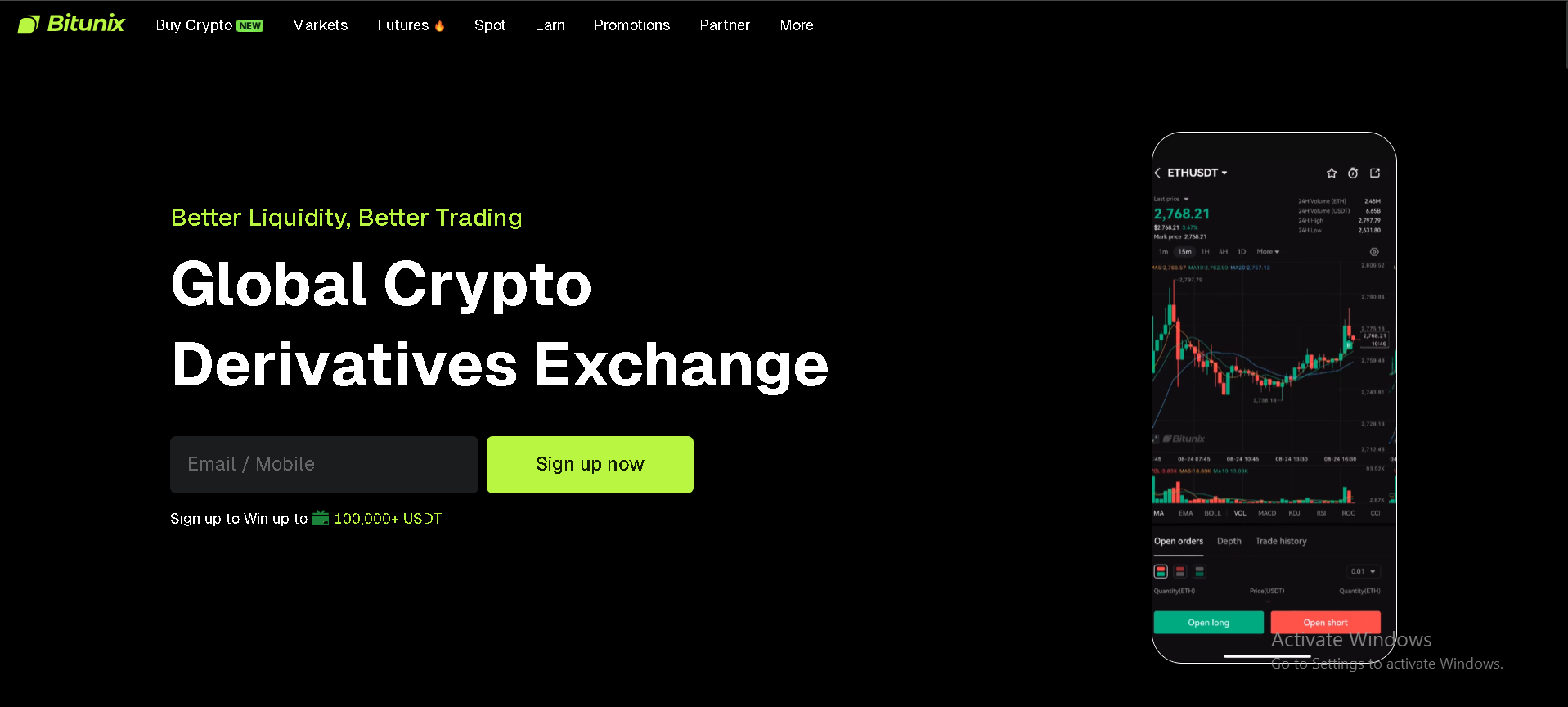
Bitunix was founded in Hong Kong in 2021. It was designed to bring a breadth of crypto features to beginner and intermediate traders.
It supports over 700 cryptocurrency trading pairs in more than 100 countries. It offers spot, P2P, and derivatives trading. With copy trading, new traders can copy the trades of successful users, with them earning a cut.
The exchange offers a myriad of new user bonuses and lotteries, letting new traders jumpstart their experience.
Rewards and tournaments are also available for existing users. Bitunix Splash gives rewards for investing in new tokens, while regular competitions in categories like trading volume or monthly profits carry up to USDT 675,000 in rewards.
Licenses
- United States (IRS)
- Canada (CRA)
- Phillipines
Cryptocurrencies
- Bitcoin
- Ethereum
- Tether
-
+78
Available countries
- Albania
- Algeria
- American Samoa
-
+233
Languages
- English
- Uzbek
- Polish
-
+12
Enjoy US$50 worth of CRO as sign-up bonus when you sign up with a referral link.


Crypto.com, founded in 2016, has emerged as one of the best crypto exchanges in the USA, offering a comprehensive platform for both novice and experienced traders. With support for over 250 cryptocurrencies, competitive fees, and advanced features like spot and margin trading, Crypto.com caters to diverse investor needs. The exchange prioritizes security with robust measures and regulatory compliance across multiple jurisdictions. Its user-friendly mobile app, NFT marketplace, and innovative products like the Crypto.com Visa Card have contributed to its popularity. Despite facing challenges like a 2022 hack, Crypto.com's swift response and continued innovation keep it among the best crypto exchanges in the USA, balancing accessibility with advanced trading options.
- Extensive list of supported cryptocurrencies
- Hardware wallet support
- With its Visa cards, you can spend your crypto and earn rewards
- Easy to purchase NFTs on the platform using either fiat or certain cryptos
- Higher fees for those who don't hold and use CRO
- Poor customer service
- Lack of educational resources
- Slow in-app live support
Year Founded
- 2016
Headquarters
- Singapore
Licenses
- United Arab Emirates
- Brazil
- United Kingdom (HMRC)
-
+19
Cryptocurrencies
- Bitcoin
- Holo
- Litecoin
-
+157
Available countries
- Afghanistan
- Algeria
- American Samoa
-
+200
Languages
- Danish
- Spanish
- French
-
+13
Features
- Supercharger
- Trading Arena
-
+2


Bitstamp, a veteran in the crypto space since 2011, holds its ground among the Best US Crypto Exchanges. With support for over 80 cryptocurrencies, it caters to novice and experienced traders. The platform offers a user-friendly interface, competitive fees starting at 0.1%, and robust security measures, including cold storage and insurance coverage. However, U.S. users face limitations, with only 35+ cryptocurrencies available and no access to staking or lending features. Bitstamp's strength lies in its simplicity and reliability for spot trading major cryptocurrencies. While it may not boast the extensive features of some competitors, its long-standing reputation and focus on core trading functionalities, make it a solid choice for those prioritizing security and ease of use.
- An advanced trading platform
- Low fees and high liquidity
- Supports lots of different payment options
- Efficient and dedicated phone and email support
- Lots of charting tools
- No live chat customer support
- Slow verification process
- International wire transfer takes 2 to 5 days to clear
- A few number of coins on offer
- Was hacked in 2015
Year Founded
- 2011
Headquarters
- Virgin Islands, British
Licenses
- Luxembourg
- United States (IRS)
- Spain
-
+1
Cryptocurrencies
- Bitcoin
- Ethereum
- Tether
-
+52
Available countries
- Afghanistan
- Albania
- Algeria
-
+244
Languages
- English
Features
- Institutions
- Pro Traders
-
+4
Enjoy up to 30,000 USDT Bonus when you sign up and complete tasks. Get a 10 USDT coupon when you sign up, and link your phone number and email.


Year Founded
- 2018
Headquarters
- Singapore
Licenses
- United States (IRS)
- Canada (CRA)
Cryptocurrencies
- Bitcoin
- Ethereum
- Tether
-
+96
Available countries
- Philippines
- United Kingdom
- United States
Languages
- English
- Simplified Chinese
- Chinese (Traditional)
-
+15
Features
- Futures Demo
- Copy Trading
-
+18
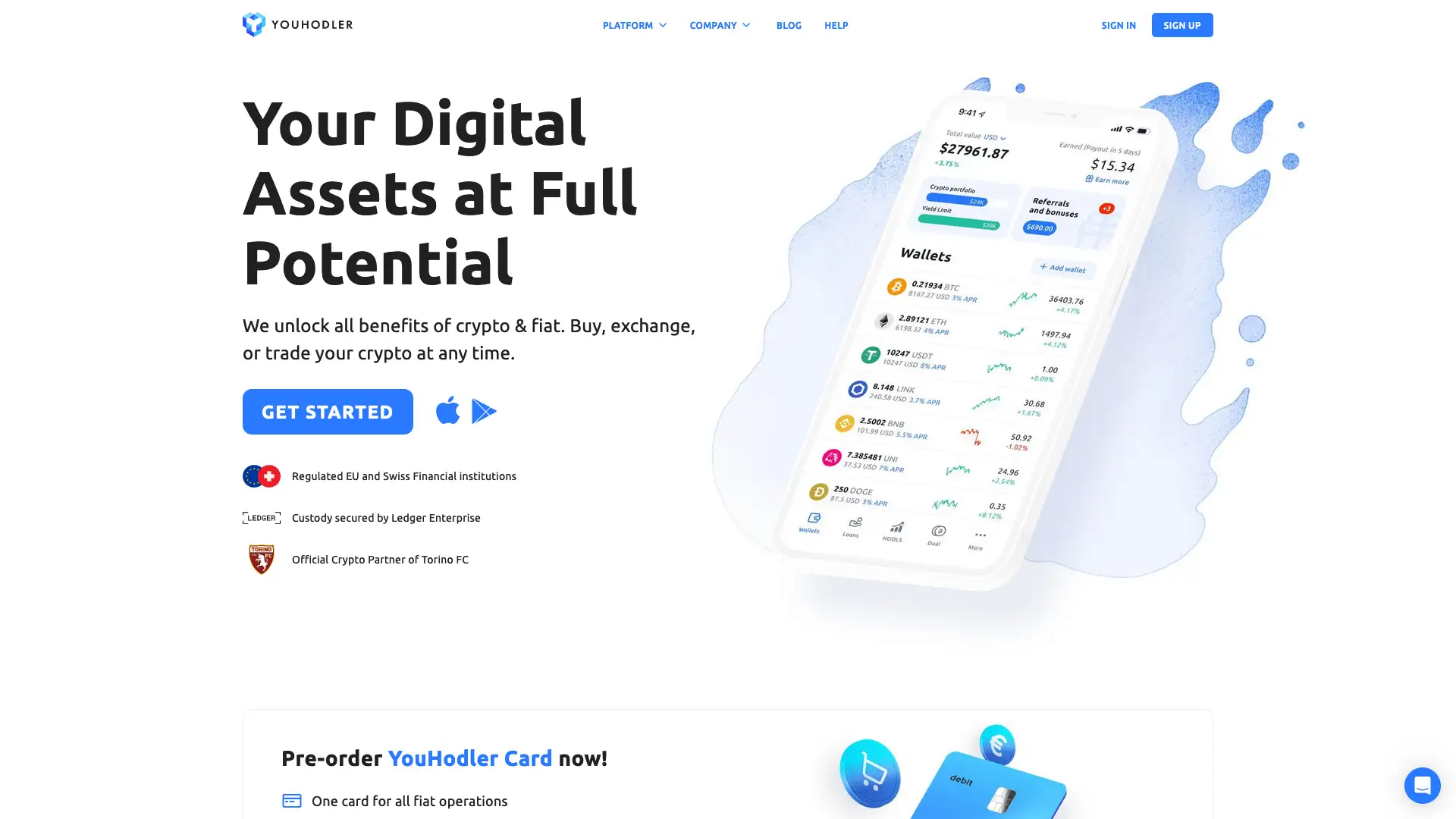
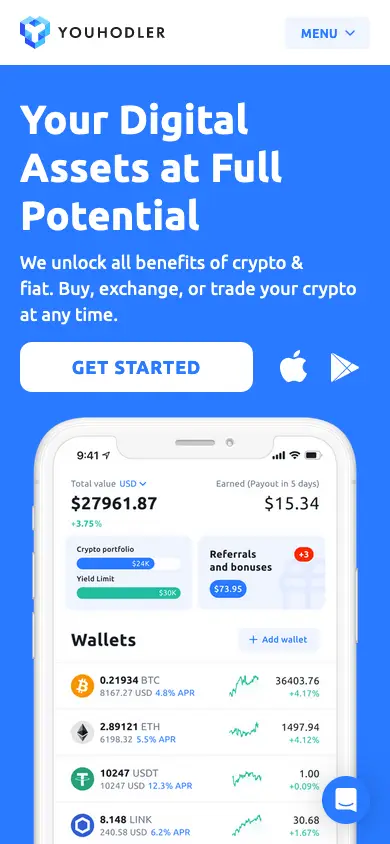
YouHodler Crypto Exchange, launched in Cyprus in 2018, stands as a versatile platform offering a plethora of crypto-fiat financial services including lending, trading, and savings accounts.
Year Founded
- 2017
Headquarters
- Cyprus
Licenses
- Italy
- Switzerland
- European Gaming and Betting Association (EGBA)
-
+2
Cryptocurrencies
- Bitcoin
- Ethereum
- Tether
-
+57
Available countries
- Belgium
- Canada
- Germany
-
+12
Languages
- English
- French
- Italian
-
+3
Features
- Conversion
- Turbocharge
-
+10
Get Free Bitcoin everyday upto Rs2000 INR on Sign Up, Referral, Deposit & Bitcoin Trading.
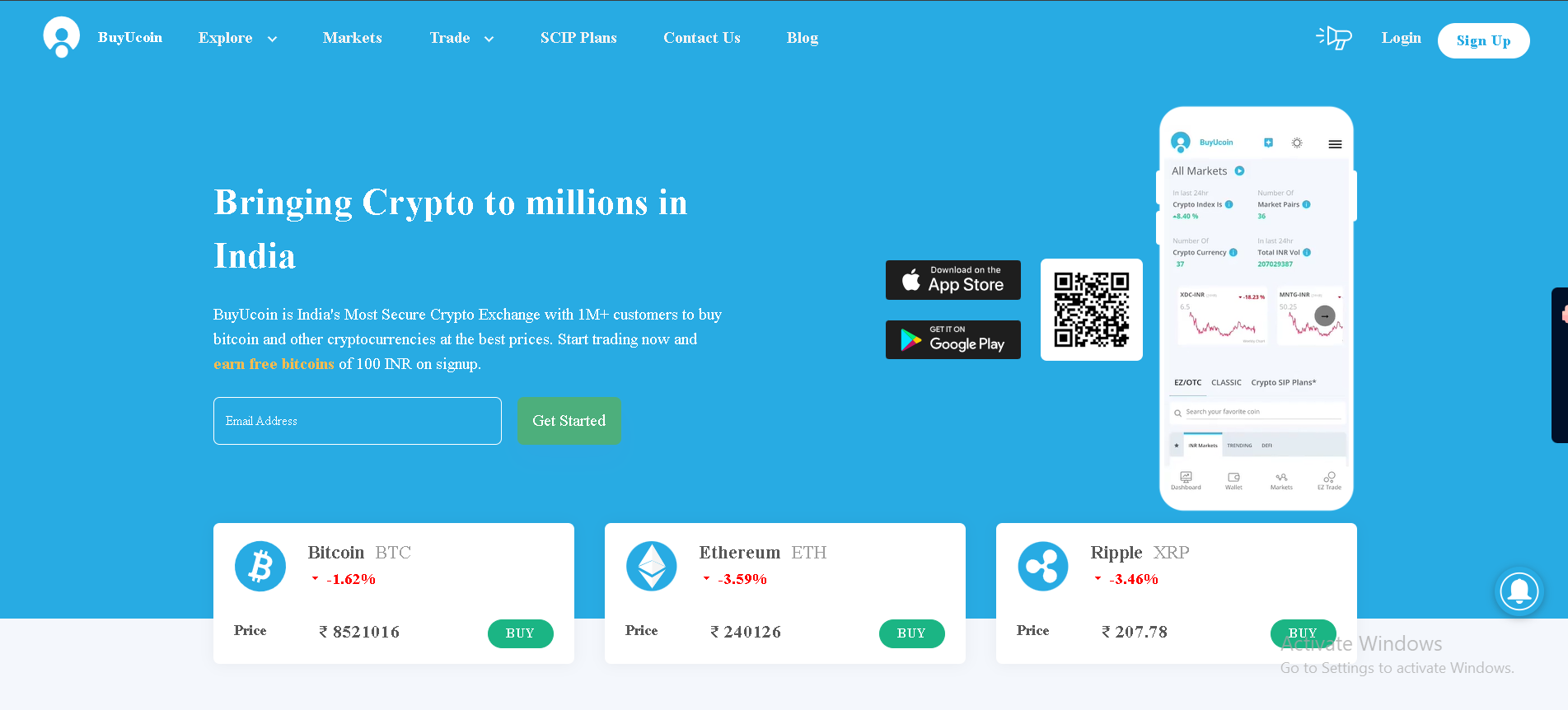

Year Founded
- 2025
Headquarters
- India
Licenses
- India
- Estonia
Cryptocurrencies
- Bitcoin
- Ethereum
- Tether
-
+77
Available countries
- China
- India
- Kenya
-
+5
Languages
- English
Features
- Free Bitcoin
- APIs
-
+9
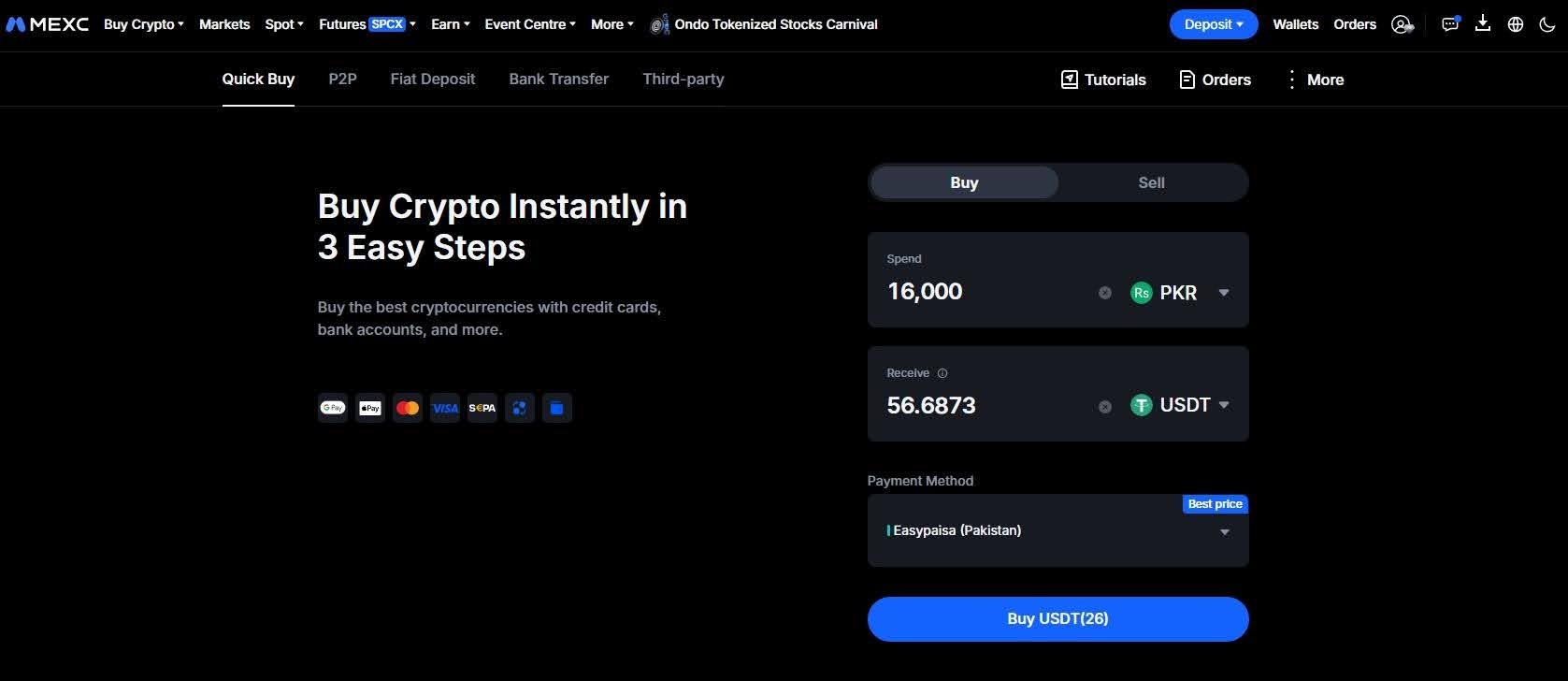

MEXC delivers a broad-based crypto trading experience to US users, featuring quick market execution and numerous trading pairs. The platform balances ease of use with advanced functionality, offering both standard and specialized trading options.
Year Founded
- 2018
Headquarters
- Seychelles
Licenses
- Seychelles
- Estonia
- Switzerland
-
+2
Cryptocurrencies
- Shiba Inu
- Bitcoin
- PAX Gold
-
+72
Available countries
- Afghanistan
- Albania
- Algeria
-
+246
Languages
- English
- Russian
- Turkish
-
+14
Features
- Leveraged ETFs
- Copy Trading
-
+8
Get up to 1,000 USDC on your Trading Fee Balance when you register, complete identity verification, and place your first spot trade.


Founded in 2013 in London, CEX.IO one of the first crypto exchanges. The global exchange is available in over 200 countries, including the UK, US, Canada, and Australia.
CEX.IO prides itself on being a one-stop shop for all things crypto. It offers spot and margin trading across over 200 tokens, a DeFi wallet, and integrated staking features.
Beyond this, CEX.IO allows you to instantly buy crypto and spend it on the company’s crypto credit card.
Globally licensed and regulated across the EU and US, the platform uses a mix of state-of-the-art security protocols and cold storage to ensure investors’ funds stay safe. This has resulted in a hack-free record over CEX.IO’s 12 years in operation.
Year Founded
- 2013
Headquarters
- United Kingdom
Licenses
- United States (IRS)
- Lithuania
- Spain
Cryptocurrencies
- Bitcoin
- Ethereum
- Tether
-
+81
Available countries
- Australia
- France
- India
-
+5
Languages
- English
- Spanish
Features
- Exchange Plus
- API
-
+9
Earn $10 in Ethereum (ETH) when you stake $100 in ETH for the first time, up to $30 in rewards


Coinbase remains a heavyweight among the Best US Crypto Exchanges. With over 200 supported cryptocurrencies and 98 million verified users, it's a go-to for newcomers and seasoned traders. The platform offers a user-friendly interface, competitive fees ranging from 0% to 0.60%, and robust security measures, including FDIC-insured fiat deposits up to $250,000. Coinbase's strong suit is its security record, having never suffered a major hack. However, it faces an ongoing SEC investigation regarding its staking program. Despite this, Coinbase's public company status, transparent operations, and diverse features like staking and a Visa debit card make it a solid choice for those prioritizing reliability and ease of use in the crypto space.
- Operating since 2012, listed on Nasdaq, and has a BitLicense from New York State Department of Financial Services.
- Offers a variety of assets
- Fast crypto withdrawals
- Lists smaller assets before other big exchanges
- User-friendly interface with intuitive design
- Coinbase Pro offers much better fees!
- This has been the main complaint against Coinbase, although they have committed to hiring more staff.
- Controls customers' private keys
- Restricted to many countries
- Doesn't offer many advanced services
Year Founded
- 2012
Headquarters
- United States
Licenses
- United States (IRS)
- Canada (CRA)
- United Kingdom (HMRC)
-
+4
Cryptocurrencies
- Bitcoin
- Ethereum
- Tether
-
+68
Available countries
- Canada
- France
- Netherlands
-
+6
Languages
- English
- German
- French
-
+9
Features
- Web3
- Borrow
-
+27

Disclaimer
The information provided on this website is for informational purposes only and should not be considered as financial, investment, or legal advice. Cryptocurrency investments are volatile and high-risk in nature. Consult with a qualified financial advisor and/or tax professional before making any investment decisions. We are not responsible for any loss incurred due to the use of information on this website. Do your own research and exercise caution. Don’t invest unless you’re prepared to lose all the money you invest.
Why Trust Us?
We test trading platforms, compare features, and listen to US traders every step of the way.
Experience: Our team has years of hands-on experience using crypto exchanges across the United States, Europe, and Africa. We know what really matters for American traders when it comes to fees, regulations, security, and ease of use.
Community: We actively engage with US crypto communities, from Discord channels to Reddit forums and local meetups, to understand real user pain points and preferences. This means our recommendations reflect what American traders actually need, not just what looks good on paper.
Alternative Crypto Exchanges in the United States
Most crypto exchanges serving US traders operate as centralized crypto exchanges (CEXs). These platforms act as intermediaries, holding your funds and facilitating trades through their order books.
CEX platforms have gained popularity by offering easy bank transfers, strong security measures, and regulated trading environments. The top US exchanges we’ve covered above fall into this category.
If you want more control over your assets while trading directly from your wallet, consider checking out our decentralized exchanges (DEXs) guide. These platforms let you trade without giving up crypto custody and often provide access to a wider range of tokens.
The choice between CEX and DEX platforms depends on your trading style and priorities. CEX platforms typically offer easier onboarding and fiat currency support, while DEX platforms give you more independence and privacy in your trading.
Some US traders use offshore exchanges via VPN, but this carries legal, tax, and account-freeze risks. In 2026, US-regulated exchanges remain the safest option for long-term investors.
Here’s How to Choose a Crypto Exchange in the US
Selecting the right crypto exchange in the US requires careful consideration of several factors that directly affect your trading experience. Read more about these below.
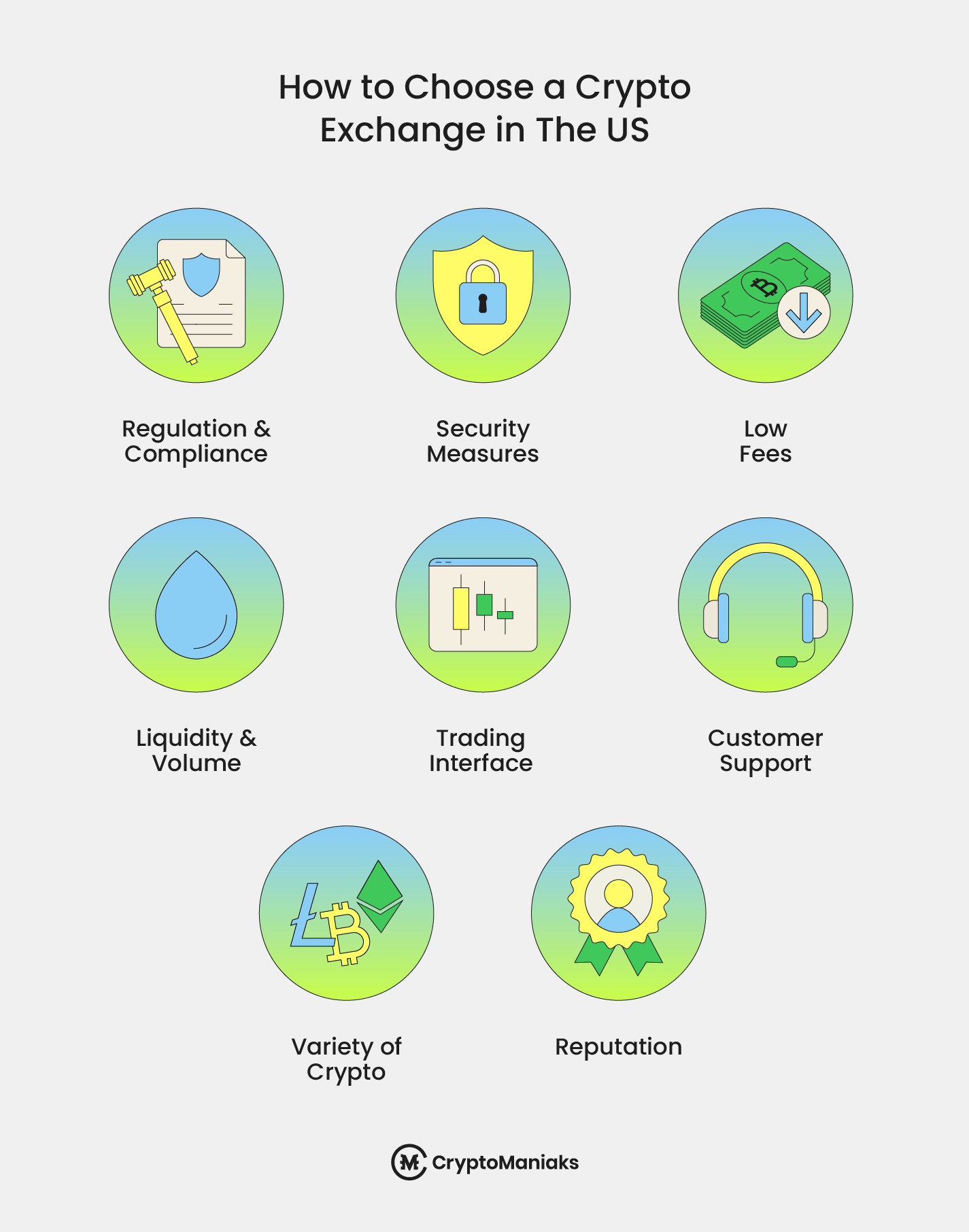
Regulation & Compliance
In today’s regulatory environment, leading US crypto exchanges are stepping up their transparency measures. Regulation and compliance standards are crucial when choosing a US crypto exchange. A properly licensed exchange must register with the Financial Crimes Enforcement Network (FinCEN) and secure state-level money transmitter licenses. Look for exchanges that follow Securities and Exchange Commission (SEC) guidelines and maintain clear policies on asset listing.
Trading platforms should display their licenses prominently and explain the state regulations under which they operate.
Top crypto exchanges in the USA perform Know Your Customer (KYC) checks and follow Anti-Money Laundering (AML) rules to protect your funds and ensure legal trading. The best platforms separate company and customer assets, regularly undergo third-party audits, and publish clear policies about fund management.
In 2025–26, the U.S. moved toward a two-track crypto regulation model:
- SEC oversees crypto assets classified as securities
- CFTC oversees spot markets for Bitcoin, Ethereum, and approved commodities
Major US exchanges now operate dual registrations or restrict certain tokens to comply with SEC enforcement actions. In 2026, several US exchanges removed or restricted tokens that were flagged as securities, which is why US asset lists are smaller than global versions.
Security Measures
As digital threats evolve, top US crypto exchanges implement advanced security protocols to safeguard user assets.
When searching for the best exchange for cryptocurrency in the USA, security should be your top priority. Strong security starts with two-factor authentication (2FA), which adds an extra verification step when you log in or make transactions. Leading exchanges also use cold storage to keep most customer funds offline, protecting them from potential cyber threats.
Look for exchanges that offer IP address whitelisting and withdrawal address management. These features let you control which devices can access your account and where your crypto can be sent, adding layers of protection against unauthorized access.
Regular security audits, insurance coverage for digital assets, and clear procedures for handling potential breaches demonstrate that an exchange takes protection seriously.
In 2026, major US crypto exchanges now comply with stablecoin reserve and custody rules, holding customer USD and stablecoins in segregated accounts at regulated US banks.
Low Fees
The best crypto exchanges that USA residents choose maintain competitive pricing structures. Trading fees have a direct impact on your investment returns. US exchanges typically charge fees on each trade, based on your monthly volume and whether you’re a maker or taker. Some platforms offer discounts when you use their native tokens or maintain higher trading levels.
The competition in 2026 has pushed many US crypto exchanges to adjust their fee models. While some platforms still advertise “0% trading fees,” traders should pay close attention to spreads and hidden costs.
Watch out for hidden costs that can add up. Beyond trading fees, exchanges may charge for deposits, withdrawals, or currency conversion. Some platforms advertise zero trading fees but make up for it by applying wider spreads between buy and sell prices.
Liquidity & Volume
Liquidity affects how easily you can buy or sell crypto at stable prices. High trading volume means more active buyers and sellers, leading to better prices and faster trade execution. US exchanges with strong liquidity help you avoid price slippage, especially when trading larger amounts.
Check the daily trading volume for specific pairs that you plan to trade. Major cryptocurrencies like Bitcoin often have deep liquidity, but smaller altcoins may be harder to trade efficiently. Good exchanges show real-time order books and trade history, helping you assess market depth.
The approval of multiple Bitcoin and Ethereum spot ETFs in the US has increased liquidity across major exchanges, especially for BTC and ETH trading pairs , reducing spreads and improving price discovery.
Trading Interface
A clean, intuitive platform marks the best crypto exchange for USA customers to rely on. Strong platforms combine essential tools with clear layouts, showing real-time price charts, order books, and trade history in one view.
The best interfaces also balance functionality with ease of use, allowing users to place trades without getting lost in complex menus.
Advanced charting tools give you better market insights. Look for exchanges that offer multiple chart types, technical indicators, and drawing tools to analyze price movements. You should be able to customize your workspace and save different layouts for various trading strategies.
Many exchanges have also streamlined tax reporting and enhanced their user interfaces to better serve traders. Integrated tax tools allow users to automatically generate detailed reports from their trading activities, simplifying compliance with IRS requirements.
Customer Support
US crypto platforms need reliable support teams that are available when issues arise. The best exchanges in the USA provide multiple contact methods (live chat, email support, and phone lines) with clear response time expectations. Active community forums and detailed FAQ sections can resolve many common questions.
Look for platforms that maintain support staff across different time zones to handle urgent matters. Quality support teams understand technical aspects and trading mechanics, providing accurate solutions rather than generic ones. Many leading US exchanges now offer callback options and ticket tracking systems to manage user requests better.
Support quality often shows during peak market activity or platform updates. Check recent user reviews and community feedback about response times and resolution rates.
Variety of Cryptocurrencies
US crypto exchanges vary widely in their asset selection. Newer platforms might list trending tokens quickly, while established exchanges focus on thoroughly vetted cryptocurrencies. Check if the platform offers the specific coins you want to trade and verify that trading pairs match your preferred base currencies. Asset research helps you evaluate what each exchange lists.
Keep in mind that more assets don’t always mean better trading. Major US crypto platforms often balance selection with proper vetting processes. They regularly review listed assets and may delist tokens that don’t meet their standards or face regulatory concerns, helping protect traders from questionable projects.
Reputation
A strong track record matters when choosing a US crypto platform. Check the exchange’s operating history, trading volume history, and response to past security incidents or technical issues. User reviews and community discussions often reveal platform reliability and provide insight into customer experience.
Research the exchange’s leadership team and company background. Established US crypto venues maintain transparent ownership structures and clear communication channels. Look into past regulatory compliance, including how the platform handles new requirements and whether it faces ongoing investigations.
Quality platforms often collaborate with established financial institutions and actively develop industry standards. Pay attention to how they handle market volatility and implement platform improvements based on user feedback.
US Dollar (USD) Deposits and Withdrawals
One of the biggest factors when choosing a crypto exchange in the United States is how easily you can move US dollars in and out of your account. Most major platforms now support direct USD deposits and withdrawals, but the speed, fees, and limits can vary.
Bank Transfers and ACH Support
- ACH Transfers (Automated Clearing House): Widely supported by US exchanges, ACH is often the cheapest way to deposit or withdraw dollars. Many platforms offer free ACH deposits, though withdrawals can take 1-5 business days to settle.
- Wire Transfers: Faster but more expensive, wire transfers usually process within the same day or one business day, but banks often charge $15-$30 per transaction. Some exchanges also add their own wire fees.
- Debit Cards: Instant deposits are available, but card issuers usually add a 2-4% processing fee. Rarely used for withdrawals.
- FedNow: Some US exchanges now support instant USD transfers via FedNow-enabled banks, allowing near-real-time deposits and withdrawals.
- Plaid-linked bank verification: Most platforms now use Plaid or similar providers for instant bank verification and fraud prevention.
Withdrawal Times and Limits
- ACH withdrawals: typically 1-5 business days
- Wires: usually same day to 1 business day
- Limits: Exchanges may set daily or monthly withdrawal caps depending on your verification level. ACH: $5,000-$25,000 per day, and Wire: $100,000+ per day for fully verified accounts
- Instant Withdrawals: Some platforms now support real-time withdrawals to debit cards or PayPal, but these usually come with higher fees.
How To Start With Crypto Exchanges in the USA In 5 Steps
Getting started with a crypto exchange in the US doesn’t need to be complicated. Here’s a step-by-step breakdown:
Step 1: Research and Compare Platforms
Look at licensing, fees, and available coins. Select the best platform based on your needs and compare fees, especially if you are a frequent trader.
Step 2: Create and Verify Your Account
Most US exchanges require KYC. Be ready to provide an ID and proof of address. Some exchanges may impose strict KYC requirements and may ask for a selfie and the source of your funds.
Step 3: Secure Your Account
Enable two-factor authentication (2FA), set strong passwords, and use withdrawal whitelisting when available.
Step 4: Deposit Funds
You can fund your account via ACH, wire transfers, debit cards, or stablecoins. Each method has different fees.
Step 5: Start Trading and Track Your Portfolio
Use beginner-friendly interfaces or mobile apps. Many platforms now offer portfolio tracking, tax reports, and security alerts.
Tips Before Registering on a US Exchange
Before opening an account with a US crypto exchange, understand these key terms: KYC and privacy measures, and tax reporting requirements. Let’s explore each aspect.
KYC Requirements and Privacy
Most US crypto exchanges require identity verification through KYC procedures. Before trading, you’ll need to provide personal information like government-issued ID, proof of address, and sometimes additional documents. These requirements stem from AML regulations that help prevent financial crimes.
The verification process typically happens in tiers. Basic verification might let you deposit and trade smaller amounts, while full verification unlocks higher limits and all platform features. Some exchanges ask for facial recognition or video calls to confirm your identity.
Keep in mind that KYC information needs updating periodically. Quality platforms encrypt and protect your data, clearly stating how they store and use your personal details. They also maintain specific processes for modifying or removing your information if you close your account.
Tax Implications
In the United States, the IRS treats crypto as property, not currency. That means:
- Deposits/Withdrawals: Moving USD into or out of an exchange is not a taxable event.
- Trading: Selling crypto for USD, or converting one crypto to another, is taxable and must be reported.
- Capital Gains: Profits are subject to either short-term (ordinary income) or long-term (reduced) capital gains tax rates, depending on how long you held the asset.
- Record-Keeping: Exchanges may issue Form 1099 or provide transaction reports, but you’re responsible for ensuring all gains and losses are reported correctly.
- Many US traders use crypto tax software (e.g., CoinTracker, Koinly) to simplify reporting and comply with IRS requirements.
 DON’T GET REKT
Curated drops, testnets and red flag alerts straight to your inbox ✌️
 You’re in. Thanks for joining our newsletter.

Our Final Tips
Choosing the best US crypto exchange in 2026 comes down to your trading style and priorities. Always weigh fees against spreads, confirm that your chosen platform is licensed in your state, and secure your account with 2FA. For long-term success, start small, learn the platform features, and only invest what you can afford to lose.
Not sure where to begin? Scroll back up to our toplist of the best US crypto exchanges and pick the one that matches your needs.
Frequently Asked Questions
-
01.
Can I use a US crypto exchange if I’m not a US citizen but live in the US?
Yes. Residency typically matters more than citizenship. As long as you have a valid ID and proof of address, most US exchanges will allow you to open an account.
-
02.
How do US exchanges handle staking after recent regulatory actions?
In 2026, most US exchanges no longer offer custodial staking for retail users. Instead, they provide non-custodial staking, validator connections, or liquid staking tokens to stay compliant with SEC rules.
-
03.
Why is “0% trading fee” sometimes more expensive?
Zero-fee exchanges often widen the spread (the gap between buy and sell prices), costing traders more than a small flat fee. Always compare spreads before trading.
-
04.
How can I minimize fees when trading on US exchanges?
Use bank transfers instead of credit cards, trade larger amounts less frequently, and take advantage of maker fee discounts where possible.
-
05.
Why do US exchanges list fewer cryptocurrencies than global platforms?
US exchanges must comply with SEC and CFTC rules. Many altcoins are considered unregistered securities, so US platforms avoid listing them to reduce legal risk. This means fewer tokens, but also much lower exposure to scams, rug pulls, and regulatory shutdowns.