


Finding the best P2P crypto exchange in 2026 is essential for traders who want more control, flexibility, and privacy when buying or selling digital assets. A peer-to-peer crypto exchange allows users to trade directly with each other. It eliminates middlemen and often bypasses the limitations of traditional centralized platforms.
With so many options out there, it can be difficult to know which platforms are safe, efficient, and worth your time. At CryptoManiaks, we’ve done the research for you. Our team compared leading P2P platforms, analyzed fees, tested transaction speeds, reviewed security measures, and gathered feedback from real traders. The result? A carefully curated list of the most reliable P2P crypto exchanges available in 2026.
In 2026, most P2P trading volume is conducted through stablecoins like Tether (USDT) and USDC, rather than Bitcoin (BTC), because they enable fast fiat on- and off-ramps without volatility risk.
In this guide, you’ll discover:
- How we rated and selected the best P2P crypto exchanges
- What makes a peer-to-peer crypto exchange different from a centralized one
- A step-by-step walkthrough of how to trade safely on P2P platforms
- The key risks to watch out for, plus tips to avoid scams
- Who should consider using P2P crypto exchanges and why
By the end of this article, you’ll clearly understand how P2P trading works, which platforms stand out this year, and how to get started securely.
Key Takeaways
- Choosing the best P2P crypto exchange requires secure platforms with escrow protection, strong user verification, and transparent fees that safeguard traders.
- P2P exchanges allow traders to maintain control by providing privacy, flexible payment methods, and access where centralized platforms may not work.
- Escrow services plus two-factor authentication (2FA) and dispute resolution tools create safer trades and reduce the risk of fraud or scams.
- Beginners should start with small trades, verify counterparties, and use on-platform communication.
- Learning to use the platform properly helps traders avoid scams. It also minimizes risks while maximizing the benefits of decentralized peer-to-peer crypto exchanges.
Best P2P Crypto Exchanges for 2026
-
 Coins
Coins



 Deposit Methods
 Avg. Spread The difference between the buy (ask) and sell (bid) price for popular trading pairs. Lower spreads mean better pricing and less slippage for you.
 -
 PromotionsCoins
Deposit Methods
PromotionsCoins
Deposit Methods
 Avg. Spread The difference between the buy (ask) and sell (bid) price for popular trading pairs. Lower spreads mean better pricing and less slippage for you.
 -
 Coins
Coins

 Deposit Methods
 Avg. Spread The difference between the buy (ask) and sell (bid) price for popular trading pairs. Lower spreads mean better pricing and less slippage for you.
 -
 Coins
Deposit Methods
Avg. Spread The difference between the buy (ask) and sell (bid) price for popular trading pairs. Lower spreads mean better pricing and less slippage for you.
Coins
Deposit Methods
Avg. Spread The difference between the buy (ask) and sell (bid) price for popular trading pairs. Lower spreads mean better pricing and less slippage for you. -
 Coins
Coins


 Deposit MethodsAvg. Spread The difference between the buy (ask) and sell (bid) price for popular trading pairs. Lower spreads mean better pricing and less slippage for you.
 -
 Coins
Coins


 Deposit Methods
 Avg. Spread The difference between the buy (ask) and sell (bid) price for popular trading pairs. Lower spreads mean better pricing and less slippage for you.
Top P2P Crypto Trading Platforms Reviewed

Get $10 in Bitcoin when you register through a referral link from an existing member.


Established in 2011, Kraken is a trusted cryptocurrency exchange renowned for its longevity and diverse trading interfaces, catering to a broad user base.
- Supports hundreds of coins
- High liquidity
- Simple and user-friendly interface
- Good customer support options
- Lots of advanced trading features like margin, futures, and indices trading
- No insurance fund for assets on the platform
- Doesn’t offer a crypto credit card
- No personal wallet service for traders
- Supports only a few fiat currencies
Year Founded
- 2011
Headquarters
- United States
Licenses
- United States (IRS)
- Canada (CRA)
- United Kingdom (HMRC)
-
+7
Cryptocurrencies
- Bitcoin
- Ethereum
- Tether
-
+83
Available countries
- Afghanistan
- Albania
- Algeria
-
+240
Languages
- Chinese (Mandarin)
- English
- French
-
+10
Features
- Cryptowatch
- Forks
-
+29


Bitget is a reputable cryptocurrency exchange known for its user-friendly interface and advanced trading features. With a focus on security and customer satisfaction, Bitget offers a wide range of digital assets for trading and investment opportunities.
Year Founded
- 2018
Headquarters
- Cayman Islands
Licenses
- United States (IRS)
- Australia (ATO)
- Canada (CRA)
Cryptocurrencies
- Bitcoin
- Ethereum
- Tether
-
+93
Available countries
- Afghanistan
- Albania
- Algeria
-
+246
Languages
- English
- Japanese
- Vietnamese
-
+16
Features
- API Trading
- Vote to List
-
+13

Year Founded
- 2018
Headquarters
- Seychelles
Licenses
- Seychelles
- Estonia
- Switzerland
-
+2
Cryptocurrencies
- Shiba Inu
- Bitcoin
- PAX Gold
-
+72
Available countries
- Afghanistan
- Albania
- Algeria
-
+246
Languages
- English
- Russian
- Turkish
-
+14
Features
- Leveraged ETFs
- Copy Trading
-
+8
Get up to 100 USDT when you sign up, verify and buy or sell crypto for at least 50 USDT.
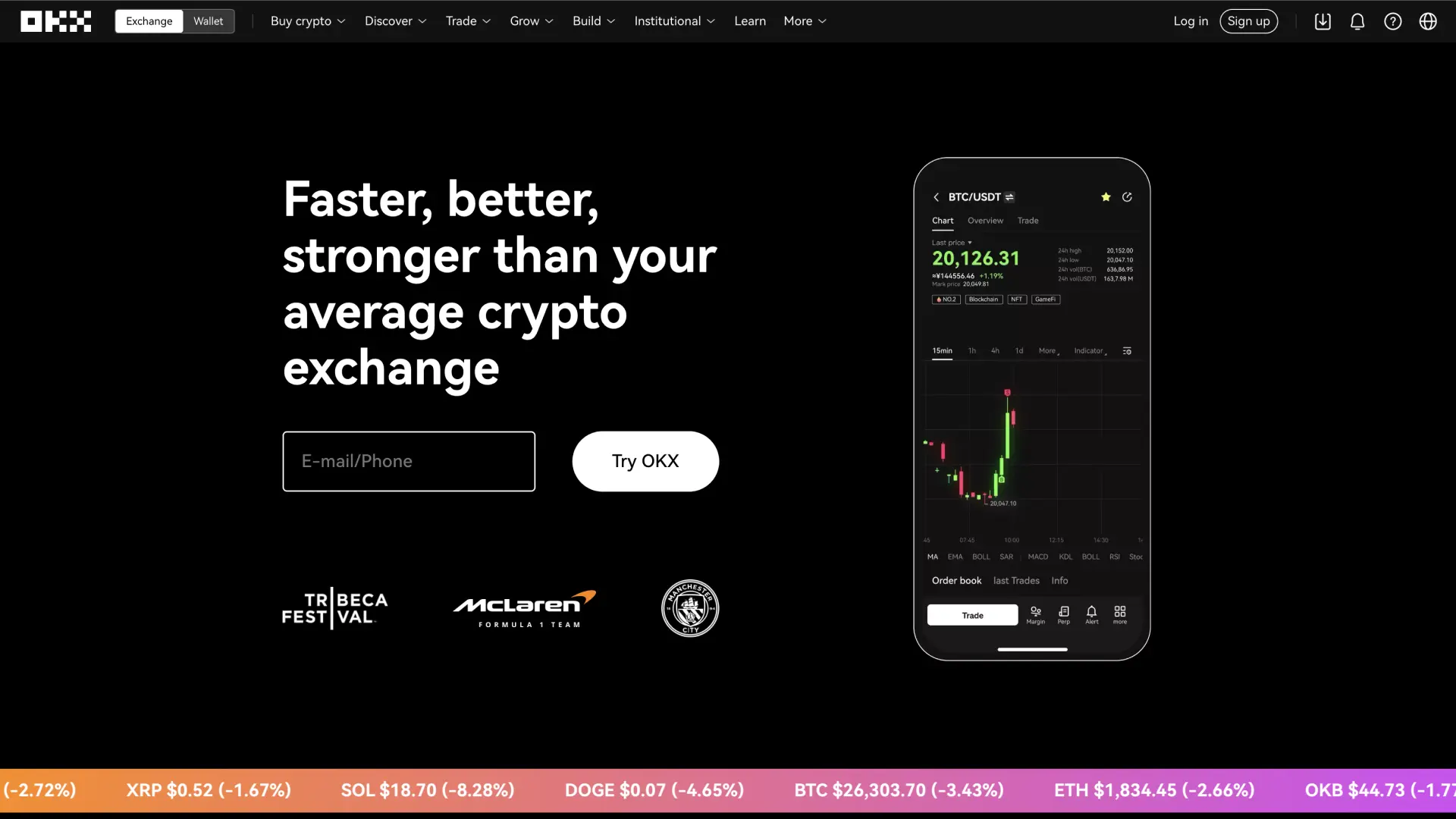
OKX Crypto Exchange is a global cryptocurrency trading platform offering a wide range of digital assets and financial services to users worldwide.
- Offering over 400+ cryptocurrencies and over 670+ market pairs
- Low trading fees - 0.1% to 0.2%
- User-friendly and easy-to-navigate interface for experts and beginners
- Very efficient mobile apps with almost the same function as the web app
- A competitive set of trading options, allowing you to place an order however you like
- giving you access to over 100 networks while providing access to DeFi Protocols and NFT Marketplaces
- Many restricted countries, including the USA
- Huge limitations to withdrawals with unclear restrictions
- The advanced trading features can be a bit complex for beginners
- Competitive multi-tiered fee system
- Limited Fiat options - No direct bank deposit option
- Slow customer support responses
Year Founded
- 2013
Headquarters
- Seychelles
Licenses
- Seychelles
- United Arab Emirates
- Australia (ATO)
-
+5
Cryptocurrencies
- Bitcoin
- Ethereum
- Tether
-
+90
Available countries
- Germany
- Netherlands
- Thailand
-
+3
Languages
- English
- Chinese (Mandarin)
- Simplified Chinese
-
+18
Features
- Copy Trading
- Conversion
-
+35
Earn 50% of trading fees paid by your friends as rewards when you invite them.
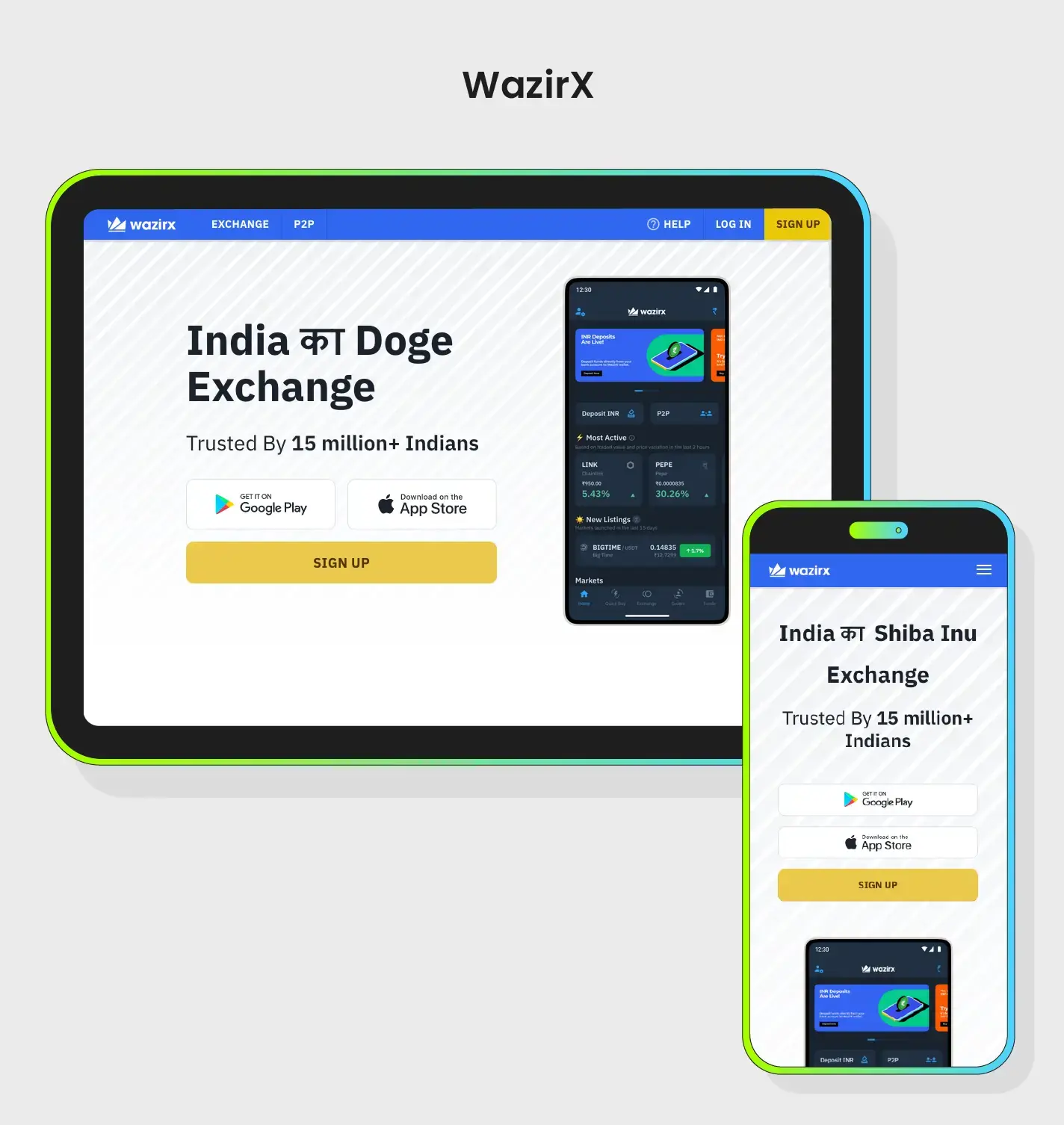
Year Founded
- 2018
Headquarters
- India
Licenses
- India
Cryptocurrencies
- 1inch Network
- Aave
- Acala Token
-
+151
Available countries
- Afghanistan
- Albania
- Algeria
-
+246
Languages
- English
- Hindi
Features
- Wazirx API
- Corporate Account
-
+2

Year Founded
- 2025
Headquarters
- Seychelles
Licenses
- N/A - Not disclosed
Cryptocurrencies
- Bitcoin
- Ethereum
- Dogecoin
-
+16
Available countries
- Afghanistan
- Albania
- Algeria
-
+242
Languages
- English
Features
- Swap
- API
-
+3

Disclaimer
The information provided on this website is for informational purposes only and should not be considered as financial, investment, or legal advice. Cryptocurrency investments are volatile and high-risk in nature. Consult with a qualified financial advisor and/or tax professional before making any investment decisions. We are not responsible for any loss incurred due to the use of information on this website. Do your own research and exercise caution. Don’t invest unless you’re prepared to lose all the money you invest.
Why Trust Us?
When it comes to finding the best P2P crypto exchange, trust and transparency matter. At CryptoManiaks, we provide recommendations based on careful research and hands-on experience. We test each platform ourselves, compare features directly, and gather feedback from real traders.
Each exchange we feature goes through an in-depth evaluation process that examines security, fees, usability, liquidity, and customer support. This gives our readers practical insights they can rely on, not just surface-level information. Our goal is to make crypto trading easier to understand and help you make safer choices.
Here’s what our methodology includes:
- Actual testing of exchanges to evaluate performance and reliability
- In-depth analysis of fees, security measures, and liquidity
- Direct feedback from real traders using P2P platforms
- Transparent comparisons so you can make informed decisions
How We Rated the Best P2P Crypto Exchanges
Choosing the best P2P crypto exchanges in 2026 requires careful testing, research, and community feedback to identify platforms that perform well.
When rating each peer-to-peer crypto exchange, we evaluated the following criteria:
- Security: We reviewed encryption methods, escrow protection, and fraud-prevention tools to ensure safe transactions. We also checked whether escrow release requires two-factor authentication, whether KYC tiers are enforced before high-value trades, and whether the platform has a public audit or bug bounty history.
- Fees: We compared trading fees, deposit/withdrawal costs, and hidden charges to find platforms offering fair pricing. We compared spread-based no-fee models against flat maker/taker structures and checked for hidden withdrawal or escrow-release fees that don’t show up in the headline rate.
- Liquidity: We looked for exchanges with strong trading volumes to guarantee faster matches and better pricing for users. During testing, we counted active offers and timed typical match speed for a given currency pair and payment method to see how liquidity held up in practice.
- Ease of Use: We tested interfaces on both desktop and mobile to see how beginner-friendly and efficient each platform is. We timed how long registration plus KYC took end-to-end and checked whether the mobile app has full feature parity with desktop.
- Payment Methods: We checked the variety of supported local and global payment options, such as bank transfers, e-wallets, and cash. We counted the number of local payment rails supported per region, since payment variety is a stronger differentiator for P2P platforms than for centralized exchanges.
- Customer Support: We assessed response times, availability, and quality of assistance for users facing issues. We tested live-chat and dispute-ticket response times directly and checked whether escalations reach a human agent or stay stuck with a bot.
What is a P2P Cryptocurrency Exchange?
A peer-to-peer crypto exchange is a marketplace where users trade directly, which gives traders more control and freedom.
The best P2P crypto trading platform connects buyers and sellers while holding funds in escrow until payments are verified. This system reduces reliance on centralized authorities while improving privacy, flexibility, and accessibility worldwide.
P2P exchanges provide secure transactions that lower costs and expand access to crypto trading, especially in regions with limited traditional exchanges.
In 2026, most large platforms use verified merchant desks. These are professional liquidity providers that post fixed buy and sell offers, making P2P faster and more reliable than earlier peer-only models.
Key features of a P2P crypto exchange include:
- Users can create or browse trade offers with specified amounts, prices, and payment methods.
- The platform holds crypto in escrow until payment is confirmed, ensuring secure transfers.
- Flexible payment options include bank transfers, digital wallets, or even cash.
- Both the buyer’s and the seller’s interests are protected since the crypto and the funds are not released unless they are verified. Dispute resolution is also available in case the trade goes wrong.
P2P vs. Centralized Exchanges
Understanding the differences between decentralized peer-to-peer platforms and traditional centralized exchanges is essential. The P2P crypto trading platform comparison table below highlights how each model varies in structure, custody, privacy, fees, liquidity, and regulation.
| Feature | Peer-to-Peer (P2P) Exchange | Centralized Exchange (CEX) |
|---|---|---|
| Structure | Decentralized, users trade directly with each other | Centralized, managed by one company |
| Custody of Funds | Users keep control, with escrow holding crypto during trades | Exchange controls custody in custodial wallets |
| Payment Methods | Wide range: bank transfers, mobile wallets, cash, local options | Limited to regulated, verified payment channels |
| Privacy | Greater privacy, sometimes no KYC required | KYC and AML mandatory, less privacy |
| Fees | Lower costs, only small escrow or service fees | Higher fees for deposits, withdrawals, and trades |
| Liquidity | Lower, depends on matching traders | High, supported by order books and market makers |
| Regulation | Less regulated, minimal oversight | Highly regulated, strict government compliance |
How to Trade Crypto on a P2P Exchange
Getting started on a P2P crypto exchange, or peer-to-peer crypto exchange, can feel intimidating at first, but breaking down the process into clear steps makes it simple. This guide walks you through everything you need to know, from choosing the right platform to completing a secure trade.
Step 1: Choosing the Right Platform
The foundation of every successful P2P trade lies in selecting the right exchange. Since not all platforms are created equal, you should weigh security, reliability, and convenience carefully.
Look for exchanges that have been operating for several years and have strong community trust, rather than new or unverified sites.
Key factors to evaluate include:
- Security features: Check whether the platform offers escrow, 2FA, and anti-fraud tools.
- Supported cryptocurrencies: Ensure the coins you want to buy or sell are listed.
- Payment methods: Confirm that local bank transfers, e-wallets, or cash options are supported.
- User verification: Platforms with verified users are less prone to scams.
- Customer support: Check response times and availability.
- Fees & interface: Transparent pricing and an easy-to-navigate design reduce trading risks.
Step 2: Account Creation & Verification (KYC)
Once you’ve chosen a reliable exchange, you’ll need to create an account. This step sets up your profile and ensures compliance with both platform rules and local regulations. While some P2P exchanges may have minimal requirements, most will request basic KYC details to protect traders.
Here’s what to expect:
- Sign up: Register with your email and create a strong password.
- Verification: Verify your email by clicking the confirmation link sent to you. Submit identification documents like a government-issued ID or passport if required.
Step 3: Posting a Trade Offer or Finding a Counterparty
At this stage, you can either create a trade offer or accept an existing one. Sellers typically post offers, while buyers search through available listings. Both approaches require careful attention to detail to avoid risks. Always choose counterparties with high ratings and a proven track record.
If you’re a seller, include:
- Crypto type and quantity
- Fixed or market-based price
- Accepted payment methods
- Trade terms such as limits and deadlines
If you’re a buyer, filter offers by:
- Cryptocurrency and price range
- Payment convenience (bank, mobile wallet, or cash)
- Seller ratings and trade completion rate
Step 4: Initiating a Trade
After finding a suitable offer, it’s time to begin the trade. This stage requires attention to detail since mistakes here can lead to disputes.
Follow these steps below to initiate the trade:
- Select the offer (buy/sell) and enter the trade amount.
- Review the terms, especially pricing and payment instructions.
- Lock the cryptocurrency in escrow, which temporarily holds the funds.
- Communicate with the counterparty using the platform’s built-in chat system.
Step 5: Using the Escrow Service
Escrow is the core of a peer-to-peer crypto exchange. It acts as a safeguard to prevent either party from walking away unfairly. This system ensures both sides follow through on the risks of scams. Without escrow, trust would rely solely on individuals, which makes trading highly unsafe.
How escrow works:
- The seller’s cryptocurrency is held by the exchange once the trade starts.
- The buyer sends payment outside the platform via the agreed method (bank transfer, e-wallet, etc.).
- The seller confirms payment receipt and provides proof if required.
Step 6: Completing the Payment and Releasing the Crypto
The final step finalizes the trade and transfers crypto securely. At this stage, always double-check wallet addresses and payment proofs to avoid costly mistakes. Once the crypto leaves escrow, the transaction cannot be reversed.
Here’s how it works:
- The buyer marks the payment as “Paid” after sending funds.
- The seller verifies the payment and confirms it on the platform.
- Once confirmed, the platform releases the crypto from escrow to the buyer’s wallet.
- If any issues occur, dispute resolution tools are available for mediation.
Is P2P Trading Safe?
P2P trading has become a popular entry point for crypto users, but many still wonder if it’s truly safe in practice.
The safety of peer-to-peer trading depends on the platform you choose and the steps you take as a trader. When using the best P2P cryptocurrency exchange, you gain access to advanced protections, streamlined systems, and a marketplace built to prioritize user security. However, safety also requires understanding how P2P trading works and recognizing where risks can arise.
Here’s Why P2P Trading Can Be Safe
- Platforms invest in strong verification processes that reduce exposure to fraudulent accounts.
- Dispute resolution channels provide recourse when transactions do not go as planned.
- Global accessibility allows users in regions without traditional exchanges to trade safely and access broader crypto markets.
To stay safe, always verify the credibility of the platform before trading. Stick to exchanges with strong reputations and clear compliance standards. Protect your account with strong passwords and 2FA. Avoid dealing with unknown or unverified third parties outside the platform, as this increases risk.
In short, P2P trading can be safe when you pair the right platform with smart trading habits.
Key Security Measures to Look For
When trading crypto on a P2P exchange, it is important to prioritize safety. Unlike centralized platforms, peer-to-peer marketplaces provide traders with more control but also involve greater responsibility for protecting their assets.
Most P2P platforms now operate under strict AML rules. In the EU, MiCA requires identity verification and transaction monitoring. In India, exchanges must report high-value trades. In the US, P2P merchants are treated as money service businesses (MSBs).
Selecting a platform that includes strong protections helps reduce fraud risks and ensures smoother transactions. Below are the key security measures to look for:
- Escrow Services: Funds remain locked until both the buyer and seller confirm payment, preventing premature release and fraud.
- User Verification (KYC/AML): Adds accountability and reduces fraudulent accounts by requiring identity checks.
- Two-Factor Authentication (2FA): Strengthens login security with an additional code beyond the password.
- Reputation and Rating System: Shows counterparties’ trade history, ratings, and reviews to identify reliable partners.
- Cold Storage for Funds: Keeps platform reserves offline to minimize hacking risks.
- Internal Messaging and Trade Management: Ensures communication and trade steps occur within the platform to limit scam attempts.
- Dispute Resolution and Mediation: Provides a process for resolving conflicts or fraud concerns.
Common P2P Scams and How to Avoid Them
Peer-to-peer trading provides flexibility and global reach, yet it also exposes users to schemes that can drain both money and trust. Even on well-established P2P crypto trading sites, fraudsters constantly look for ways to take advantage of unsuspecting traders.
Understanding these frequent scam tactics is the first step to protecting your assets. Below are some of the most common methods fraudsters use, along with practical ways to avoid them.
- Fake Payment Screenshots: Scammers send edited transfer receipts or screenshots as “proof.” Always confirm payments directly in your bank or wallet before releasing crypto.
- Chargeback Fraud: Buyers use payment options prone to reversals, then reclaim funds after receiving crypto. Choose safer payment channels with minimal chargeback risk.
- External Escrow Services: Fraudsters promote off-platform escrow that disappears with funds. Stick to legitimate platforms offering built-in escrow features.
- Phishing and Account Takeover: Fake sites or emails capture login details. Use official apps, enable 2FA, and create strong passwords.
- Impersonation Tricks: Scammers pose as trusted traders or support staff. Verify identities through platform profiles and avoid off-platform chats.
- Pressure Tactics: Fraudsters push urgency to force quick action. Slow down, verify every step, and never release funds under stress.
Who Should Use P2P Crypto Exchanges?
P2P crypto exchanges open the doors of digital finance to groups often underserved by centralized platforms. They give users greater control, privacy, and flexibility. This makes them useful in situations where traditional exchanges fail to provide access.
Professional high-volume traders often prefer centralized platforms for speed and liquidity, but everyday users gain greater freedom and opportunity through P2P. The best P2P cryptocurrency exchange allows everyday users to trade on their own terms, no matter their location or circumstances. Examples of such users are as follows:
- Users in restricted regions: P2P bypasses exchange bans by supporting local payments.
- Privacy-conscious users: Trade without revealing their full identity.
- Users seeking lower fees: Enjoy reduced costs without intermediaries.
- Travelers and expatriates: Convert funds across borders through flexible payment options.
- Individuals needing varied payment methods: Access local wallets, cash, or region-specific options.
- Traders valuing autonomy: Negotiate terms and retain custody of assets until trade completion.
- Casual or low-volume traders: Benefit from flexibility and privacy without needing high liquidity.
Largest P2P Trading Markets: Regulatory Overlook
P2P trading activity and regulatory attention are concentrated in a specific set of markets. The table below summarises licensing and tax treatment in seven of the largest as of August 2026.
| Country | Licensing requirements | Tax |
| Nigeria | SEC-led framework. Exchanges/custodians need a minimum capital of ₦2 billion (up from ₦500 million), effective through 30 June 2027. Individual P2P traders need no license. | No confirmed crypto-specific tax rate yet; still under development by the Nigeria Revenue Service. |
| Kenya | Proposed VASP licensing under the Finance Bill 2026. One-time fee ~KSh 150 million (~$1.1M); annual renewal ~KSh 2 million. | Proposed 10% excise duty on fees VASPs charge users, plus mandatory annual transaction reporting to the Kenya Revenue Authority. |
| India | Exchanges must be FIU-IND registered. Non-compliant platforms face penalties from April 2026. | Flat 30% tax on gains (plus 4% cess), no loss carry-forward. 1% TDS on transfers exceeding the statutory threshold; this includes P2P transfers. |
| Pakistan | The 2026 Virtual Assets Act created PVARA as a permanent regulator. VASPs need a PVARA license with minimum capital and Sharia-compliance checks. Unlicensed operation carries a fine of up to PKR 50 million and up to 5 years’ imprisonment. | Not yet defined under the Act. |
| Vietnam | The pilot framework requires trading through licensed crypto asset service providers ahead of a planned Q3 2026 regulated market. Full licensing criteria are still developing. | Corporate sellers: 20% CIT (15–17% preferential rate for smaller revenue). Foreign sellers: 0.1% CIT/PIT on gross transfer value through licensed providers. No VAT. |
| Russia | Only registry-listed operators may run exchanges from 1 September 2026 (unregistered operators tolerated until 1 July 2027). Retail investors are capped at $3,800 per licensed intermediary per year; qualified investors face no cap. | Not detailed in available sources. Domestic crypto payments remain banned; a foreign-trade settlement exception exists. |
| United States | Exchanges register with FinCEN as Money Services Businesses (Form 107 within 180 days of starting operations) and typically need state-level money transmitter licenses as well. Requirements vary by state (e.g., New York’s BitLicense, California’s Digital Financial Assets Law, effective 1 July 2026). | Taxed as property under IRS Notice 2014-21. Long-term gains (held over a year): 0%, 15%, or 20%. Short-term gains: taxed as ordinary income, 10–37%. |
Rules in several of these markets are evolving quickly. This table reflects our research as of August 2026. Confirm current licensing and tax obligations with a local professional before trading.
Best Practices and P2P Trading Tips for Beginners
Trading on a peer-to-peer exchange can be rewarding, but beginners must follow these key practices to stay safe and avoid costly mistakes:
- Choose a reputable platform: Select the safest P2P crypto exchange with escrow protection, KYC checks, and strong user feedback.
- Verify partners: Review ratings, trade history, and feedback before engaging.
- Keep communication on-platform: Stick to internal messaging to ensure records are maintained and reduce scams.
- Double-check payment details: Confirm wallet addresses, amounts, and methods before confirming.
 DON’T GET REKT
Curated drops, testnets and red flag alerts straight to your inbox ✌️
 You’re in. Thanks for joining our newsletter.

Our Final Tips – Why P2P May Be Right for You
P2P crypto exchanges provide traders with more control, flexibility, and global access without relying on middlemen. They are useful for traders who want lower fees, diverse payment methods, and stronger privacy compared to centralized platforms.
Focus on safe practices that make P2P trading more secure and easier to manage, such as the following:
- Start small: Begin with low-value trades until you gain confidence in how to use P2P crypto exchange platforms safely.
- Secure your account: Always enable 2FA and use strong, unique passwords.
- Stay on-platform: Keep communication and transactions within the exchange to avoid scams.
With these habits, P2P trading can be a safe, simple, and rewarding option.
Frequently Asked Questions
-
01.
Which P2P platform has the lowest fees?
Most major P2P platforms (including OKX and Binance) do not charge trading fees, but merchants receive their profit from the spread between buy and sell prices.
-
02.
How fast are trades on P2P exchanges?
Trades on P2P exchanges usually complete within 15 minutes to a few hours, depending on payment method and user responsiveness. In many cases, transactions take 20 minutes or longer and may extend up to three working days with slower methods such as bank transfers. Unlike automated centralized exchanges, P2P trades rely on buyers sending payment and sellers confirming receipt before completion.
-
03.
Can I trade altcoins on a P2P exchange or only Bitcoin?
Yes, you can trade altcoins on P2P exchanges, not just Bitcoin. Many platforms support a wide range of cryptocurrencies, including Ethereum, stablecoins, and other tokens.
-
04.
Do I need to complete KYC verification to use a P2P crypto exchange?
KYC requirements on P2P crypto exchanges depend on the platform and jurisdiction. Most platforms require KYC for trades above certain thresholds, such as $500. Some exchanges still permit limited trading without KYC, but restrictions typically include lower transaction limits or the inability to make fiat withdrawals. Global regulations, such as the FATF Travel Rule, the EU’s MiCA, and the US Bank Secrecy Act, continue to tighten compliance requirements. KYC is usually necessary, especially for higher volumes or when cashing out into fiat.
-
05.
Can my bank block me because of a P2P trade?
Banks flag P2P-related transfers for payment-behavior reasons – typically an AML or fraud check -, not because crypto is involved. Common triggers include a payment arriving from a third party, a name mismatch with your platform profile, several small transfers in a short window, or vague wording in the transfer memo. Keep your bank transfer name consistent with your platform profile, avoid third-party payments, and save order IDs and screenshots as a paper trail.
-
06.
Which P2P exchange has the best dispute resolution?
There’s no single “best” platform for dispute resolution. What separates strong dispute handling in practice is a dedicated arbitration channel rather than plain live chat, and clear escrow-hold timelines. At the same time, a case is open, there is a documented appeals step, and there are published response-time targets. Check the ranked platforms above, since dispute-resolution quality is already factored into their order for your region.
-
07.
Is P2P trading legal?
Legality depends on your country, and it’s usually the exchange or facilitator that needs a license, not the act of placing a P2P order. Most jurisdictions don’t criminalize trading itself. Pakistan, for instance, now licenses virtual asset providers under its 2026 Virtual Assets Act; Russia’s law, effective 1 September 2026, restricts trading to registered intermediaries with a roughly $3,800-a-year retail cap; and Nigeria licenses exchanges but not individual P2P traders. See the table on this page for specifics, and consult a local regulator or legal professional before trading in your jurisdiction.
-
08.
Why do my funds get locked in escrow when I make a trade?
Escrow locks the seller’s crypto, not the buyer’s fiat, from the moment a trade starts until the seller confirms payment has arrived. It exists so that neither side can walk away after only one leg is completed: it protects the buyer from non-delivery and the seller from non-payment. Hold times track the payment method’s speed: instant e-wallet payments release faster than bank transfers, and an open dispute extends the hold further. A locked balance mid-trade is normal, not a sign that something’s wrong.
-
09.
What are the most common scams with P2P crypto trading?
The most frequent P2P scams are fake or edited payment screenshots, where a seller releases crypto before confirming the funds have landed; chargeback fraud, where a buyer reverses a reversible payment after receiving crypto; and off-platform pressure to move the conversation to Telegram or WhatsApp, where platform protections don’t apply. The single highest-leverage habit? Confirm payment directly in your own banking app before releasing crypto, and keep all communication on-platform.


