


The best Indian crypto exchanges in 2026 include names you may already be familiar with, as well as others you might be hearing about for the first time. In this guide, we’ll explore the best crypto exchanges in India in 2026 and provide a comprehensive overview tailored to the needs of the India-based audience.
We’ve ranked exchanges based on key factors such as fees, security, reputation, and regulatory compliance. You’ll also find a handy comparison table, alternative options, and expert tips to help you choose the right platform for your needs.
Cryptocurrency trading is currently legal in India, but all exchanges must register with the Financial Intelligence Unit (FIU) and follow AML & KYC rules. Cryptocurrency is not considered legal tender, but buying, selling, and holding it is permitted and subject to taxation.
In 2026, India’s crypto ecosystem has matured significantly, with stricter compliance requirements, mandatory FIU registration, enhanced KYC standards, and increasing focus on tax transparency. Indian traders now prioritize exchanges that support seamless INR transactions, provide clear tax reporting, and comply with the Prevention of Money Laundering Act (PMLA).
Most global exchanges operating in India are now required to maintain full AML reporting, enhanced KYC checks, and tax transparency. Indian users increasingly prefer exchanges that support INR deposits, provide clear TDS tracking, and offer strong security infrastructure.
Whether you’re a beginner or a seasoned trader, this guide will help you make informed decisions and find an exchange that aligns with your crypto goals.
Best Indian Crypto Exchanges Listed
-
 Coins
Coins



 Deposit Methods
 Avg. Spread The difference between the buy (ask) and sell (bid) price for popular trading pairs. Lower spreads mean better pricing and less slippage for you.
 -
 Coins
Coins
 Deposit Methods
 Avg. Spread The difference between the buy (ask) and sell (bid) price for popular trading pairs. Lower spreads mean better pricing and less slippage for you.
 -
 Coins
Deposit Methods
Coins
Deposit Methods Avg. Spread The difference between the buy (ask) and sell (bid) price for popular trading pairs. Lower spreads mean better pricing and less slippage for you.
 -
 PromotionsCoins
 Deposit Methods
Avg. Spread The difference between the buy (ask) and sell (bid) price for popular trading pairs. Lower spreads mean better pricing and less slippage for you.
Deposit Methods
Avg. Spread The difference between the buy (ask) and sell (bid) price for popular trading pairs. Lower spreads mean better pricing and less slippage for you. -
 PromotionsCoins

 Deposit Methods
 Avg. Spread The difference between the buy (ask) and sell (bid) price for popular trading pairs. Lower spreads mean better pricing and less slippage for you.
 -
 PromotionsCoins

 Deposit Methods
 Avg. Spread The difference between the buy (ask) and sell (bid) price for popular trading pairs. Lower spreads mean better pricing and less slippage for you.
 -
 PromotionsCoins
Deposit Methods
PromotionsCoins
Deposit Methods
 Avg. Spread The difference between the buy (ask) and sell (bid) price for popular trading pairs. Lower spreads mean better pricing and less slippage for you.
 -
 Coins
Deposit Methods
Avg. Spread The difference between the buy (ask) and sell (bid) price for popular trading pairs. Lower spreads mean better pricing and less slippage for you.
Coins
Deposit Methods
Avg. Spread The difference between the buy (ask) and sell (bid) price for popular trading pairs. Lower spreads mean better pricing and less slippage for you. -
 Coins
Coins
 Deposit Methods

 Avg. Spread The difference between the buy (ask) and sell (bid) price for popular trading pairs. Lower spreads mean better pricing and less slippage for you.
 -
 PromotionsCoins
Deposit Methods
Avg. Spread The difference between the buy (ask) and sell (bid) price for popular trading pairs. Lower spreads mean better pricing and less slippage for you.
PromotionsCoins
Deposit Methods
Avg. Spread The difference between the buy (ask) and sell (bid) price for popular trading pairs. Lower spreads mean better pricing and less slippage for you. -
 Coins
Coins
 Deposit Methods
Avg. Spread The difference between the buy (ask) and sell (bid) price for popular trading pairs. Lower spreads mean better pricing and less slippage for you.
Deposit Methods
Avg. Spread The difference between the buy (ask) and sell (bid) price for popular trading pairs. Lower spreads mean better pricing and less slippage for you. -
 Coins
Deposit Methods
Avg. Spread The difference between the buy (ask) and sell (bid) price for popular trading pairs. Lower spreads mean better pricing and less slippage for you.
Coins
Deposit Methods
Avg. Spread The difference between the buy (ask) and sell (bid) price for popular trading pairs. Lower spreads mean better pricing and less slippage for you. -
 Coins
Coins

 Deposit Methods
Avg. Spread The difference between the buy (ask) and sell (bid) price for popular trading pairs. Lower spreads mean better pricing and less slippage for you.
Deposit Methods
Avg. Spread The difference between the buy (ask) and sell (bid) price for popular trading pairs. Lower spreads mean better pricing and less slippage for you. -
 Coins
Deposit Methods
Coins
Deposit Methods
 Avg. Spread The difference between the buy (ask) and sell (bid) price for popular trading pairs. Lower spreads mean better pricing and less slippage for you.
 -
 Coins
Coins
 Deposit Methods

 Avg. Spread The difference between the buy (ask) and sell (bid) price for popular trading pairs. Lower spreads mean better pricing and less slippage for you.
 -
 Coins
Deposit Methods
Avg. Spread The difference between the buy (ask) and sell (bid) price for popular trading pairs. Lower spreads mean better pricing and less slippage for you.
Coins
Deposit Methods
Avg. Spread The difference between the buy (ask) and sell (bid) price for popular trading pairs. Lower spreads mean better pricing and less slippage for you. -
 Coins
Deposit Methods
Coins
Deposit Methods
 Avg. Spread The difference between the buy (ask) and sell (bid) price for popular trading pairs. Lower spreads mean better pricing and less slippage for you.
 -
 Coins
Coins
 Deposit Methods

 Avg. Spread The difference between the buy (ask) and sell (bid) price for popular trading pairs. Lower spreads mean better pricing and less slippage for you.
 -
 Coins
Deposit Methods
Avg. Spread The difference between the buy (ask) and sell (bid) price for popular trading pairs. Lower spreads mean better pricing and less slippage for you.
Coins
Deposit Methods
Avg. Spread The difference between the buy (ask) and sell (bid) price for popular trading pairs. Lower spreads mean better pricing and less slippage for you. -
 Coins
Coins

 Deposit Methods
Avg. Spread The difference between the buy (ask) and sell (bid) price for popular trading pairs. Lower spreads mean better pricing and less slippage for you.
Deposit Methods
Avg. Spread The difference between the buy (ask) and sell (bid) price for popular trading pairs. Lower spreads mean better pricing and less slippage for you.
Best Indian Crypto Exchanges Reviewed

Claim 100 USDT token + 400 USDT coupon + 10500 USDT Futures Trial Fund when you sign up.


KuCoin, founded in 2017, is one of the leading global cryptocurrency exchanges. The platform is known for its extensive range of supported coins and user-friendly interface. It caters to millions of users across 200+ countries by offering features like spot trading, futures trading, and staking.
- Has a very large userbase of over 10 million across 200 countries
- Hundreds of coins to trade
- Lots of advanced trading features
- Nice customer service
- You earn interest on your crypto assets
- No USA license
- A few payment options
- Few educational resources
- Not for newbies
- Experienced a major hack in 2020
Year Founded
- 2017
Headquarters
- Seychelles
Licenses
- Cayman Islands
- Seychelles
- Malta Gaming Authority (MGA)
Cryptocurrencies
- Bitcoin
- Ethereum
- Tether
-
+81
Available countries
- Germany
- India
- Pakistan
-
+3
Languages
- English
- Russian
- Korean
-
+20
Features
- Trading Bot
- Convert
-
+51

Receive up to $100,000 worth of exclusive gifts for newcomers upon registration.
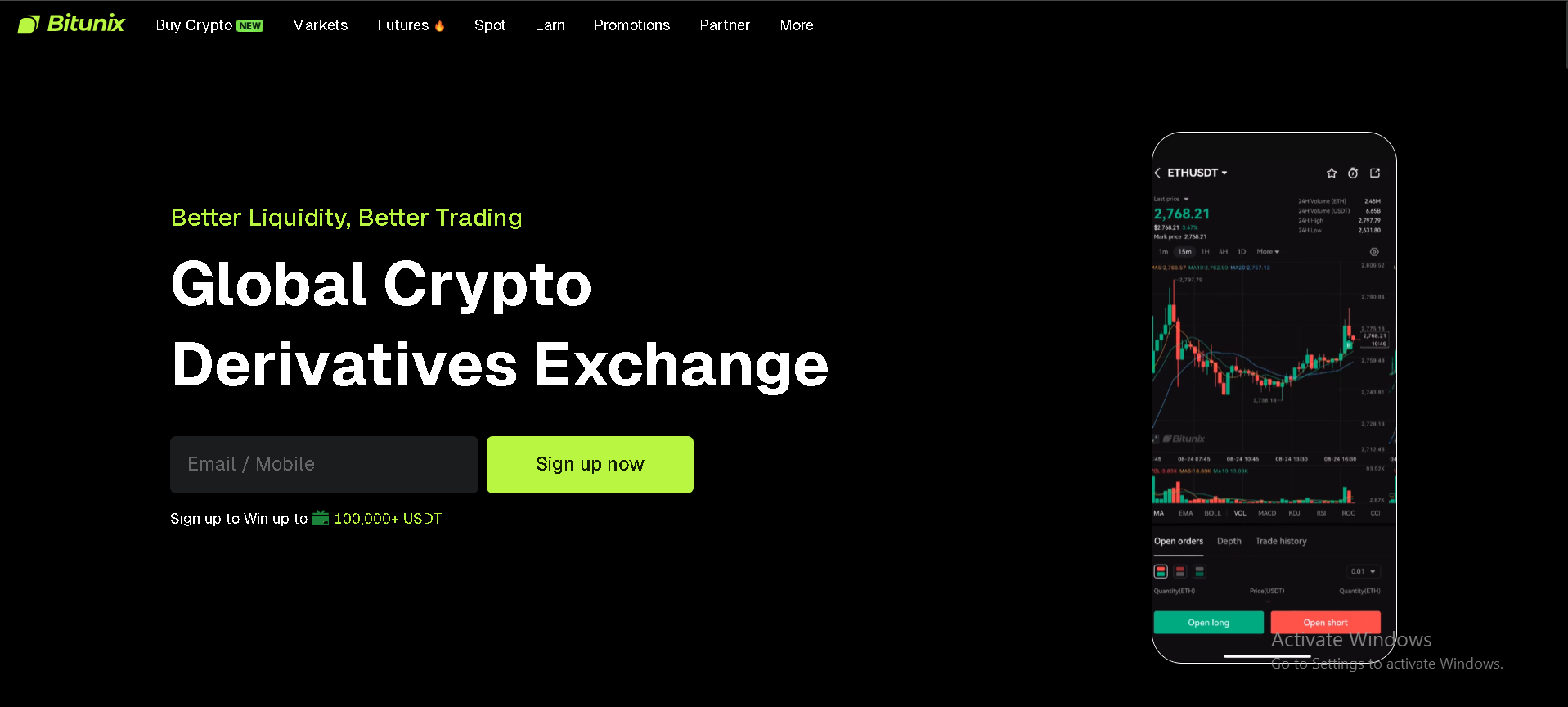

Bitunix was founded in Hong Kong in 2021. It was designed to bring a breadth of crypto features to beginner and intermediate traders.
It supports over 700 cryptocurrency trading pairs in more than 100 countries. It offers spot, P2P, and derivatives trading. With copy trading, new traders can copy the trades of successful users, with them earning a cut.
The exchange offers a myriad of new user bonuses and lotteries, letting new traders jumpstart their experience.
Rewards and tournaments are also available for existing users. Bitunix Splash gives rewards for investing in new tokens, while regular competitions in categories like trading volume or monthly profits carry up to USDT 675,000 in rewards.
Licenses
- United States (IRS)
- Canada (CRA)
- Phillipines
Cryptocurrencies
- Bitcoin
- Ethereum
- Tether
-
+78
Available countries
- Albania
- Algeria
- American Samoa
-
+233
Languages
- English
- Uzbek
- Polish
-
+12
Get $10 in Bitcoin when you register through a referral link from an existing member.


Kraken, one of the best crypto exchanges in India and globally, offers a robust platform for trading over 200 cryptocurrencies. Founded in 2011, it has grown to serve millions of users across 190+ countries. Kraken provides advanced trading features, competitive fees, and strong security measures, making it a top choice among the best crypto exchanges in India. The platform supports both fiat and crypto transactions, offers staking options, and provides educational resources for users. With its user-friendly interface and professional-grade trading tools, Kraken caters to both beginners and experienced traders in the dynamic cryptocurrency market.
- Supports hundreds of coins
- High liquidity
- Simple and user-friendly interface
- Good customer support options
- Lots of advanced trading features like margin, futures, and indices trading
- No insurance fund for assets on the platform
- Doesn’t offer a crypto credit card
- No personal wallet service for traders
- Supports only a few fiat currencies
Year Founded
- 2011
Headquarters
- United States
Licenses
- United States (IRS)
- Canada (CRA)
- United Kingdom (HMRC)
-
+7
Cryptocurrencies
- Bitcoin
- Ethereum
- Tether
-
+83
Available countries
- Afghanistan
- Albania
- Algeria
-
+240
Languages
- Chinese (Mandarin)
- English
- French
-
+10
Features
- Cryptowatch
- Forks
-
+29
Get up to 10,055 USDT when you register, verify, and make the first deposit and the first trades.


BTCC Crypto Exchange, originating in China in 2011, is one of the longest-standing platforms in the cryptocurrency industry, offering a diverse range of trading pairs and financial services. BTCC prioritizes privacy by implementing strict security measures, including advanced encryption protocols and secure storage solutions.
Year Founded
- 2011
Headquarters
- Lithuania
Licenses
- United States (IRS)
- Canada (CRA)
- European Gaming and Betting Association (EGBA)
Cryptocurrencies
- Ethereum
- Tether
- USD Coin
-
+164
Available countries
- Albania
- Algeria
- American Samoa
-
+229
Languages
- English
- Korean
- Simplified Chinese
-
+12
Features
- Convert
- Demo Trading
-
+6
Year Founded
- 2014
Headquarters
- Poland
Licenses
- United States (IRS)
- Canada (CRA)
- Poland
Cryptocurrencies
- Bitcoin
- Ethereum
- Tether
-
+67
Available countries
- Albania
- Algeria
- Andorra
-
+168
Languages
- English
- Russian
- Spanish
-
+6
Features
- Swaps
- Paybis Send
-
+3
Year Founded
- 2019
Headquarters
- Lithuania
Licenses
- Singapore
- Puerto Rico
Cryptocurrencies
- Bitcoin
- Ethereum
- Bitcoin Cash
-
+24
Available countries
- Afghanistan
- Albania
- American Samoa
-
+172
Languages
- English
- Spanish
- Portuguese
-
+2
Features
- Explorer
- Institutional
-
+8
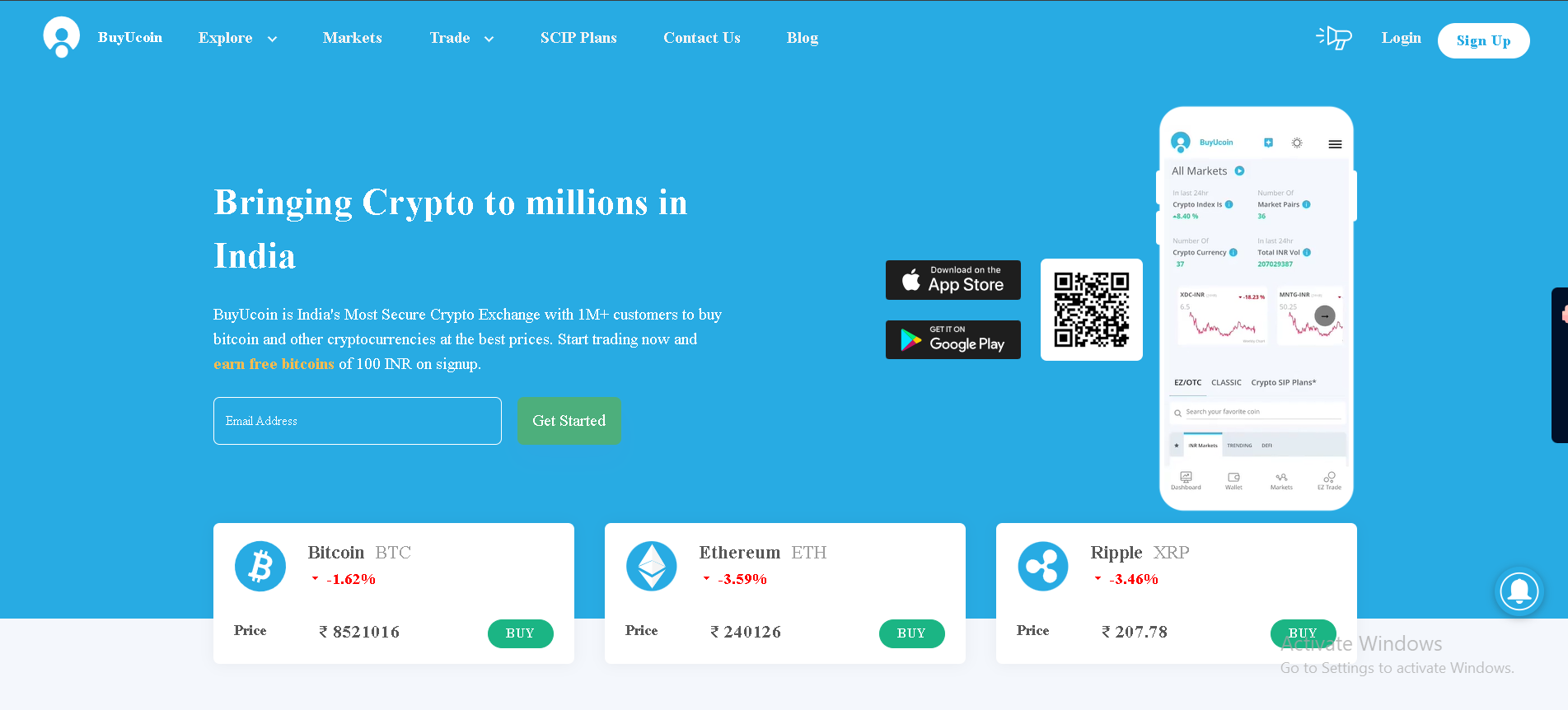
Get Free Bitcoin everyday upto Rs2000 INR on Sign Up, Referral, Deposit & Bitcoin Trading.

Year Founded
- 2025
Headquarters
- India
Licenses
- India
- Estonia
Cryptocurrencies
- Bitcoin
- Ethereum
- Tether
-
+77
Available countries
- China
- India
- Kenya
-
+5
Languages
- English
Features
- Free Bitcoin
- APIs
-
+9
Unlock 1,500+ cryptocurrencies and seamless instant swaps in the all-in-one crypto super app ChangeNOW
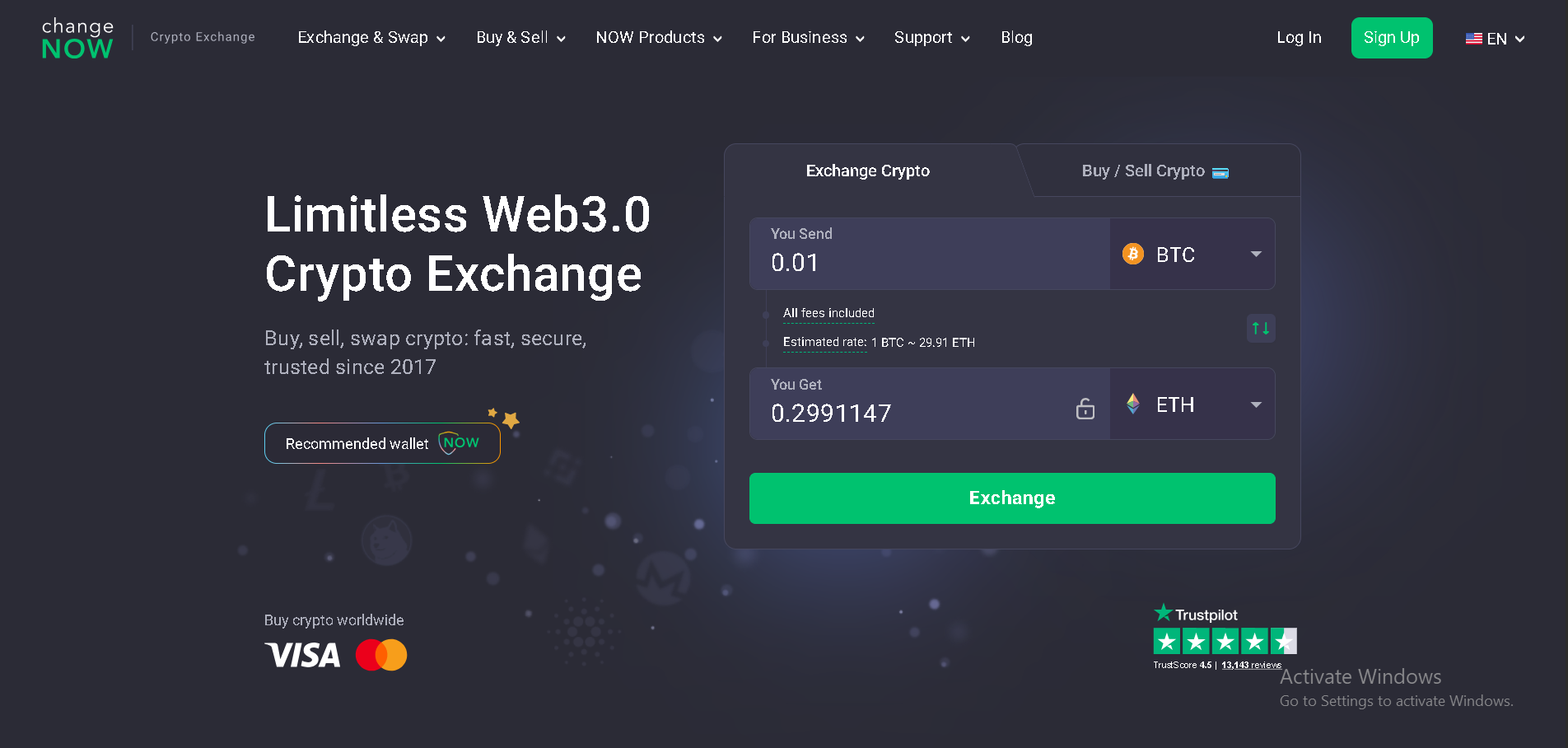
ChangeNow is one of the best hybrid crypto exchanges out there. While offering crypto custodial services, users also enjoy some other decentralized exchange features, like dApps integration. Here, you can swap, buy, sell, and enjoy others services like Now payments, Now Nodes, a white label wallet that allows you launch your own non-custodial wallet, a telegram bot, a widget, a tracker, and a native token. It's centralized nature comes in the fact that you can buy and sell crypto with lots of fiat payment methods and currencies, so it is a full package.
Year Founded
- 2017
Licenses
- N/A
Cryptocurrencies
- Bitcoin
- Ethereum
- Tether
-
+219
Available countries
- Albania
- American Samoa
- Andorra
-
+236
Languages
- Azerbaijani
- Catalan
- Czech
-
+55
Features
- Swap
- API
-
+6
Earn a 25% commission on any referred annual plan subscriptions and a 20% commission on any referred monthly subscriptions.
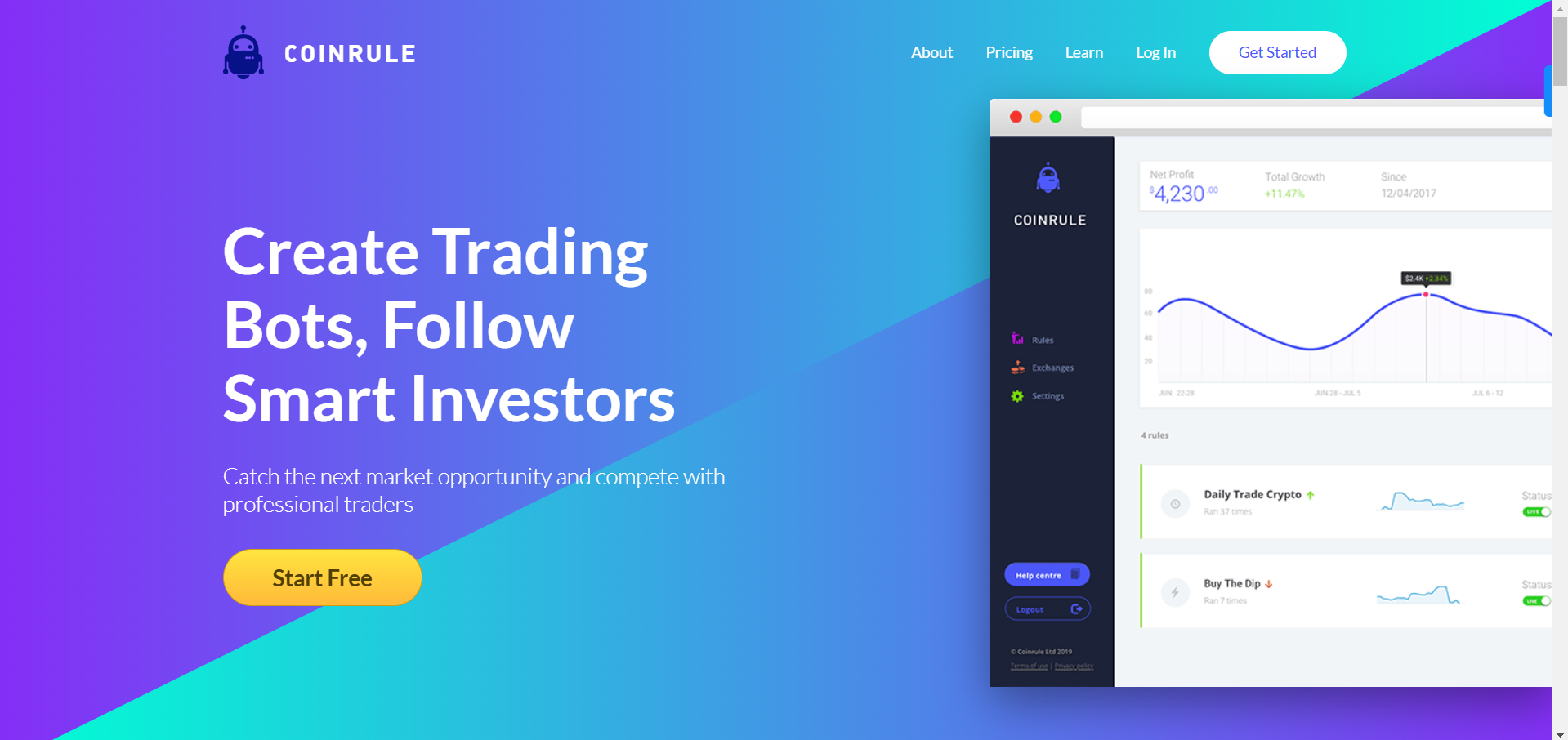

Coinrule, originating from the United Kingdom in 2018, is a user-friendly cryptocurrency trading platform that enables users to automate their trading strategies.
Year Founded
- 2017
Headquarters
- United Kingdom
Licenses
- United Kingdom (HMRC)
Cryptocurrencies
- Bitcoin
- Litecoin
- 1inch Network
-
+1
Available countries
- Afghanistan
- Albania
- Algeria
-
+242
Languages
- English
Features
- Bots
- Strategies
-
+1


Bitstamp, founded in 2011, is one of the oldest and most reputable cryptocurrency exchanges globally, though not among the best crypto exchanges in India. It offers a user-friendly platform for trading over 80 cryptocurrencies, including major coins like Bitcoin and Ethereum. Bitstamp stands out for its robust security measures, competitive fees starting at 0.30%, and institutional-grade services. While it may not be directly accessible in India, its features are comparable to some of the best crypto exchanges in India. The platform provides advanced trading tools, staking options, and 24/7 customer support, catering to both beginners and experienced traders worldwide.
- An advanced trading platform
- Low fees and high liquidity
- Supports lots of different payment options
- Efficient and dedicated phone and email support
- Lots of charting tools
- No live chat customer support
- Slow verification process
- International wire transfer takes 2 to 5 days to clear
- A few number of coins on offer
- Was hacked in 2015
Year Founded
- 2011
Headquarters
- Virgin Islands, British
Licenses
- Luxembourg
- United States (IRS)
- Spain
-
+1
Cryptocurrencies
- Bitcoin
- Ethereum
- Tether
-
+52
Available countries
- Afghanistan
- Albania
- Algeria
-
+244
Languages
- English
Features
- Institutions
- Pro Traders
-
+4

Disclaimer
The information provided on this website is for informational purposes only and should not be considered as financial, investment, or legal advice. Cryptocurrency investments are volatile and high-risk in nature. Consult with a qualified financial advisor and/or tax professional before making any investment decisions. We are not responsible for any loss incurred due to the use of information on this website. Do your own research and exercise caution. Don’t invest unless you’re prepared to lose all the money you invest.
Alternative Crypto Exchanges in India
Most of the exchanges we’ve recommended in this guide are Centralized Crypto Exchanges (CEXs). These platforms are popular for their ease of use, built-in security features, and reliable customer support.
However, if you’re looking for a different approach, consider exploring Decentralized Exchanges (DEXs).
DEXs offer greater privacy, direct peer-to-peer trading, and no reliance on a central authority. To learn more about DEXs and find the best options available, check out our dedicated page on Decentralized Exchanges. It’s a valuable resource to help you discover alternatives that might better suit your needs.
In 2026, many Indian users prefer global exchanges that are FIU-registered but operate primarily offshore. While these platforms offer advanced trading features, users should understand that INR services may be limited and tax reporting remains the user’s responsibility.
Tips on Choosing a Good Indian Crypto Exchange
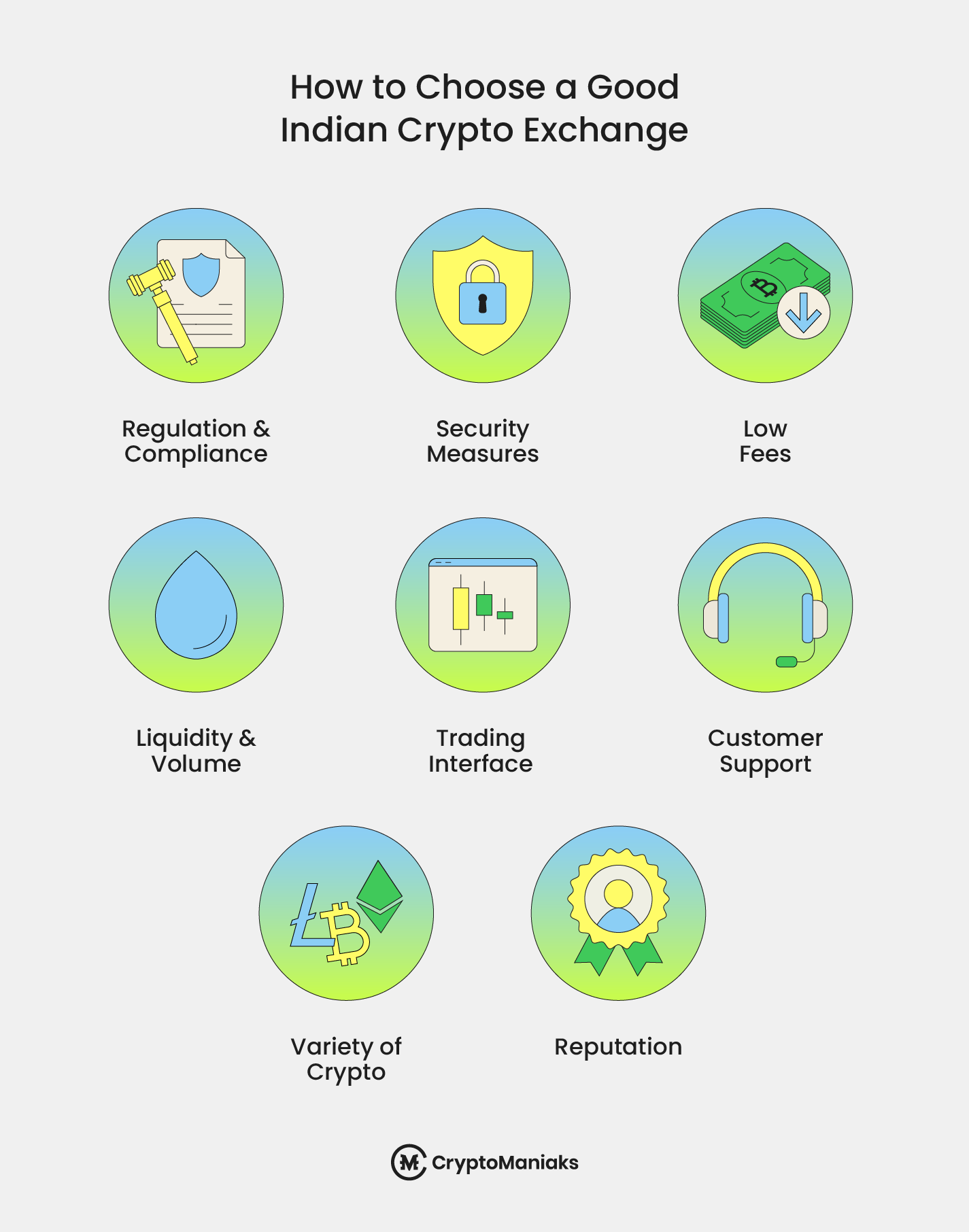
When selecting a reliable Indian crypto exchange, it’s important to keep several factors in mind to ensure a safe and efficient trading experience.
Here are the key factors to evaluate:
- Regulation and compliance
- Security measures
- Low fees
- Liquidity and volume
- Trading interface
- Customer support
- Variety of cryptocurrencies
- Reputation
Regulation & Compliance
India’s crypto space is evolving, and regulation plays a key role in ensuring user safety.
Regulated exchanges follow strict compliance standards, enhancing transparency, security, and legal accountability. They adhere to Reserve Bank of India (RBI) guidelines, helping reduce fraud and build user trust.
However, crypto exchanges in India are not licensed in any manner by either the RBI or SEBI. Centralized exchanges must register with the Financial Intelligence Unit (FIU-IND) under the Prevention of Money Laundering Act (PMLA) and comply with AML and KYC obligations.
Key benefits include:
- Enhanced security: Protects user funds and personal data.
- Fraud prevention: Regular audits minimize scams.
- Transparency: Clear operational practices.
- Legal protection: Easy dispute resolution.
Keep these simple tips in mind when selecting an Indian crypto exchange:
- Check for licenses
- Ensure RBI compliance
- Registered with India’s FIU under the Prevention of Money Laundering Act (PMLA).
- Avoid unregulated platforms
- Review terms and privacy policies
- Look for audits and certifications
Security Measures
Security is vital when choosing a crypto exchange in India, as weak protections can lead to irreversible fund loss. Prioritize platforms that implement strong security protocols to safeguard your assets.
Key Security Features to Look For:
- Two-Factor Authentication (2FA): Adds an extra layer of verification for account access.
- Cold Storage: Keeps the majority of user funds offline, minimizing hack risk.
- Encryption: Secures login credentials and personal data from interception.
- Withdrawal Whitelisting: Restricts fund transfers to pre-approved wallet addresses
- Security Audits & Bug Bounty Programs: Help identify and fix vulnerabilities proactively.
When evaluating the security measures of an Indian crypto exchange, keep these tips in mind:
- Research the exchange’s track record
- Stay away from unsecured platforms
- Read user reviews
Low Fees
Low fees are a crucial factor when choosing a crypto exchange, especially for frequent or small trades where profit margins are tight.
Even slight differences in fees can add up over time and significantly affect your overall returns.
Choosing an exchange with a transparent and cost-effective fee structure allows you to trade more efficiently and maximize your profits.
Key fees to consider:
- Trading fees: Charged for buying/selling crypto. Maker fees (e.g., limit orders that add liquidity) are usually lower than taker fees (e.g., market orders that remove liquidity ).
- Deposit fees: Apply when adding funds to your account.
- Withdrawal fees: Charged when transferring funds out of the exchange, whether in fiat or cryptocurrency.
- Hidden fees: Includes currency conversions, network charges, or inactivity penalties.
Tips to identify exchanges with affordable fee structures:
- Compare fee structures across platforms for the best rates.
- Use tier-based discounts if you’re a high-volume trader.
- Choose free deposit options like UPI or bank transfers.
- Avoid high withdrawal fees by checking platform policies.
- Leverage native token benefits (e.g., WazirX’s WRX, or Binance’s BNB) for trading discounts.
Liquidity & Volume
Liquidity in crypto trading refers to how easily assets can be bought or sold without major price changes. High liquidity is vital for fast, efficient transactions and reduces slippage—where the actual trade price differs from the expected price.
Benefits of high liquidity and trading volume:
- Faster order execution: Trades are matched quickly, even during market volatility.
- Reduced slippage: Prices stay closer to what you expect, especially for large trades.
- Price stability: Less prone to manipulation or sharp movements.
- Reliable price discovery: Active markets reflect fair value based on supply and demand.
- Better arbitrage opportunities: Easier to profit from price differences across exchanges.
How to identify liquid exchanges:
- Check daily volumes on CoinMarketCap or CoinGecko.
- Look for active communities and supported trading pairs.
- Test with small trades to assess speed and slippage.
- Choose known platforms like WazirX, CoinDCX, and Binance India.
- Focus on active pairs, such as BTC/INR or ETH/INR.
Watch out for fake volumes:
- Cross-verify volumes on multiple sites.
- Look for consistent numbers and healthy order books.
- Check user feedback on Reddit or Telegram.
Trading Interface
The trading interface is where all trading actions—from analyzing trends to placing orders—take place. A well-designed interface enhances ease of use, minimizes errors, and ensures a smooth user experience.
Mobile apps offer convenience on the go, featuring simplified dashboards, quick buy/sell options, and real-time alerts. Desktop platforms support deeper analysis, offering advanced charting tools, a wider range of order types, and configurable alerts.
Key features to look for in a trading interface:
- Interactive charts: Multiple timeframes and technical indicators for analysis.
- Order types: Flexibility to use limit, market , and stop orders.
- Real-time data: Enables accurate, timely decisions.
- Customization: Adjustable layouts and watchlists for personalized use.
- Seamless navigation: Clear menus and labeled buttons reduce confusion.
Tips to find the right platform:
- Use demo accounts: Test before committing funds.
- Prioritize usability: Beginners should look for tutorials and guided interfaces.
- Match your skill level: Experts may need tools like API access, while beginners may prefer simplicity.
- Read user reviews: Gain insights on reliability and user satisfaction.
- Check performance: Ensure fast loading and smooth operation under high traffic.
Customer Support
Crypto markets run 24/7, so choosing an exchange with reliable customer support is crucial. Issues like delayed transactions or account lockouts can arise anytime, and prompt assistance ensures minimal disruption and helps protect your funds.
Key customer support channels to look for:
- Live chat: Best for quick assistance with urgent issues like login errors or navigation help.
- Email support: Ideal for detailed or technical queries that may require documentation.
- Phone support: Useful for high-priority concerns requiring direct, real-time resolution.
Leading exchanges combine chatbots and human agents to streamline support, while robust phone and email services handle more complex problems.
Tips to evaluate an exchange’s customer support:
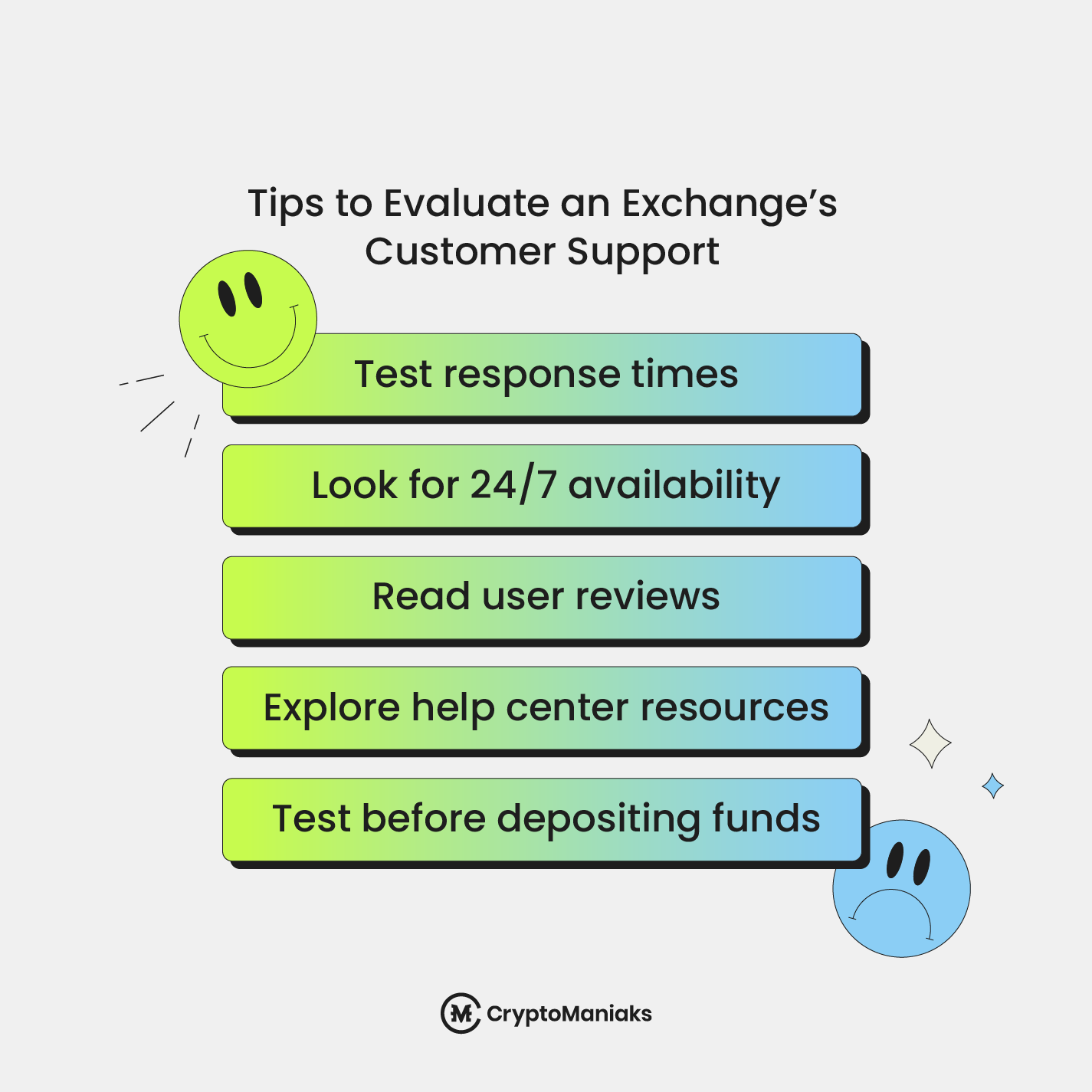
- Test response times: Try all channels to assess speed and helpfulness.
- Look for 24/7 availability: Ensure help is accessible anytime.
- Read user reviews: Check for consistent positive or negative experiences.
- Explore help center resources: FAQs and tutorials can resolve common issues.
- Test before depositing funds: Ask a simple question to gauge support quality.
Variety of Cryptocurrencies
When selecting the best platform for trading cryptocurrency in India, it’s essential to evaluate the variety of digital coins offered.
A good exchange should go beyond popular coins like Bitcoin and Ethereum, offering a diverse range of cryptocurrencies to meet different users’ needs. A diverse selection also supports portfolio diversification and reduces risk by balancing losses in one cryptocurrency with gains in another.
For instance, day traders often benefit from platforms offering multiple options, as low-market-cap coins often provide high-volatility profit opportunities. Long-term investors tend to prefer platforms with a broad selection of stable and promising projects aligned with their financial goals and holding strategies.
Additionally, arbitrage traders benefit from a wide coin selection as it helps identify price differences and secure profitable trades.
Here are tips for assessing the variety of supported cryptocurrencies:
- Check the list of supported coins: Opt for platforms that support a mix of popular and emerging tokens and offer altcoin pairings for seamless trading.
- Look for new tokens: Prioritize exchanges that regularly add new cryptocurrencies and provide updates on upcoming listings.
- Verify liquidity for diverse options: Ensure sufficient trading volume for all listed tokens to avoid issues with trade execution.
- Assess altcoin pairings: Look for exchanges with multiple trading pairs to reduce costs and increase convenience.
Reputation
An exchange’s reputation reflects its reliability, transparency, and commitment to user protection.
Trustworthy platforms offer:
- Fund safety: Strong security measures to safeguard digital assets.
- Fair trading: Transparent pricing and honest execution.
- Accountability: Prompt resolution of concerns and adherence to ethical practices.
How to assess an exchange’s reputation:
- Check user reviews: Use sites like Trustpilot and social media to identify patterns of complaints or praise.
- Study its history: Older platforms with minimal controversy often signal stability and experience.
- Review past incidents: Examine how the exchange handled hacks or legal issues.
- Evaluate partnerships and licenses: Reputable platforms comply with regulators (e.g., SEBI, FATF) and collaborate with credible firms.
Tips to find reliable Indian exchanges:
- Choose long-standing platforms: They often reflect trust and consistent service.
- Prioritize transparency: Look for clear policies, team information, and fee disclosures.
- Avoid controversy-prone platforms: Repeated scandals are red flags.
- Check community engagement: Forums, regular updates, and active support channels show user focus.
- Monitor social media presence: Frequent updates and public interaction reflect accountability.
Tips Before Registering on an Indian Exchange
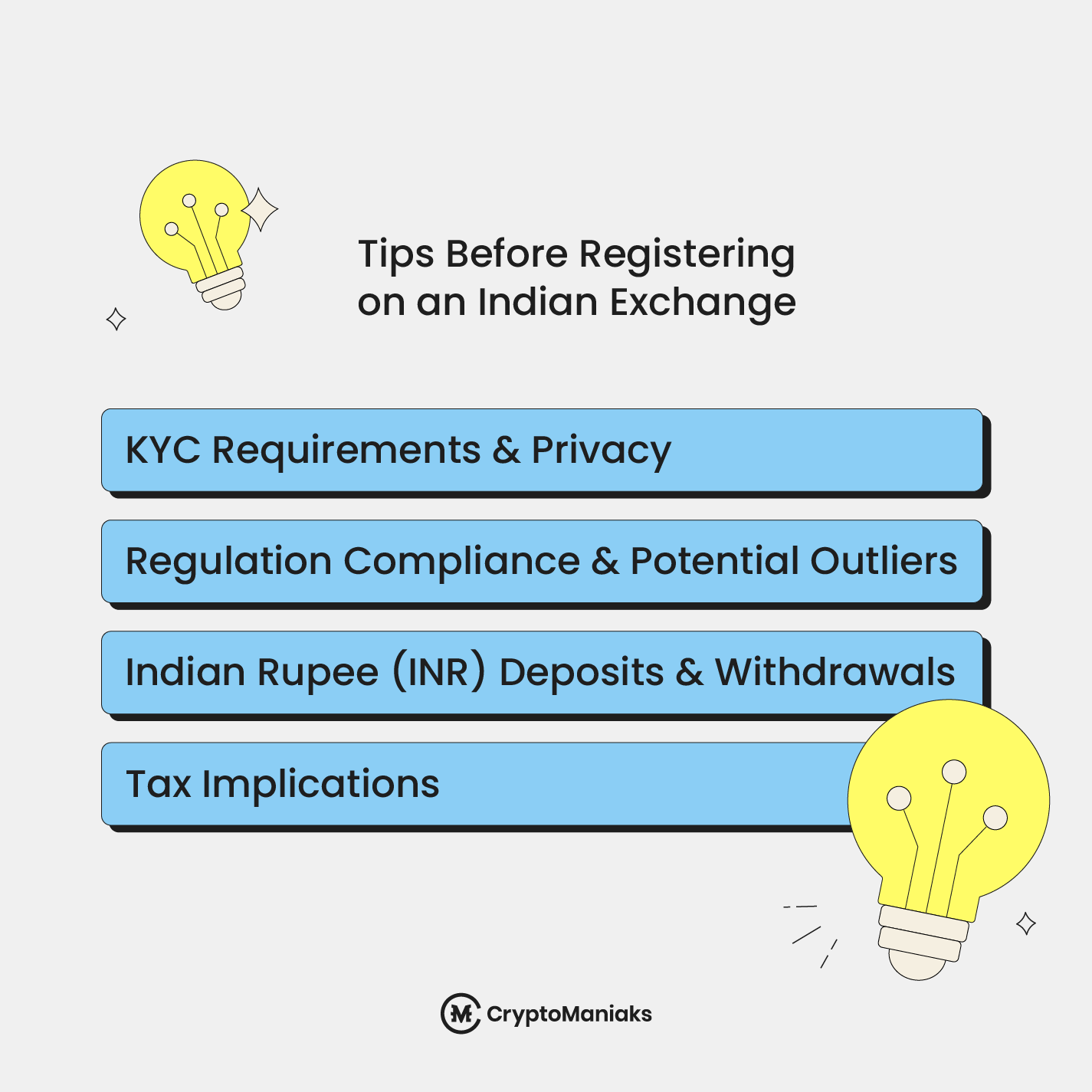
Before joining a crypto exchange in India, consider key factors that impact your security and experience.
Key considerations:
- KYC requirements and privacy
- Regulation compliance
- INR deposit/withdrawal options
- Tax implications
KYC Requirements & Privacy
Indian crypto exchanges require Know Your Customer (KYC) verification. This enhances security but raises privacy concerns.
You’ll typically need:
- Government ID (Aadhaar, PAN, Passport)
- Proof of address (utility bill, bank statement, etc.)
KYC process:
- Register with email/phone
- Upload documents
- (Optional) Selfie/video verification
- Approval within 24–72 hours
Privacy concerns include:
- Data breaches may occur if the exchange’s security is weak
- Data misuse by untrustworthy platforms
Protect yourself by:
- Choosing exchanges with end-to-end encryption
- Reviewing clear, transparent privacy policies
- Researching exchange reputation via reviews
- Avoiding platforms with little or no verification
Quick privacy checklist:
- Use trusted, secure platforms
- Verify the site URL before sharing documents
- Share only necessary information
- Monitor your email for suspicious activity
KYC is essential, but it doesn’t mean sacrificing privacy. With the right exchange and precautions, you can trade safely and securely in India.
Regulation Compliance
Regulatory compliance is essential when selecting a crypto exchange in India. Regulated platforms offer greater security, legal protection, and trust—helping safeguard your investments from fraud and disputes.
Benefits of using regulated exchanges:
- Legal assurance: Recognized by government bodies, reducing risk.
- Transparency: Clear rules ensure fair practices.
- Enhanced security: Robust systems to protect funds and personal data.
Risks of unregulated platforms:
- Fraud and scams: Lack of oversight can lead to misuse of funds.
- No legal recourse: Users may struggle to recover losses.
- Weak data protection: Inadequate safeguards for personal information.
While crypto laws apply nationally, certain regions in India are emerging as innovation hubs:
- GIFT City (Gujarat): Promotes regulated blockchain innovation.
- Telangana and Karnataka: Support blockchain in public-sector projects, though exchanges must still comply with national regulations.
Tips to ensure regulatory compliance:
- Verify SEBI or RBI compliance: Look for registration or adherence to national guidelines.
- Research the exchange’s jurisdiction: Ensure it operates in line with Indian laws.
- Check transparency: Legitimate platforms disclose their policies and security practices.
Indian Rupee (INR) Deposits and Withdrawals
Before registering on an Indian crypto exchange, it’s important to understand how INR deposits and withdrawals are handled. Reliable transaction methods ensure smooth trading and help avoid delays or unnecessary fees.
Popular INR payment methods:
- Bank transfers: Secure and widely accepted, though some platforms may not support credit or debit cards.
- UPI: Fast and convenient for instant deposits and withdrawals without needing account details. However, daily limits may apply.
- Other options: IMPS or digital wallets may be available, but support varies by exchange.
Note: Your KYC verification level affects transaction limits. Fully verified accounts typically enjoy higher limits and faster processing.
Tips for smooth INR transactions:
- Choose exchanges with fast, low-cost options: Prioritize platforms offering UPI or seamless bank transfers.
- Verify limits and fees: Check daily transaction caps and confirm whether any charges apply.
- Complete KYC early: Unlocks faster withdrawals and higher transaction limits.
- Review exchange policies: Ensure your preferred payment methods are supported.
- Check bank compatibility: Some banks restrict crypto-related transactions—confirm before linking your accounts.
Tax Implications
Understanding crypto tax regulations in India is essential for legal compliance and avoiding penalties. Cryptocurrencies are treated as assets, and earnings must be reported on your income tax returns. Non-disclosure can lead to fines or legal consequences.
Crypto Tax Rules in India in 2026
- 30% flat tax on profits (no offsetting against losses)
- No loss offset allowed
- 1% TDS on every sell trade
- Applies to crypto-to-crypto trades too
- DEX trades are also taxable
Key tax implications for crypto traders in India:
Tax Deducted at Source (TDS):
- A 1% TDS applies to crypto sales if yearly transactions exceed ₹50,000 (₹10,000 in some cases).
- It is deducted by the exchange and adjusted against your final tax liability.
- Frequent traders should account for reduced liquidity due to TDS.
Income Tax:
- Applies to profits from trading, staking, or receiving crypto as gifts.
- Income may be taxed under Capital Gains or Income from Other Sources, depending on the transaction type and holding period.
- Tax rates vary by income category and slab.
Tips for smooth tax compliance:
- Maintain transaction records: Log all dates, amounts, prices, and activities.
- Consult a tax expert: Rules are evolving—use crypto tax tools or professional advice for accuracy.
- Choose exchanges or services that provide tax accounting software: Many platforms—such as Binance India and CoinDCX—offer integrated tax reporting tools that automatically calculate your tax liabilities, making the process easier and more accurate.
- Even if TDS is not deducted on DEXs or foreign platforms, users are legally required to report gains in their income tax filings.
- Indian users are responsible for self-reporting taxes, especially if the exchange does not automatically deduct TDS.
 DON’T GET REKT
Curated drops, testnets and red flag alerts straight to your inbox ✌️
 You’re in. Thanks for joining our newsletter.

P2P Guidelines
Due to the initial animosity towards cryptocurrencies by Indian banks, the majority of crypto users in the country have become native P2P traders. This market has been fully absorbed by local exchanges that now help facilitate it on a much larger scale.
You might think this is a daily occurrence to have this much P2P activity, but on a global scale, India is the undisputed leader in this adoption. Which is why, in a list of best crypto exchanges (which also offer P2P trading methods) we figured it was essential to give some tips on how to approach these trades.
First let’s talk about the taxes applied to P2P trades:
- In a P2P trade the buyer is the one responsible for deducting the 1% TDS as soon as the annual trade volumes go above ₹50,000. Most local exchanges handle this deduction for you, but it’s worth double checking before dismissing entirely.
- Furthermore the buyer must file Form 26QE within 30 days of the trade, and provide the seller with a Form 16E certificate.
Now let’s talk about the security measures you should take during P2P trades:
-
- Don’t trust screenshots of peers trying to “confirm” they have sent the funds. Wait until all of the funds have cleared on your account before you release the crypto from escrow. Screenshot fraud is the most widespread method of scamming during P2P trades.
- In case you’re the buyer, make sure you take note of the seller’s PAN before the trade. If you miss this step your TDS will increase from 1% to 5%.
- Keep track of every single trade you make. This one’s no joke, the tax guidelines are pretty strict and don’t really leave room for error.
- Always, always, always stick with crypto platforms that have built-in escrow and dispute resolution. Any off-platform trade is not under the regulatory authority of the state, nor private company, so if anything goes wrong, you’re on your own.
- The tell-tale signs that your guard should be up during a transaction are:
- Sense of urgency. The buyer or seller is trying to hurry, dismissing any due diligence you’re trying to do and just creating an artificial deadline.
- Unusually good rates. If the rates seem too good to be true, then trust your gut, double-check with every tool at your disposal.
All of these tips don’t eliminate risk, they lower it, so if you’re always standing your ground regarding due diligence, the likelihood of you falling victim to a scam is much much lower.
Why Trust Us?
Cryptomaniaks is committed to helping you choose the best crypto exchange in India. Our evaluations are fair, thorough, and tailored to the unique needs of Indian crypto users.
Our team brings years of hands-on experience in the cryptocurrency industry. We’ve tested dozens of exchanges and understand the key factors that matter most to users. From navigating platforms to analyzing performance, every recommendation we make is backed by expertise and firsthand knowledge.
We actively engage with crypto enthusiasts worldwide, including those in India. Their feedback plays a critical role in shaping our reviews and recommendations. By listening to real experiences, we provide insights that are relevant, reliable, and grounded in the needs of the crypto community.
Frequently Asked Questions
-
01.
Can I trade cryptocurrency in India?
Yes, crypto trading is allowed in India under certain regulations. Though not considered legal tender, holding and trading cryptocurrencies are permitted. Profits are subject to a 30% tax and a 1% TDS on qualifying transactions. Exchanges must comply with AML/ KYC rules and register with the FIU.
-
02.
Do Indian exchanges report transactions to the government?
FIU-registered exchanges are required to report suspicious and high-value transactions.
-
03.
Are there any Indian exchanges that allow trading without KYC?
No. India has implemented strict regulations for crypto trading, and all centralized exchanges require mandatory KYC. If you do not wish to complete KYC, consider using decentralized exchanges (DEXs), which typically do not require user identification.
-
04.
Are DEX trades taxable in India?
Yes. Profits from decentralized exchanges are taxable even without KYC.
-
05.
Is crypto trading taxed even if I don’t withdraw to INR?
Yes. Tax applies at the time of transaction, not withdrawal.


