


 6 min read
How to Earn Crypto Passive Income With Stablecoin Liquidity




 AI Overview
Stablecoin liquidity provision means depositing paired stablecoins into DeFi pools to earn trading fees and protocol rewards, offering lower volatility than token pairs and a practical passive income option in uncertain markets.
- What it is: Depositing paired stablecoins into DEX liquidity pools to earn a share of swap fees and protocol reward tokens.
- Why it matters: Lower price volatility reduces impermanent loss risk while generating steady fees and possible airdrop or token incentives.
- What to do: Use established platforms (Curve, Pendle, Kamino, Aerodrome), prefer major stablecoins, diversify across pools, and track peg and volume.
- Watch out: Risks remain — stablecoin depegs, smart-contract bugs, low-volume pools, and fragile reward tokens can cut real yield.
In a volatile crypto market, short-term trades can become extremely risky. Passive income strategies are the best way to leverage sustainable profit from idle crypto during uncertain times.
A common DeFi passive income strategy is liquidity provision, where users deposit assets into trading pools and earn a share of fees. However, providing liquidity with general altcoins can be risky.
That is why stablecoin liquidity is one of the more practical ways to earn crypto passive income.
What Is Liquidity Provision in Crypto?
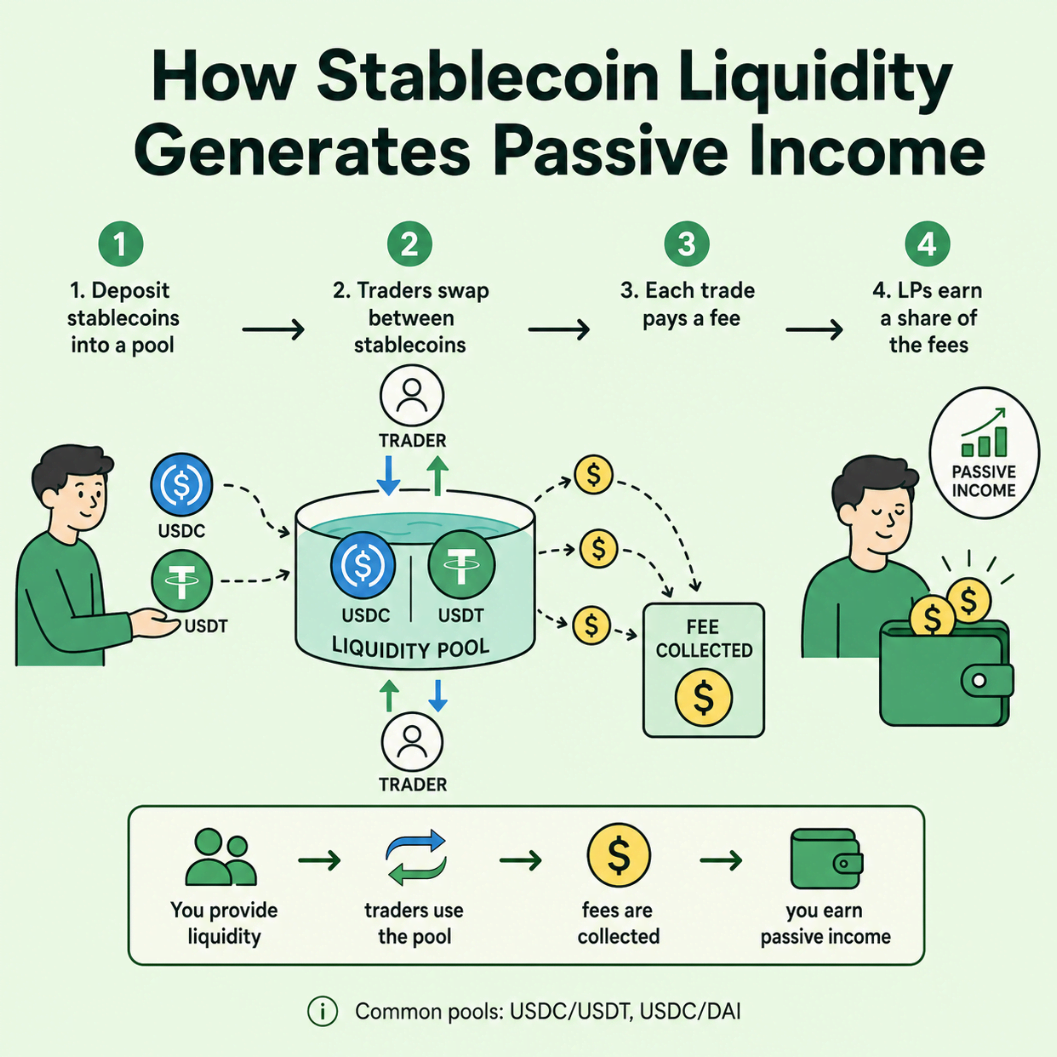
Liquidity provision means depositing crypto assets into a DeFi protocol so other users can trade between them.
For example, if you provide liquidity to a USDC/USDT pool, you help traders swap between those two stablecoins.
In return, you earn a portion of the trading fees generated by that pool.
This is how many decentralized exchanges work. Instead of relying on traditional market makers, they use liquidity supplied by users.
The more liquidity you provide, the larger your share of the fee pool.
Some protocols also add extra incentives, such as reward tokens, points programs, or potential airdrop eligibility.
Why Stablecoin Liquidity Works for Passive Income
Stablecoins are designed to stay close to a fixed value, usually $1.
That makes stablecoin pairs less volatile than pools involving assets like ETH, SOL, or memecoins.
For example:
- USDC/USDT
- USDC/DAI
- USDe/USDC
- PYUSD/USDC
Because both assets aim to stay near the same price, the risk of major price divergence is lower.
This helps reduce one of the biggest risks in DeFi liquidity provision: impermanent loss.
 DON’T GET REKT
Curated drops, testnets and red flag alerts straight to your inbox ✌️
 You’re in. Thanks for joining our newsletter.

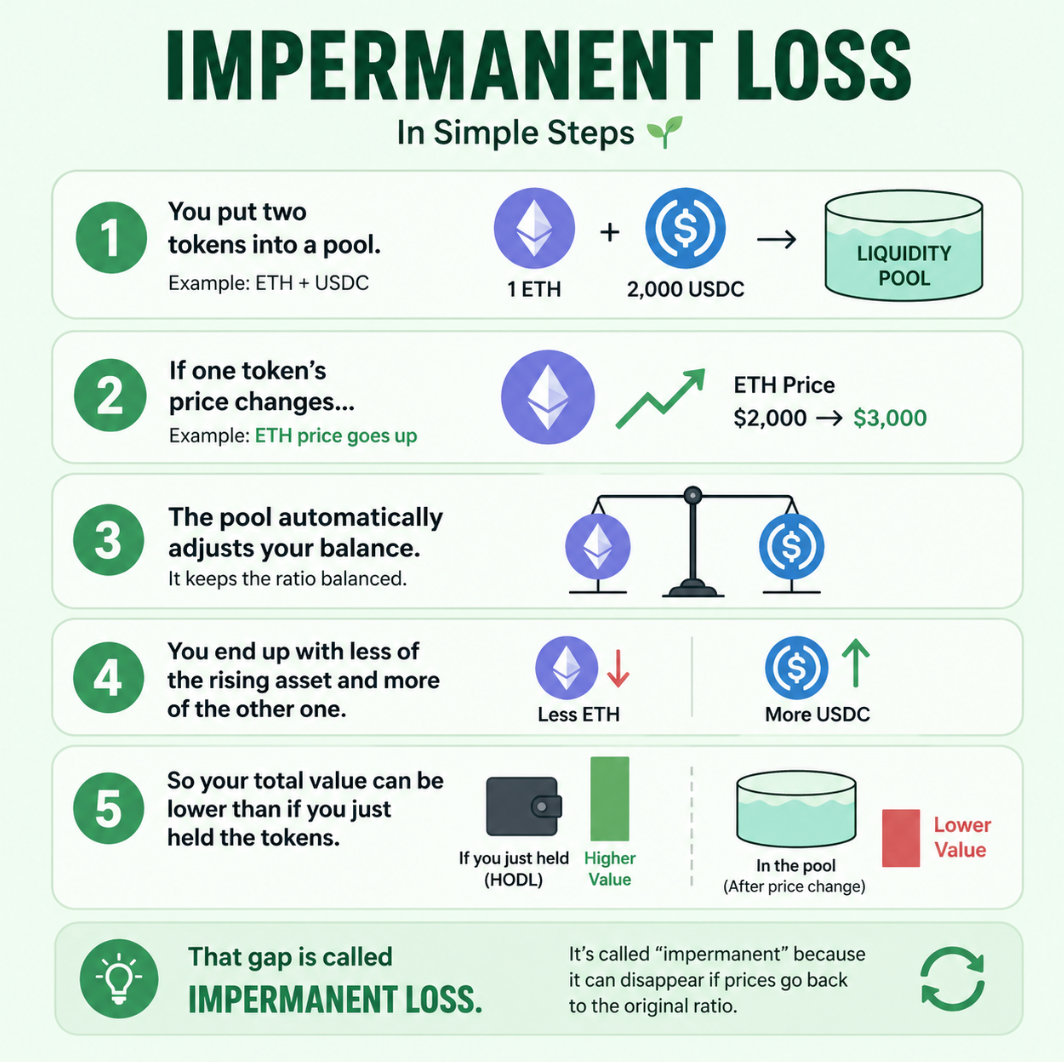
What Is Impermanent Loss?
Impermanent loss happens when the price of assets in a liquidity pool moves against each other.
This can cause liquidity providers to end up with less value than they would have had by simply holding the assets.
With stablecoin pairs, this risk is usually lower because both assets are designed to stay close to the same price.
That does not make stablecoin liquidity risk-free, but it does make it easier to manage compared with volatile token pairs.
How Stablecoin Liquidity Generates Yield
Stablecoin liquidity can generate returns in several ways:
- Trading fees from swaps
- Protocol incentives paid in native tokens
- Points programs that may lead to airdrops
- Partner rewards from ecosystem campaigns
- Yield-bearing stablecoin returns in some pools
This is why stablecoin LP strategies can sometimes offer higher returns than simply holding stablecoins in a wallet.
Top 4 Ways to Earn Crypto Passive Income With Stablecoins
There are several ways to use stablecoins for passive income in DeFi.
| Strategy | How It Works | Best For | Passive Income Platforms |
| Provide stablecoin liquidity | Deposit stablecoin pairs into DeFi pools and earn trading fees. | Users who want steady yield from swaps. | Curve, Aerodrome, Kamino |
| Use fixed or variable yield markets | Use platforms that split or trade future yield from stablecoin assets. | Users who want more advanced yield strategies. | Pendle |
| Hold yield-bearing stablecoins | Hold or stake stablecoins that generate yield from protocol revenue. | Users who want simpler passive income. | Ethena |
| Farm stablecoin reward campaigns | Provide stablecoin liquidity or market-making activity to earn points, tokens, or airdrop rewards. | Users who want yield plus potential upside. | Kamino, Swell, Backpack, Polymarket |
1. Provide Stablecoin Liquidity on DEXs
The simplest strategy is to deposit stablecoins into liquidity pools on decentralized exchanges.
Popular options include:
- Curve
- Aerodrome
- Kamino
- Swell
- Backpack
Stablecoin pools usually offer lower risk than volatile asset pools, while still generating trading fees and rewards.
This works best when the pool has strong volume and reliable incentives.
2. Use Pendle for Fixed and Variable Stablecoin Yield
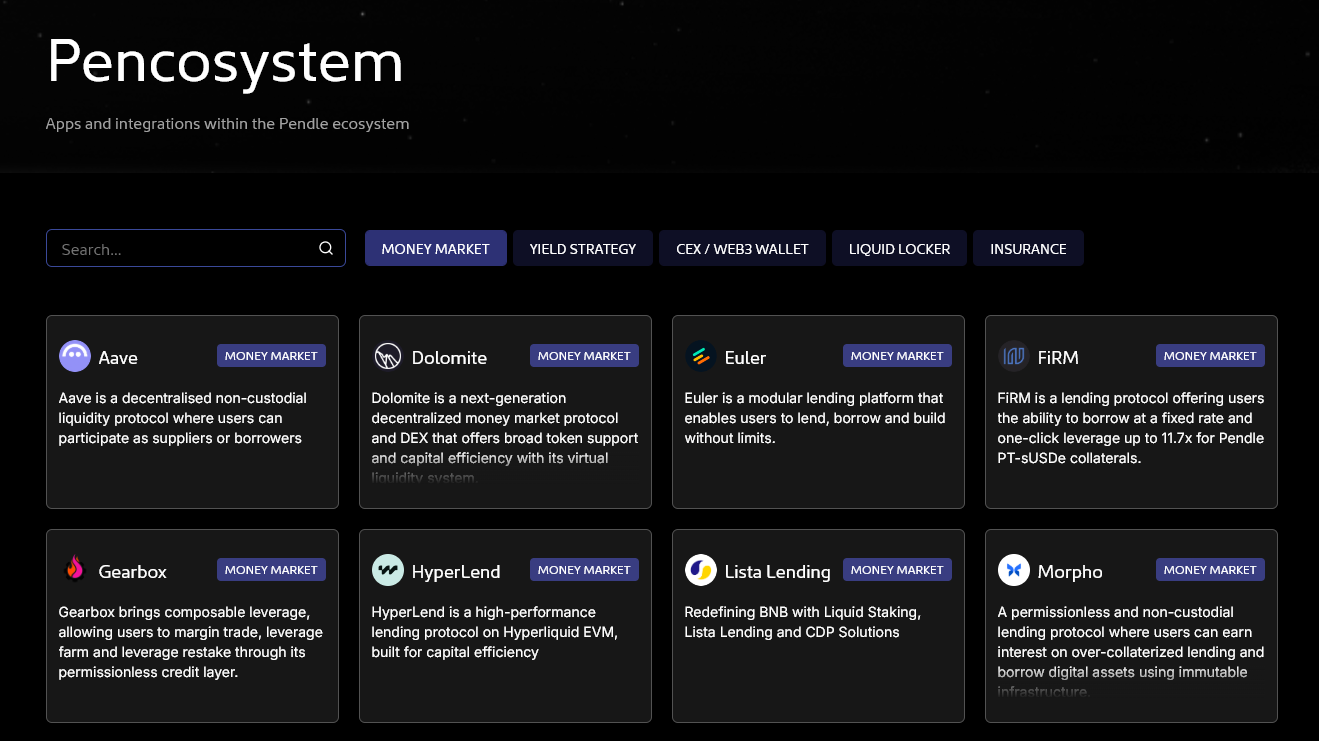
Pendle has become one of the leading platforms for structured yield in DeFi.
It allows users to separate yield-bearing assets into:
- Principal Tokens (PTs)
- Yield Tokens (YTs)
For stablecoin users, Pendle can provide access to fixed-rate yield or variable yield strategies.
This is useful for users who want more predictable passive income from stablecoin assets.
3. Use Yield-Bearing Stablecoins
Some stablecoins now generate native yield.
One example is Ethena’s USDe, where users can stake USDe to receive sUSDe and earn yield from the protocol’s revenue model.
Yield-bearing stablecoins can provide passive income without needing to manage a liquidity pool directly.
However, users should understand how the stablecoin is backed and where the yield comes from before depositing funds.
4. Farm Stablecoin Pools With Airdrop Incentives
Some protocols reward stablecoin liquidity providers with points or future token allocations.
Examples include:
- Kamino — ongoing rewards for Solana liquidity users
- Swell — Voyage campaign and partner rewards
- Backpack — post-TGE reward seasons
- Polymarket — liquidity rewards through market-making activity
- Aerodrome — AERO emissions for liquidity providers
These campaigns can make stablecoin liquidity more attractive by combining normal yield with potential airdrop upside.
Best Platforms for Stablecoin Passive Income
Pendle
Pendle is best for users looking for fixed-rate or structured stablecoin yield.
It is more advanced than a simple liquidity pool, but it can offer strong returns for users who understand PT and YT mechanics.
Best for: fixed yield and advanced DeFi users.
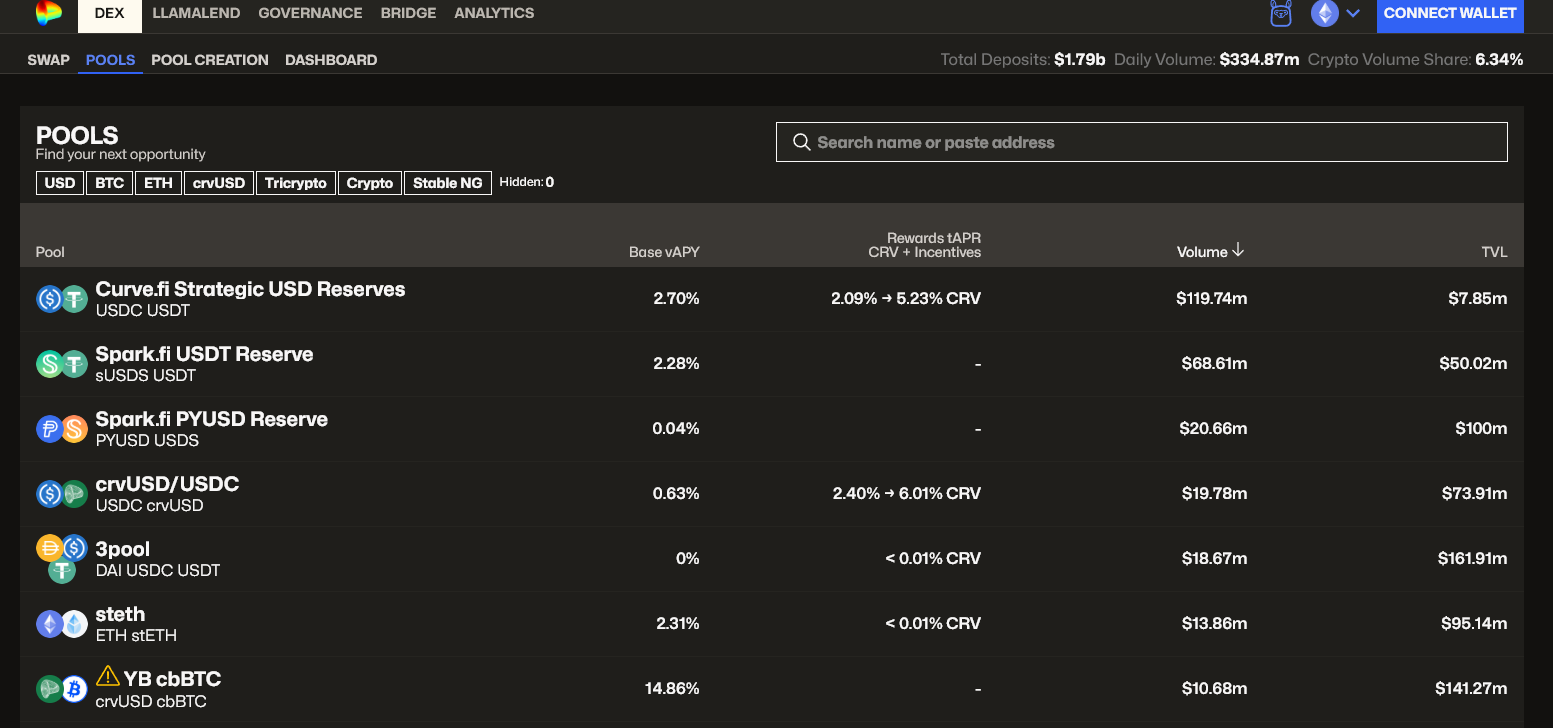
Curve
Curve is one of the most established stablecoin liquidity platforms.
It specializes in stablecoin swaps and has deep liquidity across major stablecoin pairs.
Best for: lower-risk stablecoin liquidity and large pools.
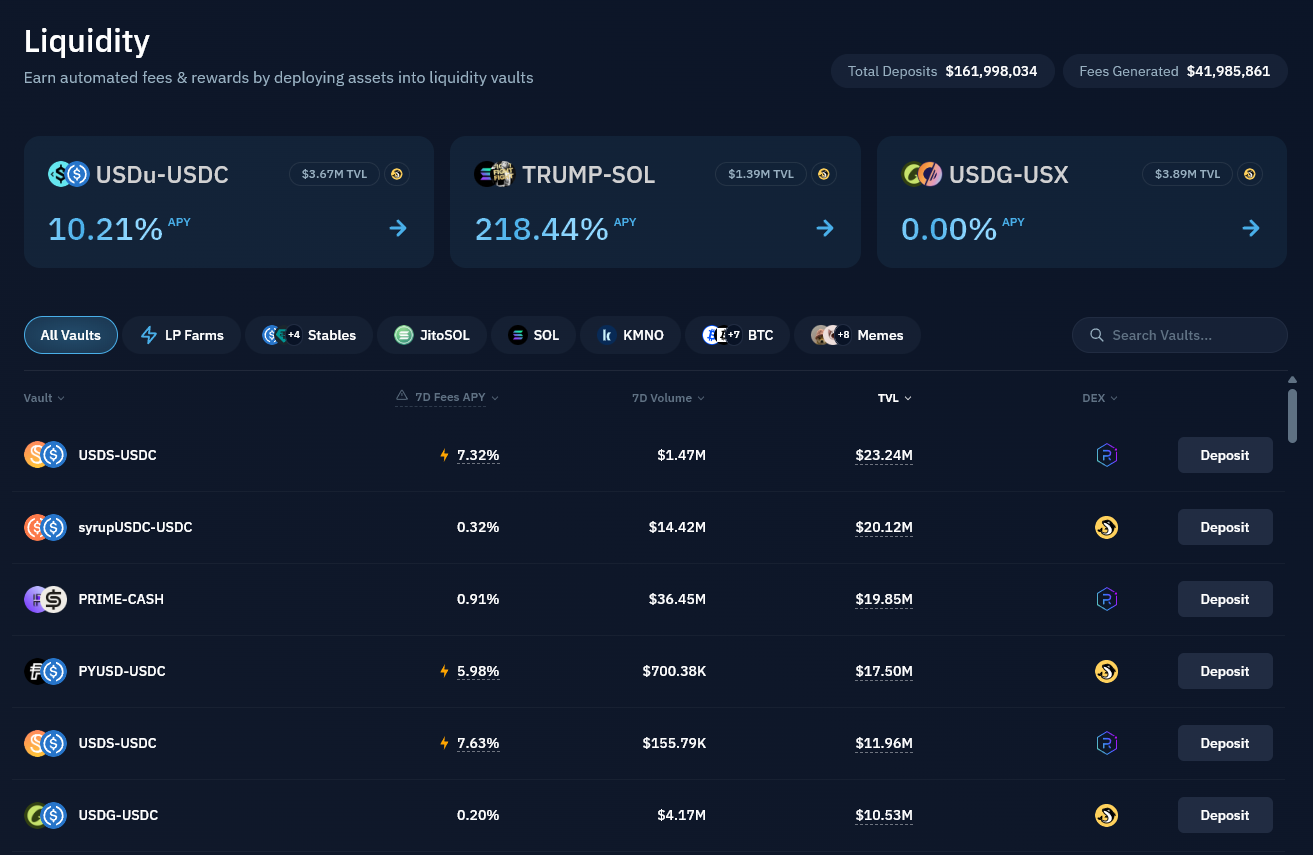
Kamino
Kamino is a major DeFi platform on Solana.
It offers lending, liquidity strategies, and rewards campaigns that may benefit active liquidity providers.
Best for: Solana users and points farming.
Aerodrome
Aerodrome is one of the main liquidity hubs on Base.
It offers liquidity pools with trading fees and AERO token emissions.
Best for: Base users seeking boosted liquidity rewards.

Polymarket
Polymarket is different from traditional DEX liquidity.
Users can earn rewards by placing tight limit orders in prediction markets using stablecoins.
Best for: users comfortable with prediction markets and market-making.
Risks of Stablecoin Liquidity
Stablecoin liquidity is lower risk than many DeFi strategies, but it is not risk-free.
Stablecoin Depeg Risk
Stablecoins can lose their peg.
If one asset in a pool drops below $1 and does not recover, liquidity providers may take losses.
Smart Contract Risk
DeFi protocols can suffer bugs, exploits, or contract failures.
Only use platforms with strong security history and audits.
Incentive Risk
High APYs often depend on token rewards.
If reward tokens fall in value, the real yield may be lower than advertised.
Liquidity Risk
Some pools may have low trading volume.
Low volume means fewer fees, even if the headline APY looks attractive.
Platform Risk
Some yield strategies depend on complex mechanisms.
Before depositing funds, users should understand where the yield comes from and what happens in stressed market conditions.
Stablecoin Liquidity Strategy for Beginners
A simple beginner strategy could look like this:
- Start with major stablecoins such as USDC or USDT
- Choose established protocols with strong liquidity
- Avoid very high APYs that are not clearly explained
- Split funds across more than one platform
- Monitor rewards, pool health, and stablecoin peg stability
- Reinvest rewards carefully instead of chasing every new farm
The goal is not to maximize risk. The goal is to earn steady passive income while keeping exposure relatively stable.
Final Thoughts
Stablecoin liquidity is one of the more practical ways to earn crypto passive income during volatile markets.
It allows users to earn trading fees, protocol rewards, and possible airdrop incentives without taking the same level of price risk as volatile token pairs.
Pendle, Curve, Kamino, Aerodrome, Swell, Backpack, and Polymarket all offer different ways to put stablecoins to work.
For most users, the best approach is simple: start with established platforms, use stablecoin pairs, avoid excessive risk, and focus on consistent yield rather than chasing the highest APY.



 Thank you for your feedback! We’re glad you found this article helpful.
 An error occurred while sending the form, please try again.
 We are sorry. You've already sent a message within the last 60 seconds. Please wait before sending another.
 Thank you for letting us know! Our team will review your feedback to help improve our content.
We're sorry you did not find what you were looking for. Please select the reason this article was not helpful.