


 3 min read
3 Best Altcoins for Staking and Passive Income in 2026




 AI Overview
Crypto staking generates passive income while positioning for long-term price upside.
- Ethereum (~3% APY) offers the most stable and reliable staking returns.
- Solana (~6–7% APY) provides higher yield with strong ecosystem growth.
- Sei (~7%+ APY) offers higher-risk, higher-reward staking opportunities.
Crypto markets in 2026 remain under pressure, with most assets trading well below previous highs. While price action has slowed, one area continues to offer consistent returns: staking and passive income.
Instead of holding idle assets, staking allows investors to earn yield while positioning for long-term upside.
For investors looking to stay productive during a slower market, selecting the right assets to stake is critical.
What Is Staking?
Staking is a process where users lock their crypto assets to help secure a blockchain network.
In return, they earn rewards—usually paid in the same token.
It functions similarly to earning interest, but instead of lending funds to a bank, users support blockchain validators that process transactions and maintain the network.
For long-term holders, staking turns inactive assets into yield-generating positions.

Why Staking Matters in a Bear Market
When prices are flat or declining, staking provides a way to generate returns independent of market direction.
Key benefits include:
- Consistent yield even during downturns
- Compounding returns through auto-restaking
- Exposure to long-term upside if prices recover
- Low effort, “set and hold” strategy
In a bear market, this combination of yield + potential price recovery becomes especially valuable.
 DON’T GET REKT
Curated drops, testnets and red flag alerts straight to your inbox ✌️
 You’re in. Thanks for joining our newsletter.

Best Cryptocurrencies for Staking and Passive Income
These assets combine strong ecosystems, reliable staking infrastructure, and sustainable yields.
Ethereum (ETH): Most Reliable Long-Term Yield
Ethereum remains the largest Proof-of-Stake network by total value locked.
- APY: ~3%
- Strength: Most secure and established staking ecosystem
- Best for: Conservative, long-term holders
Ethereum staking is widely considered the benchmark for reliability. While yields are lower than newer networks, the risk profile is also lower.
Investors can stake through:
- Solo staking
- Liquid staking (e.g., stETH)
- Staking pools and platforms
For those prioritizing stability over high yield, ETH remains a core staking asset.
Solana (SOL): High Yield With Strong Ecosystem Growth
Solana continues to offer one of the most attractive staking profiles among major blockchains.
- APY: ~6–7%
- Strength: High throughput, active ecosystem, frequent rewards
- Best for: Balanced yield + growth exposure
Solana staking is simple to set up and rewards are distributed frequently, allowing for faster compounding.
If you want instant reward and a chance to win up to 20% returns on Solana, check out our review of Tramplin – a premium staking platform.
Additional advantages:
- Liquid staking options with added incentives
- Potential MEV rewards
- Strong developer and user activity
For investors seeking higher yield without moving too far into riskier assets, SOL remains a strong option.

Sei (SEI): High-Yield Emerging Network
Sei is a newer Layer 1 blockchain focused on speed and trading efficiency.
- APY: ~7%+
- Strength: High yield and growing staking participation
- Best for: Higher-risk, higher-yield allocation
Despite weaker price performance, staking participation has continued to increase, suggesting long-term confidence from holders.
Sei offers:
- Competitive staking rewards
- Fast network performance
- Growing ecosystem activity
For investors willing to take on more risk, SEI provides higher passive income potential.
Additional Tokens to Consider
While the top three cover most use cases, a few other assets are worth monitoring:
- Sui (SUI): Lower current APY (~1.5%) but strong ecosystem growth
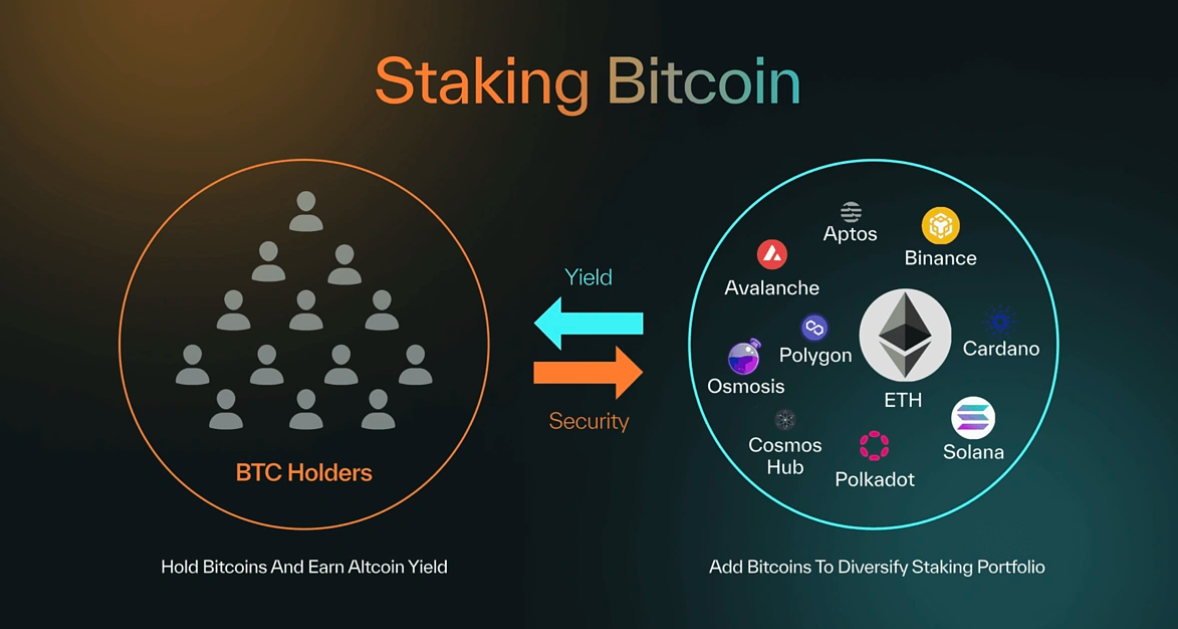
- Bitcoin (BTC): Emerging staking via protocols like Babylon, though still early
These may become more attractive as their ecosystems mature.
Risks of Staking
Staking is relatively passive, but not risk-free.
Key risks include:
- Lock-up periods: Staked assets may be inaccessible for a period of time, limiting flexibility.
- Validator risk: Poor validator performance can reduce rewards or lead to penalties.
- Inflation pressure: New token issuance can dilute value if demand does not increase.
- Smart contract risk (for liquid staking): Protocols can be vulnerable if not properly audited.
Managing these risks is essential when building a staking portfolio.
Final Thoughts
Bear markets shift focus from price speculation to capital efficiency.
Staking allows investors to:
- Accumulate more tokens over time
- Maintain exposure to long-term growth
- Generate consistent passive income
Ethereum offers reliability, Solana provides strong yield with ecosystem growth, and Sei delivers higher-risk, higher-reward opportunities.
For most investors, a combination of these assets can create a balanced staking strategy in 2026.



 Thank you for your feedback! We’re glad you found this article helpful.
 An error occurred while sending the form, please try again.
 We are sorry. You've already sent a message within the last 60 seconds. Please wait before sending another.
 Thank you for letting us know! Our team will review your feedback to help improve our content.
We're sorry you did not find what you were looking for. Please select the reason this article was not helpful.