


 5 min read
Top 3 Passive Income Tokens to Hold in 2026




 AI Overview
A practical guide to three on-chain passive-income positions for long-term crypto holders: EtherFi $eETH, Hylo $xSOL, and Ethena $sUSDe. It advocates a diversified 3‑in‑1 portfolio—restaked ETH, leveraged Solana exposure, and a yield-bearing stablecoin—to earn steady yield, capture airdrops, and lower trading risk.
- Balanced portfolio: Pair $eETH, $xSOL, and $sUSDe to mix sustainable staking yield, leveraged upside, and stablecoin returns for diversified passive income.
- Multiple yield sources: $eETH adds staking/restaking and airdrop points, $xSOL compounds staking rewards via rebalances, $sUSDe captures funding and treasury yields.
- Practical risk control: Targets holders preferring lower-friction income over active trading—immediate deployability, unlock schedules, and reduced event-driven exposure.
As the crypto market becomes more volatile due to macro conditions, liquidity shifts, and geopolitical conflicts, doing more with crypto rather than simply holding becomes increasingly important.
Many smart crypto holders may shift away from active trading and short-term speculation and instead focus on long-term holding strategies.
If you are looking for passive income through simple on-chain strategies, rather than risky degen yield farming, this guide will point you in the right direction.

Why Passive Income Matters
Rather than trading memecoins or flipping NFTs for outsized gains, long-term holders may prefer passive income as a way to hedge against inflation and reduce portfolio stress.
Blockchain technology and consensus mechanisms such as Proof of Stake allow on-chain assets to generate yield. In many cases, these yields exceed what traditional finance offers.
Instead of relying only on spot appreciation, holding yield-generating assets can steadily grow your stack over time.
Assuming you already hold crypto—or have disposable capital—you can deploy these strategies immediately. Productive, yield-bearing assets are likely to remain a core part of investor portfolios through 2026 and beyond.
 DON’T GET REKT
Curated drops, testnets and red flag alerts straight to your inbox ✌️
 You’re in. Thanks for joining our newsletter.

Top 3 Passive Income Tokens With Strong Earning Potential
1. EtherFi Staked ETH ($eETH)
For the first opportunity, we look at Ethereum’s ecosystem. As the second-largest cryptocurrency by market capitalization, Ethereum remains one of the most secure and battle-tested blockchains.
What Is EtherFi Staked ETH?
EtherFi is a staking and restaking protocol on Ethereum. It allows ETH holders to stake their assets and receive a liquid restaked token in return.
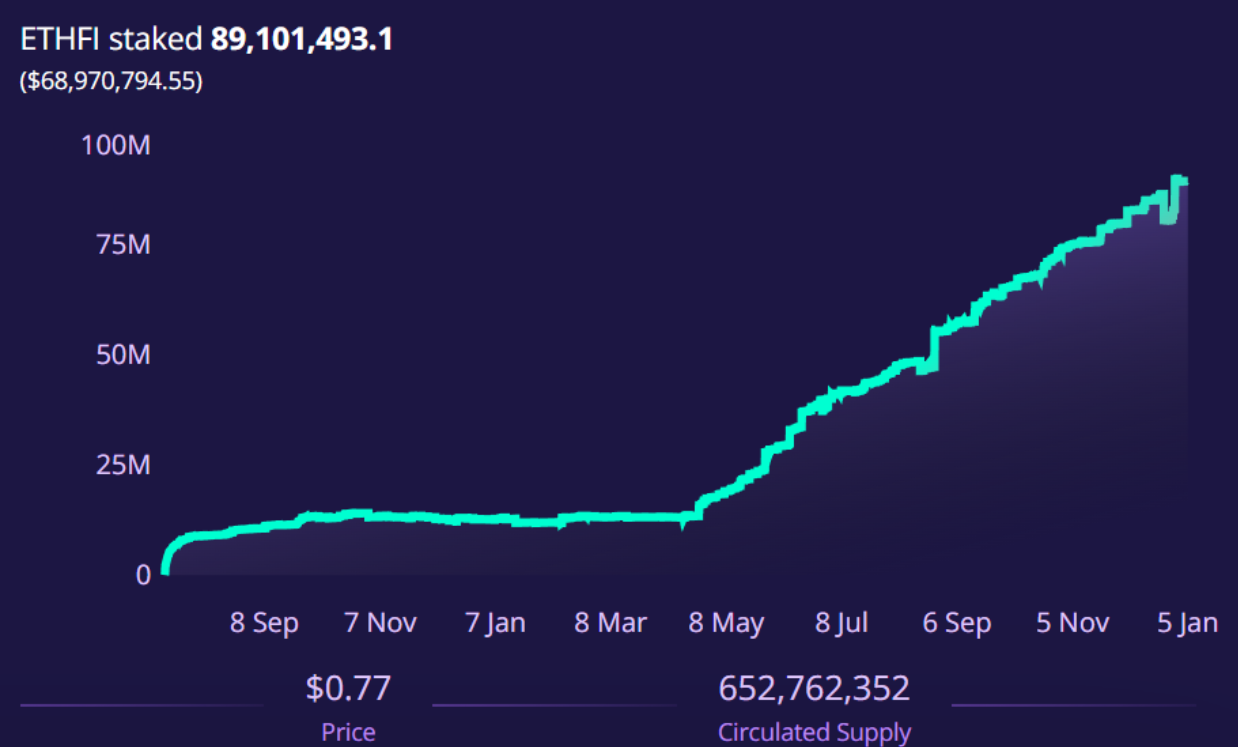
$eETH is the first native liquid restaking token and is held by more than 100,000 users. It unlocks multiple income streams beyond standard ETH staking.
Passive Income Sources With $eETH
Holding $eETH provides access to four distinct reward streams:
- Ethereum staking rewards: Typically between 3% and 5% annually
- EtherFi loyalty points: Historically distributed through $ETHFI airdrops
- EigenLayer restaking rewards: Approximately 4% for securing EigenLayer
- DeFi liquidity opportunities: Deploy $eETH across DeFi protocols for additional yield
Even without active DeFi participation, $eETH offers stronger passive income potential than native ETH staking.
How to Earn With $eETH
To earn rewards, stake ETH through EtherFi on mainnet, Base, Linea, or Scroll. You will receive $eETH and start earning automatically.
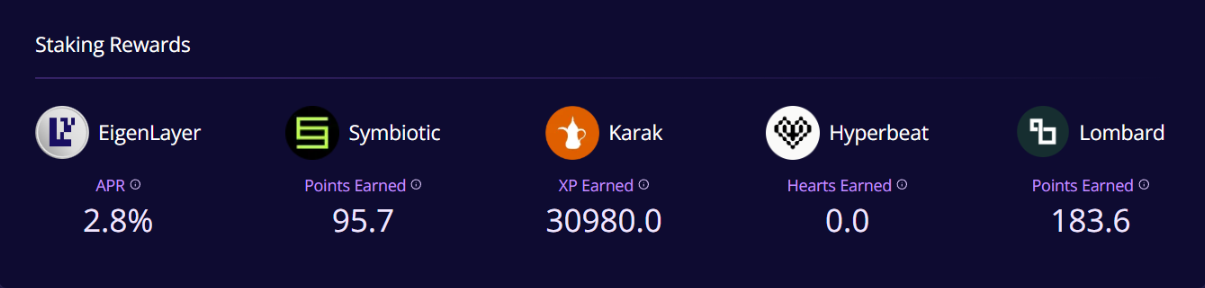
In addition, $eETH holders earn partner points from protocols such as Symbiotic, Karak, Hyperbeat, and Lombard. These points may convert into future token airdrops, with Karak viewed as a particularly strong candidate.
You also earn King Protocol’s $KING token, claimable on Swell, Arbitrum, Base, and Ethereum mainnet.
Additional Opportunities
- Deploy $eETH in EtherFi vaults for extra yield
- Stake received $ETHFI tokens on mainnet or Arbitrum
- Participate in EtherFi’s expanding ecosystem, including crypto payments and BTC restaking
If you believe in Ethereum’s long-term dominance, $eETH remains a strong passive income holding for 2026.
2. Hylo’s $xSOL
The second opportunity comes from the Solana ecosystem. Solana continues to mature through upgrades such as Firedancer, strengthening performance and resilience.
Beyond yield, holding ecosystem assets also supports long-term network growth.
What Is Hylo?
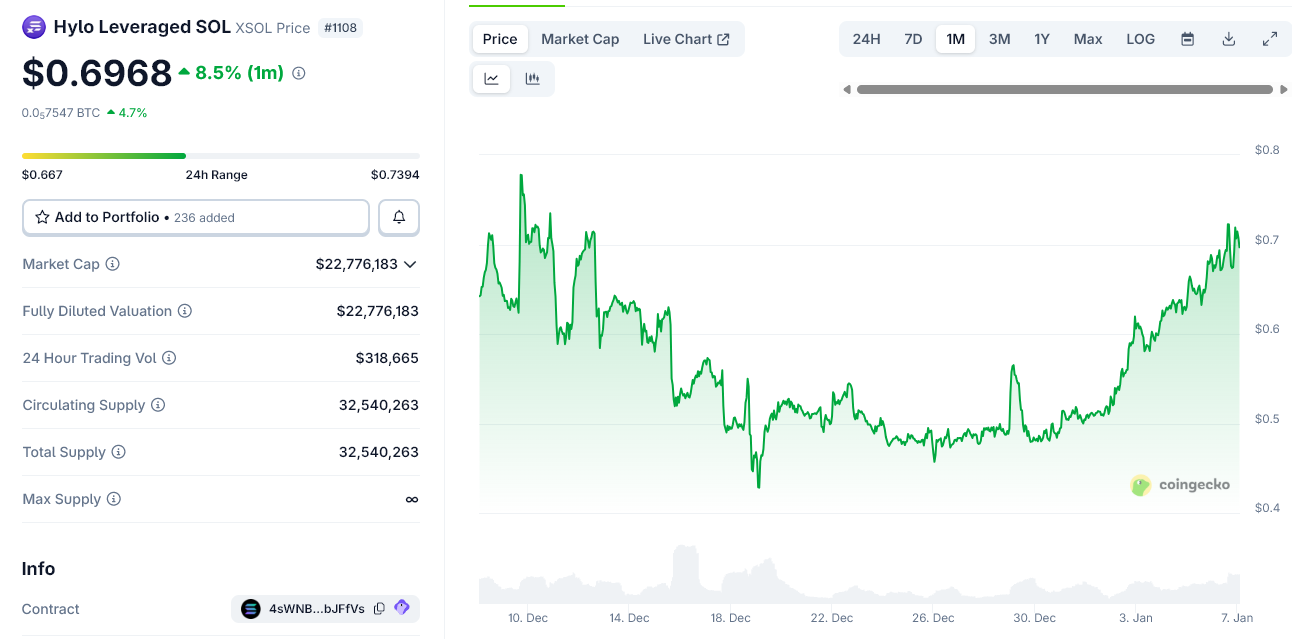
Hylo is a Solana-based project offering yield-bearing stablecoins and a leveraged Solana exposure token called $xSOL.
$xSOL provides amplified exposure to SOL through collateralization using liquid staked SOL assets such as JitoSOL. Importantly, the design removes liquidation risk.
At the time of writing, $xSOL carries approximately 2.7x leverage.
How $xSOL Generates Passive Income
Hylo automatically rebalances positions and uses staking rewards to deliver yield. Current APYs have reached up to around 10%, depending on market conditions.
Price exposure can move both up and down with SOL. However, holders are protected from liquidation and can simply hold through volatility.
How to Earn With $xSOL
You can mint $xSOL by depositing supported SOL tokens or stablecoins. Alternatively, you can swap directly into $xSOL using your wallet.
For airdrop participation, many users first mint hyUSD or shyUSD to receive XP multipliers. Once deposited through Hylo’s Leverage interface, you begin earning both XP and leveraged SOL exposure.
Additional Opportunities
$xSOL integrates with Solana DeFi protocols such as Exponent. Depositing $xSOL can unlock:
- Additional yield
- Increased Hylo XP
- Eligibility for further airdrops
If Solana rallies in 2026, $xSOL offers both yield and amplified upside.
3. Ethena Staked USDe ($sUSDe)
The final opportunity focuses on a yield-bearing stablecoin within the Ethereum ecosystem.
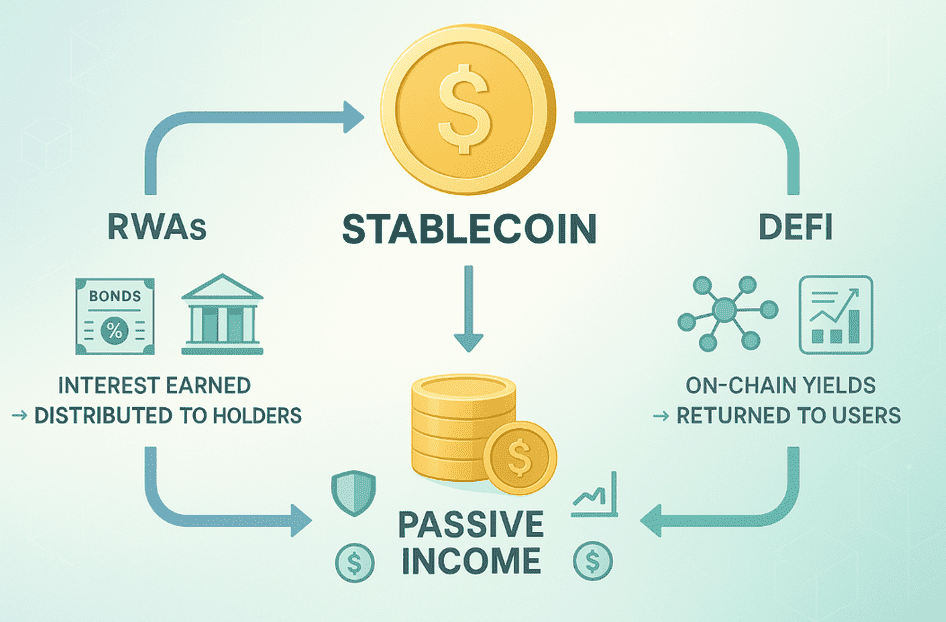
Stablecoins remain one of crypto’s strongest product-market fits. Yield-bearing versions allow investors to earn returns while minimizing volatility.
What is $sUSDe?
$sUSDe is the staked version of Ethena’s synthetic stablecoin USDe. It maintains its peg through delta-neutral strategies rather than overcollateralization.
This structure carries risk. Synthetic stablecoins gained a negative reputation after Terra’s UST collapse in 2022.
However, $USDe has not experienced an on-chain depeg. In exchange for this risk, holders receive a share of Ethena protocol revenues, which exceeded $250 million at the time of writing.
How Staked USDe Generates Yield
$sUSDe earns yield from:
- Staking rewards or treasury-linked yields
- Funding payments paid by leveraged long traders
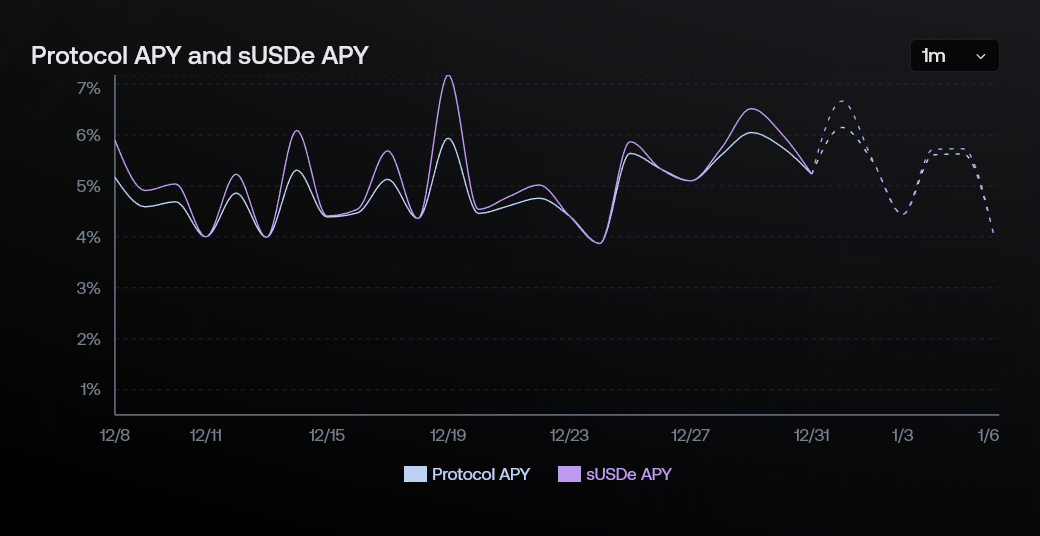
During bullish periods, funding rates can significantly boost APY. While the current yield sits around 5.1%, it has historically climbed higher.
How to Earn With $sUSDe
First, mint or swap into $USDe. Then stake it through Ethena’s app to receive $sUSDe.
This strategy includes unlock periods:
- 7 days to unstake
- 7 days to withdraw
Holding $sUSDe over a full year provides stable yield and earns Ethena Points through ongoing reward seasons.
Additional Opportunities
Ethena Points can convert into $ENA or $sENA rewards. Staked $sENA generates even more points.
The Ethena ecosystem continues to expand with partner protocols such as Ethereal. Holding $sUSDe often earns points automatically across these platforms.
For active users, depositing $sUSDe into partner protocols can further boost rewards.
Final Thoughts
This guide represents a low-risk, medium-reward strategy for 2026 that incorporates unique products on great chains along with a yield-bearing stablecoin to provide passive income throughout 2026 and beyond.
Overall, this translates into a 3-in-1 balanced approach with one yield stablecoin for stable returns; one ETH restaking token for consistent and sustainable yield; and one leveraged ecosystem for major upside!
If you’re looking at rejigging your portfolio this new year, look no further for a strategy that positions you for:
- Passive income
- Future airdrops
- Less overall risk than trading
We hope you liked it.



 Thank you for your feedback! We’re glad you found this article helpful.
 An error occurred while sending the form, please try again.
 We are sorry. You've already sent a message within the last 60 seconds. Please wait before sending another.
 Thank you for letting us know! Our team will review your feedback to help improve our content.
We're sorry you did not find what you were looking for. Please select the reason this article was not helpful.