


 6 min read
NFTs for Crypto Passive Income in 2026: Is It Still Worth It?




 AI Overview
Selected NFT collections are regaining relevance and can complement a passive‑income plan by delivering access, airdrops, staking/rental yields and treasury distributions—provided investors choose projects with clear roadmaps, active communities and disciplined risk management.
- Access-driven income: NFTs unlock whitelists, SBTs, airdrops and product access that often produce recurring economic benefits beyond price appreciation.
- Operational strategies: Free/low-cost mints, “hold one sell one,” staking, renting and treasury distributions diversify yield when applied selectively.
- Concentrated risks: Volatility, illiquidity, scams and inflationary rewards mean active selection, counterparty vetting and profit-taking discipline are essential.
As NFTs regain relevance, some collections offer more than price speculation. NFTs can complement a passive income strategy through access, airdrops, and participation, if used selectively and with risk awareness.

Then came tokens—fungible and non-fungible. Then metaverses, Layer 2s, Layer 3s, and even Layer 4s. Then new narratives followed: DePIN, AI, gaming, memecoins.
Eventually, we started calling it Web3 because “crypto” no longer captured the scope.
Today, while the metaverse narrative remains dormant, NFTs are quietly re-emerging. As Bitcoin trades below recent highs and Ethereum remains under pressure, selected NFT collections are seeing renewed activity and rising floor prices.
That raises a reasonable question: Can NFTs realistically play a role in a passive income strategy?
NFTs in Bull Markets
The era of minting a random JPEG and exiting wealthy is long gone. Still, NFTs continue to occupy a meaningful position in the crypto ecosystem.
During bull markets, fresh liquidity enters crypto broadly, and a portion of that capital consistently flows into NFTs. This creates a reinforcing cycle: collections appreciate, marketplaces grow, ecosystem tokens benefit, and communities expand.
The upside can be significant—but it is rarely durable.
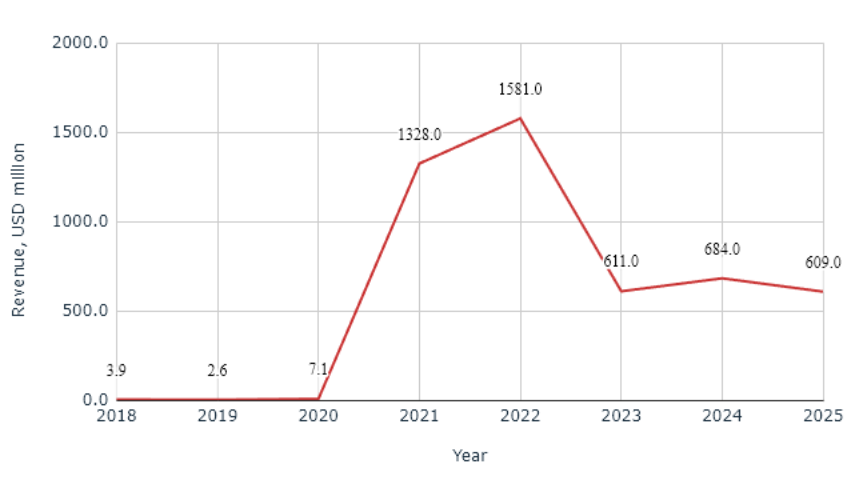
According to CoinLedger, NFT market revenue peaked at $1.58 billion in 2022, later stabilizing around $600–700 million between 2024 and 2025. While long-term projections remain sizable, they still fall short of prior peaks.
This suggests NFTs are no longer a pure momentum trade—but that does not mean they lack income potential.
NFTs in Bear Markets
Bear markets are often declared “dead” by headlines—Bitcoin, NFTs, entire ecosystems.
History shows otherwise.
When prices decline, NFT holders—particularly those with high-quality assets—are often reluctant to sell. Instead, they seek ways to extract value without liquidating. At the same time, falling floor prices allow long-term collectors to accumulate selectively.
Bear markets tend to separate speculative collections from those with enduring utility, community, or intellectual property.
Examples of Resilient NFT Collections
Some NFT collections retain relevance across cycles and can outperform major cryptocurrencies over long time horizons.
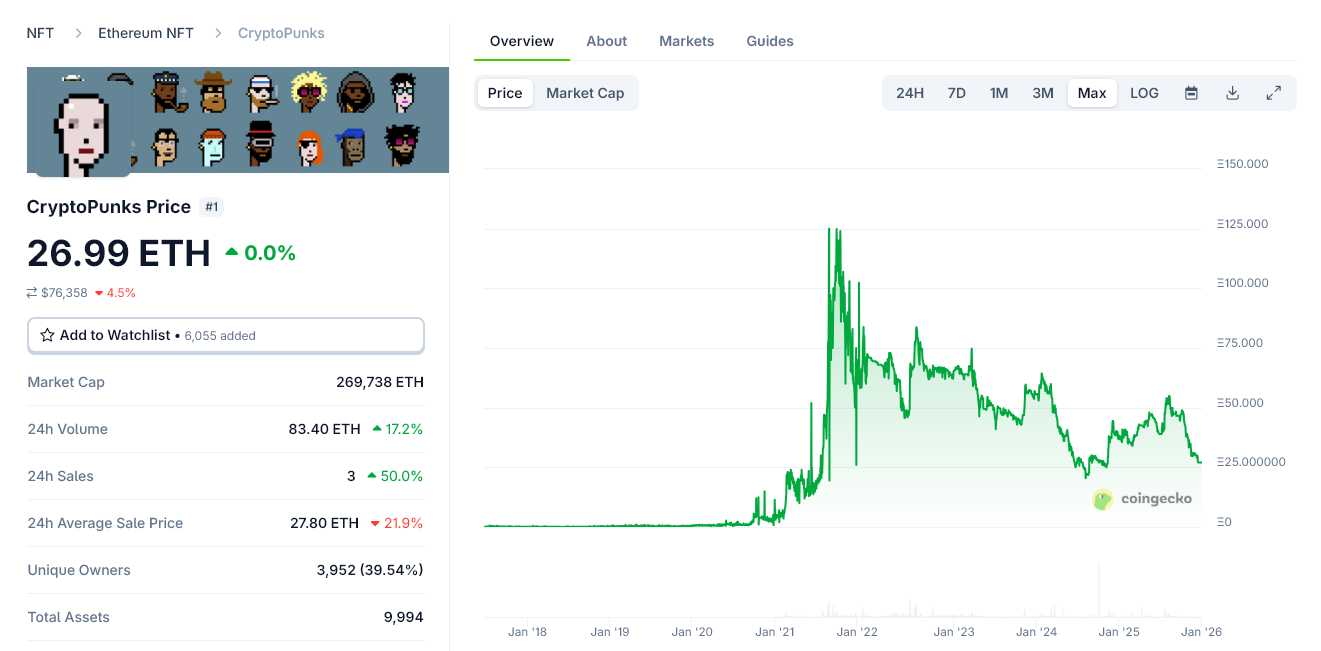
- CryptoPunks: With a floor price around 31 ETH and a market cap near $1 billion, CryptoPunks remain the benchmark for NFT value storage and financial primacy.
- Pudgy Penguins: Pudgy Penguins have expanded beyond NFTs into tokens, sub-collections, and physical retail merchandise. They exemplify NFTs as intellectual property platforms.
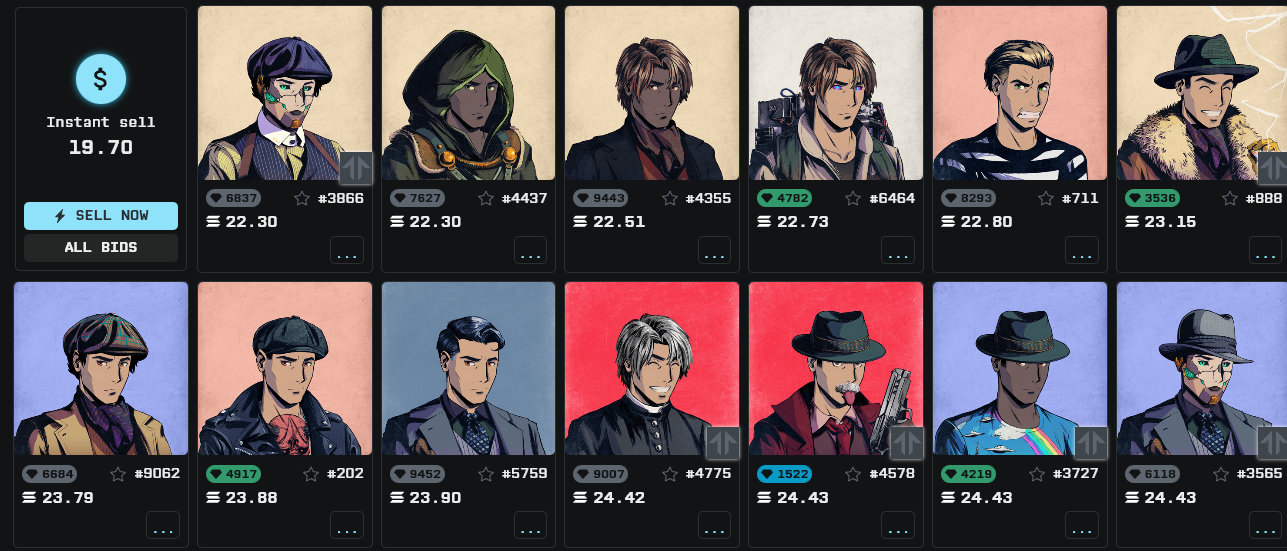
- Mad Lads: Built on Solana and tied to the Backpack ecosystem, Mad Lads integrate wallet features, mini-apps, staking, and airdrop access. With under 4% listed, they represent NFTs as ecosystem infrastructure.
Other collections, including Azuki, highlight the downside—where former six-figure floors suffered drawdowns exceeding 80%.
 DON’T GET REKT
Curated drops, testnets and red flag alerts straight to your inbox ✌️
 You’re in. Thanks for joining our newsletter.

How NFTs Can Generate Passive Income
NFTs generate income less through price appreciation alone and more through access and participation.
NFTs rarely generate income by simply sitting idle. In most cases, returns come from access, positioning, and optional participation, rather than constant trading.
Here are the main mechanisms—and how they are typically used in practice.
Holding (Appreciation and Access)
Holding high-quality NFTs can generate passive upside in two ways: price appreciation and access to future benefits.
Well-run collections tend to increase in value as they ship products, expand IP, or integrate into broader ecosystems. More importantly, long-term holders are often rewarded with whitelists, airdrops, or early access to new mints and tokens.
Focus on collections with clear roadmaps, active development, and strong secondary demand. Track listing ratios and holder distribution rather than short-term price action.
Staking NFTs
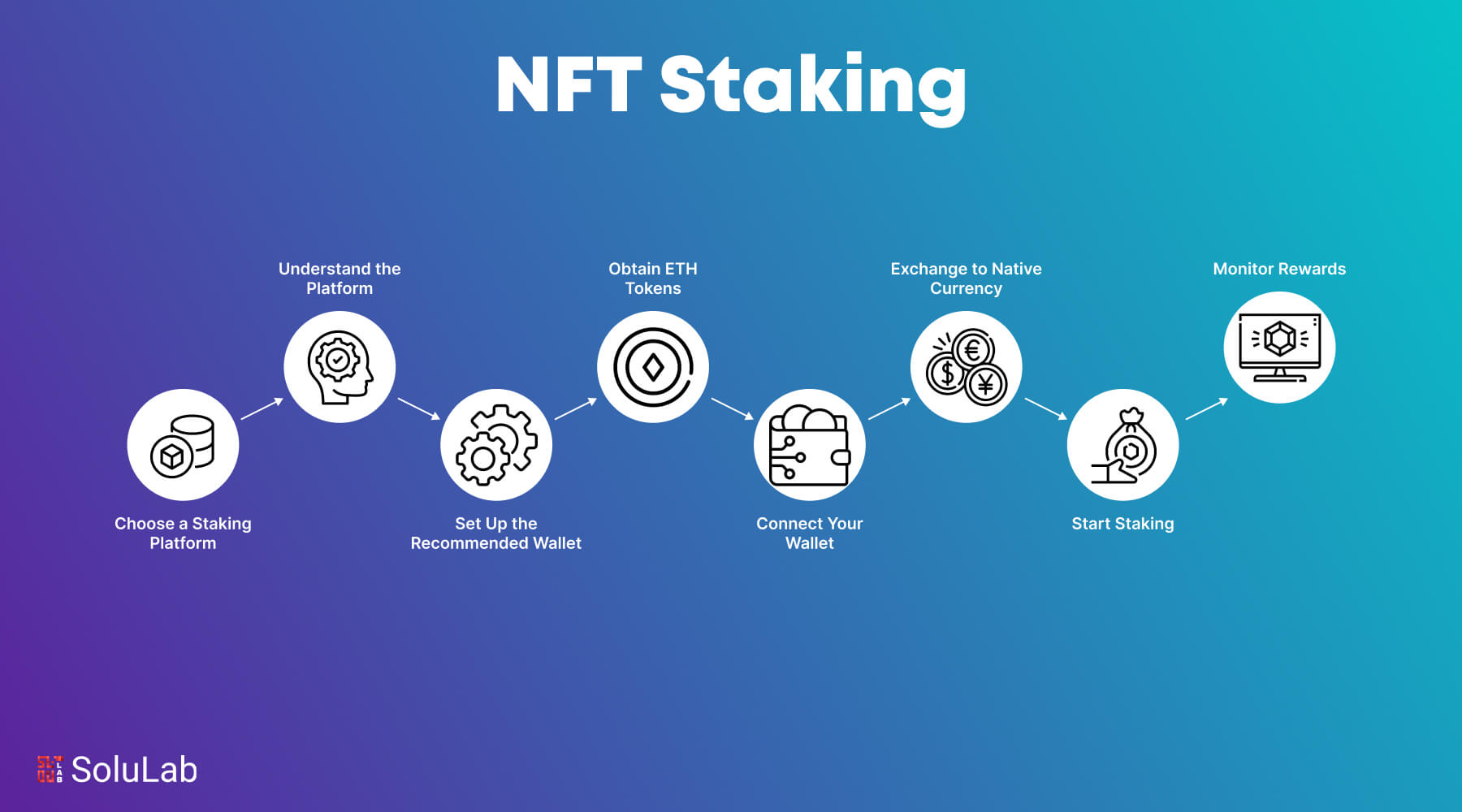
Some projects allow NFTs to be staked in exchange for tokens, points, or yield.
While this can create passive income, staking rewards are often inflationary and lose value over time. Staking works best when combined with disciplined profit-taking or when rewards provide access rather than raw emissions.
If staking generates liquid tokens, consider converting rewards periodically into stablecoins or major assets rather than compounding indefinitely.
Renting NFTs
NFT renting allows holders to earn yield without selling, while renters gain temporary access to gated features such as gameplay perks, DAO access, or yield strategies.
This model is common in gaming, DeFi access NFTs, and identity-based passes.
Renting works best for NFTs tied to ongoing utility rather than speculation. Use trusted rental platforms and set conservative durations to reduce counterparty risk.
Royalties
Some NFT collections pay creators or DAO treasuries a percentage of secondary sales.
While not guaranteed, royalties can generate long-term income for artists or founding teams, especially if the collection maintains liquidity over multiple cycles.
Royalties are more reliable for creators than collectors. For collectors, royalties matter indirectly—supporting treasury growth that may later benefit holders.
Profit Sharing and Treasury Distributions
Certain NFT projects operate shared treasuries that distribute profits, tokens, or assets to holders.
These treasuries may generate income through trading, licensing, yield strategies, or partnerships.
Earning NFTs Through Gameplay or Participation
Many Web3 games and platforms allow users to earn NFTs by contributing time rather than capital.
These NFTs can later be sold, rented, or used to unlock further rewards.
Treat time as capital. Focus on games or platforms with active secondary markets so earned NFTs can realistically be monetized.
Airdrops Targeting NFT Holders
NFT holders are frequently targeted for ecosystem airdrops.
Projects often use NFTs to identify long-term users, testers, or aligned communities. In some cases, airdrops to NFT holders exceed the original purchase price of the NFT itself.
Track ecosystems rather than individual collections. NFTs tied to infrastructure, wallets, or early networks often have higher airdrop exposure than pure PFPs.
An Example Strategy: Free and Low-Cost Mints on Base
NFT whitelisting remains one of the lowest-cost strategies.
On Base, low transaction fees and strong airdrop incentives have driven an active mint culture. Whitelists are often distributed via social engagement rather than capital.
A common approach:
- Mint free or discounted NFTs
- Hold one, sell one, stake or rent one
- Reinvest selectively
This strategy works best for participants willing to spend time in Discords and community channels, where whitelist access is frequently distributed.
NFT Collection to Watch: Moonbirds
Moonbirds, now owned by Orange Cap Games, have re-entered speculation cycles.
Recent activity—including widespread issuance of Soulbound Tokens (SBTs) to Seeker and Saga phone users, Coingecko subscribers, and Orca users—suggests ecosystem onboarding rather than short-term hype.
While Moonbirds holders have already received Monad airdrops and $TALONS exists, the scale and coordination of SBT issuance often precedes broader reward mechanisms. Ownership of Moonbirds or Mythics is not required to participate in this onboarding phase.

Risks to Consider
NFT income strategies are not passive by default.
Key risks include:
- Scams and copycat collections
- Extreme volatility, especially outside blue-chip assets
- Illiquidity, particularly during market downturns
Capital discipline and verification of official links are essential.
Final Thoughts
NFTs are no longer speculative JPEGs alone.
For participants willing to engage with communities, track roadmaps, and manage risk, NFTs can complement a passive income strategy through airdrops, whitelists, royalties, and ecosystem incentives.
They reward participation over speculation. Used selectively, NFTs still have a role—but only for those prepared to stay involved.



 Thank you for your feedback! We’re glad you found this article helpful.
 An error occurred while sending the form, please try again.
 We are sorry. You've already sent a message within the last 60 seconds. Please wait before sending another.
 Thank you for letting us know! Our team will review your feedback to help improve our content.
We're sorry you did not find what you were looking for. Please select the reason this article was not helpful.