


 4 min read
Why BTCFi Is Crypto’s Strongest Passive Income Strategy in 2026




 AI Overview
Outlines BTCFi: a security-first stack of protocols that turn idle Bitcoin into income-producing capital—lending, liquid staking, yield vaults—while preserving self-custody and full Bitcoin exposure.
- Unlocks deployable liquidity: Turning a small share of dormant BTC into productive capital could free tens of billions for lending, markets, and structured yield.
- Security-first product design: Emphasizes non-custodial, conservative protocols and Bitcoin-aligned architectures instead of speculative, high-leverage strategies.
- Changes holder behavior: Enables passive income without selling, deepening liquidity, stabilizing yields, and encouraging broader institutional and retail participation.
Bitcoin (BTC) is the earliest and most successful payment network and cryptocurrency, powered by a Proof-of-Work (PoW) consensus mechanism. With a market capitalization that rivals gold, Bitcoin is widely regarded as the ultimate digital store of value.
However, Bitcoin’s economic capital is largely idle. More than two-thirds of all BTC have not moved in over a year. Trillions of dollars in value sit in cold storage, doing nothing except preserving purchasing power.
Bitcoin’s safety is a powerful feature, but its locked capital is also what makes it economically inefficient.
In traditional finance, capital that sits idle is considered dead weight. In crypto, Ethereum introduced a different model: assets became productive. ETH could be lent, staked, used as collateral, traded, and composed into higher-order financial products.
Bitcoin never received that upgrade. This gap is exactly what BTCFi aims to narrow.
Why Bitcoin Missed the DeFi Boom
Ethereum became crypto’s financial layer not because it was more valuable than Bitcoin, but because it was programmable.
Smart contracts enabled:
- Decentralized exchanges
- Lending markets
- Derivatives
- Yield strategies
- Structured products
Assets could move seamlessly from one protocol to another. Capital became fluid. Ethereum evolved into a multi-trillion-dollar financial machine.
Bitcoin, by design, chose a different path. It prioritized:
- Simplicity
- Security
- Auditability
- A minimal attack surface
That choice made Bitcoin exceptionally resilient, but it also left it without a native financial layer. To preserve security, Bitcoin sacrificed financial velocity.
As a result, developers were forced to build workarounds.
 DON’T GET REKT
Curated drops, testnets and red flag alerts straight to your inbox ✌️
 You’re in. Thanks for joining our newsletter.

Why BTCFI is a Trend to Follow
Bitcoin has already proven itself as sound money and a durable digital asset. The next phase is not about replacing that role, but expanding it.
BTCFi is about Bitcoin winning as capital, not just collateral.
If even 1% of Bitcoin’s supply became productive inside a secure BTCFi stack, that would unlock over $20 billion in deployable liquidity.
So, BTCFi is not about copying Ethereum. It is about giving Bitcoin something it has never had before: Velocity.
As narratives shift across crypto, BTCFi stands out as one of the few that directly target Bitcoin’s biggest inefficiency: idle capital. That alone makes it one of the most economically relevant themes in 2026 and beyond.
Passive Income: The Core BTCFi Use Case
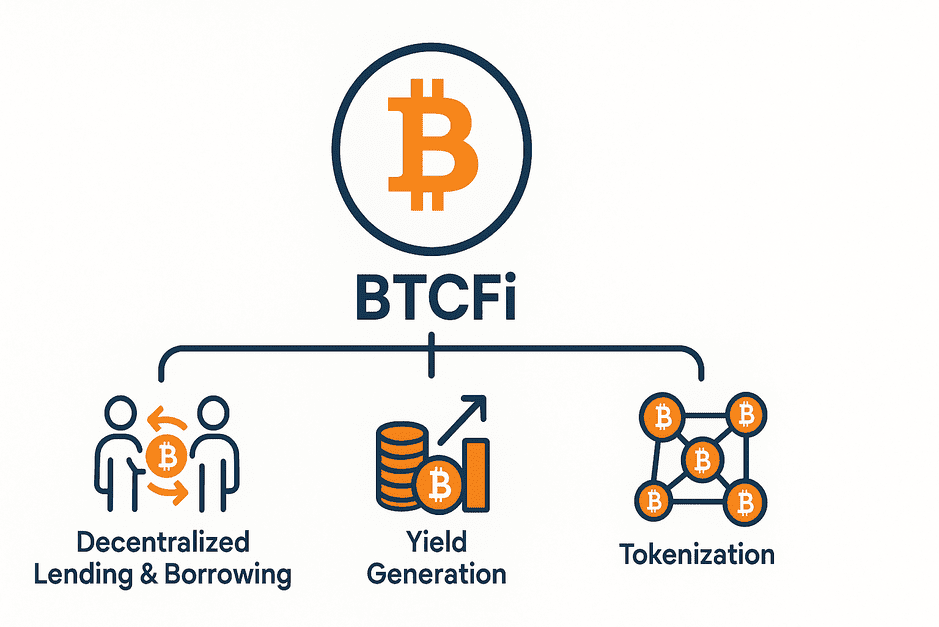
At its core, BTCFi is about turning idle BTC into income-generating capital while preserving Bitcoin exposure. Instead of sitting unused, Bitcoin can now function as working capital.
BTCFi enables passive income through several mechanisms:
1. Bitcoin Lending and Credit Markets
These operate similarly to money markets in traditional finance, but without banks. BTC can be lent to borrowers or institutions under transparent, on-chain conditions. The asset remains auditable, and risk is managed through over-collateralization or permissioned credit structures.
2. Yield-Bearing Bitcoin Assets
BTC can be deposited into structured vaults that deploy capital across conservative strategies such as lending, collateralized borrowing, or restaking-based security models. Returns come from fees and protocol incentives rather than speculative price appreciation.
3. Liquidity Provision and Trading Fees
BTCFi allows holders to provide Bitcoin-based liquidity to decentralized trading venues. In return, they may earn a share of trading fees generated by market activity, transforming long-term holders into passive liquidity providers.
Trusted BTCFi Paths Emerging Today
BTCFi is still maturing, but a small number of protocols have emerged as infrastructure-grade, rather than experimental.
Rather than chasing yield, these platforms focus on security, conservative design, and Bitcoin alignment:
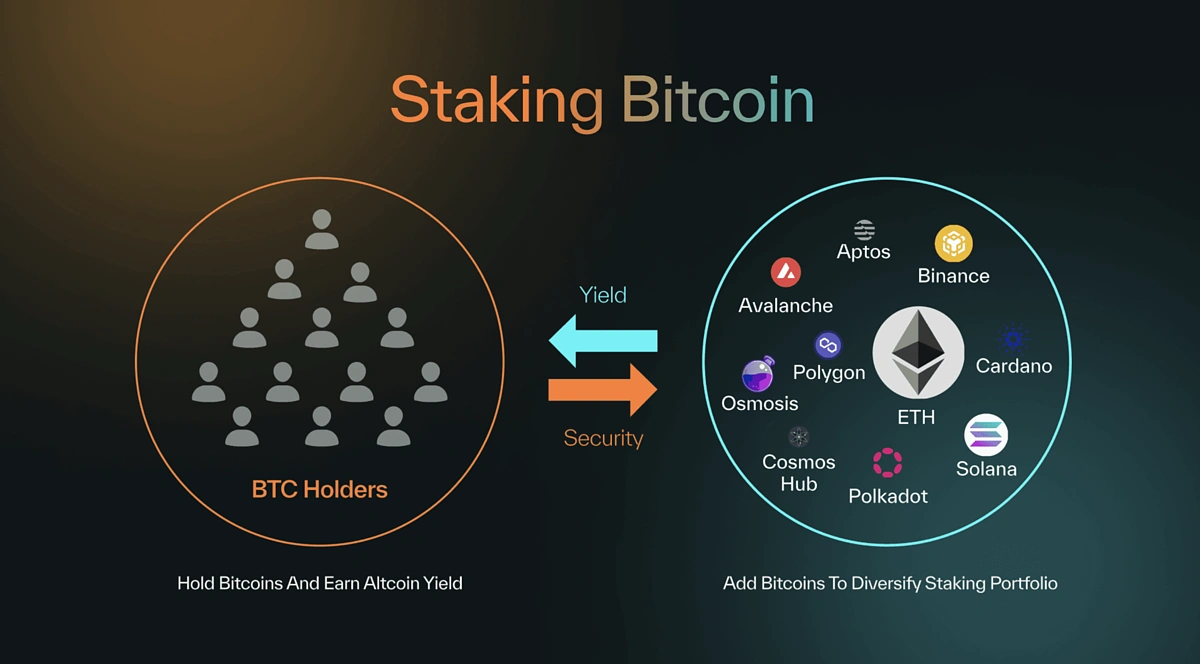
- Babylon enables native Bitcoin staking without bridges, allowing BTC to secure other networks while remaining self-custodied.
- Lombard and Solv issue liquid staking representations of BTC, designed for low-leverage yield strategies and institutional participation.
- Pendle allows BTC-linked yield to be separated and traded, offering structured income products rather than speculative farming.
- Threshold Network and tBTC focus on decentralized, non-custodial Bitcoin representations used across BTCFi applications.
- Maple and IXS bring regulated or permissioned credit markets to Bitcoin, targeting institutions seeking yield without liquidating BTC.
These systems are designed for long-term Bitcoin holders who want income without compromising custody or conviction.

Why Passive Income Changes Bitcoin Behavior
BTCFi fundamentally alters how Bitcoin is used. Instead of choosing between holding BTC or deploying it for yield, holders can now do both.
BTCFi allows users to:
- Maintain full exposure to Bitcoin
- Preserve long-term conviction
- Earn income without selling
This creates a powerful feedback loop:
More BTC enters BTCFi → deeper liquidity → more stable yields → broader participation.
Bitcoin stops being frozen wealth and becomes productive capital. That is the real promise of BTCFi.
Conclusion: Bitcoin’s Next Chapter
Bitcoin has already secured its place in history. Its PoW-based network proved that digital scarcity works, that value can move without permission, and that a decentralized system can protect trillions of dollars without a central authority.
But money alone does not create an economy.
BTCFi represents Bitcoin’s evolution from a static store of value into a system capable of sustained financial activity. BTC can finally be lent, earn yield, support markets, and circulate; all while remaining anchored to Bitcoin’s core principles of security and self-custody.
As BTCFi matures, Bitcoin no longer has to choose between safety and utility. It can be both sound money and productive capital.



 Thank you for your feedback! We’re glad you found this article helpful.
 An error occurred while sending the form, please try again.
 We are sorry. You've already sent a message within the last 60 seconds. Please wait before sending another.
 Thank you for letting us know! Our team will review your feedback to help improve our content.
We're sorry you did not find what you were looking for. Please select the reason this article was not helpful.