


 7 min read
Best Investment Strategy For Bitcoin, Gold, and Silver In 2026




 AI Overview
Late‑2025 highs for gold, silver and Bitcoin reflect fiat weakness and rising real demand. Tokenization now lets investors hold these assets on‑chain and earn yield; the strategic play is a combined allocation and active, on‑chain rebalancing into 2026.
- Balanced portfolio: Combine gold (stability), silver (industrial growth/leverage), and Bitcoin (non‑sovereign upside) to hedge currency debasement and capture growth.
- On‑chain rebalancing: Use tokenized RWAs and the “Ratio Trade” to swap profits between assets without fiat, enabling compounding and more efficient tax-aware rebalances.
- Key drivers: Gold: central‑bank buying and dedollarization. Silver: multi‑year supply deficits from EV/solar demand. Bitcoin: scarcity, privacy narrative and rising institutional reserve use.
Late 2025 saw new all-time highs for OG cryptocurrency Bitcoin and precious metals Gold and Silver.
Did these assets suddenly become more valuable, or did they just cost more in fiat currencies like the dollar, euro, or pound?
The simple answer is the latter. But both are true if we consider that part of their value comes from qualities that are hard to quantify—such as privacy preservation.
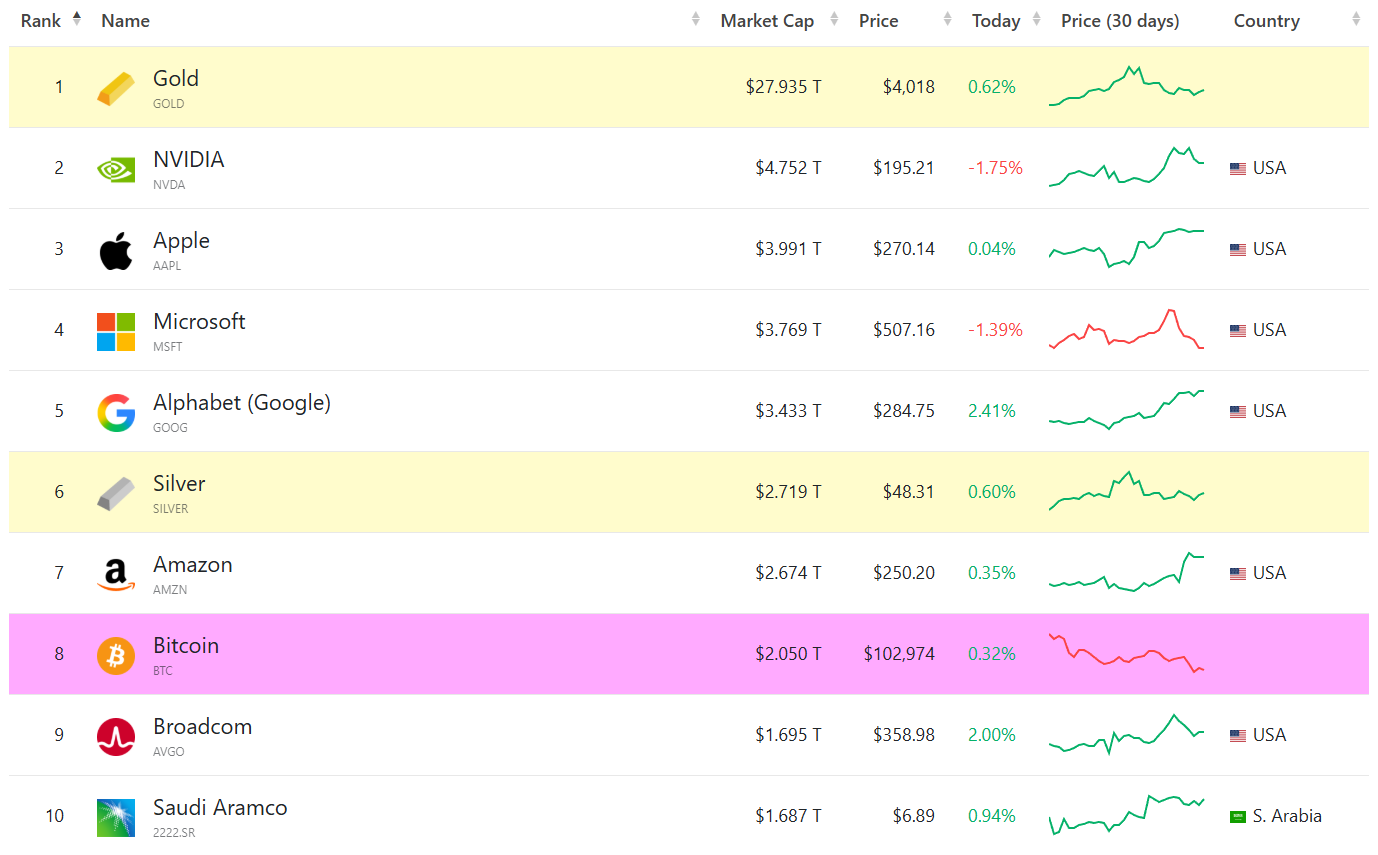
As gold’s market capitalization climbs toward $30 trillion and Bitcoin and silver reach around $3 trillion each (see latest data below), these assets are likely to remain top priorities for investors in the coming year.
What makes these assets so perfect for any investment strategy? Let’s get into it.
Oh, and before you ask why precious metals are sharing headline space with Bitcoin, it’s because they’ve been a major part of the Real-World Asset (RWA) Tokenization narrative for years.
That’s right, you can now buy and own gold and silver on the blockchain and in some cases even earn a yield on these traditionally non-yield bearing assets.
Ownership of valuable assets is a key differentiator for investors
For many years, US dollars were backed by gold, and could be redeemed for the yellow metal.
The problem with fiat money today is that – like so many critics say about Bitcoin – it’s backed by nothing. The money in your bank exists only because your central bank tells you that it does, and that is has value.
Fiat is a promise that is repeatedly broken by the banks.
Savvy investors realize this, and that true ownership of assets that store value better than fiat (which tends to increase in value over time) is vital to surviving the financial turmoil of recent years.
These assets are known as safe havens because they help hedge against the uncertainty that surrounds global economies. This uncertainty might include geopolitical events, such as conflict and war, or fiscal and monetary policies that are detrimental to a nation’s currency.
Precious metals have a long history as safe-haven assets, but recently, many analysts have found themselves asking the same question: Is Bitcoin a safe-haven asset now?
 DON’T GET REKT
Curated drops, testnets and red flag alerts straight to your inbox ✌️
 You’re in. Thanks for joining our newsletter.

There are reasons both for and against considering Bitcoin a safe haven asset:
For:
- Performs better as a store of value than fiat currencies
- Can also be used as a medium of exchange and unit of account (sound money)
- Fixed supply of total 21 million coins
- Non-sovereign asset: it cannot be controlled
- Growing “strategic reserve” narrative and actual implementation with institutions
Against:
- Relatively short history compared to gold and silver
- Not universally accepted as valuable
- Considerable price volatility compared to gold and silver
- Previous history as a “risk-on” asset like a tech stock
For these reasons, Bitcoin can be considered complementary to, rather than a key component of, a safe-haven-focused investment strategy.
If gold provides stability, and Bitcoin provides higher growth potential but increased risk, the obvious solution is to hold both. Silver, then, offers a best of both worlds approach.
Let’s take a look at each asset in more detail.
| Asset | Primary Role in Portfolio | Key Differentiating Factor |
Gold |
Stability & Safe Haven | Primarily a monetary metal; a proven anchor against fiat currency risk. |
Bitcoin |
High Growth & Non-Sovereign Hedge | Highly volatile; acts like a “risk-on” asset with fixed supply. |
| Silver | Leveraged Upside & Dual Hedge | Industrial Demand for green/future technologies; combines an inflation hedge with growth exposure. |
Gold’s role in your 2026 portfolio
Gold is recognized as legal currency in several U.S. states and has served for centuries as both money and a trusted investment.
Although gold can be owned in many forms, let’s focus on tokenized gold — digital representations of 1-troy-ounce bullion bars, such as Tether Gold ($XAU).
Just as stablecoins can be redeemed for the dollars backing them, gold-backed cryptocurrencies can be redeemed for physical gold. This process, known as taking delivery, is available anytime for a shipping fee.
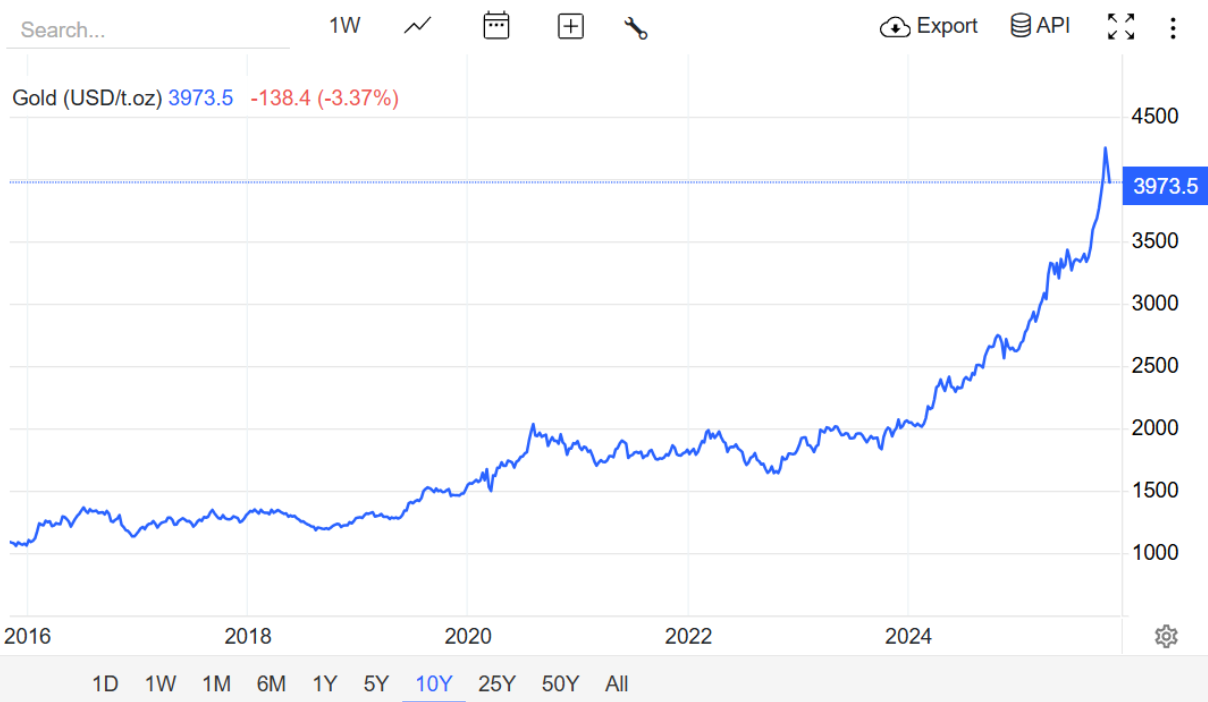
Holding gold-backed tokens allows investors to gain exposure to gold’s stability and growth potential without the burden of storing or insuring physical bullion.
Two major narratives are driving institutional and retail investment in gold this year, and both are likely to persist into 2026:
- Central Bank Buying: Central banks, led by China’s People’s Bank (PBoC), are accumulating record amounts of gold while reducing their US Treasury holdings. India’s central bank is not just buying more gold but repatriating reserves held overseas — a trend that accelerated after sanctions on Russia during the Ukraine war. Poland, Turkey, and several other nations are following similar strategies.
- Dedollarization: The global shift away from the US dollar in trade settlements poses a strategic challenge for Washington. BRICS nations are exploring a shared digital currency to strengthen their financial independence. Many of Donald Trump’s proposed economic policies — including the GENIUS Act, which requires stablecoins to be fully backed by U.S. dollars — appear aimed at countering this dedollarization trend.
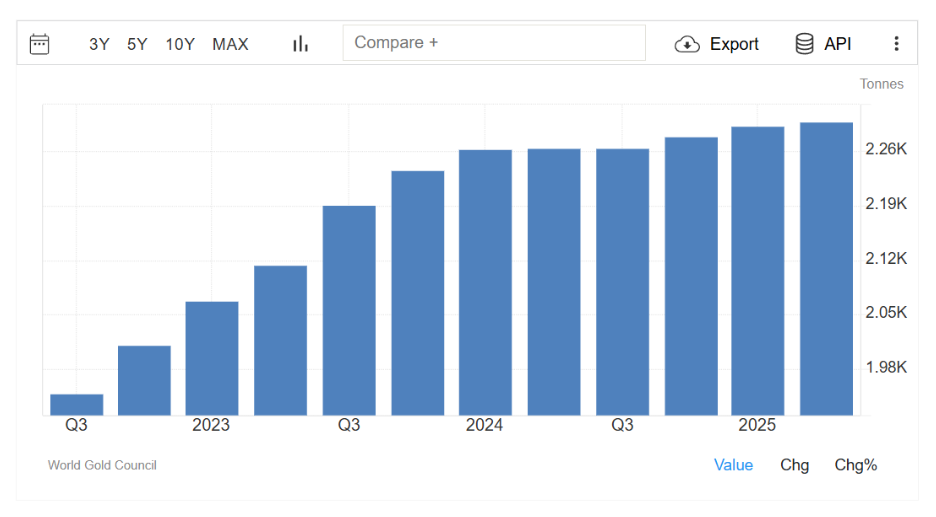
These forces, coupled with surging retail demand, have pushed gold to a historic rally in 2025. The metal hit multiple all-time highs, peaking at $4,381 per ounce in late October.
As gold stabilizes following this incredible price action, capital is likely to rotate from gold into other assets, such as silver and bitcoin.
DON’T GET REKT
Curated drops, testnets and red flag alerts straight to your inbox ✌️
Silver’s role in your 2026 portfolio
Like gold, silver is a tangible, real asset you can physically hold — but its industrial use cases make it even more dynamic.
Few realize that silver has faced supply deficits for over five consecutive years. Mining simply cannot keep up with demand. In basic economic terms, when demand outpaces supply, prices tend to rise — and that trend looks set to continue.
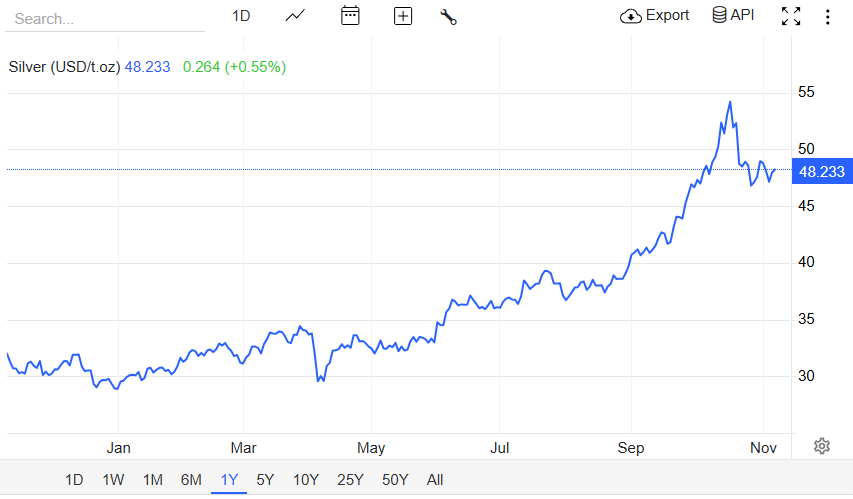
This demand doesn’t come primarily from retail buyers or jewelry production. It’s being driven by institutional and industrial needs — especially from the electric vehicle (EV) and solar industries.
Each electric car requires 25 to 50 grams of silver, while every solar panel needs 7 to 20 grams. Multiply that by millions of cars and panels being produced globally, and the scale of consumption becomes clear.
Silver is also used in missile manufacturing, and once those missiles are deployed, the silver is gone for good. That destruction further tightens supply and reinforces the structural deficit.
Given these factors, silver shows stronger short- and medium-term growth potential than gold. It remains an active industrial metal while serving as a reliable store of value — a rare dual role that strengthens its place in a diversified 2026 portfolio.
Bitcoin’s role in your 2026 portfolio
Bitcoin is often referred to as digital gold, though not everyone agrees. References to Bitcoin as like gold appear in the original whitepaper and communications from its creator, Satoshi Nakamoto, and have continued ever since.
Critics argue that where gold has tangible, in-built value, Bitcoin does not. Perhaps they overlook the value baked into each Bitcoin via the energy expended in the mining process.
Both gold and bitcoin derive some of their value from scarcity; because these assets are not abundant, they are desirable. Both assets are also associated with notions such as financial independence, freedom, and privacy. Although it is difficult to put a value on these, they are perceived as valuable by certain groups and individuals.
Some people consider not needing to use a bank very valuable indeed.
Bitcoin’s role, then, operates both as functional (preserving, storing and growing wealth) but also ideological (freedom and privacy).
How to allocate for a resilient portfolio
This is not financial advice, but here’s how a conservative, risk-adjusted allocation might look for long-term stability:
| Strategy Type | Gold | Silver | Bitcoin | Notes |
Balanced Conservative |
60% | 20% | 20% | Prioritizes wealth preservation with moderate exposure to Bitcoin. |
Even Split |
50% | 25% | 25% | Equal focus on metals and digital assets for diversified growth. |
| Ultra-Conservative | 75% | 15% | 10% | Favors gold’s historical stability over volatility in crypto. |
How you allocate depends on your risk tolerance and time horizon.
Some investors prefer to start with equal amounts in each asset, while others tilt more heavily toward gold due to its proven record as a store of value.
If you’re comfortable taking on more risk for higher potential returns, increase the Bitcoin share accordingly.
The Ratio Trade: A profit-taking strategy
Every portfolio needs periodic rebalancing. Instead of exiting into fiat, you can take profits from one asset and move them directly into another.
In the resilient portfolio strategies outlined above, there’s a deliberate 0% cash allocation. That’s because modern blockchain and crypto infrastructure make it easy to swap directly between assets. You can rebalance without ever converting back to fiat — though using a stablecoin pair as an intermediary may sometimes be necessary.
This approach allows one initial investment to compound over time. Profits from a high-performing asset can flow into one with slower growth potential, maintaining balance while capturing gains.
For example:
- Move profits from Bitcoin (after strong rallies) into gold for stability.
- Shift from silver into Bitcoin when the crypto market shows stronger momentum.
This method — known as the Ratio Trade — helps investors grow portfolios faster without increasing their fiat exposure. It turns asset performance differences into opportunities rather than requiring new capital.
Final thoughts



 Thank you for your feedback! We’re glad you found this article helpful.
 An error occurred while sending the form, please try again.
 We are sorry. You've already sent a message within the last 60 seconds. Please wait before sending another.
 Thank you for letting us know! Our team will review your feedback to help improve our content.
We're sorry you did not find what you were looking for. Please select the reason this article was not helpful.