


 3 min read
Paxos Global Dollar Stablecoin $USDG: What Is It Good For?




 AI Overview
Paxos’s Global Dollar (USDG) is a regulated, consortium-governed stablecoin that redistributes roughly 97% of reserve income to partners. With MAS and MiCA compliance and rapid 2025 adoption, it seeks to monetize ecosystem activity rather than issuer-held yield.
- Revenue-redistribution: About 97% of yield is shared with partners, aligning incentives and letting platforms monetize stablecoin flow instead of the issuer retaining profits.
- Regulatory & consortium backing: MAS and MiCA compliance plus partnerships with exchanges, card networks and banks bolster institutional credibility and integrations.
- Strategic upside & execution risk: Positions USDG as a partner-first challenger to USDC/USDT; success depends on APAC rollout, exchange integrations and ecosystem execution.
As crypto regulation becomes more defined, particularly with a more constructive policy stance in the US, the emergence of new regulated stablecoins is not surprising.
What is notable is when a new entrant comes from Paxos, a long-standing issuer with deep regulatory experience. Paxos is best known for Pax Gold, PayPal USD, and its earlier 2018 stablecoin, Pax Dollar, one of the first regulated USD-backed stablecoins.
Global Dollar ($USDG) builds on that legacy, but introduces a different economic model.
What Is Global Dollar?
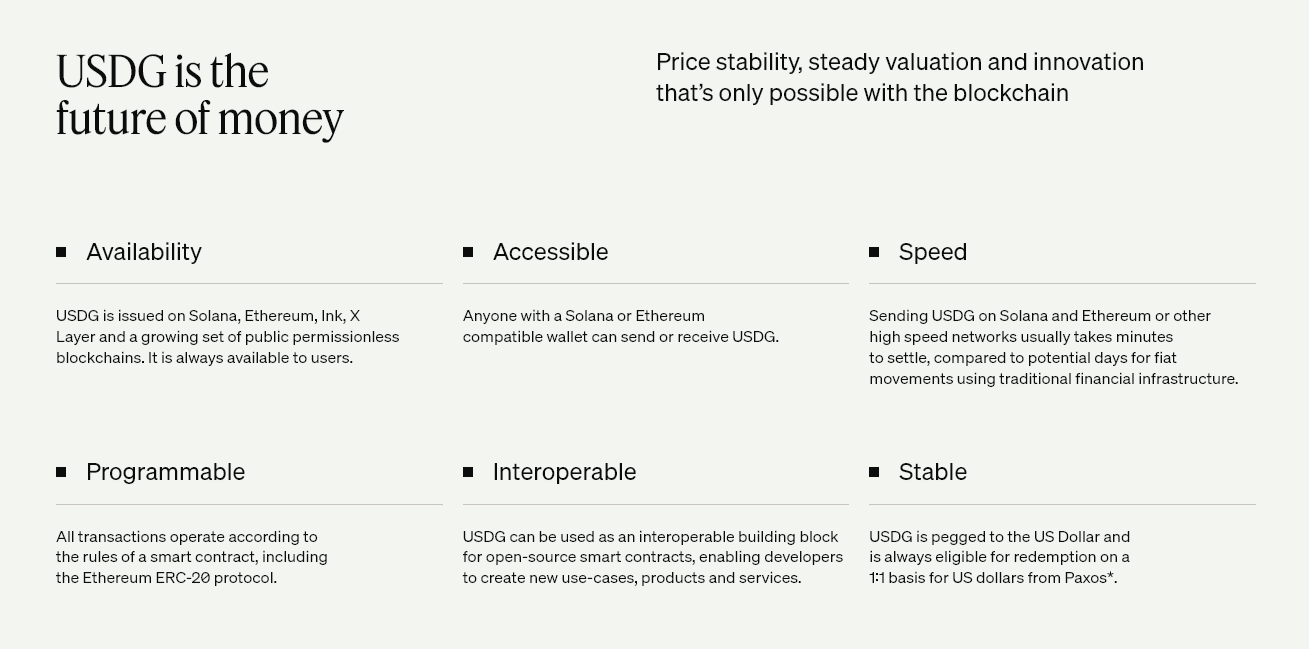
Global Dollar is a regulated stablecoin issued by Paxos and designed to function as shared financial infrastructure rather than a purely issuer-controlled product.
Its defining feature is revenue redistribution. Unlike traditional stablecoins where the issuer retains most of the yield generated from reserves, USDG redistributes approximately 97% of its income to growth partners and ecosystem participants.
USDG is regulated by the Monetary Authority of Singapore (MAS) and is MiCA-compliant in Europe. It is currently available on Ethereum, Solana, and a smaller set of emerging blockchains, including Ink.
Rather than prioritizing passive exchange listings, USDG is structured to incentivize active ecosystem participation.
 DON’T GET REKT
Curated drops, testnets and red flag alerts straight to your inbox ✌️
 You’re in. Thanks for joining our newsletter.

USDG Launch and Adoption
Although USDG technically launched in late 2024, adoption accelerated in 2025, particularly following its expansion into European markets.
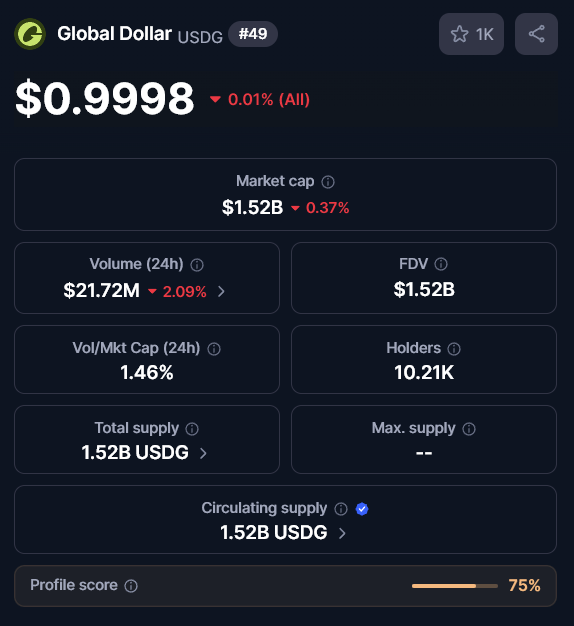
That expansion coincided with broader accessibility and distribution, allowing USDG to move beyond its original institutional-first positioning. As a result, the stablecoin grew rapidly, reaching a market capitalization of over $1.5 billion.
Integrations with Kraken and Robinhood, alongside roughly 100 ecosystem partners, have since driven renewed momentum.
The question now is whether USDG offers enough differentiation to sustain that growth.
Global Dollar ($USDG) Use Cases
As a stablecoin, USDG supports a distinct set of applications:
- Remittances: Low-cost, cross-border payments with regulatory clarity
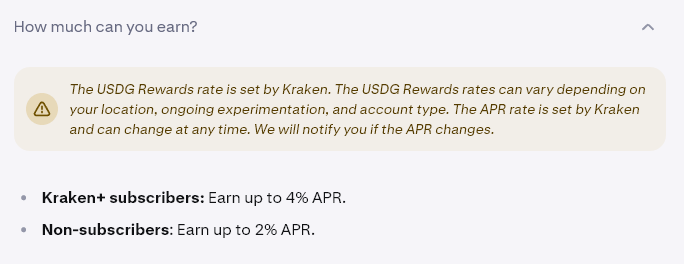
- Yield programs: Institutional “earn” products via partner platforms
- Payments: Ecommerce and merchant settlement
- Trading pairs: Potential base currency across centralized and decentralized markets
- Treasury management: Regulated dollar exposure for institutions
- DeFi liquidity: Use in lending, liquidity provision, and structured products
The redistribution model may be particularly attractive to platforms that want to monetize stablecoin activity without issuing their own asset.
Roadmap Outlook
USDG remains small relative to the two dominant stablecoins—USDT and USDC—but its roadmap is explicitly focused on closing that gap.
An Asia-Pacific (APAC) rollout in early 2026 is expected to introduce significant new liquidity and transactional volume. Beyond that, the roadmap includes:
- Expansion to additional blockchains and Layer 2 networks
- Deeper DeFi integrations
- Broader enterprise and payments partnerships
Execution across these areas will determine whether USDG can compete with stablecoins such as DAI or Ethena’s USDe.
Team and Ecosystem Backing
While issued by Paxos, Global Dollar is governed by an open consortium that includes:
- Anchorage Digital
- Galaxy Digital
- Kraken
- Robinhood
- Worldpay
More recently, Mastercard, Visa, and DBS Bank have joined as ecosystem partners, strengthening USDG’s institutional profile.
This consortium-based structure aligns with USDG’s revenue-sharing approach, distributing incentives across the network rather than concentrating them at the issuer level.
How USDG Compares to USDC and USDT
| Feature | Global Dollar (USDG) | USDC (Circle) | USDT (Tether) |
| Revenue Model | Partner-first; ~97% redistributed | Issuer-first with select partner deals | Issuer-retained yield |
| Partner Incentives | Programmatic, activity-based | Contractual agreements | Indirect (liquidity demand) |
| Regulation | MAS (Singapore), MiCA (EU) | US state-level + MiCA | Offshore (BVI) |
| Target Users | Institutional platforms and ecosystems | Broad retail + DeFi | Traders and emerging markets |
| Reserve Transparency | Monthly attestations, segregated accounts | Monthly attestations, BlackRock funds | Quarterly attestations, limited disclosure |
Final Thoughts
Global Dollar represents a structural challenge to the stablecoin duopoly dominated by USDT and USDC.
Rather than competing on liquidity alone, USDG differentiates through regulatory clarity, consortium governance, and revenue redistribution. Whether that model can meaningfully shift market share remains uncertain, but it introduces a compelling alternative for institutions and platforms seeking alignment rather than dependency.
If execution matches intent, USDG could become a meaningful pillar of regulated stablecoin infrastructure in 2026 and beyond.



 Thank you for your feedback! We’re glad you found this article helpful.
 An error occurred while sending the form, please try again.
 We are sorry. You've already sent a message within the last 60 seconds. Please wait before sending another.
 Thank you for letting us know! Our team will review your feedback to help improve our content.
We're sorry you did not find what you were looking for. Please select the reason this article was not helpful.