





Crypto lottery sites offer a range of advantages over traditional lotteries, including transparency, fairness, instant payouts, enhanced privacy, global accessibility, and higher payout percentages. In this article, we rank the best crypto lottery sites with Thunderpick rated as our number one Bitcoin lottery site overall, offering a variety of options including instant draws, daily jackpots, and progressive jackpots.
Ranking of the Best Crypto Lottery Sites
Here is our full ranking of the best crypto lottery sites, with the following crypto gambling sites making our top ten: Thunderpick, Vave, Crypto Games, Bets.io, Rainbet, Jack.com, Crypto Royal, TrustDice, FoxSlots and 7Bit Casino.
-
 PromotionsCoins


-
 Coins
Coins

-
-
 PromotionsCoins

-
 PromotionsCoins

-
 PromotionsCoins

-
 PromotionsCoins
-
 Coins
Coins
-
 Coins
Coins
-
 Coins
Coins
-
 Coins
Coins
-
 PromotionsCoins

-
 PromotionsCoins
-
 Coins
Coins
-
 PromotionsCoins
-
 PromotionsCoins
-
 Coins
Coins
-
 PromotionsCoins



-
 PromotionsCoins
-
 PromotionsCoins
Best Bitcoin Lottery Sites: Quick Picks
Reviewing the Best Sites for Crypto Lottery Betting


Thunderpick Casino, established in 2017 and licensed in Curacao, offers a unique blend of casino gaming and sports betting. The platform supports anonymous play and features a secure, licensed environment.
The casino boasts over 5,060 games, including top titles from providers like Pragmatic Play, Yggdrasil, and Betsoft. Popular games include Sweet Bonanza and Aztec Magic, with exclusive games like Thunder Spin adding to the allure.
Thunderpick provides a comprehensive sportsbook with a vast range of options, including eSports like Dota 2 and CS:GO, and traditional sports such as soccer and basketball. The platform’s partnerships with teams like Evil Geniuses highlight its commitment to the genre.
Payment options are robust, focusing on cryptocurrencies like Bitcoin, Ethereum, and Litecoin. Thunderpick ensures a smooth deposit and withdrawal experience for crypto-savvy gamblers.
- Wide range of ongoing promotions
- Fast, fee-free crypto withdrawals
- Over 5,000 slots and live tables
- Competitive esports betting margins
- No automated deposit/loss limits
- No native mobile betting apps
Year Founded
- 2017
Licenses
- Curaçao
Cryptocurrencies
- Bitcoin
- Bitcoin Cash
- Ethereum
-
+8
Available countries
- Afghanistan
- Albania
- Algeria
-
+246
Number of games
- 10000
Languages
- English
- Chinese (Mandarin)
- French
-
+5


Vave, established in 2022 and licensed in Curacao, allows for anonymous play using various cryptocurrencies. It provides a secure and modern platform, catering to both new and experienced players.
The casino offers an impressive array of over 11,000 games, including titles from leading providers like Betsoft and BGaming. Popular games include Gates of Olympus 1000 and Sugar Rush 1000.
Vave's sportsbook is extensive, featuring a wide range of sports and esports, from Soccer and Basketball to eSports like League of Legends and Valorant, ensuring diverse betting options.
Payment methods are primarily focused on cryptocurrencies, including Bitcoin, Ethereum, and Litecoin, along with several others, facilitating fast and secure transactions globally.
- Staggering selection of over 10,000+ online slots
- Beautiful site that is quick and easy to navigate
- Choose from 18 different languages
- Claim a 150% Casino Welcome Bonus up to 1.5BTC + 100 Free Spins
- Just nine cryptocurrencies supported which is less than competitors
- The live chat function is only available after registration, making it hard for new players to ask questions
Year Founded
- 2022
Licenses
- Curaçao
Cryptocurrencies
- Bitcoin
- Bitcoin Cash
- Dogecoin
-
+55
Available countries
- Afghanistan
- Albania
- Algeria
-
+240
Number of games
- 16000
Languages
- English
- German
- Russian
-
+14
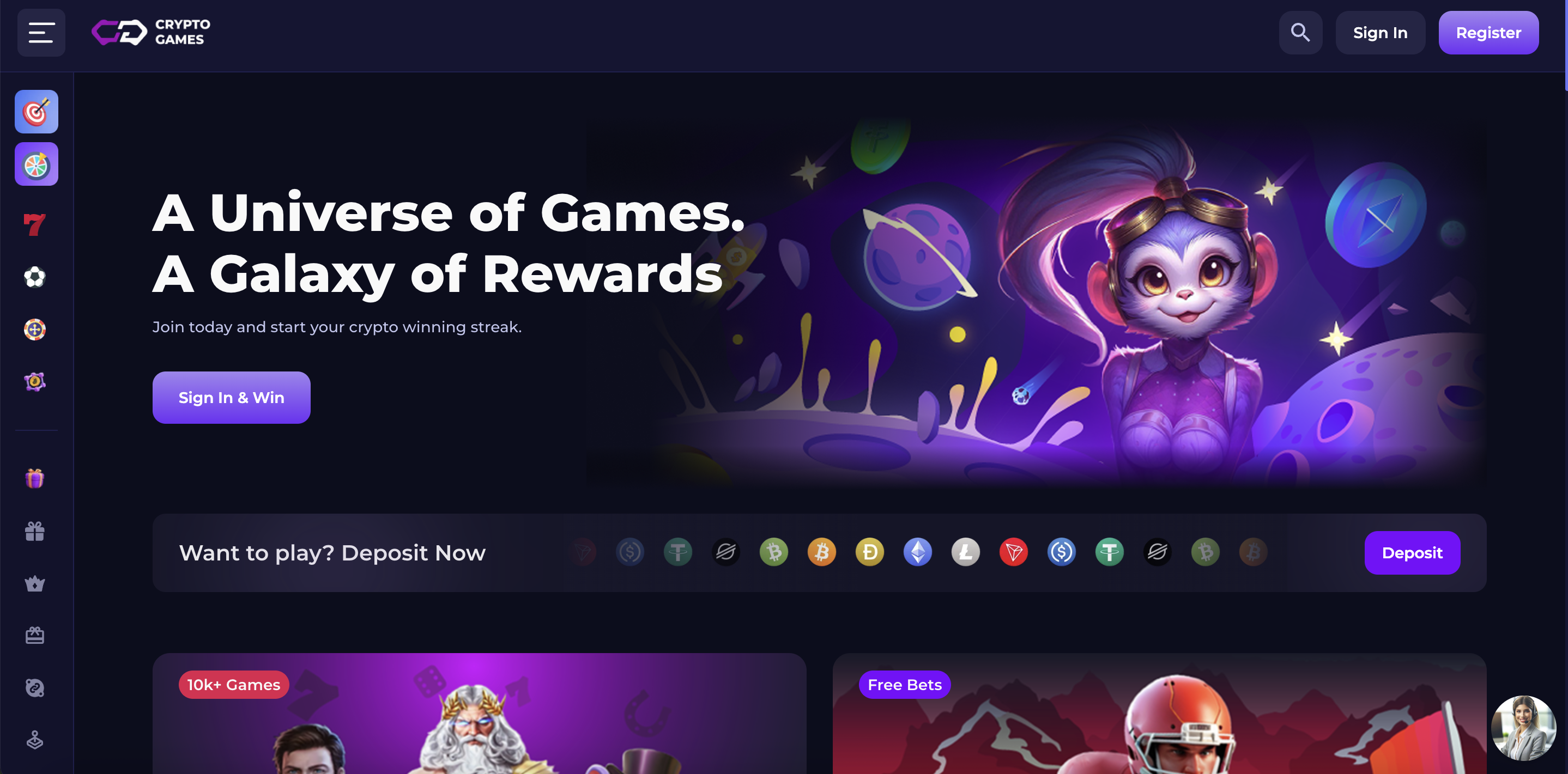
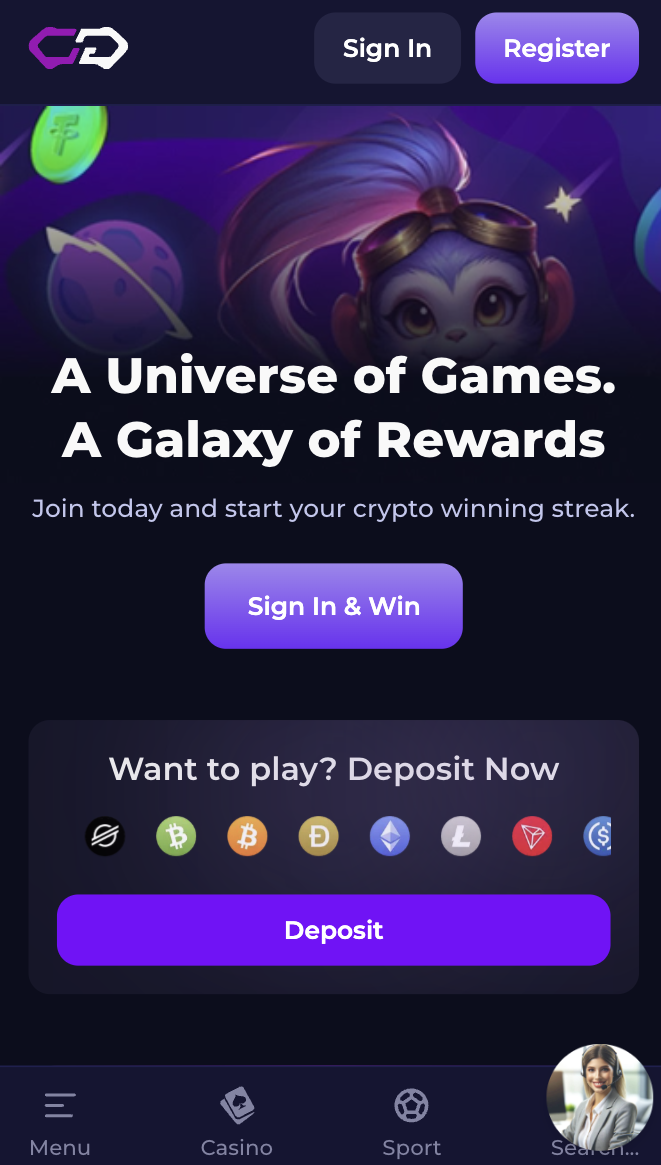
Crypto.Games, established in 2014 and operating under a Curacao license, offers a regulated online gambling environment. Anonymous play is not permitted, and all players must register with a username.
The casino boasts 10 games, including proprietary titles like Blackjack, Roulette, and Slots. All games are developed in-house by Crypto.Games, offering a unique gaming experience.
While Crypto.Games primarily focuses on casino products, it does not feature a sportsbook. Instead, players can enjoy sports-themed games such as the exclusive CryptoGames Minesweeper.
Payment options include a variety of cryptocurrencies like Bitcoin, Ethereum, and Litecoin, catering to a crypto-savvy audience looking for secure transaction options.
- Over 6,600+ casino games
- Fast crypto deposits and on-chain withdrawals
- Generous welcome bonus up to 20,000 USDT
- Weekly rakeback and daily bonus wheel
- High wagering requirements on welcome bonus
- Limited live chat hours for support
Year Founded
- 2023
Licenses
- Costa Rica
Cryptocurrencies
- Tether
- Bitcoin
- Ethereum
-
+9
Available countries
- Afghanistan
- Albania
- Algeria
-
+246
Number of games
- 10383
Languages
- English
- Spanish
- Arabic
-
+9


Bets.io, founded in 2021 and licensed by the Curaçao Gaming Control Board, is operated by Bets Entertainment N.V. This casino does not support anonymous play, ensuring a secure environment for its users.
The casino offers a vast array of games, with a count exceeding 10,000. It features popular providers such as Pragmatic Play, Evolution Gaming, and NetEnt. Top games include Gates of Olympus and Sweet Bonanza.
While Bets.io does not include a traditional sportsbook, it offers sports-themed casino games catering to sports enthusiasts. This enhances the gaming variety for players interested in sports.
Bets.io supports various cryptocurrencies including BTC, ETH, and USDT, among others. This selection facilitates swift and secure transactions, optimizing user convenience and trust.
- Huge welcome offers including a 1BTC 1st Deposit Match
- Partners with over 50 leading casino game developers
- Excellent customer service available 24/7
- Supports 12 key cryptocurrencies including Bitcoin, Tether and Litecoin
- Unavailable in many countries around the world
- Website only available in English
Year Founded
- 2021
Licenses
- Autonomous Island of Anjouan
Cryptocurrencies
- Bitcoin Cash
- Bitcoin
- Ethereum
-
+10
Available countries
- Afghanistan
- Albania
- Algeria
-
+243
Number of games
- 13509
Languages
- English
- German
- French
-
+8
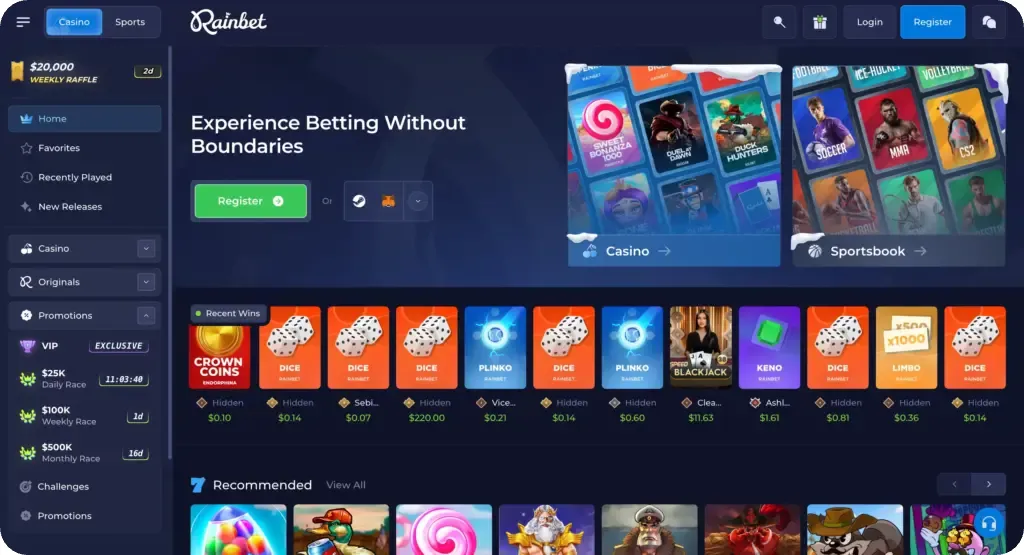
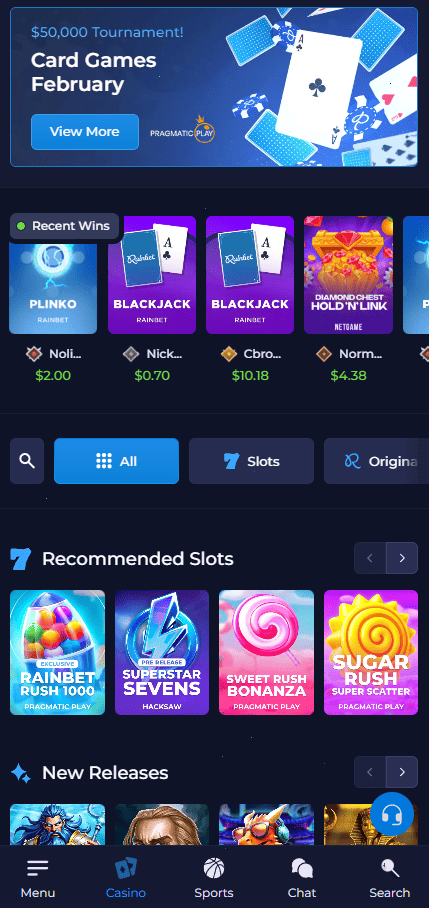
RainBet Casino delivers a holistic gaming platform that caters to both modern and traditional casino players. There is a rich library of games collected from top-notch game providers, in-house titles with a Provably Fair system, plus a loaded sportsbook covering all major leagues. The ease of registration, safe & secure platform, and responsiveness of the website make it a perfect casino choice.
- Large game library with over 6,000 titles available
- Fast deposits and withdrawals, often completed within minutes
- KYC-free signup allows quick and easy account creation
- 24/7 live chat support with fast response times
- Strong crypto support with over 20 supported currencies
- Wide sportsbook coverage including esports and niche markets
- Provably fair games increase transparency and player trust
- VIP program offers consistent rewards for regular players
- Offshore license offers weaker protection than major regulators
- Welcome bonus structure lacks clarity and consistency for users
- High wagering requirements reduce overall bonus value significantly
- Help center is limited with minimal supporting resources
- No dedicated mobile app, only browser-based mobile access
- KYC may be required later, delaying withdrawals unexpectedly
- Responsible gambling tools are limited compared to competitors
- Sportsbook odds margins higher than industry-leading platforms
Year Founded
- 2023
Licenses
- Comoros Gambling License Authority
Cryptocurrencies
- Bitcoin
- Ethereum
- Tether
-
+19
Available countries
- Afghanistan
- Albania
- Algeria
-
+237
Number of games
- 6956
Languages
- Arabic
- English
- Spanish
-
+6
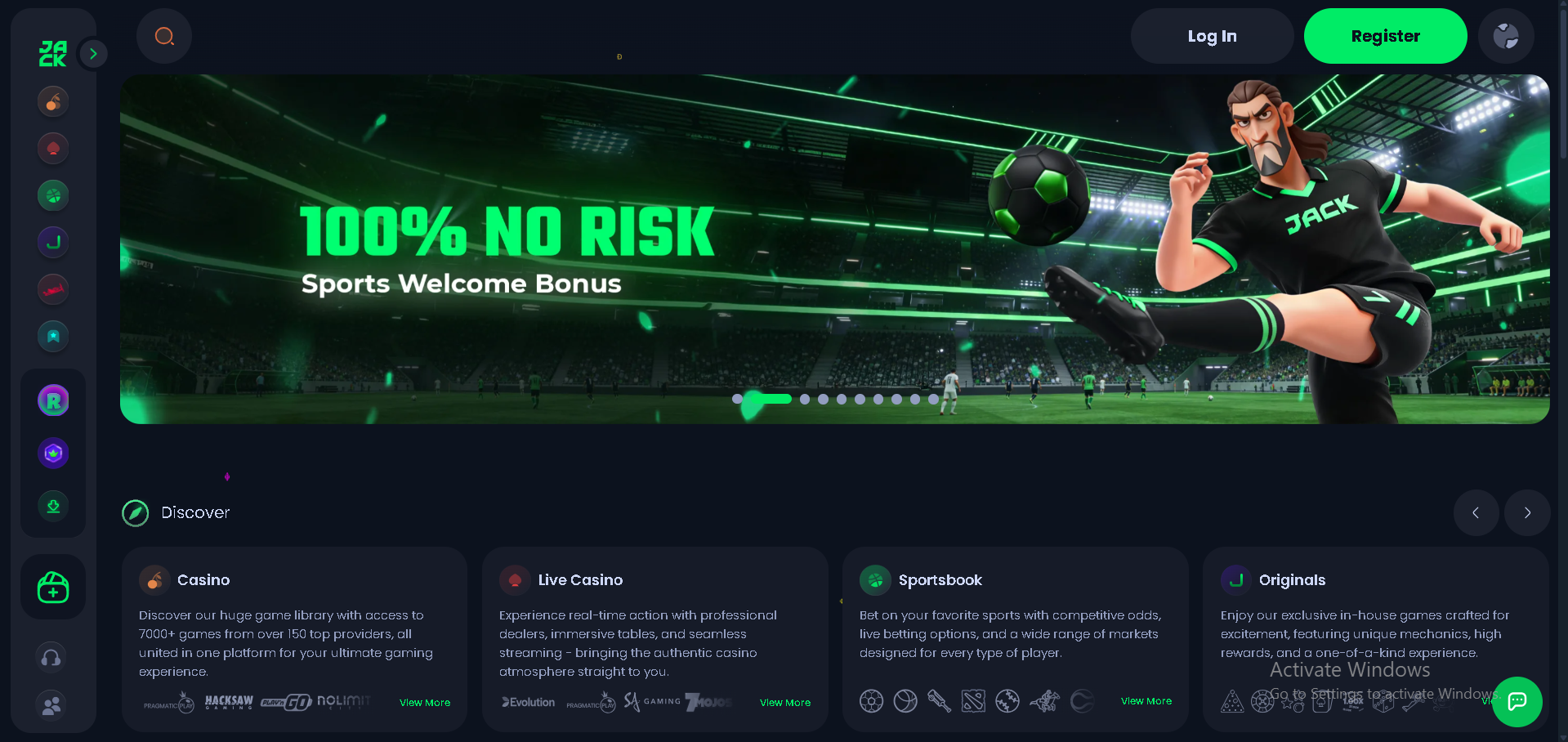
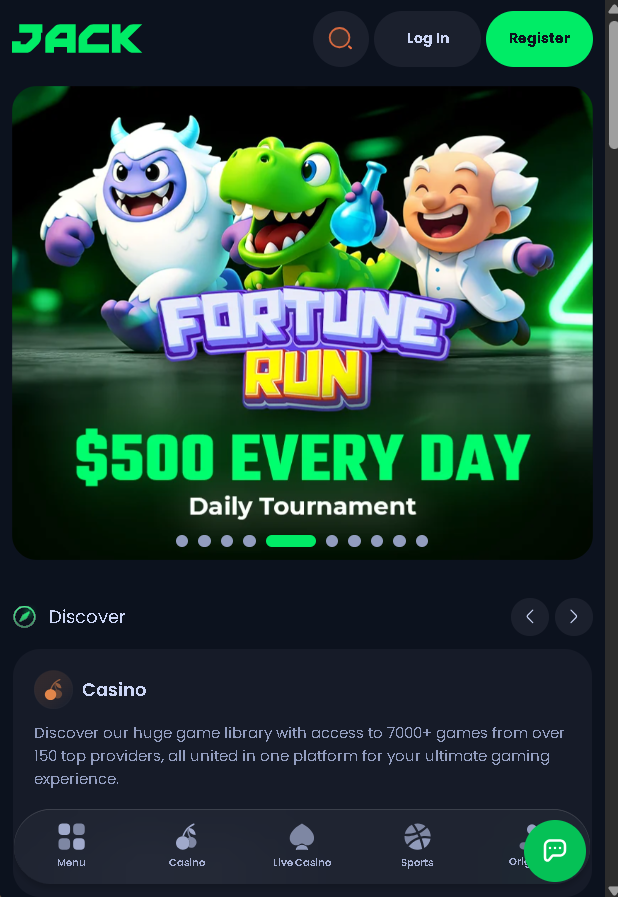
Jack Casino is a holistic online gambling platform that offers sleek user interface and a diverse selection of games from top-tier providers. The casino stands out for its no-wagering free spins welcome bonus, cryptocurrency support, and built-in exchange functionality for easier transactions. Based on the features offered, it appeals to both casual and experienced crypto casino players.
- Over 9,000 casino games and extensive sportsbook coverage
- Supports 17 cryptocurrencies, including Bitcoin and Monero
- Fast crypto deposits after one blockchain confirmation
- Withdrawals typically processed within 24 hours
- Wager-free free spins for new casino players
- Smooth, intuitive interface across desktop and mobile
- Risk-based KYC allows quick, low-friction signup
- VIP rakeback program with ongoing rewards
- Integrated crypto on-ramp for non-crypto users
- No fiat payment methods available
- No demo mode for casino games
- Sparse FAQ and poor self-service support
- Welcome bonus capped at $100 winnings
- No phone support available
- Sportsbook odds not market-leading
- No staking, token, or crypto swap features
- Inactivity fee after 12 months unused
- Limited jackpot game selection
Year Founded
- 2021
Licenses
- Curaçao
Cryptocurrencies
- Bitcoin
- Tether
- USD Coin
-
+13
Available countries
- Afghanistan
- Albania
- Algeria
-
+220
Number of games
- 9518
Languages
- English
- Turkish
- Russian
-
+10
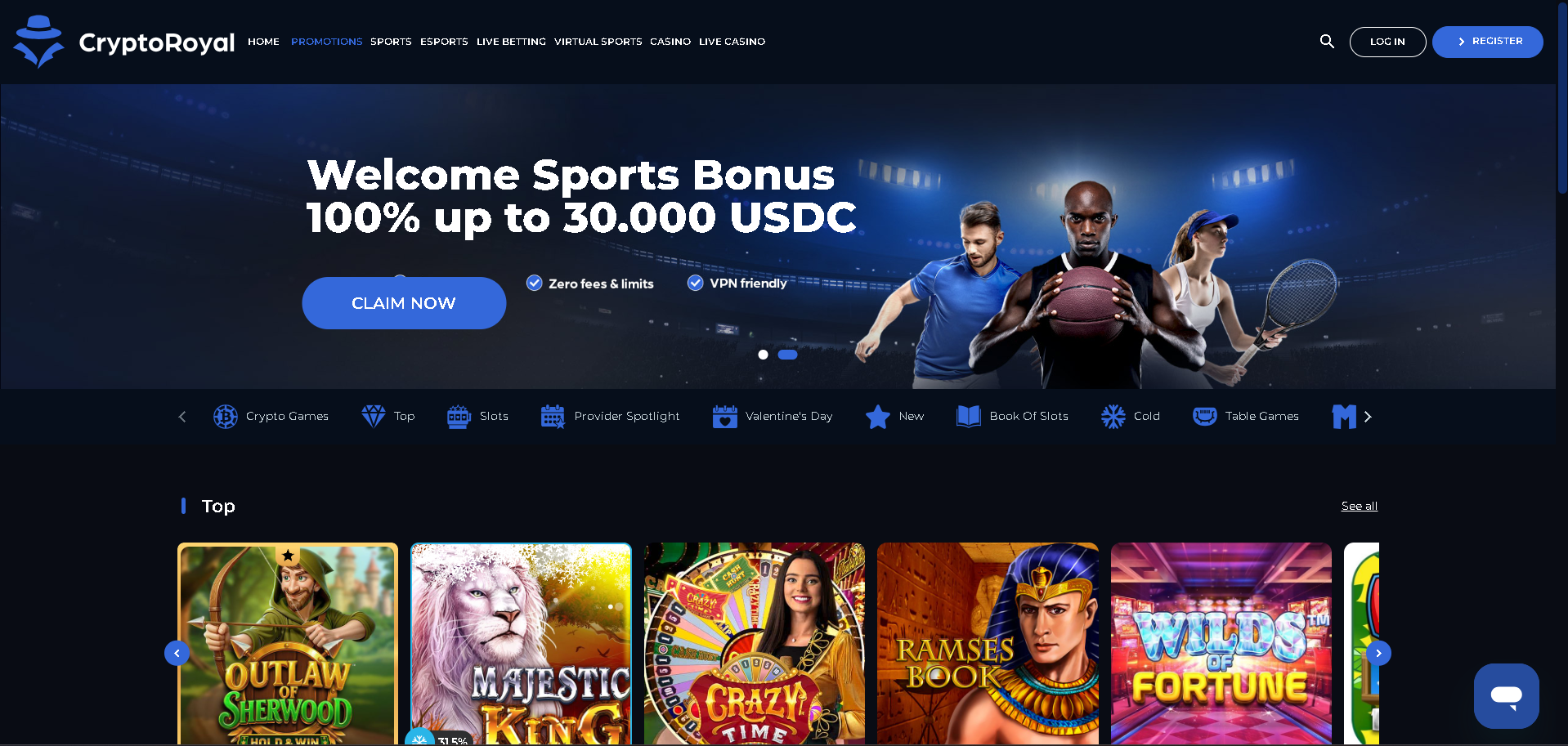
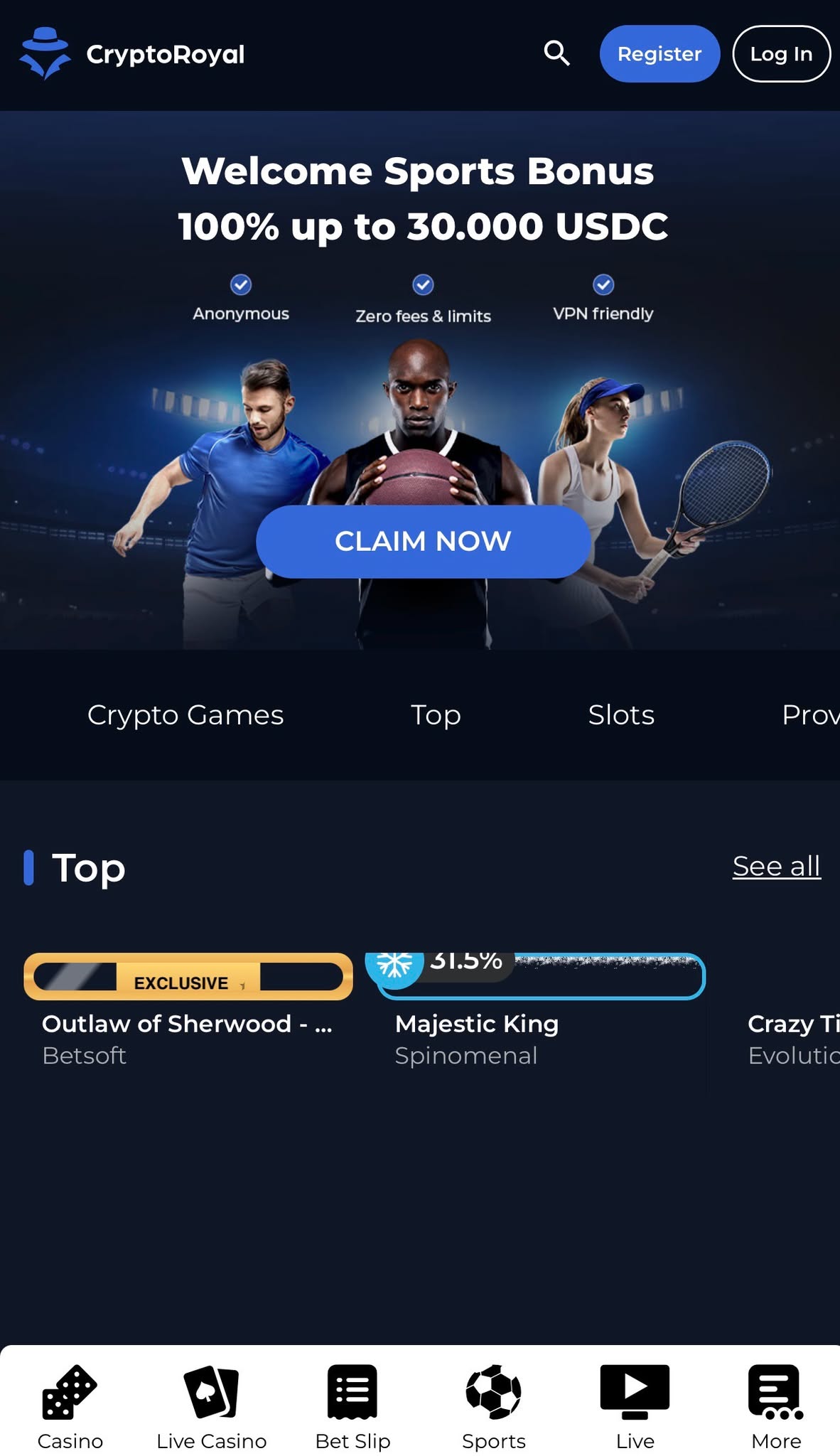
CryptoRoyal Casino is a modern gambling platform offering diverse selection of games alongside a full sportsbook. It delivers fast crypto payments, user-friendly interface, and professional support team. Even though there is no native mobile app at the moment, the website is responsive and can be accessed via different screen sizes.
- Huge 1 BTC match plus weekly cashback
- Fast, near-instant crypto deposits and withdrawals
- Smooth browser-first UX loads under two seconds
- 24/7 customer support via live chat and email
- Solid sportsbook tools including cash out and builder
- Weekly withdrawals capped at 5,000 USDC
- Maximum bonus winnings capped at 5x deposit
- No structured VIP or loyalty ladder
- Self-exclusion and limits require support contact
- No live match streaming for in-play betting
Year Founded
- 2025
Licenses
- Comoros Gambling License Authority
Cryptocurrencies
- Bitcoin
- Ethereum
- Bitcoin Cash
-
+4
Available countries
- Albania
- Algeria
- American Samoa
-
+174
Number of games
- 7500
Languages
- English
- German
- French
-
+7


TrustDice, established in 2018 and licensed by Curaçao eGaming, offers a secure gaming environment that supports anonymous play. It is operated by Satoshi Gaming Group.
With over 7208 games available, TrustDice provides a diverse gambling experience featuring slots, blackjack, roulette, and more. Notable game providers include Pragmatic Play, Evolution, and Play'n GO.
While TrustDice hosts a rich sportsbook with a wide variety of sports including Soccer, Tennis, and eSports like CS:GO, it also offers live sports betting.
TrustDice supports multiple cryptocurrencies including Bitcoin, Ethereum, and Litecoin for deposits and withdrawals, ensuring a flexible banking experience.
- Over 8,000+ casino games available
- Claim a 500% welcome bonus up to 3BTC + 100 free spins
- Excellent 24/7 customer support including live chat
- Uses provably fair technology to ensure fair and transparent game results
- Barely any responsible gambling tools available to help players
- Tough to achieve rollover requirements on welcome promotion
Year Founded
- 2018
Licenses
- Curaçao
Cryptocurrencies
- Bitcoin
- Ethereum
- Litecoin
-
+5
Available countries
- Afghanistan
- Albania
- Algeria
-
+242
Number of games
- 10546
Languages
- English
- Chinese (Traditional)
- Russian
-
+22
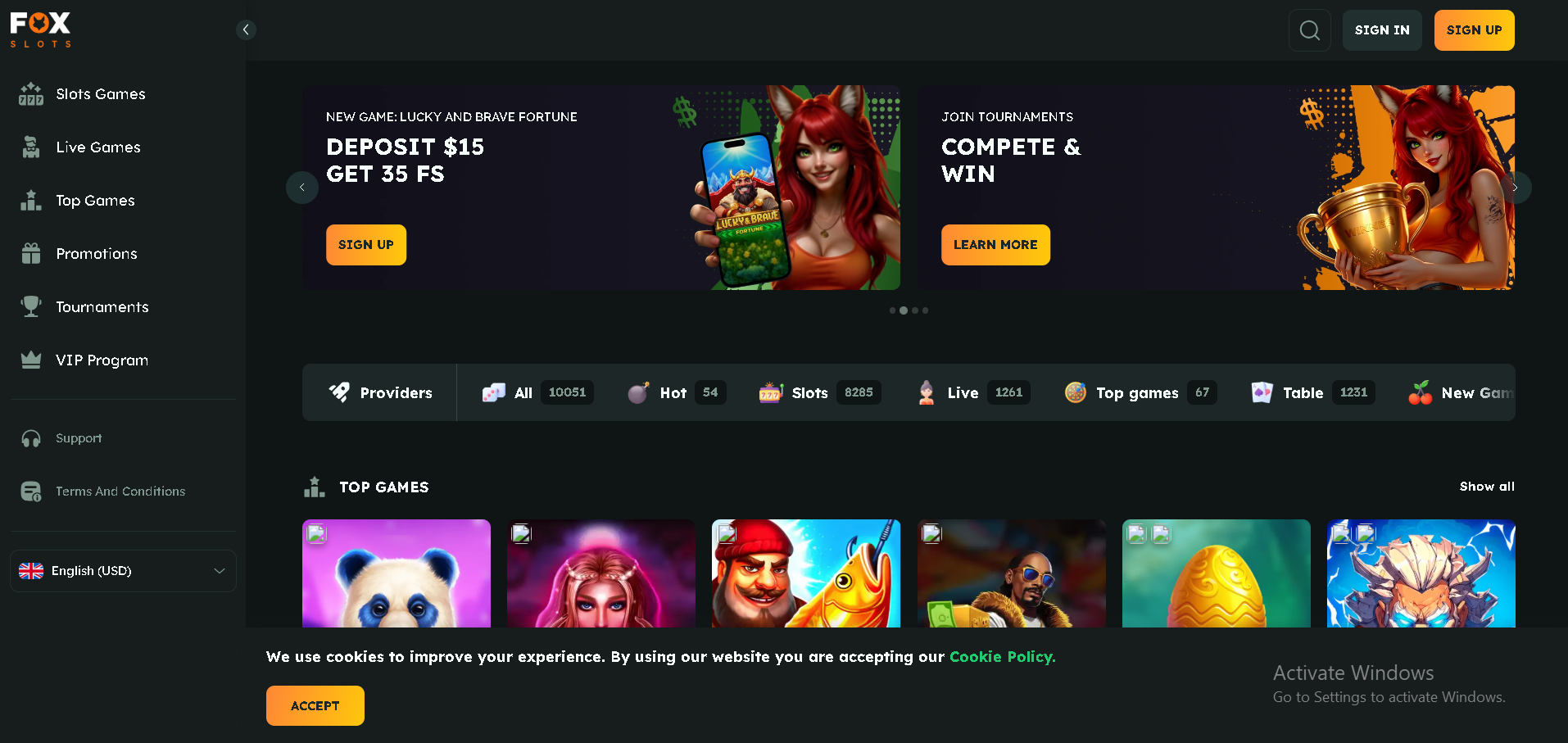
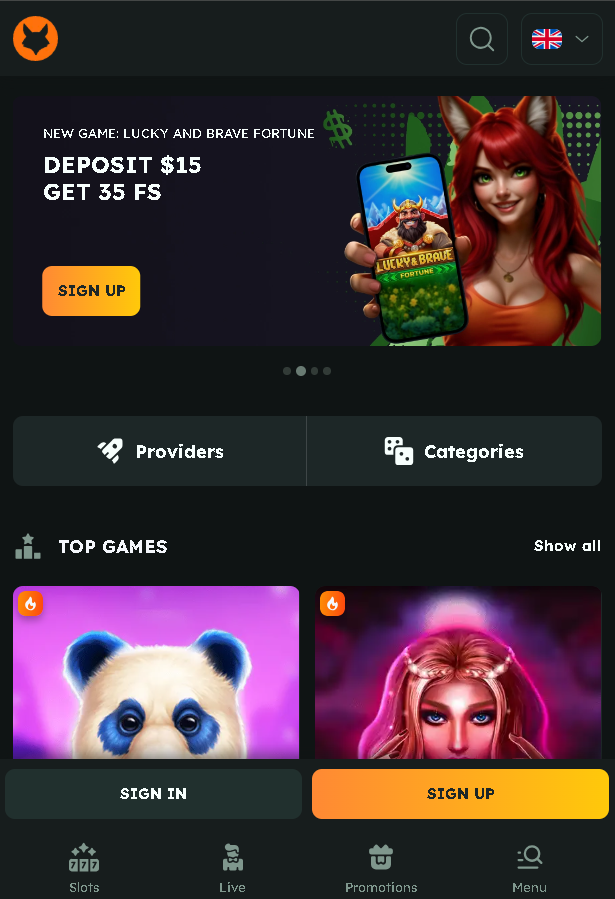
FoxSlots is a crypto-focused casino platform that delivers a fast, modern gaming experience with quick transactions and strong privacy features. It presents a diverse game library, rewarding bonuses, and a tiered VIP program that keeps frequent players engaged. However, its limited language options may not suit some players.
- 11,500+ games including 1,600+ live casino titles.
- Accepts 9 cryptocurrencies with no deposit or withdrawal fees.
- US players accepted, with under-2-minute registration.
- 11-tier VIP program delivers real cashback, rakeback, and cash bonuses.
- No casino license.
- Dormant accounts can be closed and balances retained after just 90 days of inactivity.
- Live chat is inconsistent.
- Limited responsible gambling tools.
Year Founded
- 2025
Cryptocurrencies
- Bitcoin
- Ethereum
- Tether
-
+7
Available countries
- Afghanistan
- Albania
- Algeria
-
+242
Number of games
- 9326
Languages
- English


7Bit Casino, established in 2014 and operated by Dama N.V., holds a license from Curacao. This platform mandates identity verification, preventing anonymous play.
The casino boasts an extensive collection of over 9,000 games, including offerings from Bgaming, NetEnt, and Pragmatic Play. It features a variety of slots, table games, and live dealer setups.
Although 7Bit Casino lacks a traditional sportsbook, it covers virtual sports options like virtual football, virtual tennis, and virtual horse racing, appealing to sports game bettors.
Payment methods are diverse, supporting several cryptocurrencies such as Bitcoin, Ethereum, and Litecoin, alongside traditional options, ensuring easy access for diverse users.
- Over 10,000 games from 100+ top providers available
- Generous welcome package plus countless ongoing promotions and tournaments
- Fast, mostly fee-free crypto deposits and instant withdrawals
- Mobile site highly optimized; no app needed for play
- Lacks sports betting section
- Lengthy registration process that several minutes and multiple form fields required
- 0.11 BTC weekly withdrawal cap
- 3x deposit wagering rule applies
Year Founded
- 2014
Licenses
- Curaçao
Cryptocurrencies
- Bitcoin
- Litecoin
- Ethereum
-
+9
Available countries
- Afghanistan
- Albania
- Algeria
-
+215
Number of games
- 16000
Languages
- English
- French
- Italian
-
+1
How We Rank Crypto Lottery Sites
When evaluating crypto lottery platforms, two factors matter above everything else: licensing and Provably Fair technology. We verify that each site holds a current, valid license from a recognized regulator and that its lottery draws use a Provably Fair or independently audited randomness system you can verify yourself. Each of the other criteria below builds on that foundation. A site that fails either check doesn’t make the list, regardless of how good its bonuses look.
- Crypto Lottery Game Variety – We prioritize sites offering multiple lottery formats, including live draws, RNG lotteries, instant-win games, raffles, and progressive jackpots, and reward platforms that support lotteries alongside a broader casino portfolio.
- Jackpot Size and Payout Structure – We assess maximum prize potential, jackpot frequency, rollover mechanics, and whether winnings are paid instantly, capped, or distributed via smart contracts.
- Crypto Payments and Payout Speed – We verify support for Bitcoin and leading altcoins such as ETH, LTC, DOGE, and SOL, then test deposit methods, withdrawal limits, processing times, and associated fees.
- Reputation, Security, and Audits – We review platform history, licensing, smart contract audits (where applicable), and player feedback to ensure each site operates securely and consistently.
- Lottery-Specific Bonuses and Rewards – We value bonuses that directly benefit lottery players, including free tickets, discounted entries, cashback on losses, and loyalty programs tied to participation in draws.
- Platform Usability and Reliability – We test draw schedules, ticket purchasing flow, result visibility, and overall stability across desktop and mobile devices.
- Customer Support for Lottery Players – We evaluate response speed, support quality, and the availability of live chat or 24/7 assistance, especially for payout or draw-related queries.
You can read more about how we evaluate operators in our guide to how we rate and review crypto gambling sites.
What Are Crypto Lotteries & How Do They Work?
If you’re new to crypto lottery sites, we want to provide you with as much information as possible to address any concerns. In this section, we’ll answer key questions that players have about crypto lotteries.
What Are Crypto Lotteries?
A lottery is a game of chance in which players buy tickets and choose a set of numbers, hoping their numbers match those drawn at random. If enough numbers match, the player wins a prize, often a large jackpot funded by ticket sales, as a percentage of an overall prize pool. Traditional lotteries are usually run by governments or licensed operators and are popular worldwide for their low entry costs and life-changing top prizes.
Crypto lotteries follow this same basic format but are powered by blockchain technology. Instead of buying a ticket with cash at a physical retailer or on a website, players use cryptocurrencies like Bitcoin or Ethereum. Each ticket purchase is recorded on the blockchain, and smart contracts handle the draw and payout automatically. This eliminates the need for a central authority and allows anyone to take part. Because all activity is recorded on a public ledger, players can verify that each draw is fair, transparent, and free from manipulation.
Crypto lotteries run on programmable blockchains (usually Ethereum or one of its layer-2 networks) and let you buy “ticket” tokens with coins like Bitcoin, Ether, or stablecoins like USDC. Once minted, each token represents an entry to the draw governed by a smart contract.
Unlike traditional national or state lotteries, where you have to rely on an operator’s audit trail, crypto lotteries publish each transaction and event in real time, so you can see that no extra tickets were injected or removed after sales close. This means lower house edges and faster prize payouts.
How Do Crypto Lotteries Work?
Behind the scenes of a crypto lottery, a smart contract pools the incoming crypto into a prize fund until ticket sales close. To select winners, it taps a tamper-proof source of randomness, often a hybrid of on-chain data (e.g., recent block hashes) and decentralized oracles like Chainlink VRF, to generate random numbers. The same infrastructure is also used across some sites to support provably fair gameplay.
Once the contract calculates the winning token IDs, it automatically allocates prizes according to its coded payout structure (e.g., 70% to the jackpot, 20% to secondary tiers, 10% to future draws or operator fees).
Once the winning numbers are drawn, the Bitcoin jackpots are automatically allocated to the player base, who will win prizes based on how many numbers they matched.
You can read our guide on how to play crypto lotteries.
Are Crypto Lotteries Legit?
Yes, playing at the best crypto lottery sites, such as those we recommend, is completely legitimate. Legitimacy is based on transparency, audits, and community trust. Reputable platforms open-source their smart contract code and publish third-party audit reports (from firms like CertiK or Hacken) to prove there are no critical vulnerabilities.
They also implement provably fair mechanisms by revealing the inputs used in random number generation so anyone can see the on-chain randomness wasn’t tampered with. Finally, real-money payouts in past draws, verifiable on a blockchain explorer, carry the most weight.
Are Crypto Lotteries Legal?
Legal status varies by country and sometimes by region within a country. In countries where online lotteries are regulated, crypto draws often fall under the same licensing regimes (e.g., the Curaçao Gaming Authority). Many platforms conduct KYC/AML checks to keep these licenses. However, some countries ban private or unlicensed online lotteries regardless of payment method.
These lotteries are hosted on crypto casino gambling sites, which are in a legal gray area in most countries, neither explicitly legal nor illegal. Yet nobody has been prosecuted for playing at one, and you can use a VPN to mask your location if you still have doubts.
You can find more information in our article about the legality of crypto lotteries.
How Much Can You Win on Crypto Lotteries?
As with all lotteries, the prize pools are determined by ticket sales. Smaller daily draws might offer a few hundred to a few thousand dollars in crypto, whereas weekly or monthly jackpots can reach six or seven figures if the platform attracts enough players.
Some operators even guarantee a minimum jackpot, funded by their own reserves, regardless of participation. They also award secondary prizes for matching a subset of numbers, so many players walk away with something.
Risks & Security of Crypto Lotteries
While crypto lotteries are generally very trustworthy, there are a few issues to note.
Cryptocurrency volatility can erode the fiat value of your winnings between the draw day and payout. Smart contract bugs, although quite rare, can freeze or divert funds if the code isn’t properly audited.
Phishing sites sometimes mimic legitimate platforms to steal deposits, so always bookmark official URLs and verify SSL certificates. And, of course, regulatory landscapes can shift quickly. What’s legal today in your country may be restricted tomorrow, so stay informed about changing online gambling laws.
However, overall, we are confident that our list of Bitcoin lottery sites is safe and secure.
Types of Crypto Lottery Games
One of the best things about crypto lottery games is that there are multiple variations you can play. Here are some of the most popular types of Bitcoin lottery games that most casino fans enjoy:
Instant Lottery Games
Instant lottery games are always available at the top crypto casino lottery sites. These are ideal lottery or lottery-style games for players who are short on time or simply prefer to see their results immediately.
These instant lottery games often take the form of scratch-offs, imitating the real-world scratch-offs you can buy. You reveal what’s hidden beneath to see if you’ve matched any winning selections. It’s quick and easy, and it’s just as exciting when you scratch off the cards to reveal a win.
Daily Jackpot Lotteries
Daily jackpot lotteries give you a chance to win every single day through multiple games. These lotteries usually require players to pick a set of numbers. You then hope that your numbers are drawn in the lottery. If all your numbers are drawn, you’ll win the daily jackpot.
Crypto gambling lottery sites that host daily jackpots often allow the jackpot to accumulate until a player wins. This means you can participate in jackpots that may start small or ones that have grown significantly, offering the potential for much bigger winnings.
Multiplayer Pool Lotteries
Multiplayer pool lotteries provide a fresh take on lottery betting, largely due to their social aspect. Players can contribute Bitcoin to a shared prize pool, and the winners split the pool. While it may not be the first type of lottery-style game that comes to mind, the social element adds another layer of fun. The more players who participate, the larger the prize pools.
Lottery Raffles
Lottery raffles are the most straightforward lottery games on crypto lottery sites. You buy tickets to these raffles, and if your ticket is drawn, you win the prize. Prizes can range from cash to incredible perks like free vacations or casino visits. Plus, the odds of winning these raffles are often more favorable, and you can easily purchase tickets with cryptocurrencies like Bitcoin and Ethereum.
Progressive Jackpot Lotteries
Progressive jackpot lotteries raise the stakes by allowing the jackpot to increase each time a bet is placed. In every round, a portion of the ticket sales or spins contributes to the jackpot, allowing it to grow to substantial levels.
The biggest tend to be national lotteries, though you should be wary that you qualify for the prize before opting to play international lotteries.
Best Crypto Lottery Games & Jackpots Available
Crypto lottery refers to three types of casino games, namely Keno, Digital Scratchcards, and Live Studio Draws.
Keno titles give you high multiplier payouts based on how many numbers you match, scratchcards provide fixed jackpot prizes or strong multipliers on instant reveals, and live studio draws can deliver massive headline wins that climb into the six or seven-figure range, depending on the format.
Live Studio Draws
Titles like Mega Ball and Lucky 6 are filmed in professional studios by top-class providers like Evolution. You pick numbers and watch the draw happen in real time. Mega Ball features a unique multiplier mechanic that can multiply wins up to 1,000,000x your initial stake.
RNG Keno Games
These are fast-paced number draw games developed by some of the most respected casino game providers, including Spribe, BGaming, and Pragmatic Play. In short, you select how many spots to play, choose your numbers, and the game reveals results instantly. Firefly Keno is one of the better options if you’re after better multiplier potential, whereas Bitcoin Keno leans more into crypto-themed branding.
Digital Scratchcards
Scratchcards such as Wolf Gold Scratch or Scratch Alpaca Gold deliver immediate results. You reveal symbols and either trigger a fixed jackpot or hit a strong multiplier. These games appeal to players who want lottery-style volatility without waiting for a draw.
Several major providers actively develop digital scratch titles for crypto casinos. For example, Pragmatic Play offers branded scratch experiences tied to its popular slot franchises. Whereas BGaming leans into multiplier-driven and crypto-themed games.
| Game Name | Game Type | Max Win / Jackpot |
|---|---|---|
| Mega Ball | Live Studio Draw | 1,000,000x |
| Firefly Keno | RNG Keno | 10,000x |
| Wolf Gold Scratch | Digital Scratchcard | €50,000 fixed jackpot |
| First Person Lightning Lotto | RNG Lottery | €500,000 fixed jackpot |
| Bitcoin Keno | RNG Keno | 5,000x |
| Keno | RNG Keno | 500x |
| Lucky 6 | Live Studio Draw | €500,000 fixed jackpot |
| Scratch Alpaca Gold | Digital Scratchcard | 5,000x |
Top Crypto Lottery Game Providers
The lottery sites that accept crypto need games from the best crypto casino software providers. While many providers offer top-quality games, a few have consistently stood out, especially in lottery titles. These are some of our favorites to keep an eye out for when looking to buy lottery tickets:
Betsoft
Betsoft is well known for its quality slots and table games, but it also offers some excellent lottery-style games. Their crypto lottery offerings, particularly instant and scratch-off games, are among their most popular.
Lotto Madness is one such game that blends slot mechanics with a lotto premise. Another popular title they offer is Treasure Room Jackpot, where aligning symbols can win you progressive jackpot prizes.
SoftSwiss
SoftSwiss features a wide variety of games across many of the best online casinos. You can play the lottery with crypto through options like multiplayer pool lotteries and progressive jackpots.
Some of their top lottery games include Golden Keno, where you choose numbers and then wait for the draws to reveal the winning combinations. It’s undoubtedly one of the easiest lottery games to understand. Another option is Lucky Numbers, where you pick specific numbers to be drawn.
BGaming
BGaming is celebrated for its fair, provably fair crypto games, including exciting lottery-style titles. Like SoftSwiss, they offer a variety of lottery options, including fast-paced instant lotteries and daily jackpot lotteries that integrate well with crypto.
Their provably fair games are a significant draw for users, as they can be verified and checked for fairness. For instance, Just A Bingo is a unique game that blends a bingo-like feel with lottery mechanics. With quick rounds and easy rules, it’s an excellent choice for players exploring new crypto casinos and trying their hand at lottery games.
Playtech
Playtech remains one of the most recognizable software providers in the industry today. It offers a wide range of casino games, including slots, table games, and lottery-style games.
Two titles stand out among their options: Age of the Gods: Norse Legends Scratch and Keno Xperiment. In Age of the Gods: Norse Legends Scratch, you’ll find an instant lottery game where matching symbols can result in big wins.
It also features a captivating theme with impressive animations. On the other hand, Keno Xperiment lets you pick numbers and see if the draw is favorable. While it’s less engaging than Age of the Gods, it’s still an exciting option.
Crypto Lotteries vs Traditional Lotteries
We’ve put together a comparison table to highlight the fundamental differences between crypto lotteries and traditional lotteries:
| Aspect | Crypto Lotteries | Traditional Lotteries |
|---|---|---|
| Currency Used | Cryptocurrency (e.g., Bitcoin, Ethereum, USDT) | Fiat currency (e.g., USD, EUR, GBP) |
| Accessibility | Global – anyone with internet and crypto can join | Often restricted to residents of specific countries or regions |
| Ticket Purchase | Online only, via blockchain wallet | In-store or online (varies by country) |
| Transparency | Fully transparent – all transactions and draw logic visible on blockchain | Limited transparency – draw process and ticket handling done behind closed systems |
| Draw Mechanics | Automated via smart contracts and verifiable randomness (e.g., Chainlink VRF) | Run by a centralized authority with internal draw mechanisms |
| Speed of Payouts | Often instant or within minutes via smart contract | It can take days or even weeks to receive prizes |
| Trust Requirements | Trustless – relies on code, not people | Requires trust in the lottery operator and regulators |
| Fees & Margins | Typically, lower fees, with more prize money returned to players | Higher operational costs reduce the portion of ticket sales returned as prizes |
| Prize Volatility | Prizes may vary in value depending on crypto market fluctuations | Fixed fiat-value prizes; stable payouts |
| Legal Clarity | Varies by country; often operates in a legal gray area | Regulated and licensed by local or national governments |
| Anonymity | Can be played semi-anonymously, depending on KYC requirements | Usually requires ID for large prize claims and regulated purchases |
| Regulation & Oversight | Typically decentralized and lightly regulated or unlicensed | Heavily regulated with government oversight |
Why Crypto Casinos Are Safer Than DeFi Lotteries
Our team recommends centralized crypto casinos over decentralized smart contracts because they give you guaranteed liquidity and instant payouts. On the flipside, DeFi lotteries often suffer from abandonment and empty prize pools.
That’s enough reason for players to make the switch to centralized casinos because, at the end of the day, you need a guarantee of real money payouts.
The Dead Project Problem
Something that doesn’t get enough attention is how lottery-style tokens and smart contract games simply disappear. We’ve regularly seen them get enough hype to launch, but then their liquidity dries up, developers disappear, and the “lottery” becomes a ghost town.
Projects like Kibo Finance and MegaMoon launched with big promises around decentralized prize pools and community-driven jackpots. These two games relied heavily on community engagement, and when that support wasn’t sustained, they couldn’t gain enough traction to continue.
Even more established names like PoolTogether have faced regulatory pressure and participation challenges at different points. If you have ever asked yourself, “Is PoolTogether safe?”, the honest answer is that smart contract risk, platform sustainability, and user participation all factor into that equation.
At the end of the day, if players stop contributing to these games, there is no “house” to keep it afloat until they do.
Liquidity vs Ideology
The idea behind a smart contract lottery sounds great. No middleman. Fully on chain. Transparent prize pool. On paper, it sounds like it could work, but these smart contract lotteries can only payout what players put in, which is often not much. The less player activity and investment there is, the smaller the jackpots, which further stifles the lottery’s growth.
When you compare that to a provably fair crypto casino, established platforms hold significant liquidity reserves. When you play a live draw like Mega Ball from Evolution or a high multiplier Keno title, the casino is not waiting for other users to fund your payout because there is already a bankroll backing the game.
In a smart contract lottery vs casino comparison, the casino wins on financial stability almost every time.
The Safe Middle Ground
At this point, we can understand that your main concern is trust. That’s where provably fair casinos come in. With provably fair games, you can verify the outcomes of every result, making sure that they have not been tampered with by the casino in any way. These games also still benefit from the liquidity of the casino, so you’re still chasing big jackpots, but they are just more transparent.
So instead of choosing between ideology and safety, provably fair casinos sit in the middle. They give you auditability with real bankroll depth. On the whole, provably fair jackpots and games make more sense than waiting for community engagement to boost the potential payouts of DeFi games.
How to Verify Provably Fair Lottery Results
You can independently verify every lottery draw by using the Client Seed, Server Seed, and Nonce to prove the casino didn’t alter the result. With this system, you don’t need to just blindly trust the casinos you are using. You can verify the results yourself to ensure they are 100% fair.
There are some key components to these provably fair lotteries, and they include:
- Server Seed: A hidden value generated by the casino and hashed before the bet. It prevents it from being changed later.
- Client Seed: The Client Seed is the value you control and can usually edit, adding your own randomness
- Nonce: This is the bet counter that makes sure each draw produces a unique result
Because the Server Seed is hashed and published before you play, the casino can’t cheat without breaking that hash. After the round, you copy the Server Seed, Client Seed, and Nonce into a third-party provably fair checker and confirm the hash matches. If it does, you have cryptographic proof that the result was fair. That is how you verify a Bitcoin casino’s hash without relying on the casino’s own tool.
Pros and Cons of Crypto Lotteries
Crypto lotteries offer clear advantages over traditional lotteries, particularly in terms of accessibility, speed, and transparency. However, they also introduce risks that players should understand before committing funds. Below is a concise, side-by-side breakdown of the main benefits and drawbacks, allowing you to quickly assess whether crypto lotteries align with your expectations and risk tolerance.
| Pros of Crypto Lotteries | Cons of Crypto Lotteries |
|---|---|
| Global access – Open to players worldwide with cryptocurrency and an internet connection | Legal uncertainty – Regulations vary widely and may be unclear or restrictive in some regions |
| Fast payouts – Winnings are often distributed instantly via smart contracts | Crypto volatility – Prize values can fluctuate due to market price swings |
| Lower fees – Reduced overhead means more of the prize pool goes back to players | Limited regulation – Consumer protections are typically weaker than in state-licensed lotteries |
| Transparent and provably fair – Transactions and draws can be verified on the blockchain | Technical barrier – Requires basic knowledge of wallets, tokens, and blockchain mechanics |
| Trust minimization – Smart contracts reduce reliance on central operators | Risk of scams – Poorly audited or rogue platforms still exist |
| Potential anonymity – Some platforms allow play with minimal or no KYC | Irreversible transactions – Mistakes or fraud cannot usually be reversed |
Responsible Gambling
Crypto lotteries are designed to be fast, accessible, and engaging, which makes responsible play essential. While the best crypto lottery sites provide powerful tools to help players stay in control, managing risk ultimately starts with informed decision-making and disciplined bankroll management.
Reputable crypto lottery platforms typically offer features such as deposit limits, loss limits, session-time reminders, and self-exclusion tools, allowing players to set clear boundaries before participation becomes problematic. These controls are especially important in lottery formats, where frequent draws and instant-win games can encourage repeated play.
Players should also account for cryptocurrency volatility when budgeting, as prize values and balances can fluctuate independently of gameplay. Treat crypto lottery tickets as entertainment expenses, never as investments, and only play with funds you can afford to lose. If gambling stops being enjoyable or begins to affect your finances or wellbeing, using platform controls or stepping away entirely is the responsible choice. Read our responsible gambling guide for more information.
Conclusion
Crypto lottery sites give players a more modern alternative to traditional lotteries, combining global access, fast crypto payouts, and transparent results that can often be verified on-chain. Instead of relying on a central authority and slow payment processes, you can play instant-win scratch games, high-multiplier Keno titles, or live studio draws that offer headline jackpots.
That said, not every platform offers the same level of safety or value. Legal conditions vary by region, crypto prices can swing, and weaker sites may lack audits, clear payout structures, or proper player protections. That’s why we recommend starting with Thunderpick as the best crypto lottery site overall, then using the ranking factors in this guide to compare game variety, jackpot mechanics, provable fairness, and payout reliability before committing funds. Finally, set limits early and treat lottery play as entertainment, not income, so you stay in control regardless of the results.
FAQs
-
01.
Do I need KYC to play crypto lottery?
No, not when you make small wagers, but casinos will ask for KYC when you’re trying to make large withdrawals. You can still deposit and play at the best crypto lottery sites anonymously. That said, Anti-Money Laundering (AML) laws require casinos to verify players’ identities when they make larger withdrawal requests.
-
02.
Can I play the crypto lottery anonymously?
True anonymity is difficult, but pseudonymity is possible. To play as anonymously as possible, use WalletConnect signups instead of using your email or phone number. This way, you can avoid revealing any personal info. Additionally, it’s also best to use crypto wallets like MetaMask to store/transfer crypto, which avoids direct transfers between the casino and the crypto exchange.
-
03.
Can I claim promotions on crypto lottery sites?
Yes, the best crypto lottery sites in our guide offer plenty of bonuses and promotions. These may vary in terms of what they provide, but you’ll typically find welcome offers, free spins, a deposit bonus and loyalty programs where you can earn rewards to boost your lottery funds. Some may even offering free Bitcoin lottery tickets on occasion, though in our experience free crypto lotto promotions do tend to be rare.
-
04.
Do all of these sites have lottery games?
Yes, you will find at least some lottery games on the best crypto lottery sites allowing you to purchase lottery tickets and win prizes. They may not all feature the same number of games or traditional lotteries, but they will always have options like instant scratch-offs, Keno, progressive jackpot lotteries, and more at the best online crypto casinos.
-
05.
Can I play crypto lottery games on my phone?
Yes, the best crypto lottery sites have optimized their platforms for mobile browsers. This means you can open Safari, Google Chrome, or another browser, search for the site, and start playing lottery games. These sites may not have official apps, but their mobile versions are well-optimized and run smoothly on all mobile devices.
-
06.
Is crypto lottery legal?
The short answer is: it depends where you are, and in most countries the honest answer is “unclear.” Crypto lotteries are hosted at offshore-licensed sites that operate outside domestic licensing frameworks: not government-licensed, but not explicitly banned either. The crypto lottery sites we recommend hold verifiable operator licenses and run KYC checks, which provide baseline protection in an unregulated space.



 You’re in. Thanks for joining our newsletter.
