


 3 min read
Is Mind Of Pepe A Scam? An Analysis Of Risks And Red Flags For $MIND



 AI Overview
A review finds Mind of Pepe’s $MIND presale — marketed with AI utilities and $9.2M claims — shows multiple red flags: inconsistent team data, risky tokenomics, limited audits, and negative community signals indicating high fraud risk.
- Team & transparency: Inconsistent company names, unverifiable founder credentials, and addresses tied to past questionable projects undermine credibility.
- Tokenomics & incentives: Massive supply with 30% dev and 20% marketing, no clear vesting and advertised 600%+ APY create high dump and rug risk.
- Audits & community: ERC-20 audits exclude presale, staking and AI features; auditors disclaim liability and independent communities warn of promoter ties.
Mind of Pepe is gaining attention as one of the latest crypto presales, positioned as an innovative meme coin with built-in AI utilities. The $MIND presale claims to have raised over $9.2million so far.
But beneath the surface, significant risks and several red flags call its legitimacy into question. Here’s a detailed breakdown of what potential investors need to know.

Project transparency and team credibility
Transparency is critical in crypto projects, yet Mind of Pepe shows notable gaps. The project’s whitepaper is publicly available, outlining tokenomics and a basic roadmap. However, important inconsistencies raise concerns:
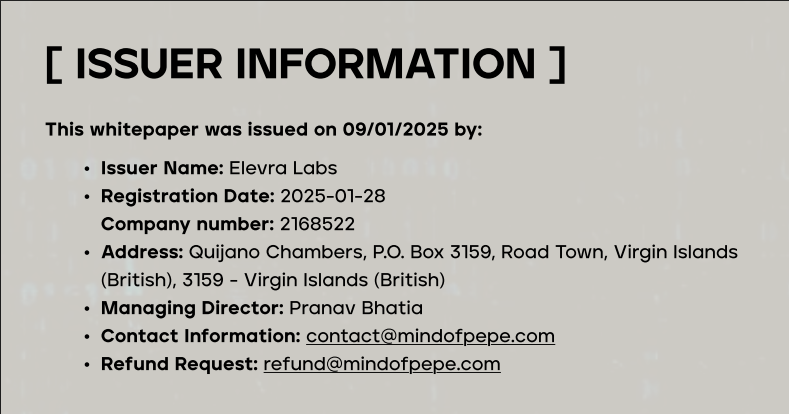
The company behind Mind of Pepe, ‘Elevra Labs’, occasionally appears as ‘Elvara Labs’ in documents. This discrepancy suggests rushed or careless presentation, a common trait among low-quality projects.
The project lists only one individual, Pranav Bhatia, as managing director, but independent verification of his credentials or previous crypto experience is missing. The business address provided has been linked to other suspicious meme projects, suggesting potential involvement from known questionable operators.
Analysis of $MIND tokenomics
Token distribution is another crucial element to consider:
- Mind of Pepe offers a massive total supply of 100,000,101,001 tokens. The presale has numerous stages with increasing token prices, typically designed to generate urgency among buyers.
- A considerable 30% of the token supply is reserved for development, with another 20% for marketing. High allocations to developers and marketing raise concerns about potential token dumps, especially given no clear vesting schedules.
- Marketing materials advertise extremely high yields and staking rewards. Claims of yields exceeding 600% APY are typically unrealistic and unsustainable, indicating exaggerated marketing tactics aimed at inexperienced investors.
Smart contract audits: Limited reassurance
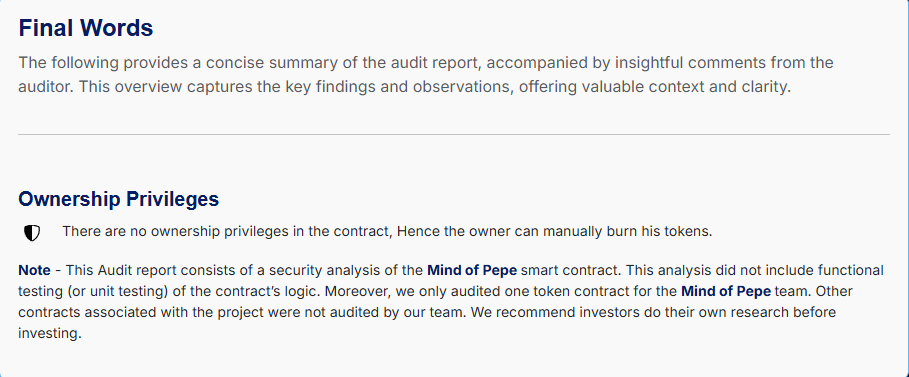
Mind of Pepe has secured smart contract audits from SolidProof and Coinsult, with both firms stating that the basic ERC-20 token contract is secure, without ownership privileges or critical flaws. While these audits offer some comfort, they have limitations:
- Audits cover only the ERC-20 token contract, leaving critical components like the presale mechanism, staking system, and purported AI features entirely unreviewed.
- Auditors explicitly disclaim responsibility if the project is ultimately fraudulent or fails to deliver on broader promises.
Investors should understand that audited token contracts do not guarantee a project’s legitimacy, especially when other critical components remain unaudited.
Community sentiment and warnings
Public sentiment provides important additional context, and Mind of Pepe receives mostly negative attention within independent crypto communities:
Forums like Reddit’s r/WallStreetBetsCrypto openly warn users away, alleging connections between Mind of Pepe’s promoters and previous meme-coin scams.
Influencer and affiliate-driven marketing dominate social media, often using paid articles and sponsored posts to promote overly optimistic narratives without addressing fundamental risks.
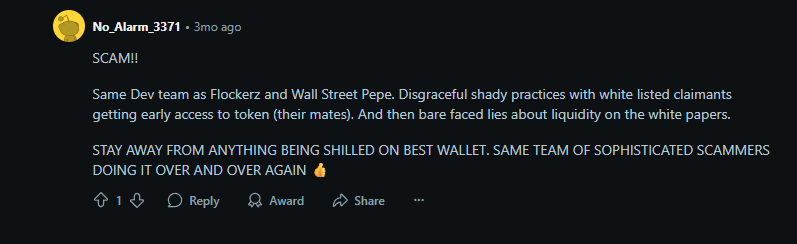
Trusted community reviewers frequently highlight aggressive marketing tactics, unrealistic promises, and lack of transparency as major red flags.
Major red flags and cautionary notes
Investors should carefully consider several high-risk factors associated with Mind of Pepe:
- Questionable team identity: Lack of verifiable, experienced team members raises significant accountability concerns.
- Aggressive and unrealistic marketing: High staking yield promises and over-hyped AI claims typically signal unsustainable models.
- Token allocation concerns: High percentages allocated to developers and marketers without transparent vesting schedules increase the risk of sudden price manipulation.
- Negative community feedback: Independent crypto communities consistently warn investors, flagging previous associations with alleged scam projects.
Conclusion
Mind of Pepe presents multiple risks and clear red flags that strongly suggest caution. While the token’s basic smart contract audit is a positive step, it doesn’t mitigate broader concerns about transparency, token allocation, aggressive marketing, and negative community feedback.
Investors should approach $MIND with a highly skeptical mindset and recognize it as a speculative investment carrying a substantial risk of loss.



 Thank you for your feedback! We’re glad you found this article helpful.
 An error occurred while sending the form, please try again.
 We are sorry. You've already sent a message within the last 60 seconds. Please wait before sending another.
 Thank you for letting us know! Our team will review your feedback to help improve our content.
We're sorry you did not find what you were looking for. Please select the reason this article was not helpful.

 You’re in. Thanks for joining our newsletter.
