


 4 min read
Mechanics of bStocks: How Tokenized Equities Bridge TradFi and DeFi



 AI Overview
Binance now offers US stock trading and is launching bStocks—BEP-20 tokenized securities backed one-to-one by shares—so users can trade and use equity exposure on-chain beyond normal market hours.
- What it is: A phased service for eligible users to buy 7,000+ US stocks and ETFs and upcoming bStocks, tokenized BEP-20 representations of shares that are legally distinct.
- Why it matters: It enables 24/7 trading and DeFi composability, letting equity exposure serve as programmable collateral for lending and liquidity protocols.
- What to do: Verify legal parity, custody structure, and the zero-fee conversion process, and limit on-chain exposure until you confirm backing and operational controls.
- Watch out: Tokens depend on an SPV and custodian backing, so regulatory, custody, market liquidity, and smart-contract risks persist despite one-to-one claims.
Equity markets operate on schedules established decades ago. Yet modern investors increasingly treat capital mobility as a baseline requirement rather than a premium feature. This friction between traditional market hours and digital-native expectations drives a growing demand for continuous and borderless infrastructure.
Addressing this structural gap, Binance initiated a phased rollout of US equities trading, offering eligible users access to over 7,000 stocks and exchange-traded funds. Purchases occur primarily via select stablecoins and BNB, bringing cryptocurrency utility directly to traditional assets.
This initial deployment sets the foundation for bStocks, a soon-to-launch series of tokenized securities. The progression from direct equity ownership to on-chain asset representation reflects an ongoing modernization of how retail capital interacts with established financial markets.
Beyond Trading: Programmable Assets and DeFi Composability
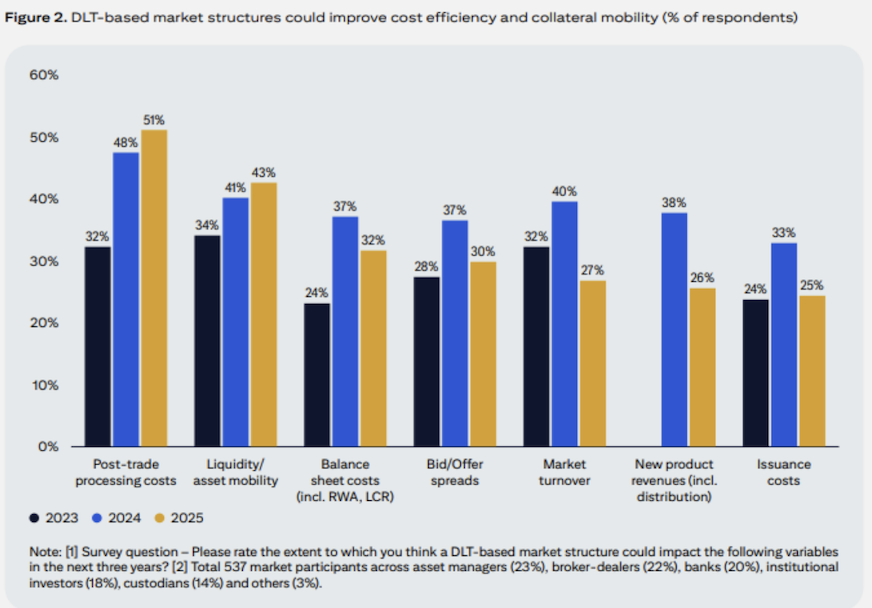
The migration of traditional equities to blockchain networks converts static holdings into active, programmable collateral.
Source: Citi Securities Services Evolution 2025 Whitepaper
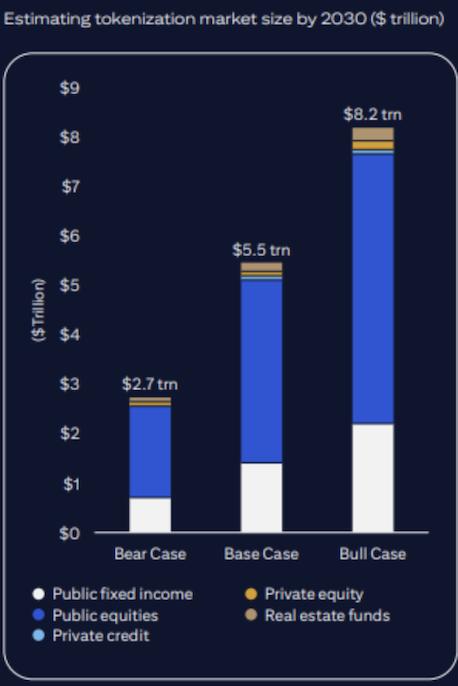
Analysts observe a measurable shift in how modern capital moves. A recent Citi Institute report projects a $5.5 trillion base case for tokenized assets by 2030, calculating that tokenized public equities might reach $3.6 trillion as digitally native market participants require continuous access.
Source: Citi Securities Services Evolution 2025 Whitepaper
Fitting within this framework, bStocks operate as standard BEP-20 tokens on the BNB Chain. Digital assets carrying tickers like APPLB or TSLAB represent traditional shares, but they carry the technical properties of cryptocurrency tokens. These instruments are designed to track exposure to selected equities in tokenized form, while remaining legally distinct from direct ownership of the underlying shares. This structural change makes them fully compatible with decentralized finance lending and liquidity provision protocols.
“Tokenization has the potential to reshape financial markets by giving users greater control, more flexibility, and ultimately more financial freedom,” states Richard Teng, Co-CEO of Binance. This flexibility becomes apparent when equities transition from closed brokerage databases into open decentralized ecosystems.
Teng notes that the company sees “a significant opportunity to make financial assets more accessible, more useful, and more connected across traditional and digital markets.” Issuing these equities as smart contracts unlocks capital that previously sat idle after the closing bell to serve as programmable collateral. Doing so allows investors to maintain equity exposure while participating in decentralized yield strategies.
Bridge Between Traditional Custody and Self-Sovereignty
Moving traditional securities onto public ledgers requires a specific legal and operational architecture to maintain parity between the physical share and its digital counterpart. Research from Standard Chartered highlights that “composability” allows tokenized assets to bypass siloed, traditional intermediary ledgers, enabling a single asset to earn yield and serve as collateral simultaneously across different applications.
To achieve this composability without compromising structural integrity, bStocks are issued by BTech Holdings Limited, a Special Purpose Vehicle registered in the Abu Dhabi Global Market. Every tokenized security remains backed one-to-one by underlying equities held securely within a regulated custodian account. This setup ensures that the digital representation maintains a verifiable link to the actual corporate shares.
Furthermore, moving capital between these two environments needs to be economically viable. To reduce the friction typically associated with cross-market asset movement, Binance built a zero conversion fee mechanism between traditional stocks and bStocks. Market participants can shift their positions from traditional custodial accounts directly to self-custody wallets without incurring financial penalties. It’s a practical bridge between the regulatory assurances of established market custody and the autonomy of self-sovereign digital asset management, allowing capital to move efficiently across environments.
Continuous Liquidity: The 24/7 Market Reality
Legacy equity markets operate on rigid schedules, strictly limiting trading activity from 9:30 AM to 4:00 PM EST. This constraint often forces international participants to trade during adverse local hours or rely on delayed execution. Tokenized equities remove these temporal borders, providing a 24/7 market reality. With bStocks, users can execute trades and manage self-custody withdrawals globally, completely outside of standard banking hours.
Supporting continuous markets requires substantial foundational depth. Binance currently serves over 310 million users globally. The exchange has processed $145 trillion in historical transaction volume since its inception. This massive operational scale indicates the platform’s capacity to support consistent liquidity for new on-chain equity markets.
When investors can trade tokenized shares at any hour, deep liquidity prevents the severe price slippage that typically plagues off-hours trading in traditional environments. Continuous access combined with high-volume infrastructure allows capital to react to global economic events precisely as they happen.
Infrastructure for Next-Generation Capital Markets
The introduction of tokenized US equities reflects a broader shift in how market participants interact with financial instruments. Rather than treating cryptocurrency and traditional stocks as isolated portfolios, modern architecture merges them into a single continuous ecosystem.
Products like bStocks represent more than just an alternative trading interface; they serve as foundational infrastructure for the next generation of financial markets. As the lines between direct equity ownership and programmable on-chain assets blur, platforms that can support multi-asset convergence with consistent liquidity may play an important role in shaping the structural standards of global retail investing.



 Thank you for your feedback! We’re glad you found this article helpful.
 An error occurred while sending the form, please try again.
 We are sorry. You've already sent a message within the last 60 seconds. Please wait before sending another.
 Thank you for letting us know! Our team will review your feedback to help improve our content.
We're sorry you did not find what you were looking for. Please select the reason this article was not helpful.

 You’re in. Thanks for joining our newsletter.
