


 2 min read
Three Altcoins Quietly Gaining Strength In The Crypto Bear Market



 AI Overview
Three altcoins — Chainlink, Avalanche and Polkadot — show on-chain accumulation, steady engagement and intact technical supports despite the broader crypto correction, positioning them as potential early rebound candidates if sentiment improves.
- Chainlink — Growing base: Rising holders and steady daily active addresses, plus a bounce from $10.80 with committed volume, signal durable support.
- Avalanche — Quiet accumulation: Price holding the $15–$17 support zone, renewed volume and a flat A/D line imply long-term holders absorbing sell pressure.
- Polkadot — Range-bound resilience: Stable A/D and intact key supports near multi-month lows suggest accumulation that could fuel a sharp revaluation when sentiment flips.
While the crypto market continues to trade in correction territory, not every token follows the same downward trajectory. Beneath the surface of red charts and cautious sentiment, a few altcoins are showing signs of quiet resilience, particularly through accumulation trends, active address data, and key technical levels holding strong.
Here’s a closer look at three altcoins building momentum in the background and why they could be early candidates to rebound once sentiment turns.
Chainlink: Rising holders and support-backed bounce
Chainlink (LINK) was trading near $11.57 after a pullback as of this writing. However, its on-chain metrics point to long-term strength.
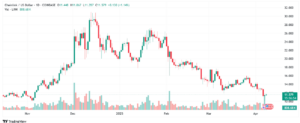
According to data from Santiment, the number of LINK holders has grown steadily, rising from just over 714,000 in October 2024 to more than 744,000 by April 2025. That’s a notable increase, given the broader market’s risk-off tone.
Daily active addresses remain consistent, fluctuating between 3,000 and 5,000, with intermittent spikes suggesting healthy engagement from its core user base. On the technical side, LINK has rebounded from the $10.80 support level, with volume showing signs of commitment behind the move.
If Bitcoin stabilizes or macro sentiment improves, Chainlink’s expanding holder base and consistent network activity position it well for a potential upside recovery.
Avalanche: Consolidation with quiet accumulation
Avalanche (AVAX) has pulled back significantly since peaking in December, currently trading at $16.90. Yet, it remains above a long-term support zone between $15 and $17, a range that has previously triggered bullish reversals.
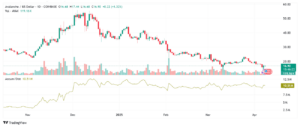
Recent Santiment data revealed a bounce in trading volume to over 580 million, reversing the trend of waning interest since late Q4 2024. However, the flatlining Accumulation/Distribution line at 10.51 million is more telling, implying that long-term holders are stepping in to absorb sell pressure.
The lack of breakdown from this range and accumulation signals suggests that AVAX may be in a stealth accumulation phase, setting the stage for a future move if market conditions improve.
Polkadot: Accumulation beneath the range
Polkadot (DOT) has slipped to $3.57, hovering near multi-month lows. Despite the price weakness, on-chain data paints a different picture. DOT’s Accumulation/Distribution line remains stable at 102 million, indicating steady positioning from long-term investors.
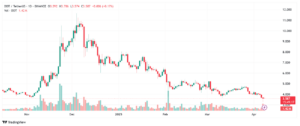
Daily volume is subdued at around $300million, and DOT remains stuck in a tight trading range. Still, it has not breached key support levels even as market-wide pressure has increased. When paired with accumulation, this range-bound behaviour often precedes sharp revaluations, especially if sentiment flips and capital rotates back into interoperability-focused projects.
Final thoughts
Corrections in crypto are often where narratives go quiet, but data never does. Chainlink, Avalanche, and Polkadot are demonstrating a similar pattern: accumulation, technical stability, and core engagement metrics that defy current price trends.
These altcoins may not be making headlines now, but their under-the-radar resilience could put them in a prime position to lead when the market regains momentum.



 Thank you for your feedback! We’re glad you found this article helpful.
 An error occurred while sending the form, please try again.
 We are sorry. You've already sent a message within the last 60 seconds. Please wait before sending another.
 Thank you for letting us know! Our team will review your feedback to help improve our content.
We're sorry you did not find what you were looking for. Please select the reason this article was not helpful.

 You’re in. Thanks for joining our newsletter.
