


 3 min read
Ripple President Praises SEC ‘Clarity’ At Paris Blockchain Week



 AI Overview
Ripple revealed a $1.25B acquisition of prime broker Hidden Road, creating the first crypto-owned global, multi-asset prime broker. The deal aims to scale institutional onboarding by embedding RLUSD and XRPL into settlement, custody and post-trade infrastructure.
- Strategic acquisition: Becomes first crypto-owned global prime broker with Hidden Road’s $3T annual clearing and 300+ institutional clients, opening direct institutional distribution.
- On-chain settlement: RLUSD will serve as on-chain collateral for 24/7 settlement while XRPL powers post-trade rails and auto-bridging to boost liquidity and speed.
- Growth-focused strategy: With clearer US regulation and a strong balance sheet, Ripple prioritizes acquisitions, tokenization and custody expansion rather than an IPO.
At Paris Blockchain Week today, 8 April, Ripple made several major announcements, including its record $1.2billion acquisition of broker firm Hidden Road and discussed rumors about a potential IPO in the US.
Ripple Targets institutional growth with Hidden Road deal
During a main stage chat today, Ripple President Monica Long confirmed the company’s $1.25bn acquisition of prime broker Hidden Road during a session at Paris Blockchain Week 2025. She described the move as a strategic leap toward institutional decentralized finance, calling it “a milestone moment” for Ripple and for blockchain infrastructure.
Hidden Road clears more than $3trn annually and serves over 300 institutional clients. Ripple plans to integrate Ripple USD (RLUSD), its stablecoin , into Hidden Road’s prime brokerage operations as on-chain collateral for 24/7 settlement. The XRP Ledger (XRPL) will also support Hidden Road’s post-trade infrastructure.
“This deal puts us in a position to bring hundreds of institutions onto blockchain rails without friction,” Long said.
Ripple has worked with Hidden Road for years on FX services for payments. The acquisition aligns with Ripple’s broader push into enterprise custody, stablecoin flows, and capital markets infrastructure.
RLUSD stablecoin sees demand spike for institutional use
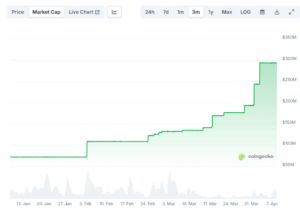
RLUSD launched in December 2024 and has crossed $300m in market cap , with over $10bn in trading volume. Long explained that Ripple created RLUSD for institutional flows in cross-border payments. The Hidden Road deal opens new use cases, especially for collateral and settlement in capital markets.
Ripple expects RLUSD adoption to grow through distribution partnerships with exchanges like Kraken and Bitstamp, along with use by institutional clients.
While RLUSD expands use in payments and prime brokerage, XRP still plays a central role on the XRP Ledger. Long emphasized its function in gas fees, reserve accounts, and native decentralized exchange operations.
She noted that XRPL’s auto-bridging mechanism uses XRP to route trades without direct liquidity, reinforcing its use case as a bridge asset.
Real progress on US regulation
Long said Ripple now operates with “more clarity than ever” in the US. She pointed to the SEC dropping enforcement actions and Congress advancing stablecoin legislation. Ripple sees these developments as a turning point for industry confidence.
According to Long, U.S. banks began re-engaging with crypto businesses “almost overnight” after the election. The rollback of SAB 121 accounting rules also removed key barriers to crypto custody.
Tokenization, custody, and global expansion
Ripple is expanding beyond payments into tokenized real-world assets and enterprise custody. Long cited Europe and Asia-Pacific as key growth markets. Ripple’s custody business is active in Europe, while stablecoin-based payments are gaining traction in corridors across Asia, Latin America, and Africa.
The tokenization of money market funds and other assets is entering a new phase. Ripple expects use cases like on-chain collateralization to push adoption beyond early experiments.
IPO not a priority for Ripple
Asked about a potential IPO, Long said Ripple’s focus remains on growth. The company has a strong balance sheet and is prioritizing acquisitions and organic expansion.
“An IPO makes more sense when liquidity is a constraint,” she added. “That’s not the case for us right now.”



 Thank you for your feedback! We’re glad you found this article helpful.
 An error occurred while sending the form, please try again.
 We are sorry. You've already sent a message within the last 60 seconds. Please wait before sending another.
 Thank you for letting us know! Our team will review your feedback to help improve our content.
We're sorry you did not find what you were looking for. Please select the reason this article was not helpful.

 You’re in. Thanks for joining our newsletter.
