


 3 min read
Meta Reportedly Exploring Stablecoin Payments On Facebook And Instagram



 AI Overview
Meta is reportedly exploring using existing stablecoins to pay creators and enable cross-border transfers across Facebook, Instagram and WhatsApp — a cautious comeback after the Diem era. Leveraging established tokens could accelerate adoption while limiting direct regulatory exposure.
- Strategic pivot: Preferring USDC/USDT over a proprietary coin signals a risk‑averse, faster-to-market approach compared with Diem.
- Business upside: Stablecoins could cut fees and speed global creator payouts, boosting monetization and cross-border commerce for billions of users.
- Regulatory hurdle: Progress depends on clearer stablecoin rules, reserve transparency and continued regulatory acceptance to avoid past pitfalls.
Meta Platforms Inc. is reportedly exploring the integration of stablecoins into its social media platforms, according to recent reports from several financial news outlets.
The tech giant is said to be in preliminary discussions with crypto firms about potentially deploying stablecoins for user payouts across Instagram and Facebook.
While Meta has yet to officially confirm these plans, the move would mark a significant return to the digital asset space after its earlier failed attempts.
Renewed interest following past failures
If confirmed, this would signal Meta’s renewed interest in digital currencies after its previous high-profile failure with the Libra project, later rebranded as Diem. Launched in 2019, Libra aimed to introduce a global digital currency backed by a basket of fiat currencies.
However, the project faced immediate and intense regulatory scrutiny from governments and central banks worldwide.
Despite support from a consortium of major companies, including Uber and PayPal, Diem struggled to overcome these regulatory hurdles, particularly in the United States. Ultimately, Meta abandoned the initiative in January 2022.
Now, with a shifting regulatory landscape and growing acceptance of stablecoins, Meta appears to be reassessing its position. Congressional discussions around stablecoin regulation could provide clearer guidelines that tech giants like Meta need to re-enter the space with more confidence.
A booming stablecoin market
Meta’s reported exploration comes at a time when the stablecoin market is experiencing significant growth. As of May 2025, the total stablecoin market capitalization has reached approximately $242.8billion, representing a substantial increase over the past few years.
- Tether (USDT ) remains the dominant player, holding approximately 61.91% of the market, despite ongoing regulatory scrutiny and questions about its reserves.
- USD Coin (USDC), issued by Circle, ranks second and has seen significant adoption growth recently.
- Other stablecoins, including Binance USD (BUSD) and Dai (DAI), maintain smaller but stable portions of the market.
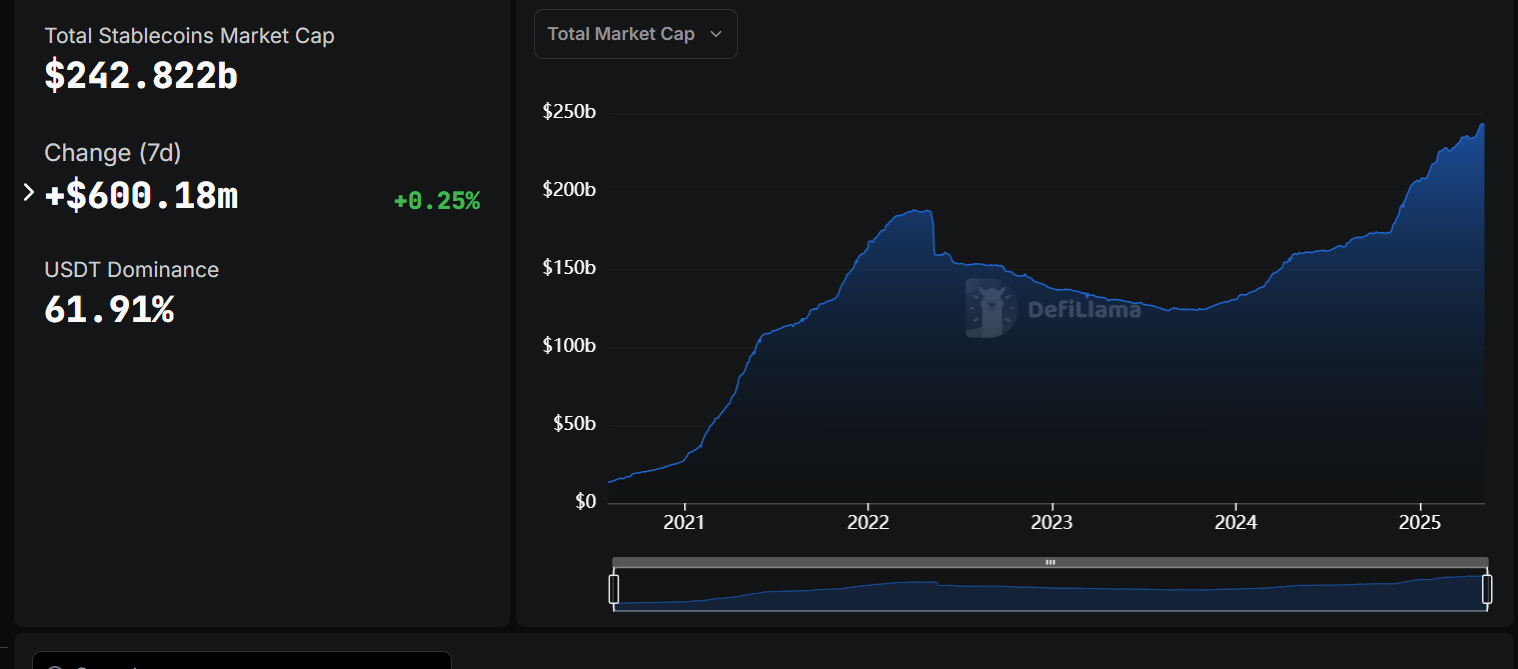
In just the past week, the stablecoin market capitalization increased by $600.18m, reflecting a 0.25% growth. This steady expansion underscores the sustained demand for digital assets that maintain a stable value relative to traditional fiat currencies.
Potential use cases and strategic implications
According to sources, Meta is considering stablecoin integration primarily for content creator payouts and cross-border transactions across its suite of apps, including Facebook, Instagram, and WhatsApp.
This could provide a more efficient and cost-effective payment option for the platform’s vast global user base, which exceeds three billion people.
Importantly, Meta is reportedly exploring the use of existing stablecoins rather than developing a proprietary digital currency, marking a key strategic shift from its previous Diem initiative. By leveraging established assets like USDT or USDC, Meta could potentially avoid the regulatory pitfalls that derailed its earlier attempts.
If successful, such a move could have a significant ripple effect across the broader cryptocurrency market, boosting adoption and legitimizing stablecoins as a mainstream financial tool.
Navigating the regulatory landscape
Meta’s more cautious approach this time reflects a clear lesson from Diem’s failure. Rather than attempting to reinvent the digital currency space, the company seems focused on integrating regulated, widely accepted stablecoins into its ecosystem.
However, despite the more conservative strategy, regulatory hurdles remain. Stablecoins continue to face global scrutiny, with financial regulators concerned about issues related to transparency, reserves backing, and systemic financial risks.
At this stage, Meta has not officially confirmed these reports, and its exploration of stablecoin integration remains in the early stages.



 Thank you for your feedback! We’re glad you found this article helpful.
 An error occurred while sending the form, please try again.
 We are sorry. You've already sent a message within the last 60 seconds. Please wait before sending another.
 Thank you for letting us know! Our team will review your feedback to help improve our content.
We're sorry you did not find what you were looking for. Please select the reason this article was not helpful.

 You’re in. Thanks for joining our newsletter.
