


 3 min read
Bitcoin Surges Back to $100k Following US Inflation Data



 AI Overview
US inflation matched expectations—core CPI +3.3% YoY in November (overall CPI 2.7% for October)—reducing the chance of surprise Fed tightening and triggering a near 5% Bitcoin rally to about $100,500 as risk appetite returns.
- Signals calmer Fed policy: Core CPI matching forecasts lowers odds of surprise rate hikes, easing pressure on risk assets and supporting crypto valuations.
- Liquidity and risk appetite: Stable inflation keeps borrowing costs steady, preserving liquidity that flows into Bitcoin and altcoins and weakening the dollar’s tailwind for crypto.
- Market momentum: Bitcoin’s near 5% jump to ~$100.5k after recent liquidations shows renewed buying; monitor Fed commentary and incoming data for reversal risk.
According to the latest CPI (Consumer Price Index) data, US inflation increased 3.3% year-over-year in November, matching forecasts. This drove Bitcoin price up by nearly 5% today, reaching back up to $100,500. The overall crypto market is up by nearly 4% after liquidations earlier in the week.
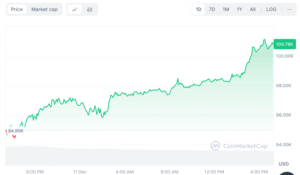
Bitcoin turns bullish following US Inflation data
The Core CPI measures inflation, excluding volatile items like food and energy. When it matches expectations, as it did at 3.3% year-over-year in November, it signals that inflation trends are predictable and under control. This consistency reassures both traditional markets and crypto investors. The overall CPI at 2.7% for October shows broader inflation pressures are easing, which strengthens this sentiment.
For crypto, this kind of inflation data can be significant. Inflation impacts monetary policy, especially the Federal Reserve’s decisions on interest rates. When inflation aligns with expectations, it suggests the Fed may not need to raise rates aggressively, which is positive for risk assets like crypto.
Bitcoin’s price jump of nearly 4%, reaching $100,500, reflects optimism that the macroeconomic environment could remain favorable.
A lower or stable interest rate environment makes borrowing cheaper and encourages investment in assets perceived as stores of value or speculative growth opportunities—crypto fits both categories. It also reduces the dollar’s strength, indirectly benefiting Bitcoin and other cryptos since they often act as hedges against fiat devaluation.
Why is the latest US Inflation Rise Positive for Crypto?
When inflation matches expectations, like the 2.7% CPI figure, it signals stability and predictability in the economy. Here’s why this is bullish for markets, including crypto:
Central banks, like the Federal Reserve, rely on inflation data to decide whether to adjust interest rates. If inflation is lower than expected, it can indicate economic weakness, potentially leading to rate cuts. On the other hand, if it’s higher than expected, the Fed might raise rates to control inflation, which can hurt markets by increasing borrowing costs.
However, when inflation comes in exactly as forecast, it suggests that the Fed’s current policies are effective, reducing uncertainty about future rate hikes.
For crypto, this matters because higher interest rates usually pull liquidity out of riskier assets like Bitcoin. Investors move money into safer, interest-yielding options. When inflation aligns with expectations, it reduces the likelihood of sudden rate hikes, keeping liquidity flowing into risk assets, including crypto.
Additionally, stable inflation data helps maintain confidence in the broader economy. Confidence drives investment, and crypto benefits as part of the risk-on asset class. This is why Bitcoin and the overall market often react positively to predictable inflation numbers. It’s a sign of a steady economic environment where speculative assets can thrive.



 Thank you for your feedback! We’re glad you found this article helpful.
 An error occurred while sending the form, please try again.
 We are sorry. You've already sent a message within the last 60 seconds. Please wait before sending another.
 Thank you for letting us know! Our team will review your feedback to help improve our content.
We're sorry you did not find what you were looking for. Please select the reason this article was not helpful.

 You’re in. Thanks for joining our newsletter.
