


 4 min read



 AI Overview
The market opened May 2025 cautiously constructive: regulatory clarity in the US and UK plus renewed institutional flows have put several high‑utility crypto projects in focus. On‑chain metrics and analyst models identify six tokens—Solana, Arbitrum, Sui, Aptos, Toncoin, Chainlink—as data‑backed undervaluation candidates.
- Regulatory backdrop: US enforcement easing and UK draft rules, alongside ETF inflows, create a firmer framework for institutional adoption and potential repricing.
- Underpriced fundamentals: High throughput, developer commits, DEX volume and ecosystem integrations suggest SOL, ARB, SUI, APT, TON and LINK trade below intrinsic value.
- Key risks & signals: Monitor outages, security audits, developer activity, TVL, active addresses and token unlock schedules to assess timing and risk.
The crypto market entered May 2025 on a cautious but constructive footing. After peaking in late 2024 — when Bitcoin briefly topped $100,000 amid surging ETF inflows — prices retraced as global trade tensions and macro uncertainty resurfaced.
Yet regulatory momentum in the US and UK has swung decisively in favor of digital assets. US agencies eased enforcement, and the UK unveiled draft legislation to integrate crypto firms under existing financial rules.
Against this backdrop of renewed institutional interest, on‑chain indicators and analyst models point to pockets of undervaluation across major and emerging tokens. Here we review key fundamentals and data to spotlight eight projects trading below their intrinsic potential.
Solana, Sui, and Aptos: High‑performance Layer‑1 contenders
Solana (SOL), known for low fees and sub‑second finality, accounted for roughly 40% of global decentralized exchange volume in Q1 2025. Solana’s user experience, token‑approval efficiency, and quick smart contract calls give it a key edge over competitors.
Despite network hiccups, developer activity remains positive: on‑chain event data ranks SOL among the top three chains by weekly code commits. Its $76billion market capitalization sits well below peers with similar throughput, reflecting a potential mispricing amid strong real‑world usage.
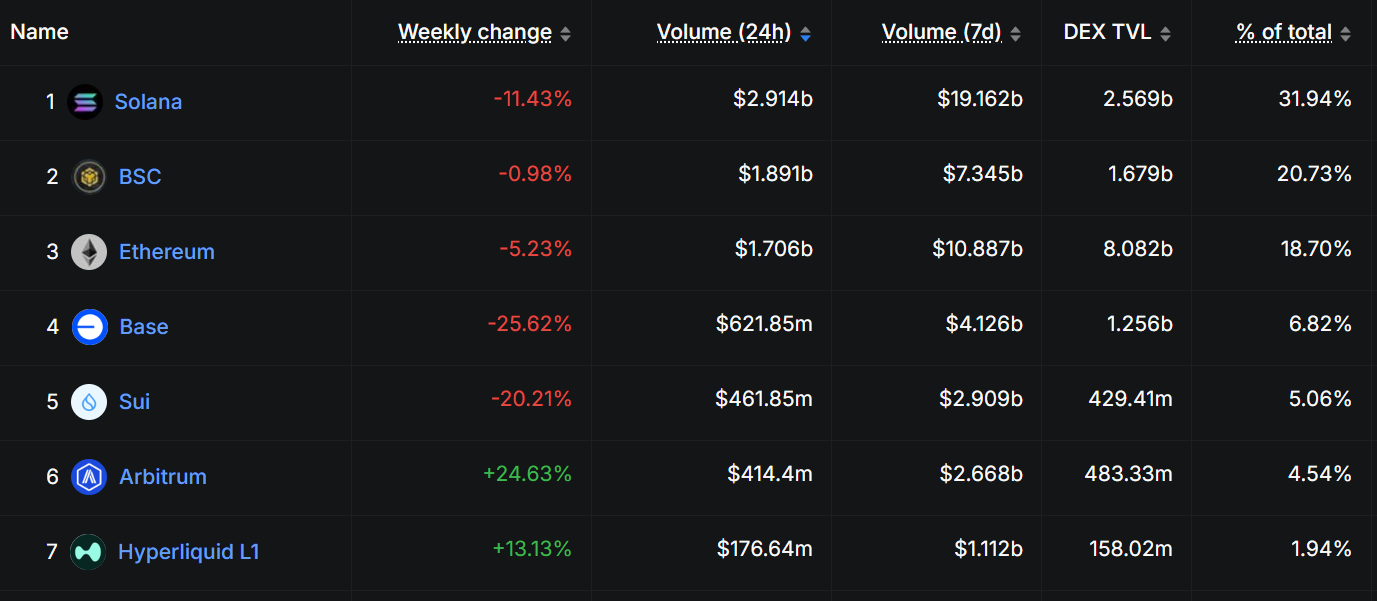
Solana leads the market share in DEX trading. Source: DefilLama
Sui (SUI) and Aptos (APT), both built on Meta‑originated Move language, target high‑frequency gaming and DeFi applications. Sui’s ecosystem saw a 73.9% surge since 2024 in developer contributions, driven by new projects like decentralized exchanges, NFT marketplaces, and social apps.
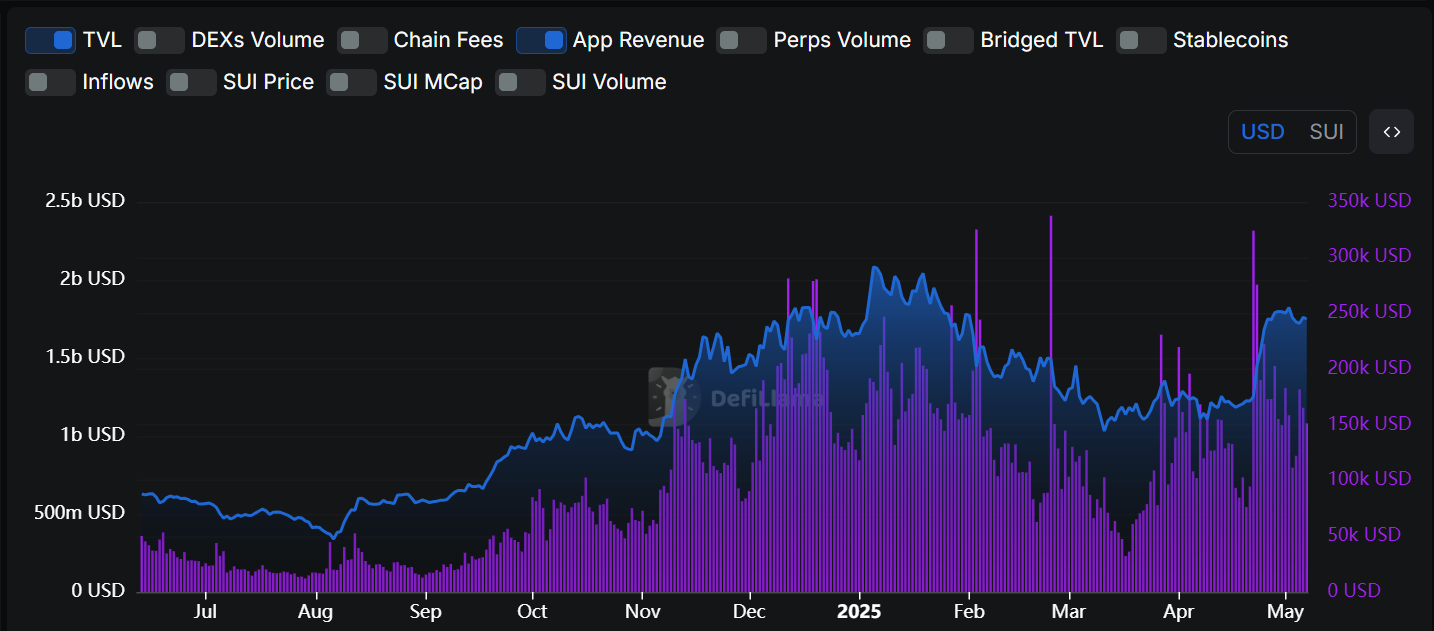
Sui TVL and app revenue in 2025. Source: DefiLlama
Aptos, with a $3bn market cap, mirrors this growth trajectory: its nascent DeFi protocols and NFT platforms are attracting audit‑backed launches, yet APT trades well below levels implied by its technical roadmap and prospective ETF filings.
Arbitrum’s bargain: Layer‑2 scaling
Ethereum’s scaling powerhouse Arbitrum (ARB) offers an absorbed glimpse of Ethereum’s future capacity. Over the past week, Arbitrum‑based decentralized exchanges processed $2.6bn in trading volume — about two‑thirds of Ethereum’s own DEX throughput — while the ARB token languishes 87% below its all‑time high.
That divergence between usage and price marks ARB as a standout undervalued asset. With ongoing airdrops and developer grants fueling ecosystem growth, ARB embodies how value accrues to settlement‑layer tokens in a permissionless network.
TON and LINK: New Web3 infrastructures
Toncoin (TON) taps into Telegram’s vast user base — nearly one billion active users — to deliver on‑chain payments and social‑media integrations. Telegram’s native wallet, payment bots, and upcoming DeFi experiments promise to convert social interactions into token‑driven economies. Despite the setbacks in the past few months, TON still remains the most suitable infrastructure for Web3 developments on Telegram.
Yet Toncoin’s $7.5bn market cap has not fully priced this potential: market observers note Telegram’s network effects could rival that of major Layer‑1 protocols once integrated DeFi primitives go live.
Chainlink (LINK) serves as the de facto decentralized oracle network. It anchors data feeds for DeFi protocols, insurance contracts, gaming applications, and cross‑chain bridges. Google’s BigQuery integration and ongoing partnerships with major enterprises underscore Chainlink’s entrenched position in Web3 infrastructure.
Despite ubiquity, LINK’s $9bn market cap appears modest relative to its indispensability — Santiment consistently ranks Chainlink among top projects by developer activity and commit frequency, suggesting robust innovation ahead.
Risk considerations and market dynamics
Solana, Sui, Aptos and Arbitrum face technical execution risks—network outages, upgrade delays, or security audits — that could amplify price swings. Toncoin’s social‑layer success depends on Telegram’s continued developer support and user adoption.
Chainlink must maintain its lead amid emerging oracle competitors and evolving cross‑chain demands. Investors and analysts should monitor active addresses, developer commits, TVL (total value locked), and token unlock schedules as core indicators of health.
Observations and outlook
As of 7 May 2025, the crypto market reflects a mid‑cycle environment: regulatory clarity in key jurisdictions, renewed institutional inflows, and maturing on‑chain metrics. Fidelity’s and Bitwise’s research uniformly signals undervaluation for leading assets, citing historical precedents around oversold metrics and supply‑demand shifts.
The six projects profiled — Solana, Arbitrum, Sui, Aptos, Toncoin, and Chainlink — all offer data‑backed fundamentals that the current price does not fully capture. While volatility remains a defining feature, this selective group presents some of the clearest ‘value opportunities’ in crypto’s ongoing evolution.



 Thank you for your feedback! We’re glad you found this article helpful.
 An error occurred while sending the form, please try again.
 We are sorry. You've already sent a message within the last 60 seconds. Please wait before sending another.
 Thank you for letting us know! Our team will review your feedback to help improve our content.
We're sorry you did not find what you were looking for. Please select the reason this article was not helpful.

 You’re in. Thanks for joining our newsletter.
