


 4 min read



 AI Overview
Three altcoins—Sei (SEI), Monero (XMR), and WhiteBIT Coin (WBT)—are gaining traction entering Q3 2025 due to distinct real-world catalysts: institutional and gaming adoption for SEI, privacy-driven resilience and protocol upgrades for XMR, and exchange-driven utility plus sports partnerships for WBT.
- Sei (SEI): Institutional and state-level interest plus a staking-integrated ETF and rapid gaming-driven on-chain growth position SEI as an infrastructure play for Q3.
- Monero (XMR): Protocol upgrades, record hashrate and persistent privacy demand sustain its resilience despite exchange delistings and regulatory headwinds.
- WhiteBIT Coin (WBT): Exchange utility, a high-profile Juventus sponsorship, new trading features and rising volume are driving user activity and token demand.
The crypto market is entering the third quarter of 2025 with a complex mix of macro uncertainty, regulatory shifts, and emerging sectoral momentum. Amid sideways movement in large-cap assets like Bitcoin and Ethereum, several mid-cap and lesser-known tokens have posted strong performance driven by real-world developments and on-chain metrics.
Here we analyze three altcoins — Sei (SEI), Monero (XMR), and WhiteBIT Coin (WBT) — that have shown notable price movement and ecosystem growth in recent weeks. Each represents a different segment of the blockchain economy.
1. Sei Network (SEI): Blockchain infrastructure gaining institutional attention
SEI surged 30% in June, trading near $0.28—its highest price since March. The surge reflects momentum from major institutional optimism.
The Wyoming Stable Token Commission selected Sei as one of two finalists for its official USD-pegged stablecoin project, known as WYST. Sei scored 30 out of a possible 36 points in the commission’s technical evaluation, beating out competitors like Ethereum, Avalanche, and Base.
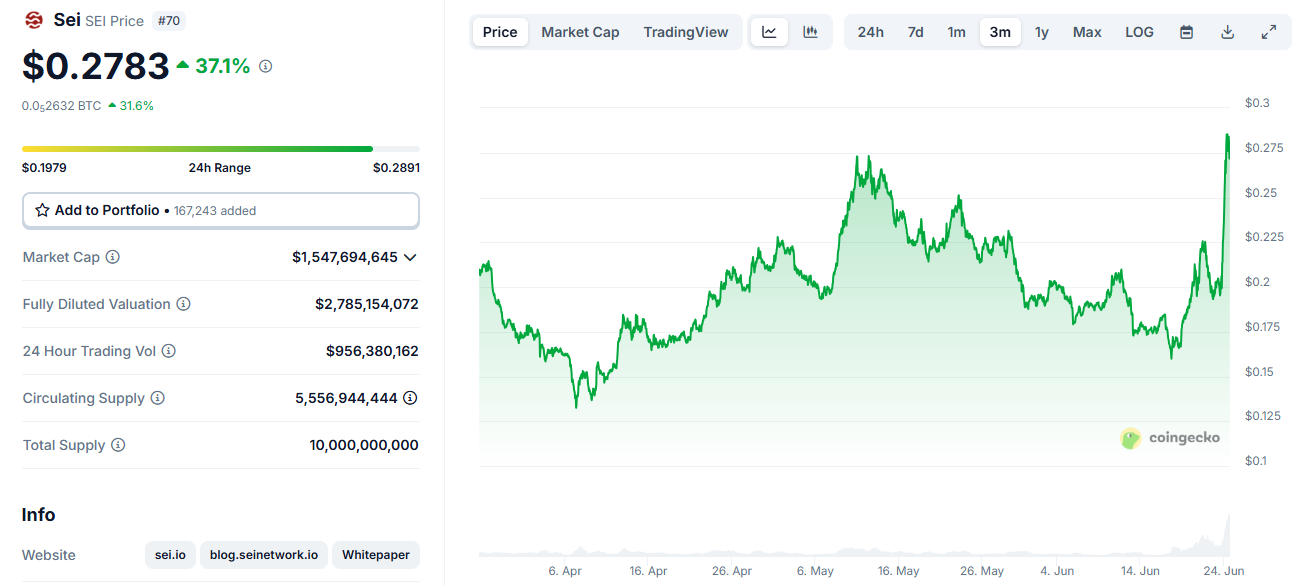
Meanwhile, Canary Capital filed for the first US-based Staked SEI ETF, combining spot exposure to the SEI token with staking rewards earned via on-chain validation. This is the first ETF in the US to integrate staking yield into a regulated product structure.
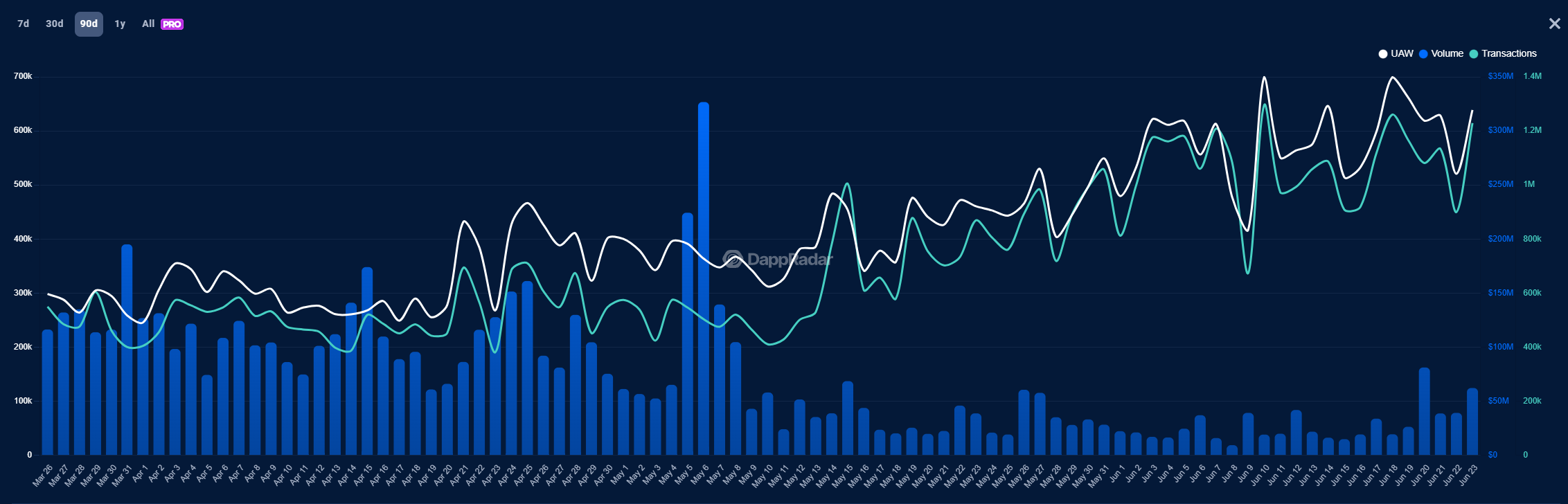
Sei is also emerging as a major hub for blockchain gaming. According to DappRadar, gaming-related addresses on the network grew 82% month-over-month, with total network transactions up 141% to over 36 million.
Why it matters for Q3
SEI is positioned at the intersection of state-backed digital currency infrastructure, institutional investment vehicles, and blockchain gaming — a rare convergence in the current market.
Its performance infrastructure and active user growth could make it a focal point of Q3 developments, especially if the WYST pilot and ETF proceed on schedule.
2. Monero (XMR): Privacy resilience amid regulatory heat
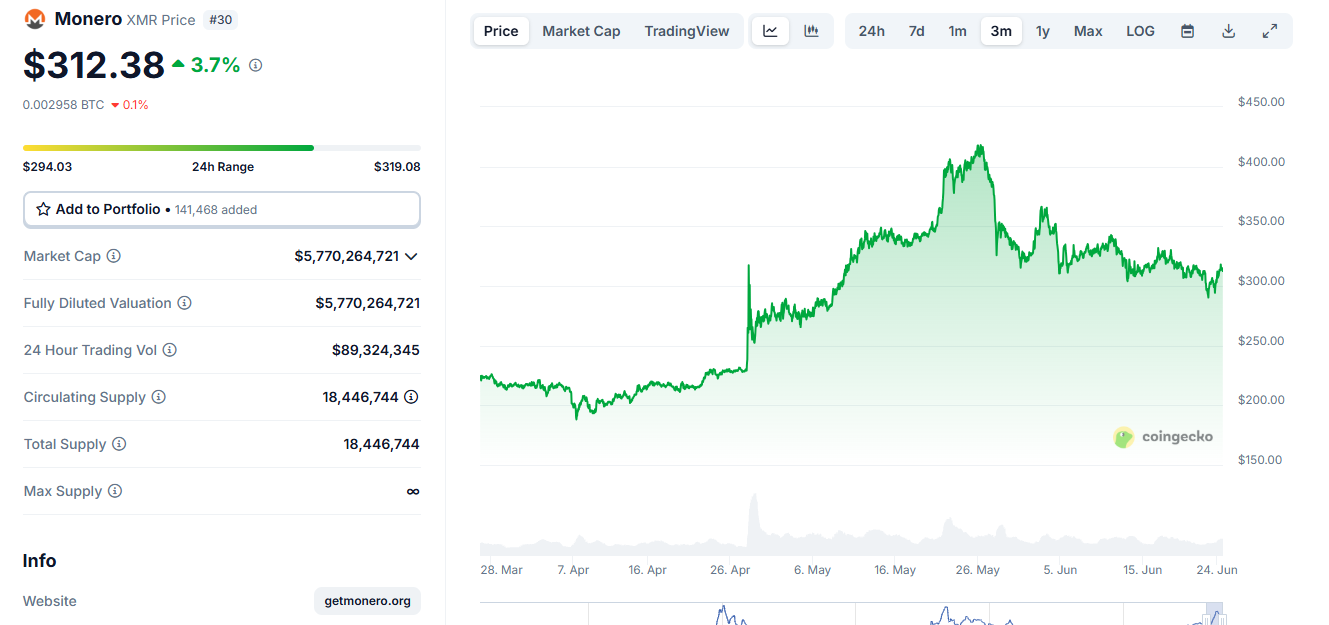
Monero has quietly delivered one of the strongest performances among legacy altcoins in 2025, up approximately 86% year-to-date. In June, it briefly crossed $420, marking its highest level in nearly three years.
The XMR/BTC chart shows a bullish breakout above the Ichimoku cloud, supported by strong technical signals and rising demand.
Also, the ongoing rollout of the Seraphis protocol has strengthened Monero’s default anonymity and resistance to blockchain surveillance.
Additional upgrades, including Bulletproofs++, OPSEAD, and a Rust-based node implementation, are under development, focused on reducing traceability and improving efficiency.
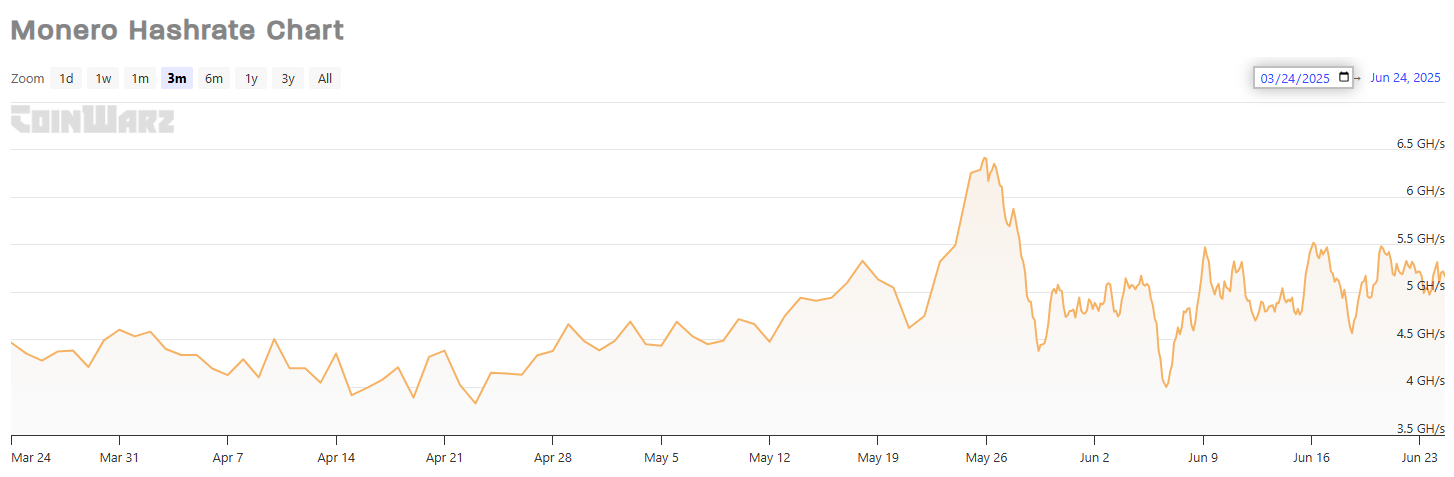
Meanwhile, Monero’s hashrate hit an all-time high of 6.33 GH/s in May, a sign of miner confidence and network robustness. Following delistings on major centralized exchanges such as Binance and Kraken, usage has moved to decentralized platforms like Haveno.
Despite concerns around privacy leaks in some DEX environments, Monero remains the top privacy currency used on darknet markets and continues to be favored for peer-to-peer trade.
Why it matters for Q3
Monero represents a unique case in crypto — a longstanding asset that has survived regulatory scrutiny, exchange exclusion, and protocol fatigue. With rising demand for privacy and upcoming enforcement of privacy coin restrictions in the EU by 2027, Monero may see both increased usage and visibility. Its resurgence is grounded in protocol improvements and user-led demand, not hype.
3. WhiteBIT Coin (WBT): Exchange token riding brand momentum
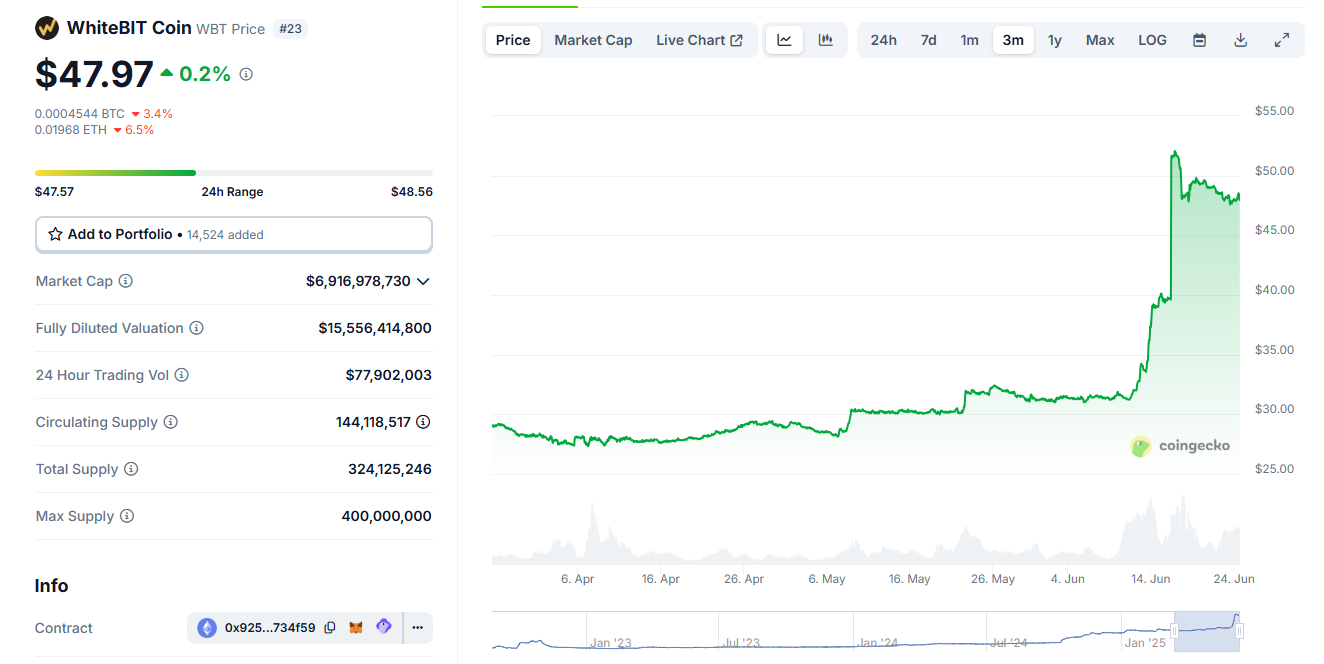
WBT surged nearly 50% in June leading up to 24 June, hitting an all-time high of $52.30. The price action followed a high-profile partnership with Juventus FC, the Italian football club.
In early June, WhiteBIT signed a three-year partnership with Juventus worth roughly €5million per year. The exchange’s branding now appears on the team’s kits, and the announcement triggered a 182% increase in active WBT addresses and renewed interest in the exchange’s ecosystem.
WBT is integrated into the WhiteBIT exchange for staking, fee discounts, launchpad access, and daily withdrawal benefits. On 11 June, the platform launched Hedge Mode, a feature enabling simultaneous long/short futures positions — a move aimed at attracting professional traders.
Also in June, WhiteBIT’s reported 30-day trading volume surpassed $41bn, up 11% month-over-month. The exchange now claims over 4 million users globally and has expanded its brand strategy with earlier deals involving FC Barcelona and Trabzonspor.
Why it matters for Q3
WBT’s utility is tied directly to WhiteBIT’s trading platform, which continues to grow in volume and feature offerings. With high visibility in global sports and a surge in real-world user activity, WBT could remain on investor radars.
Final thoughts
Each of these three altcoins has seen meaningful growth due to distinct catalysts:
- SEI is gaining traction with governments, institutions, and developers.
- XMR is solidifying its reputation as the most resilient privacy coin in a tightening regulatory environment.
- WBT is leveraging brand strategy and exchange utility to build momentum.
As Q3 begins, these tokens stand out not because of speculative hype but because of structural developments, on-chain activity, and real-world usage.
While each carries its own risks — regulatory, technical, or market saturation — they provide useful case studies in how altcoins can gain traction beyond price charts.



 Thank you for your feedback! We’re glad you found this article helpful.
 An error occurred while sending the form, please try again.
 We are sorry. You've already sent a message within the last 60 seconds. Please wait before sending another.
 Thank you for letting us know! Our team will review your feedback to help improve our content.
We're sorry you did not find what you were looking for. Please select the reason this article was not helpful.

 You’re in. Thanks for joining our newsletter.
