


Managing ERC-20 tokens safely in 2026 requires a wallet that balances strong security, broad network support, and seamless usability. As Ethereum’s ecosystem expands across layer-2 (L2) networks, sidechains , decentralized finance (DeFi) , and interoperable bridges, selecting the right ERC-20 wallet can significantly impact both security and convenience.
Below is a comprehensive guide to the best ERC-20 wallets available today, assembled by our team at CryptoManiaks.
Key Takeaways
- The best ERC-20 wallets in 2026 prioritize security above all else, featuring secure elements, open-source firmware, air-gapped signing, and tamper-resistant manufacturing.
- Cross-chain functionality is now essential, meaning top ERC-20 wallets support Ethereum mainnet, major L2s (Arbitrum, Optimism, Base, zkSync), and other EVM-compatible chains.
- User experience has dramatically improved, offering clearer onboarding, better recovery flows, WalletConnect 2.0, and safer DeFi integrations for everyday users.
- Price does not always equal protection: budget wallets can offer enterprise grade security if the firmware, secure element (SE) chip, and audits meet high standards.
- The best ERC-20 wallet depends on your use case (DeFi power user, NFT collector, long-term investor, or multi-chain trader).
Best ERC-20 Wallets Listed & Ranked
-
 PromotionsCoins


-
 Coins
Coins

-
 Coins
Coins


-
 Coins
Coins

-
 PromotionsCoins



-
 PromotionsCoins
-
 PromotionsCoins
-
 Coins
Coins
Best ERC-20 Wallets Reviewed


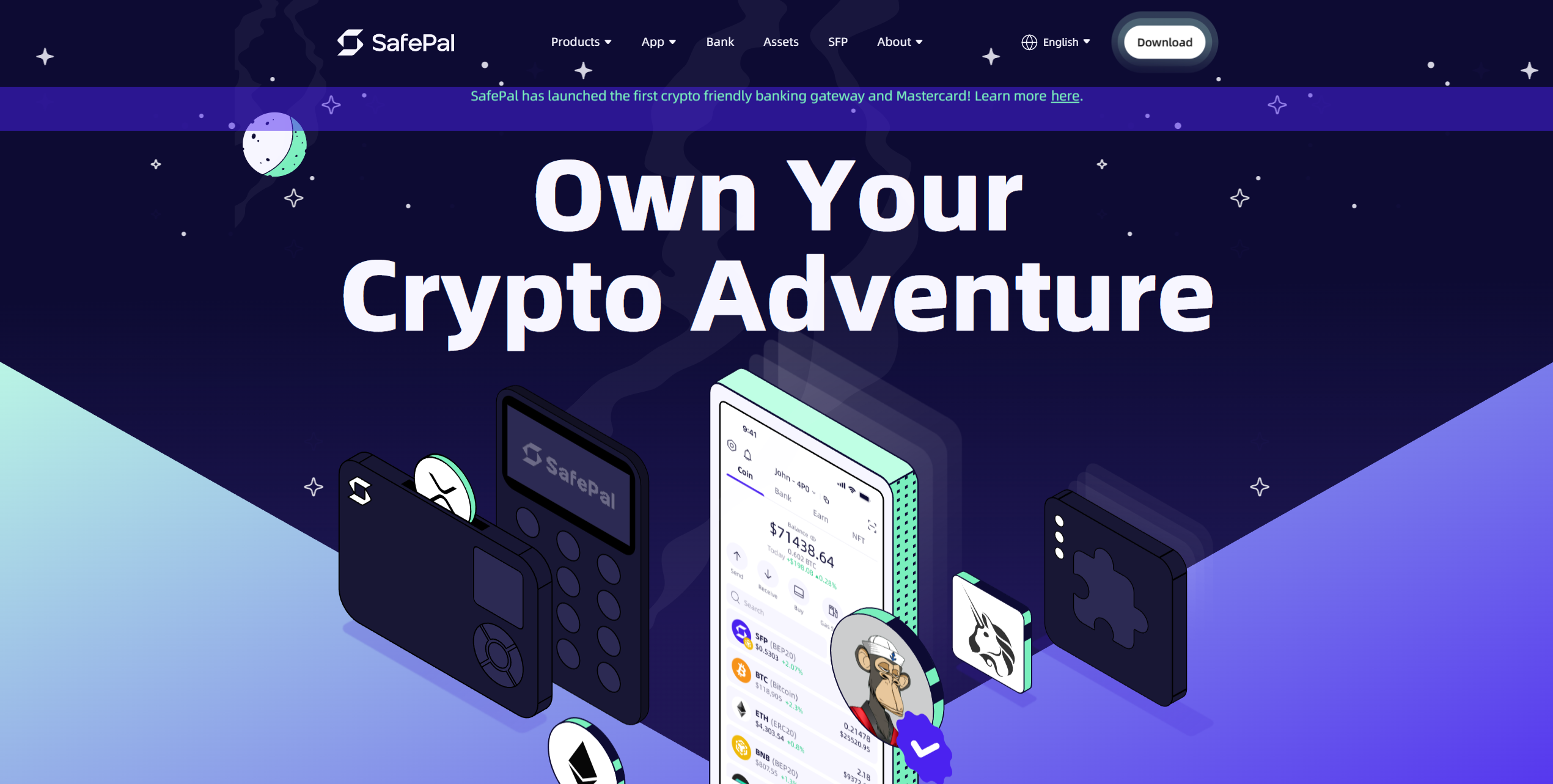
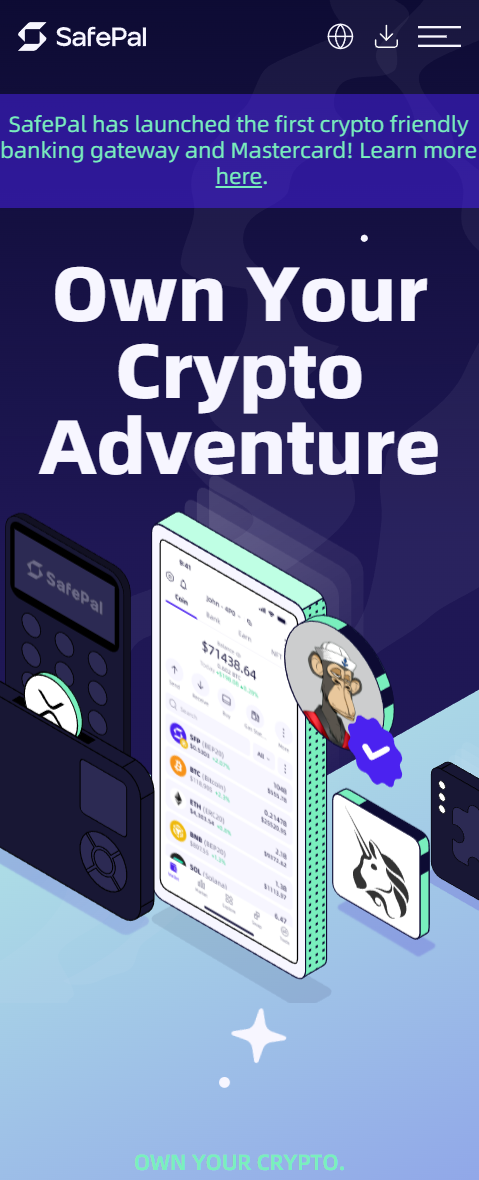
Safepal offers a complete suit of assets operations, with hardware and software wallets that are all multichain and multi-sig in nature. They do not just allow you to store and secure your assets, you can also swap, trade, buy and sell, and above all stake some of your assets to make profits. Safepal is fully anonymous and completely self-custodial, though its source is not 100% open. It supports assets across hundreds of chains and allows integration with lots of DEFIs and DAAPs. Above all, you are allowed to backup your almighty seeds both manually and on the cloud.
Year Founded
- 2018
Cryptocurrencies
- Bitcoin
- Ethereum
- Tether
-
+89
Available countries
- Afghanistan
- Albania
- Algeria
-
+246
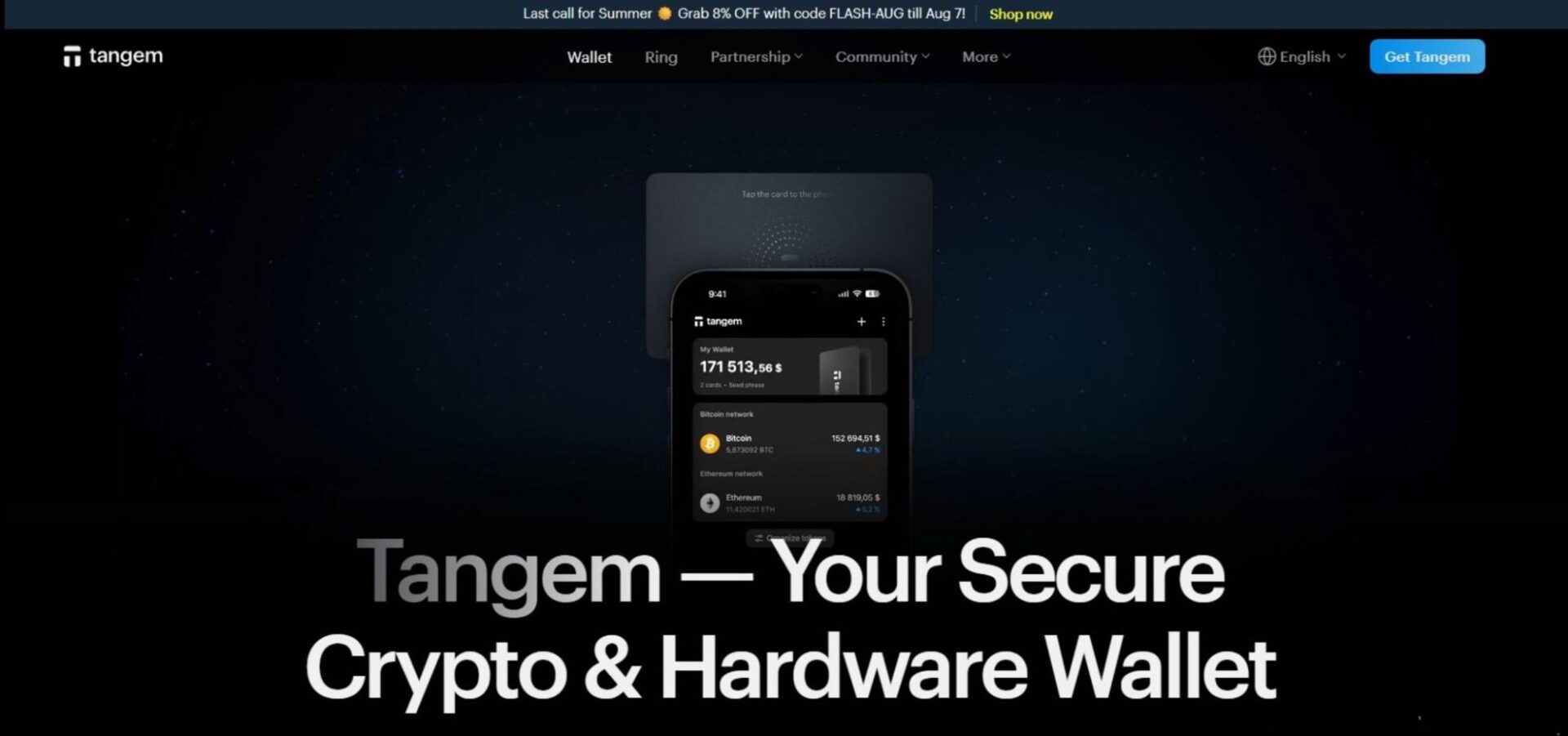
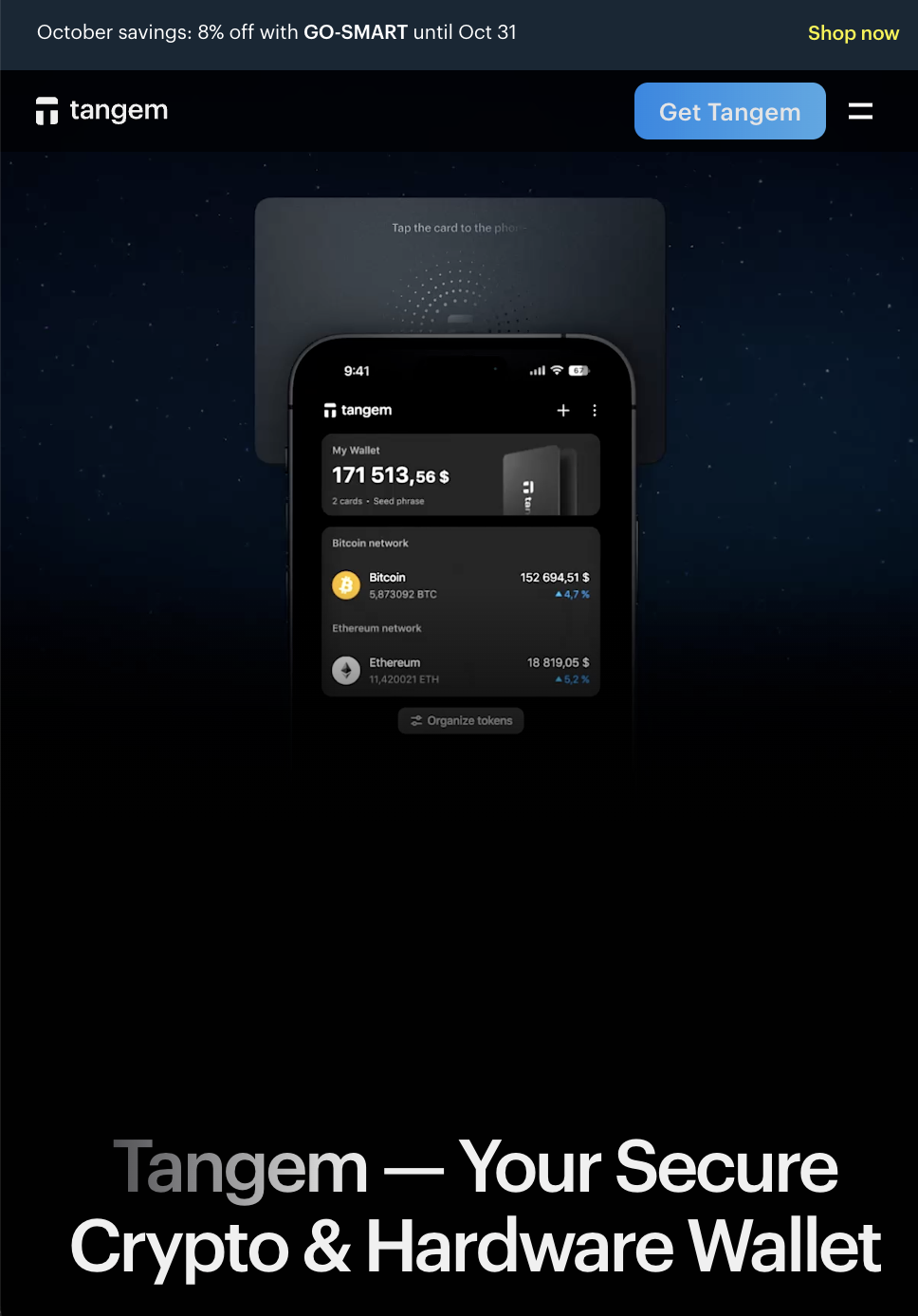
Year Founded
- 2017
Headquarters
- Switzerland
Licenses
- N/A - Not disclosed
Cryptocurrencies
- Bitcoin
- Ethereum
- Tether
-
+70
Available countries
- Albania
- Algeria
- American Samoa
-
+228
Languages
- English
- German
- French
-
+6
Features
- Tangem Pay
- Tangem Academy
-
+11
Year Founded
- 2023
Headquarters
- United States
Licenses
- United States (IRS)
Cryptocurrencies
- Bitcoin
- Ethereum
- Tether
-
+10
Available countries
- United States
Languages
- English
Features
- Swap
- Affiliate Program
-
+6
Get $10 in Bitcoin when you register through a referral link from an existing member.


Established in 2011, Kraken is a trusted cryptocurrency exchange renowned for its longevity and diverse trading interfaces, catering to a broad user base.
- Supports hundreds of coins
- High liquidity
- Simple and user-friendly interface
- Good customer support options
- Lots of advanced trading features like margin, futures, and indices trading
- No insurance fund for assets on the platform
- Doesn’t offer a crypto credit card
- No personal wallet service for traders
- Supports only a few fiat currencies
Year Founded
- 2011
Headquarters
- United States
Licenses
- United States (IRS)
- Canada (CRA)
- United Kingdom (HMRC)
-
+7
Cryptocurrencies
- Bitcoin
- Ethereum
- Tether
-
+83
Available countries
- Afghanistan
- Albania
- Algeria
-
+240
Languages
- Chinese (Mandarin)
- English
- French
-
+10
Features
- Cryptowatch
- Forks
-
+29


Uphold Crypto Exchange, founded in the United States in 2014, is a global digital money platform that enables users to buy, sell, and trade various cryptocurrencies.
Year Founded
- 2015
Headquarters
- Bahamas
Licenses
- United States (IRS)
- United Kingdom (HMRC)
- Lithuania
Cryptocurrencies
- Tether
- TrueUSD
- USD Coin
-
+144
Available countries
- Australia
- Canada
- France
-
+9
Languages
- English
- Spanish
Features
- Metals
- National Currencies (Forex)
-
+5
Don’t invest unless you’re prepared to lose all the money you invest.
Earn $10 in Ethereum (ETH) when you stake $100 in ETH for the first time, up to $30 in rewards


Coinbase, a major player since its inception in 2012, is a user-friendly cryptocurrency exchange offering a secure platform for buying, selling, and managing a variety of digital assets.
- Operating since 2012, listed on Nasdaq, and has a BitLicense from New York State Department of Financial Services.
- Offers a variety of assets
- Fast crypto withdrawals
- Lists smaller assets before other big exchanges
- User-friendly interface with intuitive design
- Coinbase Pro offers much better fees!
- This has been the main complaint against Coinbase, although they have committed to hiring more staff.
- Controls customers' private keys
- Restricted to many countries
- Doesn't offer many advanced services
Year Founded
- 2012
Headquarters
- United States
Licenses
- United States (IRS)
- Canada (CRA)
- United Kingdom (HMRC)
-
+4
Cryptocurrencies
- Bitcoin
- Ethereum
- Tether
-
+68
Available countries
- Canada
- France
- Netherlands
-
+6
Languages
- English
- German
- French
-
+9
Features
- Web3
- Borrow
-
+27
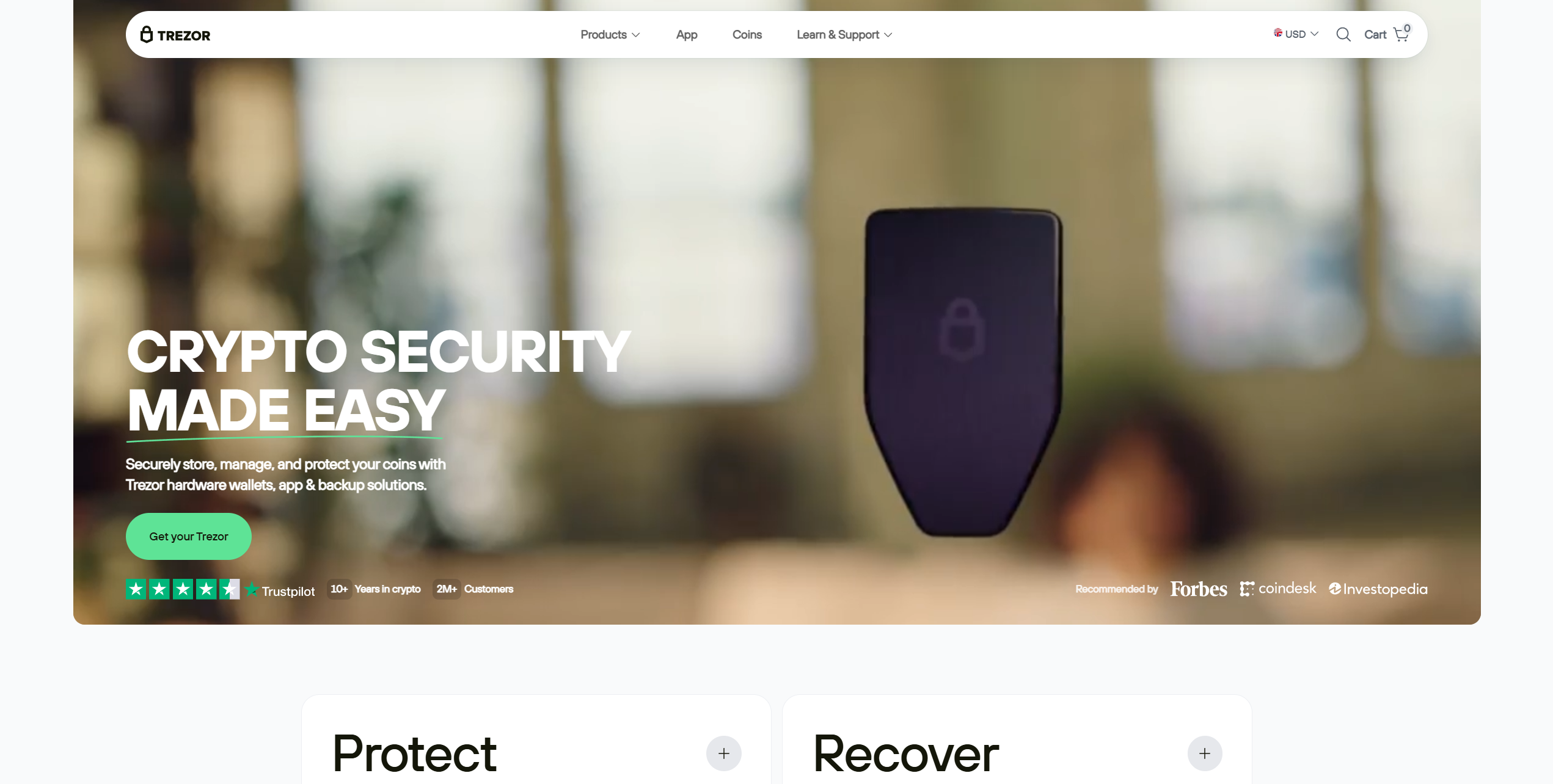
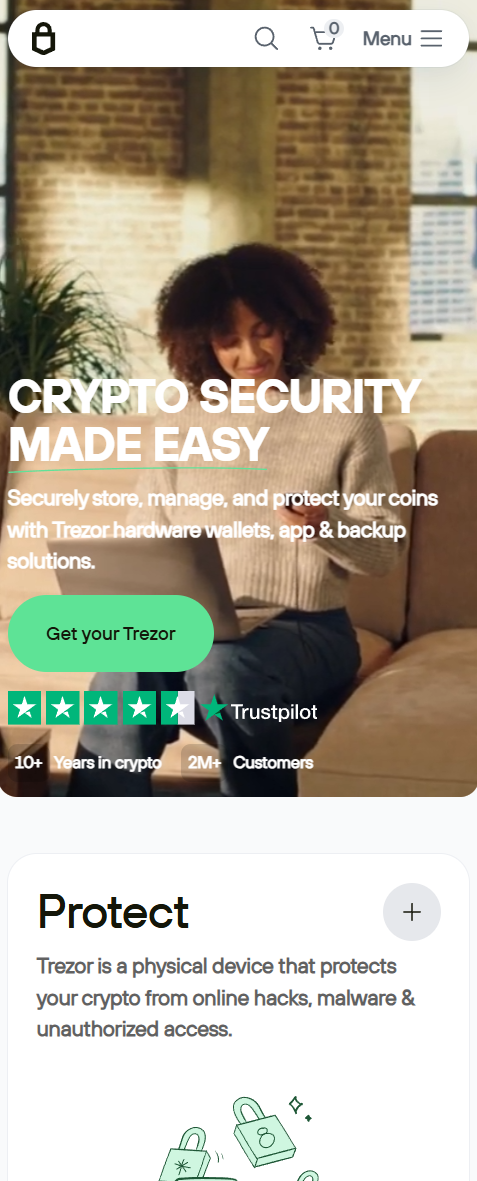
Year Founded
- 2013
Headquarters
- Czech Republic
Licenses
- N/A - Not disclosed
Cryptocurrencies
- Bitcoin
- Ethereum
- Tether
-
+204
Available countries
- Afghanistan
- Albania
- Algeria
-
+246
Languages
- English
- Czech
Features
- Trezor Keep
- Trezor Expert Onboarding Session
Year Founded
- 2019
Headquarters
- Israel
Licenses
- N/A - Not disclosed
Cryptocurrencies
- Bitcoin
- Ethereum
- Tether
-
+68
Available countries
- Afghanistan
- Albania
- Algeria
-
+245
Languages
- English
- German
- Portuguese (Brazil)
Features
- Swap
- Multi-Party Computation (MPC)
-
+15

Disclaimer
The information provided on this website is for informational purposes only and should not be considered as financial, investment, or legal advice. Cryptocurrency investments are volatile and high-risk in nature. Consult with a qualified financial advisor and/or tax professional before making any investment decisions. We are not responsible for any loss incurred due to the use of information on this website. Do your own research and exercise caution. Don’t invest unless you’re prepared to lose all the money you invest.
How We Determine the Best ERC-20 Wallets
Choosing the best ERC-20 wallet in 2026 means evaluating far more than simple token support. At CryptoManiaks, each wallet undergoes a structured assessment that focuses on cryptographic strength, developer transparency, long-term security, and real-world usability.
We test how wallets behave during setup, signing, backup, and recovery, and we analyse their company history, audit quality, and firmware practices. Our scoring system is designed to highlight wallets that both beginners and advanced users can trust, whether they’re storing stablecoins, trading DeFi tokens, or managing NFT assets.
Below are the in-depth criteria used for evaluation:
Security Architecture
Security architecture is the foundation of any reliable ERC-20 wallet and is the most important factor in our review.
Today’s Ethereum threats are more varied and complex than in the past.
- Supply-chain tampering during manufacturing or shipping
- WalletConnect phishing and malicious dApp requests
- Malware capable of memory scraping on compromised systems
- Targeted attacks against poorly stored seed backups
We view physical and digital security as integral to a single system, rather than as separate items to be checked off.
- A modern Secure Element chip, ideally rated CC EAL5+ or above, should protect against physical extraction and glitch attacks.
- Using air-gapped signing with QR codes or microSD cards helps reduce the risk of attacks.
- We verify that these methods maintain transaction accuracy in real-world signing situations.
We also include user-facing security controls in our scoring.
- Duress PINs
- Optional passphrases (25th word support)
- Hidden or decoy wallets
- Recovery-shield mechanisms
Firmware design is less visible but still very important.
- Reproducible builds
- Signed updates
- Tamper-evident boot sequences
We also pay close attention to supply-chain protections.
- Packaging seals and integrity checks
- Serial verification
- Device authentication on first use
In practice, a strong security architecture should still protect funds even if the user’s computer, phone, or network has already been compromised.
Open-Source Transparency
Open-source transparency enables verification of whether a wallet’s security claims are upheld in practice.
We check how much of the wallet’s technology is open for review.
- Firmware
- Hardware schematics
- Bootloaders
- Communication protocols
- Companion software
- Recovery tooling
When the source code is public, anyone can review it instead of just trusting the company.
- Researchers can verify that implementations match stated cryptographic designs
- Issues can be caught by the community before they become systemic risks
Reproducible builds demonstrate to users that they can trust the software.
- Users can compare compiled firmware hashes against published source code
- This confirms the device is running what the vendor claims it is
We take external security audits seriously.
- Who performed the audit?
- How deep did the testing go
- Whether full reports and remediation details are publicly available
Activity on GitHub indicates the health of a project’s development over time.
- Commit frequency
- Responsiveness to issues
- Patch quality and closed-source wallets are not ruled out, but they need to make up for it in other ways.e elsewhere.
- Verifiable hardware isolation
- Strong audit history
- Clear explanations of trust assumptions
Usability & User Experience
Even the most secure wallet can fail if it regularly pushes users into mistakes.
UX accounts for 25% of our total score because human error remains the leading cause of crypto loss.
- This is especially true for Ethereum users navigating DeFi, NFTs, and multi-network setups
We assess how the wallet handles first-time setup.
- Clear guidance during seed creation
- Explicit warnings for unsafe actions
- Visual confirmations that reduce ambiguity
How comfortable the hardware is to use matters more than most people think.
- Screen size and legibility
- Button versus touch input
- Ability to verify addresses and contract data directly on the device
The experience of using the companion app is just as important as the device itself. Clear transaction prompts:
- Logical menu layout
- Reliable gas estimates
- Firmware updates that don’t require guesswork
We also check for features that help prevent accidental mistakes.
- WalletConnect approval flows
- Meaningful error messages
- Backup reminders
- Friction where it actually matters
Power users are evaluated differently.
- Frequent signing efficiency
- DeFi transaction handling
- Smooth network switching without buried menus
Backup, Recovery & Migration
Backup and recovery systems determine whether a mistake becomes an inconvenience or a permanent loss.
This category carries extra weight for ERC-20 users.
- Assets are often spread across mainnet, L2s, and smart contracts
We examine which backup standards are supported.
- BIP39
- SLIP-39 / Shamir backups
- SeedQR
- Proprietary approaches
Interoperability is critical.
- Backups should be recoverable on more than one brand
- Closed ecosystems reduce long-term resilience
Backup storage formats are compared realistically.
- Paper backups (fragile, but common)
- Steel backups (far more durable)
- Encrypted microSD options
- QR-based graphical backups
We run full recovery tests to check:
- Ease of restoration
- Error handling quality
- Performance under imperfect conditions (damaged screen, forgotten passphrase)
Migration flexibility also matters.
- Users should be able to move to a competing wallet if support ends
Supported Coins & Chains
ERC-20 usage now spans far beyond the Ethereum mainnet.
We assess real-world EVM compatibility.
- Ethereum mainnet
- Major Layer-2 networks
- EVM sidechains and rollups
- Ethereum-adjacent ecosystems
Token handling goes beyond default listings.
- Custom token imports
- Contract interaction support
- DeFi and staking compatibility
NFT support is evaluated in practical terms.
- ERC-721 and ERC-1155 support
- On-device metadata visibility
- Collection verification
Integration with external tools is tested.
- Browser wallets
- Portfolio trackers
- DeFi frontends
Network safety mechanisms are reviewed.
- RPC reliability
- Network-switching clarity
- Warnings when assets risk being sent to incompatible chains
Transaction Functionality
Modern Ethereum transactions require clarity, not guesswork.
We test support for current Ethereum standards.
- ERC-20 and related extensions
- EIP-2612 permits
- EIP-1559 gas mechanics
- WalletConnect 2.0
Showing transaction details on the device is essential.
- Users must understand what they are signing
- Contract calls should be clearly described
NFT transaction handling is reviewed closely.
- Metadata checks
- Collection validation
- Risk warnings for suspicious approvals
Advanced workflows are included.
- Multisig compatibility
- Offline signing accuracy
- Air-gapped transaction verification
We also check how wallets warn users about risks.
- Unlimited approval warnings
- Permission visibility
Firmware & Longevity
Security doesn’t stand still, and neither should wallet firmware.
We assess update cadence and responsiveness.
- Frequency of patches
- Speed of vulnerability response
- Secure delivery mechanisms
Offline update options score highest.
- microSD
- QR-based methods
- No mandatory online connection
The duration of product support is important.
- Ongoing support for older models
- Clear communication about end-of-life timelines
We pay close attention to the stability of the firmware.
- Avoidance of breaking changes
- Minimal usability regressions
Reputation
Reputation offers context that specs alone can’t provide.
We examine the team behind the product.
- Technical background
- Public transparency
- Willingness to address mistakes
We research the wallet’s history in the community.
- Forums
- GitHub issues
- Independent security discussions
Security culture is a strong differentiator.
- Bug bounty programs
- Responsible disclosure policies
- Engagement with researchers
We judge past incidents by how the team responded, not by whether they denied them.
- Hacks
- Recalls
- Supply-chain issues
Price Value
Value isn’t just about price tags.
- Expensive wallets aren’t automatically safer.
- Fancy materials don’t matter if the wallet isn’t secure at its core.
- Even less expensive devices can still achieve high scores.
- Strong Secure Elements
- Transparent firmware
- Reliable updates
- Included accessories are considered.
- Backup materials
- Cables and cases
- Missing features can lead to hidden costs.
- No air-gapped signing
- Limited passphrase support
- Closed designs
- The quality of a wallet’s construction significantly impacts its reliability over time.
- Weak materials can create recovery risk
- We rank wallets by overall value, not just the price.
 DON’T GET REKT
Curated drops, testnets and red flag alerts straight to your inbox ✌️
 You’re in. Thanks for joining our newsletter.

Final Tips
The best ERC-20 wallet is the one that suits your actual Ethereum usage. Long-term holders should prioritise defensive security.
- Secure Elements
- Air-gapped signing
- Robust recovery options
Active DeFi users need clarity above all else.
- Accurate contract displays
- WalletConnect 2.0 support
If you use multiple chains, try to avoid using bridges unless necessary.
- Native L2 and EVM support is safer
Being disciplined about backups is important.
- Maintain multiple offline backups
- Test recovery before you need it
- Update Firmware updates and stay updated about new Ethereum standards
Frequently Asked Questions
-
01.
What exactly is an ERC-20 wallet?
ERC-20 wallet is a cryptocurrency wallet that works with the ERC-20 token standard on the Ethereum blockchain. This means you can use it for popular tokens like USDT, USDC, LINK, UNI, AAVE, and many others on the Ethereum network. With an ERC-20 wallet, you can store, send, receive, and use these tokens. Most also allow you to access other parts of Ethereum, such as NFTs, staking, and Layer-2 networks. Not all wallets are the same, though—security, user experience, and support for different blockchains can vary a lot, so it’s important to pick carefully.
-
02.
Are hardware wallets necessary for ERC-20 tokens?
You don’t have to use a hardware wallet, but it’s a very good idea. Hardware wallets keep your private keys offline, which protects you from malware, browser hacks, and phishing attacks that are common in DeFi. If you frequently store a lot of value in your wallet or use smart contracts, a hardware wallet makes things much safer. Software wallets are suitable for small amounts or daily use, but for long-term storage, it’s best to use them in conjunction with a hardware wallet.
-
03.
Can ERC-20 wallets interact with Ethereum Layer-2 networks?
Yes. Most modern wallets are compatible with major Layer-2 networks, including Arbitrum, Optimism, Base, zkSync, and Linea. Still, not all wallets handle these networks the same way. Some make it easy to switch between L2s and display clear gas fees, while others require additional tools like MetaMask to function. Always check if your wallet supports the Layer-2 network before transferring your tokens, as sending them to an unsupported network can be expensive to rectify.
-
04.
Is MetaMask good enough to be my main ERC-20 wallet?
MetaMask is a good choice for convenience and daily DeFi tasks, but it’s still a software wallet. Your private keys are stored on your phone or computer, which can be a security risk. The safest way to use it is to connect it to a hardware wallet, so your transactions are signed securely. MetaMask is a safer tool for managing your funds, but not the primary place to store large amounts.
-
05.
What’s the safest way to store an ERC-20 seed phrase?
The safest approach is to create at least two offline backups and store them in separate, secure locations. Using metal backups is best because they are fireproof and waterproof, so they last longer than paper. Never save your seed phrase on your phone, computer, or online. If your wallet supports passphrases or Shamir backups, you can add extra protection; however, only do this if you fully understand how to set up and recover your wallet.