


 4 min read
5 Best Smart Money Crypto Trading Strategies for 2026




 AI Overview
A practical guide to five repeatable crypto trading approaches—swing, grid, risk‑controlled futures, arbitrage/funding carry, and high‑volume NFT flips—used by profitable traders in 2025, with clear execution steps and regime‑matching rules to apply in 2026.
- Match strategy to market regime: Swing for trends, grid for ranges, futures for high volatility, arbitrage/funding for neutral markets, and NFT flips for liquid, fast markets.
- Risk & position controls: Small sizes, predefined stops, 2–5x leverage limits, and disciplined sizing are the survival mechanisms that enable consistent gains.
- Automation & repeatability: Bots, funding-rate carry, and systematic flipping turn small, reliable edges into scalable returns while reducing emotional errors.
Crypto rewards the prepared. Traders who made the most consistent gains in 2025 weren’t lucky. They used structured systems, risk controls, automation, and data-driven decision-making.
Heading into 2026, retail traders have more tools than ever. From grid bots to futures hedging and sector rotation trading, smart strategies can turn market volatility into an opportunity instead of a source of stress.
This guide breaks down five practical trading approaches used by profitable traders in 2025, along with step-by-step instructions on how to apply them effectively in 2026.
1. Swing trading with trend confirmation
Swing trading captures medium-length price moves, usually days or weeks.
This trading approach worked well in 2025 as BTC and ETH moved in clear uptrends while altcoins rotated in strong cycles. Traders who waited for confirmation instead of guessing breakouts saw better win rates.
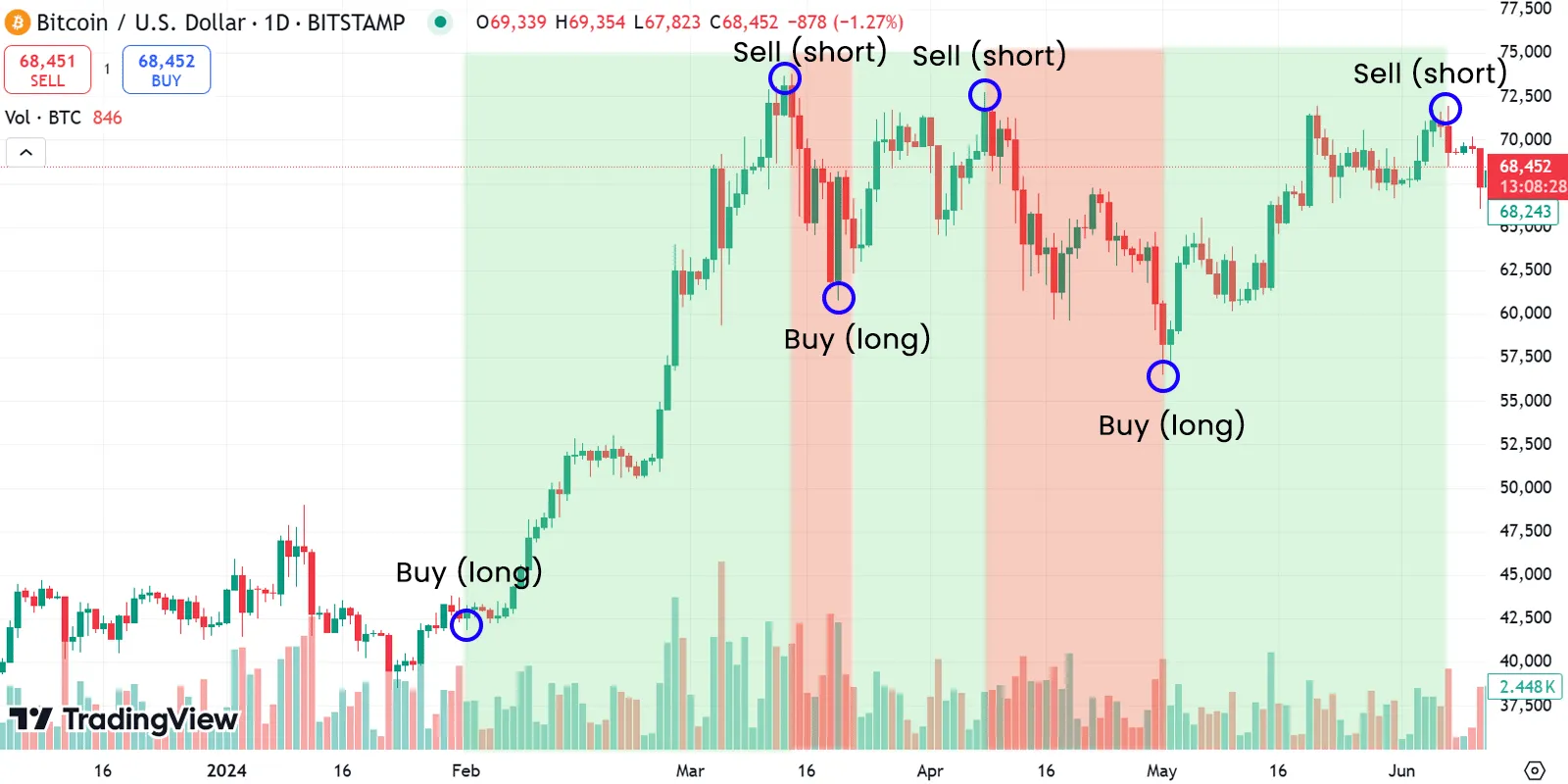
How to execute swing trading:
- Identify trend direction using 200-day and 50-day moving averages
- Buy only when the price is above both MAs and pullbacks remain shallow
- Target moves of 10–30% per swing, depending on volatility
- Place stop-loss below support or previous swing low
| If SOL breaks above key resistance, retests, and holds support, enter on retest. Target next resistance levels. Exit partially as price climbs — never wait for peak guesses. |
Swing trading rewards patience, not speed.
 DON’T GET REKT
Curated drops, testnets and red flag alerts straight to your inbox ✌️
 You’re in. Thanks for joining our newsletter.

2. Grid trading in sideways markets
Grid bots became one of the top retail tools in 2025. Instead of predicting price direction, the strategy profits from movement inside a range.
When Bitcoin consolidates between two levels (e.g., $80K–$95K), a grid bot automatically buys low and sells high repeatedly — extracting value without manual timing.
How to run a grid strategy:
- Choose a pair that moves sideways, not parabolic
- Set top and bottom price range based on recent structure
- Add multiple buy-low / sell-high grid levels
- Use short time-frame volatility (1h–4h) for profit scaling
| If BTC trades repeatedly between $78,000 and $111,000, a grid bot can accumulate profits every bounce. A real 2025 case showed ~75% return in five months during sideways action. |
For choppy markets, few strategies outperform grids.
3. Perpetual futures with risk-controlled leverage
Perpetual futures allow traders to go long or short with leverage. Used responsibly, this magnifies profitable trades. Used recklessly, it destroys accounts.
Smart money never over-leverages. They trade with a defined plan — small size, consistent execution.
How to trade futures safely:
- Use 2–5x leverage only — never 10x+ as a beginner
- Only trade liquid assets (BTC, ETH, SOL, major L2s)
- Long strong uptrends, short confirmed breakdowns
- Always set stop-loss and take-profit before execution
| If ETH breaks support and volume increases, a short position can protect spot holdings and generate profit. If trend reverses, stop out early — survival is the strategy. |
4. Arbitrage & funding rate carry trades
Arbitrage extracts profit from market inefficiencies. It doesn’t rely on market direction — only price gaps or funding differences between platforms.
In 2025, funding-rate arbitrage was one of the most consistent professional-grade strategies, generating 10–20% carry APR on BTC and ETH when executed correctly.
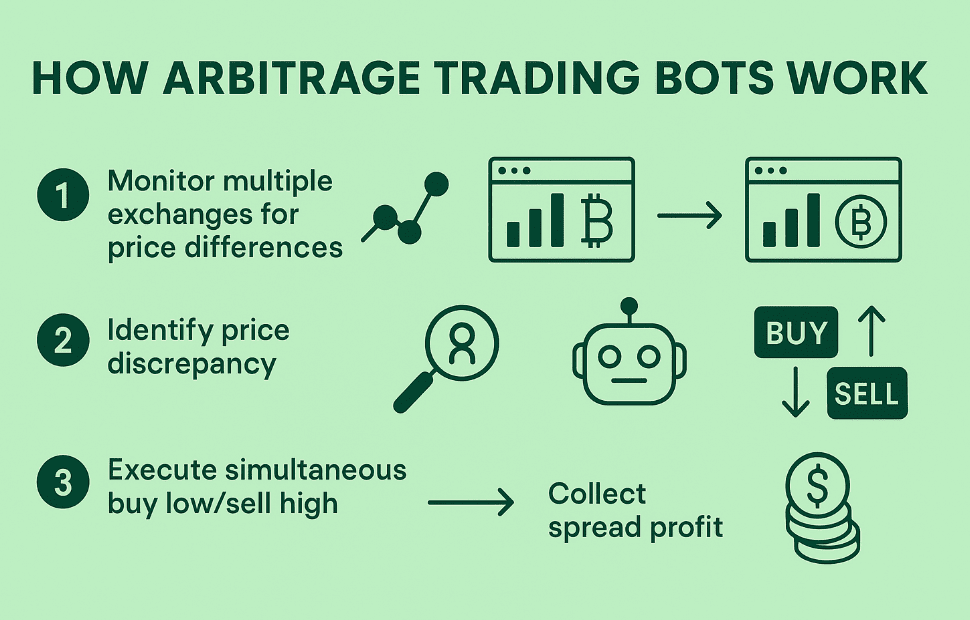
How to execute arbitrage:
Funding-rate method example:
- Long spot BTC
- Short BTC perpetual futures of equal size
- Earn funding payments while the price stays neutral
This is market-neutral — price movement matters less than funding flows.
Other forms retail traders used:
- CEX → DEX price differences
- Triangular pair inefficiencies
- Futures basis trades on quarterly contracts
Small spreads, repeated often, build serious return.
5. High-volume NFT flipping (low entry, fast rotation)
NFTs are no longer buy-and-hold assets. In 2025, the most consistent gains came from high-volume flipping of low-cost NFTs, not rare collection speculation.
With average NFT prices falling below $60 on some chains, traders flipped supply instead of hoping for moonshots.
How to trade NFTs intelligently:
- Filter collections by trading volume first
- Buy floor listings during low activity periods
- Sell small +5% to +20% moves repeatedly
- Avoid stagnating collections — rotate fast
| Buy 5 NFTs at $50 each. Sell at $60–$70 over several cycles. Repeat with volume rather than attachment to a single project. This way, NFT trading becomes a business, not a lottery ticket. |
Smart money crypto trading strategy comparison for 2026
| Strategy | Best Market Type | Skill Required | Risk Level | Potential Gain | Practical Use Case |
| Swing Trading | Trending markets | Medium | Medium | 10–30% per swing | Buy pullbacks in strong coins, exit gradually |
| Grid Bot Trading | Sideways / range-bound | Low-Medium | Medium | 20–100%+ yearly depending on volatility | Automate buy-low-sell-high repeatedly |
| Futures Trading | High-volatility trends | Medium-High | High | 20–200% depending on leverage control | Long uptrends, short breakdowns with stops |
| Arbitrage & Funding Carry | Neutral/any | Medium | Low-Medium | ~10–20% APR in neutral environments | Spot long + perp short for passive funding |
| NFT High-Volume Flips | Liquid NFT markets | Medium | Medium-High | % gains depend on velocity + execution | Small trades repeated frequently |
Final thoughts
Always remember that smart money doesn’t chase hype. It follows structure, liquidity, and repeatable edge.
Swing trading fits trending markets. Grid bots thrive in sideways movement. Futures reward discipline. Arbitrage rewards patience. High-volume NFT flipping rewards speed and rotation.
You should finalize and stick to a strategy as per your needs, risk tolerance, time availability, skill level, and portfolio size.
No single strategy wins forever. Market conditions decide what works. The traders who survive 2026 will adapt, not guess.



 Thank you for your feedback! We’re glad you found this article helpful.
 An error occurred while sending the form, please try again.
 We are sorry. You've already sent a message within the last 60 seconds. Please wait before sending another.
 Thank you for letting us know! Our team will review your feedback to help improve our content.
We're sorry you did not find what you were looking for. Please select the reason this article was not helpful.