


Hawaii’s unique financial regulations regarding cryptocurrencies set it apart from other states. The best crypto exchanges in Hawaii are quite different because of state financial regulations, and navigating these restrictions can be challenging, but I’m here to help you find the top exchanges that meet your needs.
At CryptoManiaks, we take pride in delivering accurate and well-researched insights. This list of the best crypto exchanges in Hawaii 2026 results from thorough analysis, expert consultations, and input from active crypto users. I’ve tailored these recommendations with Hawaii-based crypto enthusiasts in mind to make sure that these platforms are reliable and cater to the state’s specific financial landscape.
At the end, you’ll discover the top crypto exchanges for Hawaii residents ranked based on fees, security, supported cryptocurrencies, and ease of use. I’ll also guide you through what makes a great exchange and highlight the key factors to consider when selecting one. By the end, you’ll have all the information needed to make an informed choice and start trading confidently.
Best Crypto Exchanges in Hawaii 2026 Are…
-
 Coins
Coins




-
-
 PromotionsCoins
-
 PromotionsCoins

-
-
 Coins
Coins

-
 Coins
Coins
-
 PromotionsCoins
-
 Coins
Coins


-
 Coins
Coins
-
 PromotionsCoins
-
 Coins
Coins
-
 Coins
Coins


-
-

-
 PromotionsCoins

-

-
 Coins
Coins


-
 Coins
Coins

-
 Coins
Coins


Get $10 in Bitcoin when you register through a referral link from an existing member.


Kraken offers over 300 cryptocurrencies with competitive fees starting at 0.25% for makers and 0.40% for takers. The exchange provides advanced features like margin trading and futures contracts, along with a user-friendly interface and mobile app. Kraken's strong security measures, including two-factor authentication and cold storage, are noteworthy.
- Supports hundreds of coins
- High liquidity
- Simple and user-friendly interface
- Good customer support options
- Lots of advanced trading features like margin, futures, and indices trading
- No insurance fund for assets on the platform
- Doesn’t offer a crypto credit card
- No personal wallet service for traders
- Supports only a few fiat currencies
Year Founded
- 2011
Headquarters
- United States
Licenses
- United States (IRS)
- Canada (CRA)
- United Kingdom (HMRC)
-
+7
Cryptocurrencies
- Bitcoin
- Ethereum
- Tether
-
+83
Available countries
- Afghanistan
- Albania
- Algeria
-
+240
Languages
- Chinese (Mandarin)
- English
- French
-
+10
Features
- Cryptowatch
- Forks
-
+29
Receive up to $100,000 worth of exclusive gifts for newcomers upon registration.
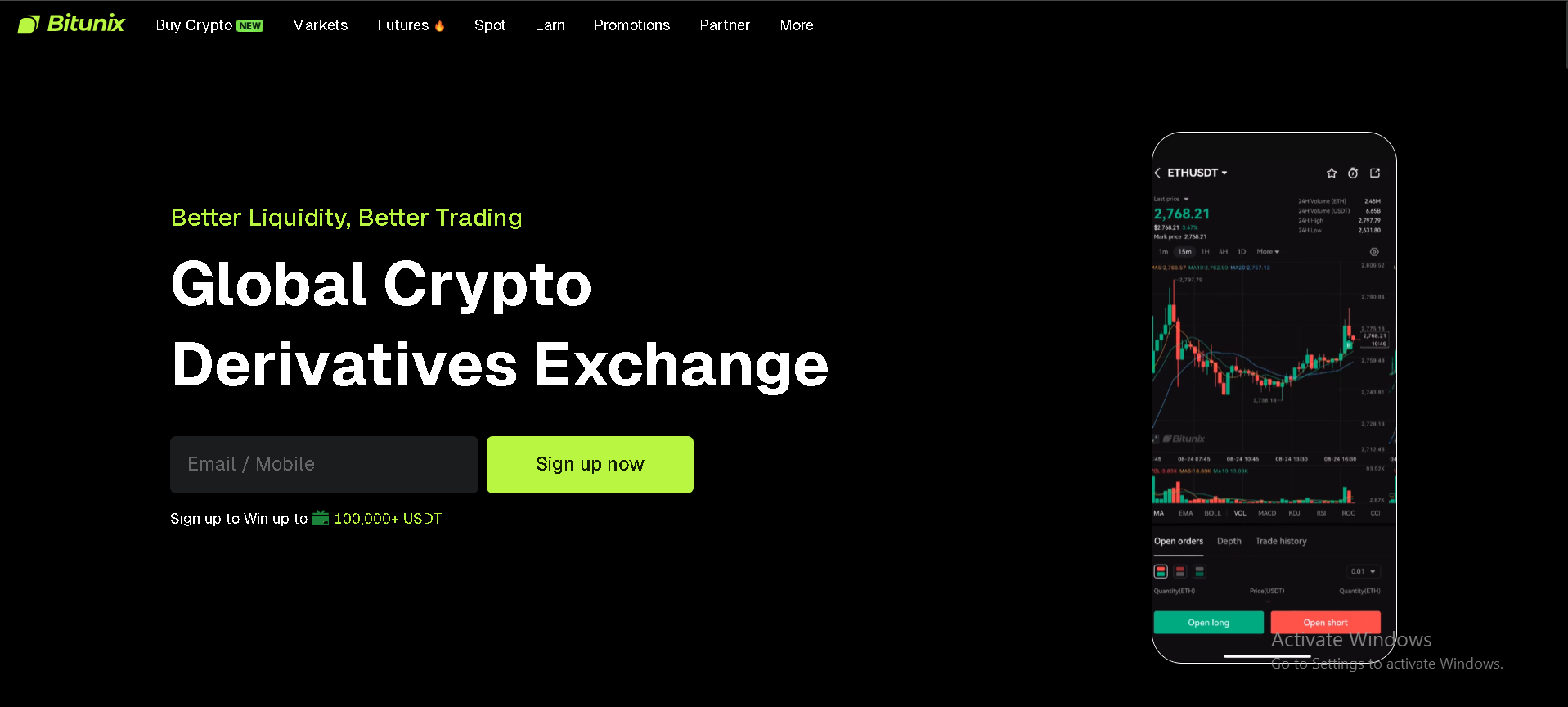
Bitunix was founded in Hong Kong in 2021. It was designed to bring a breadth of crypto features to beginner and intermediate traders.
It supports over 700 cryptocurrency trading pairs in more than 100 countries. It offers spot, P2P, and derivatives trading. With copy trading, new traders can copy the trades of successful users, with them earning a cut.
The exchange offers a myriad of new user bonuses and lotteries, letting new traders jumpstart their experience.
Rewards and tournaments are also available for existing users. Bitunix Splash gives rewards for investing in new tokens, while regular competitions in categories like trading volume or monthly profits carry up to USDT 675,000 in rewards.
Licenses
- United States (IRS)
- Canada (CRA)
- Phillipines
Cryptocurrencies
- Bitcoin
- Ethereum
- Tether
-
+78
Available countries
- Albania
- Algeria
- American Samoa
-
+233
Languages
- English
- Uzbek
- Polish
-
+12


Bitget is a reputable cryptocurrency exchange known for its user-friendly interface and advanced trading features. With a focus on security and customer satisfaction, Bitget offers a wide range of digital assets for trading and investment opportunities.
Year Founded
- 2018
Headquarters
- Cayman Islands
Licenses
- United States (IRS)
- Australia (ATO)
- Canada (CRA)
Cryptocurrencies
- Bitcoin
- Ethereum
- Tether
-
+93
Available countries
- Afghanistan
- Albania
- Algeria
-
+246
Languages
- English
- Japanese
- Vietnamese
-
+16
Features
- API Trading
- Vote to List
-
+13


Bitstamp offers over 70 cryptocurrencies with a tiered fee structure starting at 0.30% for makers and 0.40% for takers. The exchange provides a user-friendly interface, advanced trading tools, and 24/7 customer support. Bitstamp's strong security measures include cold storage and crime insurance. However, U.S. traders face limitations, with only 35+ cryptocurrencies available and no access to staking or lending features. Despite these constraints, Bitstamp's transparency and long-standing reputation make it a reliable choice for many crypto enthusiasts.
- An advanced trading platform
- Low fees and high liquidity
- Supports lots of different payment options
- Efficient and dedicated phone and email support
- Lots of charting tools
- No live chat customer support
- Slow verification process
- International wire transfer takes 2 to 5 days to clear
- A few number of coins on offer
- Was hacked in 2015
Year Founded
- 2011
Headquarters
- Virgin Islands, British
Licenses
- Luxembourg
- United States (IRS)
- Spain
-
+1
Cryptocurrencies
- Bitcoin
- Ethereum
- Tether
-
+52
Available countries
- Afghanistan
- Albania
- Algeria
-
+244
Languages
- English
Features
- Institutions
- Pro Traders
-
+4
Enjoy US$50 worth of CRO as sign-up bonus when you sign up with a referral link.


Crypto.com offers over 350 cryptocurrencies with competitive fees starting at 0.25%. The exchange provides a user-friendly mobile app, advanced trading features, and a popular Visa card with cashback rewards. Crypto.com's robust security measures, including multi-factor authentication and cold storage, ensure user asset protection. Notable features include staking options, an NFT marketplace, and earning interest in cryptocurrencies.
- Extensive list of supported cryptocurrencies
- Hardware wallet support
- With its Visa cards, you can spend your crypto and earn rewards
- Easy to purchase NFTs on the platform using either fiat or certain cryptos
- Higher fees for those who don't hold and use CRO
- Poor customer service
- Lack of educational resources
- Slow in-app live support
Year Founded
- 2016
Headquarters
- Singapore
Licenses
- United Arab Emirates
- Brazil
- United Kingdom (HMRC)
-
+19
Cryptocurrencies
- Bitcoin
- Holo
- Litecoin
-
+157
Available countries
- Afghanistan
- Algeria
- American Samoa
-
+200
Languages
- Danish
- Spanish
- French
-
+13
Features
- Supercharger
- Trading Arena
-
+2
YouHodler Crypto Exchange, launched in Cyprus in 2018, stands as a versatile platform offering a plethora of crypto-fiat financial services including lending, trading, and savings accounts.
Year Founded
- 2017
Headquarters
- Cyprus
Licenses
- Italy
- Switzerland
- European Gaming and Betting Association (EGBA)
-
+2
Cryptocurrencies
- Bitcoin
- Ethereum
- Tether
-
+57
Available countries
- Belgium
- Canada
- Germany
-
+12
Languages
- English
- French
- Italian
-
+3
Features
- Conversion
- Turbocharge
-
+10
Enjoy up to 30,000 USDT Bonus when you sign up and complete tasks. Get a 10 USDT coupon when you sign up, and link your phone number and email.


Year Founded
- 2018
Headquarters
- Singapore
Licenses
- United States (IRS)
- Canada (CRA)
Cryptocurrencies
- Bitcoin
- Ethereum
- Tether
-
+96
Available countries
- Philippines
- United Kingdom
- United States
Languages
- English
- Simplified Chinese
- Chinese (Traditional)
-
+15
Features
- Futures Demo
- Copy Trading
-
+18
Get Free Bitcoin everyday upto Rs2000 INR on Sign Up, Referral, Deposit & Bitcoin Trading.
Year Founded
- 2025
Headquarters
- India
Licenses
- India
- Estonia
Cryptocurrencies
- Bitcoin
- Ethereum
- Tether
-
+77
Available countries
- China
- India
- Kenya
-
+5
Languages
- English
Features
- Free Bitcoin
- APIs
-
+9
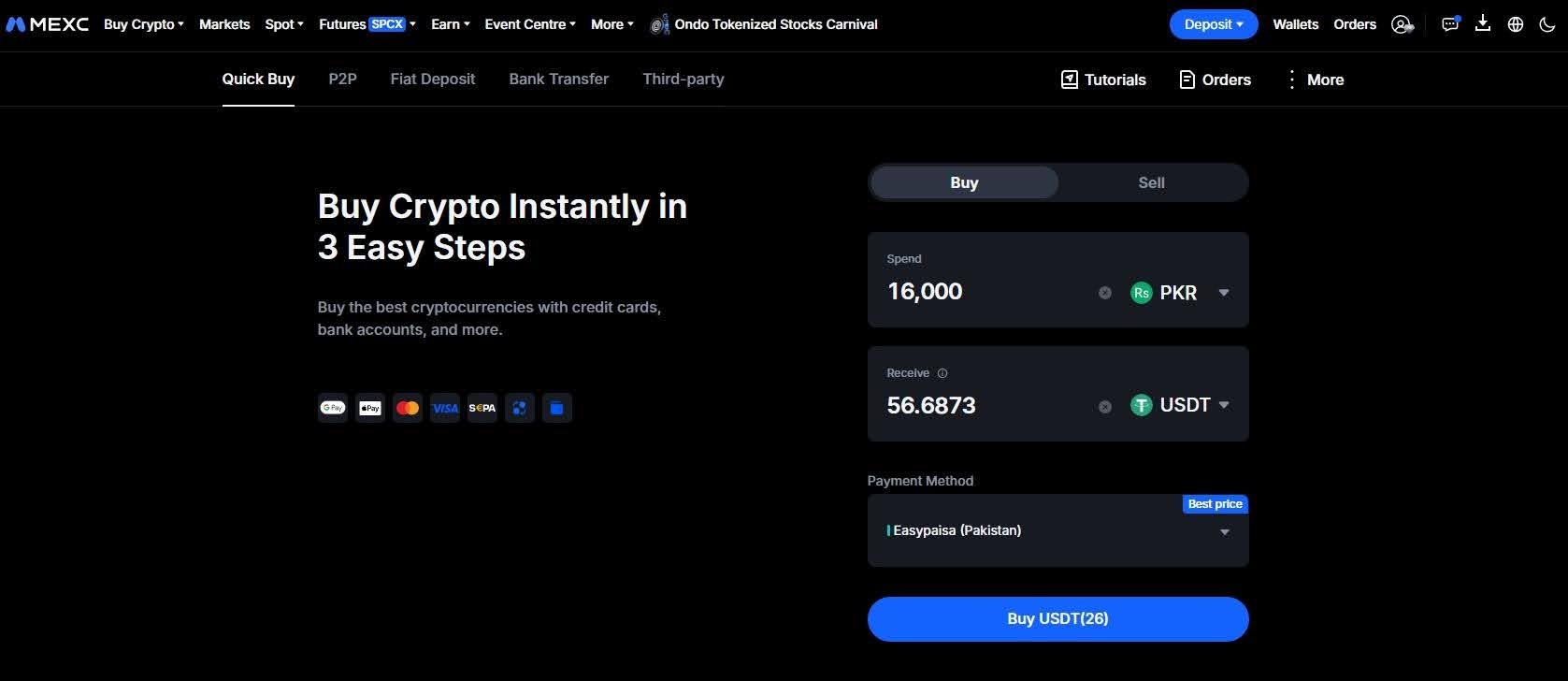
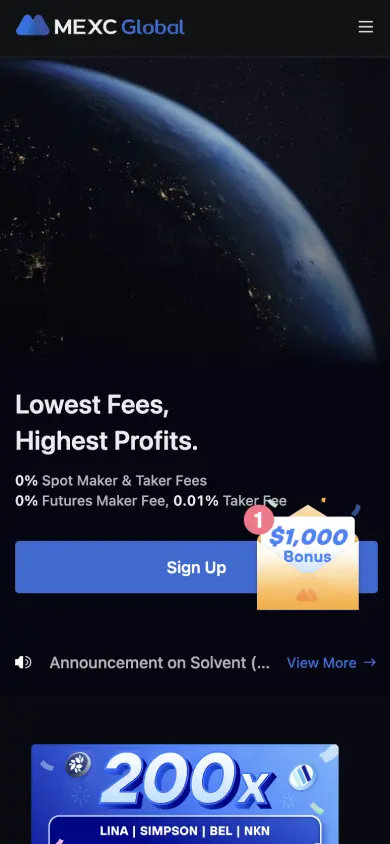
MEXC offers an impressive range of over 2,960 cryptocurrencies and 2,110+ trading pairs. The exchange boasts competitive fees, with 0% maker fees for spot trading on select pairs and futures trading fees as low as 0.01%. MEXC's high-performance trading engine can process 1.4 million transactions per second, ensuring smooth trading experiences. Notable features include futures trading with up to 200x leverage, copy trading, and staking opportunities with potential yields of up to 100% APY.
Year Founded
- 2018
Headquarters
- Seychelles
Licenses
- Seychelles
- Estonia
- Switzerland
-
+2
Cryptocurrencies
- Shiba Inu
- Bitcoin
- PAX Gold
-
+72
Available countries
- Afghanistan
- Albania
- Algeria
-
+246
Languages
- English
- Russian
- Turkish
-
+14
Features
- Leveraged ETFs
- Copy Trading
-
+8
Get up to 1,000 USDC on your Trading Fee Balance when you register, complete identity verification, and place your first spot trade.


Founded in 2013 in London, CEX.IO one of the first crypto exchanges. The global exchange is available in over 200 countries, including the UK, US, Canada, and Australia.
CEX.IO prides itself on being a one-stop shop for all things crypto. It offers spot and margin trading across over 200 tokens, a DeFi wallet, and integrated staking features.
Beyond this, CEX.IO allows you to instantly buy crypto and spend it on the company’s crypto credit card.
Globally licensed and regulated across the EU and US, the platform uses a mix of state-of-the-art security protocols and cold storage to ensure investors’ funds stay safe. This has resulted in a hack-free record over CEX.IO’s 12 years in operation.
Year Founded
- 2013
Headquarters
- United Kingdom
Licenses
- United States (IRS)
- Lithuania
- Spain
Cryptocurrencies
- Bitcoin
- Ethereum
- Tether
-
+81
Available countries
- Australia
- France
- India
-
+5
Languages
- English
- Spanish
Features
- Exchange Plus
- API
-
+9
Alternative Crypto Exchanges in Hawaii
Most of the exchanges we’ve recommended for crypto exchanges in Hawaii are Centralized Crypto Exchanges (CEXs).
These platforms are well-regarded for their intuitive designs, strong security protocols, and reliable customer assistance.
If you’re interested in a different approach to trading, you may want to explore Decentralized Exchanges (DEXs).
DEXs prioritize privacy, facilitate direct user transactions, and operate without a central authority.
For more information and a list of top DEX options, check out our dedicated page on Decentralized Exchanges.
It’s a great resource to help you find platforms that match your trading style.
You may also like..
Here’s How to Choose a Crypto Exchange in The US
Choosing a trustworthy crypto exchange in the United States, especially in Hawaii, requires careful consideration of several factors to guarantee both safety and efficiency in trading.
Key points to assess include:
- Regulation and compliance
- Security measures
- Low fees
- Liquidity and volume
- Trading interface
- Customer support
- Variety of cryptocurrencies
- Reputation
Let’s explore each of these in more detail!
Regulation & Compliance
Hawaiian and U.S. financial laws are designed to promote safety and fairness in financial transactions.
Crypto exchanges operating in Hawaii must adhere to state-specific requirements, such as the Hawaii Digital Currency Innovation Lab (DCIL) framework.
This initiative guarantees that exchanges operate transparently and foster trust among users.
Regulated exchanges are required to implement measures like Know Your Customer (KYC) and Anti-Money Laundering (AML) protocols.
These steps not only protect users from identity theft but also prevent the platform from being used for illegal activities such as money laundering.
Adherence to these rules means exchanges are accountable for their operations and reduces the likelihood of scams and financial losses.
Unregulated platforms often lack accountability and leave users vulnerable to potential scams, data breaches, or sudden platform shutdowns.
Without proper licensing, these exchanges may operate with limited oversight and increase risks for traders. For example:
- No guarantee of funds: In case of platform failure, your assets may not be recoverable.
- Security risks: Without strict compliance, the chances of hacking or data leaks are higher.
- Uncertain operations: Platforms with unclear legal status may disappear without notice and take your investments with them.
Here are some actionable tips to help you identify a well-regulated exchange in Hawaii:
- Verify state-level registration
- Look for regulatory certifications
- Examine terms and conditions
- Avoid platforms with unclear legal statuses
- Research user reviews and feedback
- Contact customer support
When choosing a cryptocurrency exchange in Hawaii, it is essential to verify that the platform is registered with relevant Hawaiian authorities.
Exchanges participating in initiatives like the DCIL showcase their commitment to complying with state laws.
Additionally, check for certifications or partnerships with recognized U.S. regulatory bodies such as the Financial Crimes Enforcement Network (FinCEN), as this demonstrates adherence to federal regulations.
Review the exchange’s policies on KYC and AML procedures. Transparent platforms will clearly outline these measures and require user verification to signal regulatory compliance.
Be cautious of exchanges that fail to disclose their regulatory standing or licensing details, as a lack of transparency is often a red flag for scams or unreliable services.
It is also helpful to read online reviews and community discussions about the platform. Positive feedback regarding security, transparency, and compliance can indicate a trustworthy exchange.
Finally, test the platform’s customer support by asking questions about their compliance practices. Prompt and clear responses are usually a good sign of a legitimate and well-regulated operation.
By verifying state-level registration, checking for regulatory certifications, and avoiding platforms with unclear legal statuses, you can confidently trade on the best crypto exchange Hawaii has to offer.
Security Measures
The security of a cryptocurrency exchange is important to protect your funds and personal data from cyber threats.
When choosing a Hawaiian crypto exchange, it’s essential to understand the security measures in place and how they contribute to a safe trading environment.
Cryptocurrency exchanges are frequent targets for hackers due to the high value of assets they hold.
Strong security measures act as a shield that keeps your funds and personal information safe from threats. A reliable platform guarantees:
- Protection of funds from theft
- Safeguarding of personal data, such as identity verification documents and banking information
- Maintenance of trust and confidence in the platform
Without proper security protocols, users risk losing their assets and exposing their personal data to malicious actors.
To protect your funds and data, prioritize exchanges with the following security features:
- Two-factor authentication (2FA)
- Cold storage
- SSL encryption
- Secure password practices
- Insurance coverage
2FA enhances account security by requiring not only a password but also a second form of verification.
This second layer often involves a unique code sent to your mobile device or email. It makes it harder for unauthorized users to gain access, even if they have obtained your password.
Another important security measure is the use of cold storage, a method of keeping digital assets offline and away from internet-connected environments. This reduces the risk of hacking and unauthorized access to the majority of an exchange’s funds.
To strengthen this protection further, some exchanges implement multi-signature wallets. This requires multiple private keys to approve and complete transactions to prevent any single individual from accessing funds.
In addition to securing stored assets, exchanges must also protect user data during online interactions.
SSL encryption plays a critical role in safeguarding data by encrypting the information exchanged between a user’s browser and the exchange. This encryption prevents hackers from intercepting sensitive details such as login credentials and financial information.
You can verify the presence of SSL encryption by checking that the exchange’s URL begins with “https://” and that a padlock icon appears in the browser’s address bar.
Another key aspect of exchange security is the enforcement of strong password policies. Exchanges should require users to create complex passwords that meet specific length and character requirements.
Besides, regular password updates should be encouraged to maintain account security over time. Users also play an important role by making sure they create unique passwords for each account. This helps minimize the risk of widespread compromise if one password is breached.
Finally, insurance coverage is an additional layer of protection that some exchanges offer to reassure users.
If a security breach or theft occurs, insured platforms can compensate affected users to reduce potential financial losses.
Be cautious of exchanges exhibiting the following red flags:
- No 2FA options: If an exchange doesn’t offer 2FA, it’s a significant security risk.
- Lack of transparency: Difficulty in finding information about the platform’s security measures is a bad sign.
- Past security breaches: Exchanges with a history of successful hacks may not have strong protocols in place.
- No SSL encryption: Avoid platforms that lack HTTPS in their URL or show a “Not Secure” warning in your browser.
When assessing a Hawaiian crypto exchange, use this checklist to evaluate its security protocols:
- Is SSL encryption in place?
- Does the platform support 2FA?
- What percentage of user funds is stored in cold storage?
- Are multi-signature wallets utilized for fund withdrawals?
- Does the exchange have insurance coverage for user funds?
- Is the platform transparent about its security measures and protocols?
- Has the exchange faced any past security incidents? If so, how were they addressed?
Here are some key steps for safe trading practices:
- Research Thoroughly: Check reviews and feedback to assess the exchange’s security history and how past breaches were handled.
- Enable All Security Features: Use 2FA, withdrawal whitelists, and any additional security settings provided by the platform.
- Limit Your Exposure: Store only the funds you need for trading on the exchange. Transfer the rest to a personal cold wallet for added security.
- Avoid Public Wi-Fi: When accessing your exchange account, use a secure and private internet connection.
- Stay Updated: Keep track of any announcements from the exchange about changes to their security protocols.
By choosing exchanges with security measures in place, you can protect your investments and trade with peace of mind.
Low Fees
Fees impact profitability, particularly for active traders. Understanding these charges helps you minimize costs and optimize your returns.
Most cryptocurrency exchanges charge fees in three primary areas:
- Trading fees
- Deposit and withdrawal fees
- Hidden fees
Trading fees and other costs can significantly impact profitability, which makes it essential to understand the fee structures of cryptocurrency exchanges.
The maker-taker model is a common structure for trading fees, with users providing liquidity (makers) typically paying lower fees than those who take liquidity (takers).
Some platforms use flat trading fees for simplicity, which can lead to higher costs for smaller trades.
High-volume traders may benefit from tiered fee discounts that lower costs as their trading activity grows.
Deposit and withdrawal fees also vary by exchange.
Typically, deposits are low-cost or free, though charges may depend on the payment method, such as credit card or bank transfer.
On the other hand, withdrawal fees are influenced by the blockchain network used, with Bitcoin and Ethereum transfers often being more expensive due to higher network fees.
Traders should also be aware of hidden fees, such as inactivity fees for dormant accounts and network fees tied to blockchain transactions.
These costs can fluctuate based on factors like network congestion, further emphasizing the importance of understanding all potential expenses.
Even small fees can add up over time, particularly for frequent traders.
For instance, a trader executing dozens of trades each week might see their profit margins diminish if trading costs are excessive.
Similarly, high withdrawal fees for transferring cryptocurrency to an external wallet can reduce overall gains.
Therefore, staying mindful of hidden expenses, such as unexpected conversion or processing fees, is essential for preserving profitability.
A good Hawaiian crypto exchange prioritizes transparent fee structures. This transparency allows traders to estimate costs accurately and budget effectively.
The top 10 crypto exchanges in Hawaii provide clear breakdowns of charges to help users to make cost-efficient decisions.
Here are actionable steps to manage and reduce trading expenses:
- Compare fee structures:
Research exchanges with transparent pricing to avoid hidden surprises. Focus on platforms offering competitive maker-taker or flat-fee systems. - Choose high-volume discounts:
If you plan to trade frequently, opt for an exchange with fee-reduction programs for high-volume trades. - Understand total costs:
Calculate all potential costs for your trading activities, including deposits, trades, and withdrawals. - Avoid ambiguity:
Stay away from exchanges with unclear pricing details, as hidden fees can erode your profits. - Use network-specific knowledge:
Be aware of fluctuating blockchain fees, especially when withdrawing or transferring crypto, and try to time transactions during low network congestion periods.
By understanding fee structures, analyzing the impact of fees on your trades, and leveraging practical tips, you can ensure that low fees remain a key advantage in your cryptocurrency journey.
Liquidity & Volume
When selecting a Hawaiian crypto exchange, understanding liquidity and trading volume is essential for achieving a seamless trading experience.
Liquidity refers to how easily a cryptocurrency can be bought or sold without significantly impacting its market price.
It plays an important role in creating an efficient trading environment for several reasons.
First, high liquidity enables smoother transactions and makes it possible for trades to be executed faster with fewer obstacles. This reduces delays and makes trading more straightforward.
Additionally, liquidity minimizes price slippage, a situation where the price changes significantly between placing and completing an order.
With higher liquidity, traders are more likely to receive prices closer to their expectations.
Moreover, liquidity contributes to market stability by absorbing large trades without causing substantial fluctuations in price.
Trading volume, on the other hand, measures the total number of assets traded over a specific period, usually daily, and serves as a key indicator of market activity.
High trading volume promotes a steady flow of buyers and sellers, which makes it easier to match orders quickly.
Active trading markets also support market efficiency by reflecting up-to-date pricing that reacts swiftly to new information.
Furthermore, platforms with high trading volumes are less likely to suffer from stagnation or delays in trade execution. This creates a more reliable trading experience overall.
When assessing the liquidity of a crypto exchange, look for the following key indicators:
- Tight bid-ask spreads
- Low trade execution times
- Diverse trading pairs
A narrow difference between the highest price buyers are willing to pay (bid) and the lowest price sellers are willing to accept (ask) indicates high liquidity.
On liquid exchanges, trades are processed almost instantly due to the high level of activity that efficiently matches orders.
In addition, exchanges offering a wide range of crypto-to-crypto and crypto-to-fiat pairs provide users with greater flexibility and liquidity.
Therefore, understanding the interplay between liquidity and volume allows traders to identify platforms that provide competitive pricing, faster transactions, and a more stable trading environment.
Choosing a Hawaiian crypto exchange requires examining several aspects of liquidity and trading activity.
Use these tips to make an informed decision:
- Check daily trading activity
- Examine trading charts
- Confirm support for multiple trading pairs
- Consider community feedback and reputation
- Test with smaller trades
Begin by examining the exchange’s daily trading volume statistics, which are often displayed publicly.
High daily activity indicates strong market participation and is a positive sign for traders.
Look for platforms that provide real-time trading charts, as these tools allow you to analyze liquidity by reviewing price movements, bid-ask spreads, and transaction histories.
This information can help you understand how quickly trades are executed and whether prices remain stable during transactions.
It is also important to select an exchange that offers a wide variety of trading pairs, including popular crypto-to-crypto and crypto-to-fiat combinations.
This diversity guarantees greater trading opportunities and helps maintain strong liquidity across the platform.
Furthermore, consider the reputation of the exchange by exploring community feedback. User reviews and discussions in forums often provide insights into the reliability of order execution and the overall market depth.
Before committing to significant transactions, start with smaller trades to evaluate the platform’s performance and identify any potential issues.
By prioritizing exchanges with high liquidity and trading volumes, you can avoid common pitfalls like price slippage, delayed transactions, and inefficient markets.
Trading Interface
A smooth and responsive trading interface saves time and reduces stress.
Using an exchange should feel simple so that you can focus on your trades without needing to fix technical issues.
Consider these factors when evaluating user experience:
- Ease of navigation
- Responsiveness
- Accessibility for beginners
A well-designed trading platform should have a clean and organized interface that makes it easy for users to find essential features like trading pairs, charts, and order books.
It is also important for the platform to perform consistently across desktop and mobile devices so that users can trade without interruptions wherever they are.
Simple and intuitive designs enhance the user experience, particularly for beginners who are still learning the basics.
Integrated guides or tooltips within the platform provide valuable support. They help new users explore the platform as they develop a better understanding of trading.
For Hawaiians, finding exchanges that combine ease of use with strong functionality is important.
Many platforms market themselves as the best apps to buy crypto in Hawaii, but only those that prioritize user experience truly stand out.
If you’re an experienced trader, look beyond basic functionality.
Advanced tools and customizable options can significantly impact your efficiency and profitability.
Here are some essential features to seek:
- Comprehensive charting tools
- Order customization
- Real-time alerts
A comprehensive trading platform should offer detailed and customizable charts that allow users to analyze price trends and market movements with greater precision.
These charts provide traders with the flexibility to adjust visual settings and apply various tools to suit their specific strategies.
Advanced order types, such as stop-loss, limit orders, and take-profit, play a crucial role in automating trades and managing risks effectively.
Notifications for price changes or order execution are another essential feature. They keep traders informed even when they are not actively monitoring their screens.
Together, these features empower experienced traders to maintain control over their strategies while staying competitive in a fast-paced market.
To avoid surprises, it’s smart to test an exchange’s trading interface before depositing funds.
Most platforms offer demo accounts or trial versions that let users explore the interface without financial risk. Here’s how to approach this step:
- Sign up for a demo account: Use this feature to test how well the platform aligns with your trading style and skill level.
- Check device compatibility: Ensure the platform works smoothly on all your devices, especially if you trade on the go.
- Read app reviews: User feedback can highlight potential issues, such as frequent crashes or lag during high trading volumes.
To find a trading interface that fits your needs, keep these three tips in mind:
- Evaluate simplicity vs. functionality
- Test across multiple devices
- Review customer support options
Beginners should focus on platforms that offer simple and intuitive navigation to make the trading process straightforward.
On the other hand, advanced users may prefer platforms that provide advanced charting tools for detailed market analysis.
Regardless of whether you are trading on a laptop, tablet, or smartphone, it is essential to choose a trading app that performs reliably across all devices.
In addition, opt for exchanges with responsive customer support to guarantee that any technical issues can be resolved quickly and efficiently.
By focusing on ease of use, advanced features, and platform reliability, you can confidently choose one of the best crypto apps in Hawaii to match your trading goals.
Customer Support
Hawaii’s unique geographic location and regulatory landscape can sometimes present specific challenges for crypto traders.
Opting for an exchange with reliable and responsive customer support helps you handle these complexities effectively. This includes complying with state-specific regulations and resolving technical issues at any hour.
A supportive customer service team resolves issues promptly and helps avoid potential financial losses or prolonged frustrations.
For instance, if you find yourself locked out of your account due to a forgotten password or a 2FA error, quick and efficient support can help you regain access and secure your funds.
Similarly, delays or errors in deposits and withdrawals can disrupt your trading plans.
However, a proactive support team can step in to expedite the resolution process and help your trading activities resume smoothly.
Having responsive support demonstrates the platform’s commitment to its users and builds trust within the trading community.
The following are key factors to consider when evaluating customer support on a cryptocurrency exchange:
- 24/7 availability
- Clear communication channels
- Response times
Cryptocurrency trading operates 24/7, which means the customer support of a reliable exchange should be available at all times as well.
Having access to assistance around the clock is especially important during emergencies, such as being locked out of your account or experiencing transaction delays.
Platforms that offer 24/7 support provide peace of mind by guaranteeing help is always accessible regardless of your timezone or the time of day.
Before choosing an exchange, it’s essential to check whether their support hours are stated on their website.
If round-the-clock service isn’t available, consider how this limitation might affect you during critical moments when immediate assistance is required.
The availability of multiple communication channels enhances user convenience. The best exchanges provide:
- Live chat: Instant support for urgent issues.
- Email support: For detailed questions or documentation requests.
- Phone lines: Direct help for critical concerns.
- Social media: Quick updates on outages or platform news.
Having a variety of options means you can always choose the channel that best fits your situation.
In addition to availability, the speed of response plays a crucial role in effective customer service.
Delays in receiving help can lead to missed trading opportunities or prolonged stress, especially in a fast-paced market.
Exchanges should prioritize prompt responses across various communication channels, such as live chat, email, and phone.
Live chat is often the quickest option, with many platforms responding in under five minutes.
Email, while suitable for more detailed inquiries, should provide a resolution within 24 hours.
Phone support offers a direct and efficient way to handle urgent issues but is not always provided by all exchanges.
Assessing the responsiveness of these channels can help you choose an exchange that meets your needs effectively.
While evaluating exchanges, it’s important to identify red flags indicating inadequate customer service. Common warning signs include:
- Delayed responses
- Lack of FAQs or resources
- Generic replies
Consistently slow response times may indicate understaffed or inefficient support teams, which can be a red flag when choosing a platform.
A reliable exchange should offer comprehensive FAQs or self-help guides to address common issues effectively.
In addition, vague or copy-paste responses often suggest a lack of personalized attention, which can lead to frustration when seeking assistance.
To ensure a positive experience, it’s wise to avoid platforms that receive frequent negative user feedback about support delays or unhelpful service.
Before committing to a crypto exchange, follow these five steps to test and assess their customer service quality:
- Test response times
- Prioritize platforms with fast options
- Check online feedback
- Explore their website
- Look for multilingual support
Start by sending an inquiry to their support team and evaluating the speed and effectiveness of their response.
Use multiple channels, as exchanges offering live chat or phone support typically resolve issues faster than email-only platforms.
If instant support is a priority, consider this a key factor in your decision.
Furthermore, search for reviews or community discussions to assess user satisfaction, as platforms with positive feedback are more likely to provide a reliable experience.
Review the platform’s FAQ section and resources to see if they are clear and helpful. A well-organized knowledge base often reflects a customer-centric approach.
Lastly, if English is not your first language, check whether the exchange offers support in your preferred language to facilitate smooth communication.
By testing support quality, researching user feedback, and identifying warning signs, you’ll be better equipped to select an exchange that prioritizes your needs.
Variety of Cryptocurrencies
Another crucial factor to consider when exploring top crypto exchanges Hawaii is the range of cryptocurrencies they offer.
A wide cryptocurrency selection caters to the diverse goals and strategies of traders.
First, it enables portfolio diversification by allowing investors to spread risk across various assets.
While major cryptocurrencies like Bitcoin and Ethereum provide stability, smaller altcoins often present higher growth potential.
This combination helps traders build well-rounded portfolios that balance risk and reward.
Second, access to a variety of tokens opens up increased trading opportunities, as each cryptocurrency operates within unique market dynamics.
This diversity enables traders to capitalize on price movements, trends, and arbitrage opportunities while encouraging creative strategies.
Lastly, having access to newly listed or niche tokens is essential for those looking to invest early in emerging trends or technologies. These tokens can yield significant returns if the project gains traction.
A platform that regularly updates its cryptocurrency offerings guarantees traders never miss out on such opportunities.
Choosing an exchange with a small or static coin list can significantly hinder your trading experience.
Limited cryptocurrency options may restrict your ability to execute various strategies, such as hedging or pairing coins for arbitrage. These strategies are essential for maximizing trading opportunities.
Additionally, a narrow selection of tokens might force you to create accounts on multiple platforms to access the assets you need.
This increases complexity and can lead to higher fees and greater security risks. It also makes the trading process less efficient and more difficult to navigate.
When selecting an exchange, it’s important to assess its coin offerings. Follow these steps to make sure the platform meets your needs:
- Research the coin list
- Check for frequent updates
- Confirm altcoin trading pairs
- Read reviews and user feedback
Visit the exchange’s website to review its list of available cryptocurrencies. The list includes a mix of popular coins like Bitcoin and Ethereum, as well as altcoins and niche tokens.
A good exchange regularly updates its offerings to reflect market trends and emerging projects. Such updates signal that the exchange stays current and proactive in addressing trader needs.
Make sure the platform supports trading pairs involving altcoins. This flexibility allows you to explore innovative strategies and seize opportunities beyond standard BTC or ETH pairs.
Finally, check online reviews or community discussions to gain insights into other users’ experiences with the platform’s coin selection and determine whether it delivers on its promises.
By evaluating the coin list, monitoring updates, and verifying altcoin pair support, you can confirm that your chosen exchange aligns with your trading goals.
Reputation
A crypto exchange’s reputation is a reflection of its operational integrity and the trust it has cultivated within its user base.
Reliable exchanges prioritize transparency and implement clear policies and consistently meet user expectations.
Key features of such platforms include straightforward fee structures and detailed terms of service. They also offer accessible customer support and publicly available information about leadership, ownership, and partnerships.
These elements work together to build credibility and make users feel secure in their transactions.
Conversely, platforms with unclear practices or questionable histories can expose users to significant risks, such as the loss of funds or regulatory complications.
When evaluating an exchange’s reputation, transparency is a key indicator of credibility.
Trustworthy platforms share information about their policies, security measures, and operational procedures.
Clear communication about fees, terms of service, and the handling of user funds demonstrates a commitment to fairness.
For example, exchanges that disclose their use of cold storage to safeguard funds or employ strong security protocols like 2FA build confidence.
Users should always verify whether an exchange provides detailed and up-to-date information about its processes.
Another critical measure of an exchange’s reputation is feedback from its users.
Platforms with high satisfaction ratings and positive reviews deliver on their promises of usability, customer support, and transaction reliability.
Consistent praise for these aspects suggests a track record of meeting user needs.
However, patterns of recurring complaints about hidden fees, transaction delays, or poor customer service can be a cause for concern.
Independent review sites like TrustPilot or forums such as Reddit are excellent resources for gaining insight into other users’ experiences.
A strong ratio of positive to negative reviews and evidence of how the exchange resolves user concerns can help you make an informed choice.
Lastly, avoiding platforms with controversial histories or unresolved issues is essential for protecting your assets and peace of mind.
Exchanges involved in lawsuits, regulatory fines, or unresolved customer complaints may indicate mismanagement or fraudulent activity.
Similarly, a lack of clarity about ownership or leadership can signal instability.
Conducting thorough research into an exchange’s background and verifying its compliance with local regulations are vital steps.
Platforms flagged by financial authorities or associated with security breaches should be avoided, as they pose significant risks to users.
When evaluating a reputable crypto exchange, certain warning signs should not be overlooked, as they can indicate potential risks or operational issues.
Here are some major red flags that you should be aware of:
- Frequent complaints about withdrawals
- Ongoing legal troubles
- Opaque leadership
Complaints about delayed or blocked withdrawals are a significant red flag. They often indicate deeper problems within the platform’s operations, such as liquidity issues or mismanagement of funds.
Exchanges with ongoing lawsuits or regulatory penalties may also pose serious risks. These legal troubles often highlight difficulties with compliance, stability, or adherence to financial regulations.
Furthermore, a lack of publicly available information about the exchange’s key decision-makers can be a cause for concern.
Transparency in leadership is important, as it reflects accountability and fosters trust. Platforms that hide such critical details may be attempting to conceal unethical practices or operational weaknesses.
By evaluating transparency, user satisfaction, and a platform’s history, you can make an informed decision and avoid potential pitfalls.
Comparing the Best Crypto Exchanges in Hawaii
| Exchange | Fees | KYC | Supported Coins | Trading Types | Security Features | US License | Mobile App |
|---|---|---|---|---|---|---|---|
| eToro | $5 withdrawal fee, 1% crypto trading fee | Required | 100 | spot, CFDs, forex, commodities, indices | 2FA, SSL encryption, segregated accounts | Yes | Yes |
| Kraken | 0% to 0.40% trading fee, free crypto deposits, variable fiat withdrawal fees | Required | 120 | spot, margin, futures, staking | 2FA, cold storage, encryption, ISO 27001 certification | Yes | Yes |
| Binance US | 0.4% taker fee, 0.6% maker fee for Tier 1, free Bitcoin and Ethereum trading on select pairs, 0.5% Instant Buy/Sell fee | Required | 120 | spot, staking | 2FA, cold storage, real-time monitoring, data encryption, withdrawal address whitelisting | No | Yes |
| Crypto.com | 0.04%-0.40% maker fee, 0.015%-0.07% taker fee, 2.99% credit card fee | Required | 365 | spot, futures, margin, OTC, staking, lending, trading bots | 2FA, cold storage, anti-phishing codes, withdrawal address whitelisting, FDIC insurance for fiat balances | Yes | Yes |
| Gemini | 0.03%-0.40% taker, 0.00%-0.20% maker, $0.99-$2.99 for small orders | Required | 80 | spot, futures, margin | 2FA, cold storage, insurance | Yes | Yes |
| Bitstamp | 0.00%-0.40% taker fee, 0.00%-0.30% maker fee, variable crypto withdrawal fees | Required | 80 | spot, staking, lending | 2FA, cold storage, multisig wallets, whitelisting | Yes | Yes |
| Bitflyer | 0.01%-0.15% trading fee, withdrawal fees vary by currency | Required | 17 | spot, futures, margin | 2FA, cold storage, multi-signature wallets | Yes | Yes |
| Deepcoin | 0.1% trading fee for spot, 0.06% taker and 0.04% maker fee for derivatives, variable withdrawal fees | Not Required | 216 | spot, derivatives, margin, OTC | 2FA, cold storage, insurance, SSL encryption | No | Yes |
| Coinbase | 0.6%-1.2% trading fee, $25 wire withdrawal fee | Required | 150 | spot, futures, margin | 2FA, cold storage, insurance | Yes | Yes |
| Phemex | 0.1% spot trading fee, 0.01% maker and 0.06% taker fee for contracts, no deposit fees, variable withdrawal fees | Required | 250 | spot, futures, margin | 2FA, cold storage, Merkle Tree proof of reserves, AWS cloud security, firewalls | No | Yes |
Tips Before Registering on an Exchange
Before creating an account on a cryptocurrency exchange in Hawaii, it’s important to be aware of certain key factors for a smooth and secure experience.
Consider the following points before getting started:
- KYC requirements and privacy
- Both federal and state-level compliance
- US Dollar (USD) deposits and withdrawals
- Tax implications
Let’s break down these considerations further below!
KYC Requirements and Privacy
KYC compliance is a legal requirement for cryptocurrency exchanges to help combat fraud, money laundering, and other illicit activities.
These processes are mandated under AML regulations and guarantee exchanges adhere to local laws, including those in Hawaii.
Here are some key reasons why KYC compliance matters:
- Fraud prevention: By verifying user identities, exchanges reduce the risk of fraudulent accounts and financial crimes.
- AML adherence: Exchanges play an important role in preventing money laundering and financing of illegal activities.
- Enhanced trust: A platform that complies with KYC regulations promotes trust among its users and creates a safer trading environment.
- Legal protection: Operating within regulatory frameworks protects both exchanges and their users from potential legal issues.
In Hawaii, adherence to strict AML laws helps cryptocurrency exchanges operate transparently and ethically. This compliance also reassures users that their investments are in secure hands.
The KYC verification process typically includes a few straightforward steps. While the specifics may vary depending on the exchange, most platforms require similar documentation and procedures, such as:
- Account registration
- Identity verification
- Proof of address
- Additional verification
The process begins with creating an account by providing basic details such as a name, email address, and phone number.
Next, a government-issued ID, such as a driver’s license or passport, is required to verify identity.
Some platforms may also request a selfie or video for facial recognition purposes.
Additionally, proof of residential address, such as a utility bill, bank statement, or lease agreement, must be submitted. The document must be recent and include a full name and address.
Depending on the exchange, further steps might involve answering security questions or undergoing video verification.
For high-value transactions, enhanced verification measures may be required.
The entire process can take anywhere from a few minutes to several days, depending on the platform’s verification system.
While KYC processes are essential for regulatory compliance, they can raise legitimate concerns about user privacy.
Handing over sensitive personal information always carries risks, such as data breaches or misuse of information.
Here’s what you should consider:
- Data security: Ensure the exchange uses encryption and secure servers to protect your information.
- Data storage policies: Research how long the platform retains your data and whether it shares it with third parties.
- Jurisdictional risks: Be aware of where the exchange operates and the data protection laws governing that region.
Exchanges usually store KYC data in compliance with regulations, but the level of protection varies across platforms.
While many use advanced security measures to safeguard user information, it’s essential to do your own due diligence.
To maintain a balance between regulatory compliance and personal data protection, follow these five tips:
- Choose exchanges with comprehensive privacy policies
- Check AML adherence in Hawaii
- Review security features
- Limit data sharing
- Backup your documentation
Prioritize platforms that explain how your data is collected, stored, and used while providing transparency in their practices.
Verify that the exchange follows General Data Protection Regulation (GDPR) standards and complies with Hawaiian AML laws. This makes it less likely to encounter operational disruptions.
Security should also be a top priority. Choose exchanges that offer multi-factor authentication (MFA) and encrypted communication protocols. Then, research their track record in handling data breaches or cyberattacks.
Be cautious about the personal information you share. Only provide the details that are strictly necessary, as requests for excessive information may indicate potential risks.
Moreover, it is important to keep copies of any documents you submit for KYC verification, as these could be essential if you need to resolve disputes or address issues later.
By understanding KYC verification and protecting your privacy, you can balance regulatory compliance and personal data security.
Both Federal and State-level Compliance
When registering on a cryptocurrency exchange, understanding compliance with both U.S. federal and Hawaiian state-level regulations is essential.
These laws uphold the legal operation of platforms, safeguard user funds, and promote a secure trading environment.
Cryptocurrency exchanges operating in the United States are required to adhere to federal laws designed to regulate financial markets and protect users.
Exchanges that offer tokens classified as securities must comply with Securities and Exchange Commission (SEC) guidelines to maintain proper registration and adherence to legal standards.
Meanwhile, platforms offering crypto derivatives or futures contracts fall under the oversight of the Commodity Futures Trading Commission (CFTC).
Together, these federal safeguards promote a transparent and secure trading environment.
It is important to confirm that any exchange operates in compliance with these laws to minimize potential risks.
In Hawaii, cryptocurrency exchanges face additional state-specific regulations that residents need to be aware of before registering.
One prominent feature of the state’s regulatory framework is the Digital Currency Innovation Lab (DCIL) program.
This initiative, managed jointly by the Hawaii Division of Financial Institutions (DFI) and the Hawaii Technology Development Corporation (HTDC), enables select exchanges to operate without obtaining a money transmitter license while encouraging innovation in the digital currency space.
However, not all exchanges participate in the DCIL program.
So, residents should verify whether a platform is listed under the program and confirm that any exchange outside the DCIL framework complies with other applicable Hawaiian financial regulations.
Using unregulated or non-compliant platforms can lead to significant risks, including:
- Financial losses
- Legal issues
- Limited recourse
Funds stored on unregulated exchanges may lack insurance or safeguards, which makes them unrecoverable in cases of fraud or platform failure.
In addition, engaging with platforms that fail to comply with Hawaiian or federal laws could expose users to fines or other legal repercussions.
In the event of disputes, users might face limited protection if the platform operates without clear regulatory oversight.
To avoid these risks, it is crucial to prioritize compliance when selecting an exchange.
Here are four steps to confirm you’re registering with a safe and legal platform:
- Verify federal and state compliance
- Look for DCIL participation
- Check licensing
- Avoid unregulated platforms
Start by researching whether the exchange adheres to both federal regulations and Hawaiian laws.
Opt for exchanges included in Hawaii’s DCIL program, as they meet state-specific requirements.
Then, confirm that the platform holds any necessary licenses to operate legally within Hawaii.
Avoid platforms that fail to outline their compliance or regulatory status.
By following these steps, you can choose the best crypto exchanges Hawaii has to offer that align with your needs and adhere to local regulations.
US Dollar (USD) Deposits and Withdrawals
When dealing with cryptocurrency exchanges in Hawaii, understanding the available methods for depositing and withdrawing USD is essential. This promotes smoother transactions and helps you avoid unnecessary fees or delays.
Cryptocurrency exchanges offer several methods for depositing and withdrawing USD. The main options include:
- Bank transfers
- Automated Clearing House (ACH) transfers
- Debit/Credit card
- Third-party payment services (PayPal, Apple Pay, etc.)
- Checks and money orders
Bank transfers involve directly moving funds from a bank account to the exchange. These are best suited for large transactions due to higher limits but can take 1 to 5 business days to process and cost $10 to $30 per transfer.
On the other hand, ACH transfers are a more cost-effective option. It allows for electronic transfers directly from a bank account with minimal or no fees. These transfers are usually processed within 1 to 3 business days.
Debit or credit card payments provide near-instant transactions for immediate deposits. However, they come with high fees of 3% to 5%, which makes them more suitable for urgent and smaller deposits.
Third-party payment services such as PayPal or Apple Pay offer speed and convenience, with deposits processed instantly and withdrawals taking up to 2 days. Yet, fees vary from 1% to 3%.
For users without access to electronic banking, checks and money orders remain an option. These require physical mailing, take 5 to 10 business days to process, and involve variable fees.
Each method has its advantages and drawbacks. So, it is important to choose the one that best aligns with your transaction size, urgency, and cost preferences.
While Hawaii residents have access to cryptocurrency exchanges, certain challenges can arise when dealing with USD transactions, including:
- Withdrawal limits: Some exchanges impose daily or monthly limits on withdrawals.
- Processing times: Bank and ACH transfers can take several days to process and often result in delays.
- High fees: Credit card deposits and wire transfers often come with significant fees.
- Regulatory restrictions: Some exchanges may have limited services in Hawaii due to regulatory compliance.
The following are seven tips to optimize the process and minimize fees:
- Choose exchanges with low transaction fees
- Verify withdrawal timelines
- Use ACH transfers for cost-effective transactions
- Monitor withdrawal limits
- Diversify payment methods
- Stay updated on exchange policies
- Test with small transactions
Start by researching exchanges with the lowest deposit and withdrawal fees.
Some platforms offer zero-fee ACH transfers, which can be the most cost-effective option.
Keep an eye out for exchanges that provide promotional periods with reduced or waived fees.
Before initiating any transactions, review the exchange’s withdrawal timelines to avoid unnecessary delays, especially if you need quick access to your funds.
If available, consider expedited withdrawal options for a small additional fee.
ACH transfers are faster and cheaper than wire transfers. This makes them a preferred choice for regular transactions. Setting up recurring ACH deposits can further streamline your investment process.
Furthermore, be mindful of withdrawal limits imposed by exchanges and plan your transactions to stay within those boundaries.
If necessary, you can request a higher withdrawal limit directly from the exchange.
A mix of payment methods helps manage various transactions, with ACH suited for regular deposits and wire transfers for larger amounts. Backup options like PayPal or debit cards can be useful for emergencies.
Since exchange policies and fees can change frequently, stay informed by regularly checking for updates and subscribing to newsletters or alerts.
Lastly, conduct small test transactions before making significant deposits or withdrawals to confirm everything works smoothly and to reduce the risk of issues with larger amounts.
By selecting the right deposit and withdrawal options, keeping track of fees, and following best practices, you can simplify your transactions, lower costs, and achieve a smooth process.
Tax Implications
In Hawaii, cryptocurrency transactions are subject to capital gains tax. This applies to activities such as buying, selling, or exchanging cryptocurrencies.
So, it’s important to distinguish between short-term and long-term capital gains:
- Short-term capital gains: Profits from selling assets held for less than one year. These are taxed at your regular income tax rate.
- Long-term capital gains: Profits from selling assets held for more than one year. These are usually taxed at a lower rate and provide potential tax savings for long-term investors.
Every taxable event must be reported accurately. This includes selling cryptocurrency, trading it, or using it to purchase goods and services. If these transactions are not properly reported, you may face substantial fines or even audits.
While Hawaii does not impose taxes on unrealized gains, it’s important to stay informed about legislative changes that could impact your obligations.
Unrealized gains refer to the increase in the value of assets that you hold but haven’t sold.
Therefore, monitoring local policies helps you stay prepared for any future developments.
If you earn cryptocurrency through mining, staking, or as payment for goods and services, the fair market value of the received assets must be reported as income. These earnings are taxed at the same rate as other forms of income and need to be documented thoroughly.
Maintaining accurate records is an essential part of successful tax reporting. Keeping track of all transactions, including purchases, sales, trades, and earnings, will simplify your filing process and minimize errors. Consider these five tips:
- Use crypto tax tools
- Save receipts and records
- Track fair market values
- Seek professional advice
- Monitor policy updates
Platforms like CoinTracker or Koinly can simplify tax reporting by automatically calculating your gains, losses, and income.
It is important to keep all relevant documentation, such as exchange statements and wallet transaction histories, for accurate record-keeping.
Make sure to note the value of each transaction in U.S. dollars at the time it occurred.
For more complex situations, like cross-border transactions or DeFi earnings, seeking personalized guidance can be beneficial.
Staying informed about both local and federal tax laws helps you remain compliant.
Hawaii’s tax regulations for cryptocurrencies can evolve, so it’s important to stay informed. Here’s how:
- Subscribe to updates from the Hawaii Department of Taxation.
- Follow reputable cryptocurrency news outlets for policy changes.
- Regularly consult a tax professional with expertise in cryptocurrency to address any specific concerns.
By following these steps, you’ll be better prepared to manage the tax implications of your cryptocurrency activities while using the best exchange for cryptocurrency in Hawaii.
Why Trust Us?
At CryptoManiaks, we are dedicated to providing recommendations that equip you to trade confidently and securely on the top crypto exchanges in Hawaii.
Our team comprises passionate crypto enthusiasts with years of hands-on experience exploring the complex landscape of cryptocurrency.
We continuously refine our selection process by testing platforms, analyzing performance metrics, and staying updated on industry trends to provide you with accurate and trustworthy options.
By engaging directly with crypto enthusiasts and professionals, we prioritize the unique challenges and goals of cryptocurrency users in Hawaii.
This collaborative approach helps us identify and recommend exchanges that deliver value and reliability while adhering to Hawaii’s distinct financial regulations.
Frequently Asked Questions
-
01.
Which crypto exchanges work in Hawaii?
Hawaii residents can now access several cryptocurrency exchanges due to important regulatory changes made on July 1, 2024. These changes removed the need for exchanges to obtain a money transmitter license. This makes it easier for crypto platforms to operate in the state. Popular options include Coinbase, which returned to Hawaii in August 2024 after a seven-year absence. Gemini and Kraken are also fully operational and provide a wide variety of cryptocurrencies to trade. Other platforms like Uphold, Bitstamp, Robinhood, and Bitcoin-only exchanges like River and Unchained are also available.
-
02.
Is crypto trading legal in Hawaii?
Yes, crypto trading is legal in Hawaii. Since July 1, 2024, cryptocurrency exchanges and firms have been able to operate without needing a money transmitter license. This shift happened because Hawaii no longer classifies cryptocurrency activities as money transmission under state law. Companies can now run unregulated businesses in the state, but they still need to follow federal laws. Previously, strict regulations, like holding cash reserves equal to customer assets, made it difficult for crypto businesses to operate in Hawaii. The relaxed rules now position Hawaii as an attractive location for the crypto industry, potentially transforming it into a U.S. crypto hub.
-
03.
Does Hawaii tax crypto?
Yes, Hawaii taxes cryptocurrency by following federal guidelines and treating it as property. Income earned from activities such as mining or staking is subject to state income tax, with rates ranging from 1.4% to 11%, along with applicable federal taxes. Capital gains taxes also apply when cryptocurrency is sold, traded, or spent. If the asset is held for less than a year, the gain is taxed as ordinary income at rates up to 11%. For assets held longer than a year, a flat rate of 7.25% is applied. Proper tax planning is essential due to Hawaii’s high tax rates.


 You’re in. Thanks for joining our newsletter.
