


 4 min read
Is Memereum Presale Legit? A Closer Look At The $MEME Crypto Project



 AI Overview
Investigation of Memereum finds multiple red flags—anonymous team, opaque tokenomics, unverifiable presale claims and a weak audit—indicating high risk of fraud; investors should avoid contributing funds or sharing personal data.
- Red flags: Anonymous founders, unrealistic guaranteed yields, no open-source contract or on-chain proof of the $2M presale, weak audit and withdrawal-fee complaints.
- Why it’s risky: Large presale allocations, promised returns and opaque controls create conditions for rug pulls or Ponzi-style exits.
- Investor action: Do not invest. Require public team IDs, verified contracts on explorers, independent audits and verifiable on-chain fundraising before any exposure.
As new crypto projects continue to flood the market, investors face growing risks of falling for well-polished scams disguised as promising startups.
One such project, Memereum, claims to have raised over $2million through a presale of its $MEME token.
With flashy visuals, exaggerated promises, and an aggressive marketing campaign, the project has drawn both interest and suspicion. This article investigates whether Memereum is legitimate or a potential scam.
Anonymous team and lack of transparency
A critical red flag with Memereum is the complete absence of verifiable team information. The project website and whitepaper make vague references to an “experienced team of Web3 developers and cryptographers,” but do not disclose any names, LinkedIn profiles, or public identities. Even the advisory board is labeled as “not publicly disclosed.”
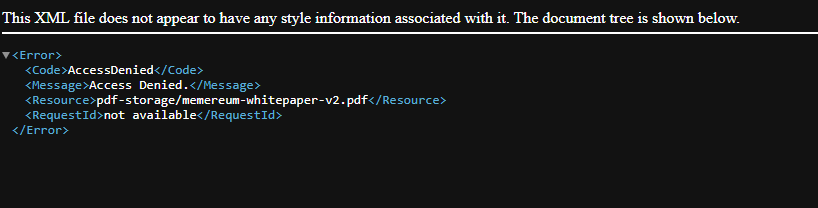
In legitimate projects, founders are typically transparent and publicly accountable. In contrast, Memereum’s anonymity aligns with scam tactics often used to avoid legal liability and public scrutiny.
Tokenomics and unrealistic promises
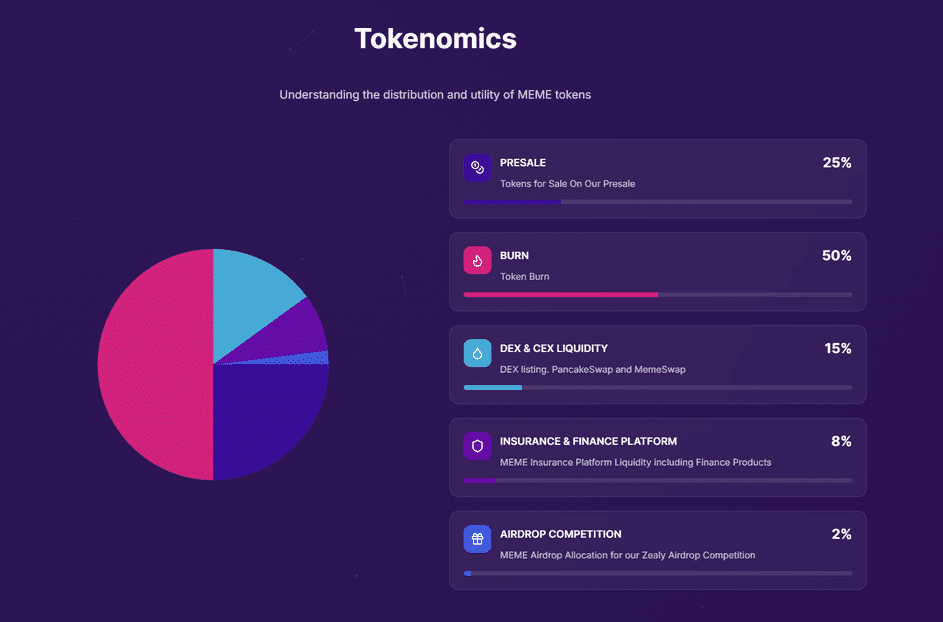
Memereum’s tokenomics raise multiple concerns. The total supply of $MEME is capped at 200 million tokens. According to its public documents, 50% of tokens are allocated to the presale, and 25% are reserved for token burns.
Another 8% is reportedly set aside for the project’s platform, but there’s no mention of a developer or team allocation.
This lack of clarity about how the project funds future development is problematic. It suggests that the team’s main incentive is the money raised from presale investors.
Even more alarming are the promised returns. Memereum advertises daily staking rewards of 0.5%, which equals 183% APY. It also promotes a token listing price of $0.45, significantly higher than the initial presale stages priced as low as $0.01.
The team explicitly claims a guaranteed return of 66% at launch. These types of guaranteed gains are highly unrealistic in any financial market and strongly resemble high-yield Ponzi schemes.
Weak audit and no open-source verification
Memereum touts an audit from BlockSafu, a little-known auditing service. While the report confirms that no critical vulnerabilities were found, the audit itself offers limited assurance.
It lacks detail and does not address whether the contract includes functions that allow the team to mint new tokens or freeze wallets.
More importantly, the smart contract does not appear to be independently verified or open-sourced on major explorers like BSCScan or Etherscan. This lack of transparency makes it impossible for the community to verify how the token functions or whether the funds are safe.
Hype-driven marketing and unverified presale claims
The project has been aggressively promoted through sponsored articles and press releases. Many of these articles repeat the same talking points, including the claim that Memereum has raised $2m in presale funds. However, no on-chain proof has been provided to back this figure.
The presale is conducted on the project’s own website without any publicly accessible smart contract or wallet address. Without blockchain data, investors have no way to verify how much money was actually raised or how it is being used.
To create urgency, the project also uses common psychological tactics such as countdown timers, spin-the-wheel bonuses, and referral rewards of up to 25%. These features are designed to mimic legitimate gamification but are frequently used in scams to lure in inexperienced buyers.
Questionable website and review manipulation
The Memereum website (memereum.net) is professionally designed and uses secure HTTPS protocols.
However, the domain was registered in late 2023 and is hosted anonymously with WHOIS privacy protection. This alone is not proof of wrongdoing, but it adds to the overall lack of transparency.
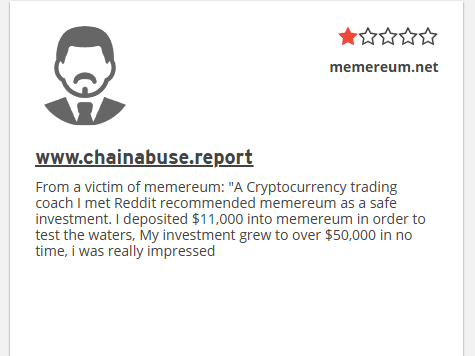
More troubling are reports from users on platforms like ScamAdviser and Trustpilot. While many reviews are positive, several first-hand accounts describe being unable to withdraw funds without paying additional fees — a classic red flag.
One user reported being asked for a $10,000 “withdrawal fee” after seeing large, unreal gains on their dashboard.
Social media activity and community manipulation
Memereum maintains active accounts on Twitter, Telegram, and Discord. However, much of the engagement appears artificial. Despite having over 10,000 followers on Twitter, most posts receive low interaction. This often indicates the use of bot followers or paid growth campaigns.
Reports from users and Reddit threads suggest that anyone asking critical questions in the Discord is muted or banned. There is no sign of open developer engagement or public AMAs, which are standard in legitimate Web3 communities.
Final verdict: High risk of fraud
Based on all available evidence, Memereum exhibits nearly every hallmark of a scam project:
- No public team or advisors
- Unrealistic yield promises and fake guaranteed returns
- Weak, low-credibility audit
- Aggressive FOMO marketing
- No proof of actual fundraising
- Pay-to-withdraw user complaints
- No legal or regulatory compliance
Until proven otherwise, Memereum should be considered a high-risk and likely fraudulent project. Investors should avoid contributing funds or sharing personal information. If you have already invested, do not send additional payments or fall for further requests to unlock your funds.
In crypto, transparency is trust. And Memereum has shown very little of either.



 Thank you for your feedback! We’re glad you found this article helpful.
 An error occurred while sending the form, please try again.
 We are sorry. You've already sent a message within the last 60 seconds. Please wait before sending another.
 Thank you for letting us know! Our team will review your feedback to help improve our content.
We're sorry you did not find what you were looking for. Please select the reason this article was not helpful.

 You’re in. Thanks for joining our newsletter.
