


 3 min read
What Is Web3Cashback? New Platform Promises 25% Crypto Rewards



 AI Overview
Web3Cashback lets users earn USDC rewards on everyday crypto activity across exchanges, casinos, and wallets.
- The platform uses a tiered system, with cashback rates increasing up to 25% based on monthly activity.
- Referral rewards and gamified loyalty mechanics aim to keep users engaged and consolidate activity.
- Long-term success depends on partner quality, payout reliability, and whether users stick to the tier model.
A new cashback platform has entered the market with an ambitious pitch: up to 25% cashback for crypto users.
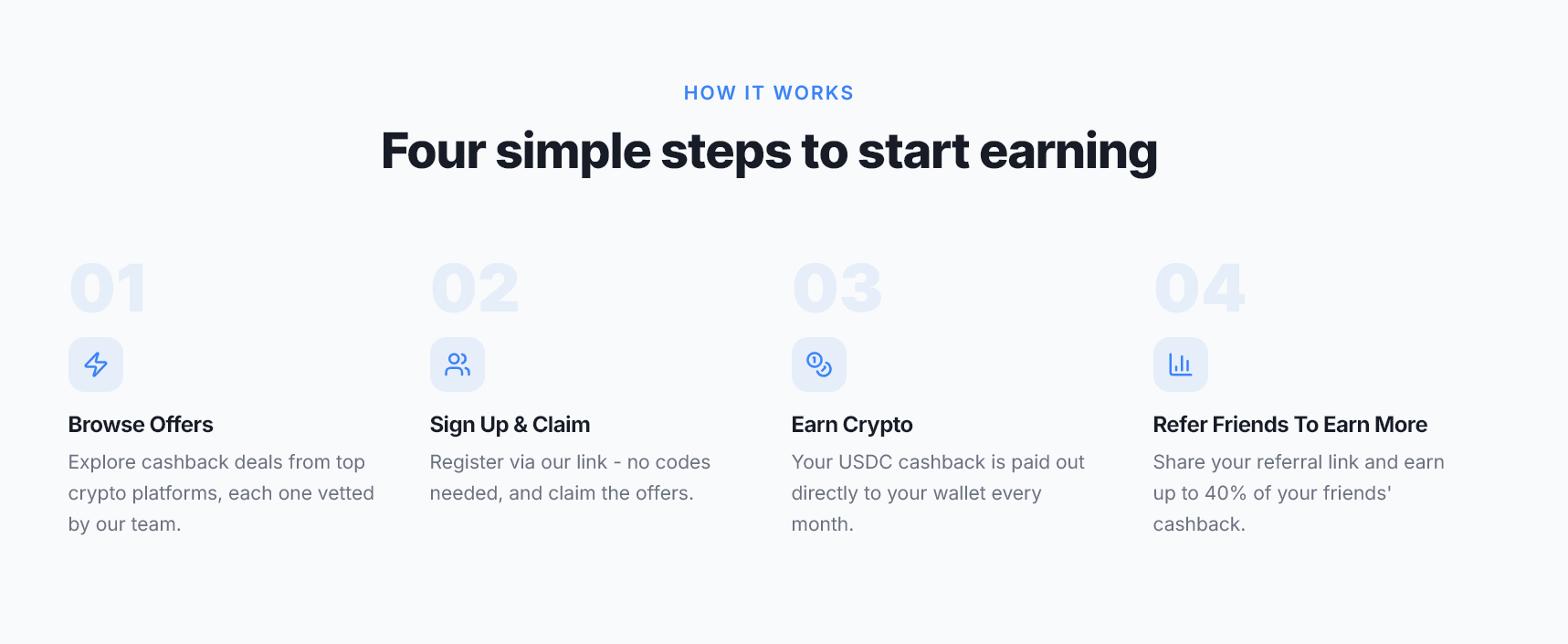
Web3Cashback (W3C) says it gives users crypto back when they use participating crypto services, including exchanges, casinos, wallets, and trading platforms. The idea is simple. You sign up, continue your usual activity, and earn a percentage of that activity back in USDC rewards whenever you trade, play, or engage with supported brands.
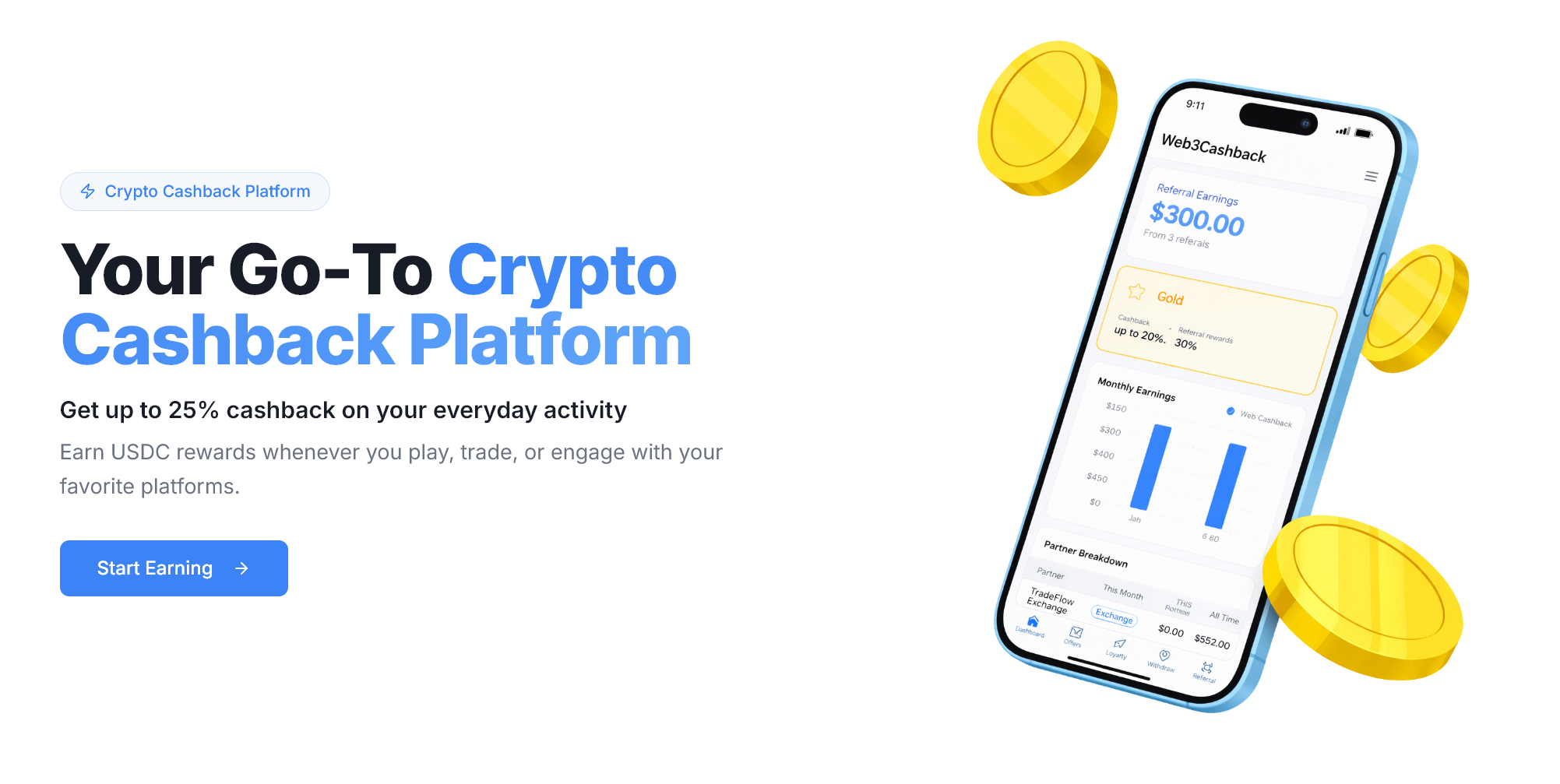
On the surface, that sounds familiar. But W3C is trying to build something more durable than a standard affiliate link model, and that is where the product starts to get more interesting.
How Web3Cashback Works for Everyday Crypto Users
Cashback is hardly new in crypto. Referral codes and partner links are already everywhere across crypto media and marketing. What W3C is doing differently is turning that one-off transaction model into a broader loyalty system.
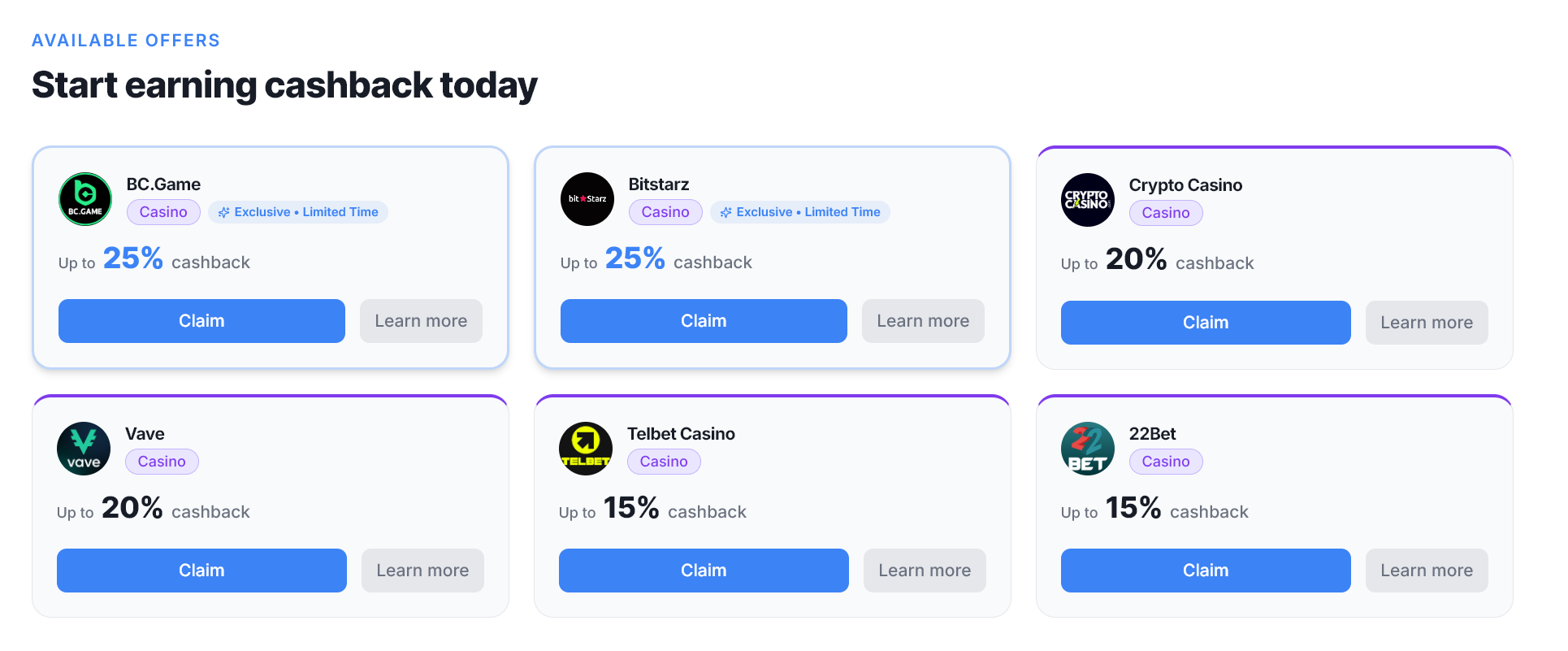
The platform runs on tiers. New users begin with a base cashback rate, such as 10% at selected casino partners, including BCGame and Bitstarz. As users accumulate cashback across the platform over a monthly period, they move up the ladder and can increase their rate to as much as 25%.
The structure will feel familiar to anyone who has used airline or hotel loyalty programs. The more activity you consolidate into one ecosystem, the more valuable it becomes to stay there.
The Gamified Loyalty Model Behind W3C
W3C also adds a referral layer on top of its cashback system. Referral rewards reportedly range from 20% at the bronze tier to 40% at the supernova tier, giving users another route to increase earnings alongside direct platform usage.
That creates a system designed to reinforce itself. Cashback can improve with activity, referrals can add another stream of rewards, and using more partner brands can help users maintain or improve their tier.
According to the team, the longer-term goal is to build partnerships across multiple crypto verticals.
For active users who already split time between exchanges, iGaming platforms, wallets, and presale opportunities, that kind of consolidated rewards layer could be appealing.
The open question is whether crypto users, who usually switch platforms quickly in search of the best deal, will remain loyal enough for the tier model to matter.
Starting With Crypto iGaming
Right now, W3C is focused heavily on iGaming, including crypto casinos and sportsbooks. That starting point makes sense. Cashback models already have traction there, affiliate economics are established, and users are used to reward-driven engagement.
It is a practical launch category. The margins are there, brands already understand the model, and the use case is easier to explain.
Still, public materials suggest the company does not want to stop at iGaming. The broader ambition is to become a cashback layer for crypto more generally, spanning exchanges, wallets, trading platforms, and nearby categories.
That expansion could open the product up to a much wider audience. It could also make execution harder.
A product that works cleanly in one vertical does not always translate neatly across others.
Will It Expand Beyond Casinos and Trading?
That will likely determine whether W3C stays niche or becomes something larger.
The model is easy to understand, and the loyalty mechanics are proven in other industries. If the company can add credible brands and maintain reliable payouts, the platform could offer real value to highly active crypto users.
At the same time, it is still early. A rewards platform like this depends on partner quality, payout consistency, and whether users see enough benefit to shift their behavior over time.
Web3Cashback Verdict: Early Idea, Clear Use Case
Web3Cashback enters the market with a product that makes sense on paper. The tier system is easy to grasp, the gamified structure is familiar, and the use case is clear for users who are already active across multiple crypto platforms.
Whether it works at scale will depend on execution more than concept.
If W3C can expand its partner network without making the product feel bloated, and if rewards remain transparent and dependable, it may find a place among active crypto users looking to get more out of activity they were already going to do anyway.
The idea is solid. The next step is proving it can hold up over time.
Cryptomaniaks has a commercial relationship with Web3Cashback. This article was written independently.



 Thank you for your feedback! We’re glad you found this article helpful.
 An error occurred while sending the form, please try again.
 We are sorry. You've already sent a message within the last 60 seconds. Please wait before sending another.
 Thank you for letting us know! Our team will review your feedback to help improve our content.
We're sorry you did not find what you were looking for. Please select the reason this article was not helpful.

 You’re in. Thanks for joining our newsletter.
