


Looking for the best Bitcoin savings account or crypto savings account to grow your holdings in 2026? You’re not alone. Many investors are exploring ways to earn passive income through crypto interest accounts, which allow you to put your Bitcoin, Ethereum, or stablecoins to work while earning high-yield passive returns.
In this guide, we’ll break down everything you need to know about crypto savings accounts and interest rates, from how they work to their benefits and risks, as well as the platforms that offer the best crypto interest rates today.
At CryptoManiaks, we’ve conducted thorough research, tested the platforms ourselves, and compared APYs, security, and ease of use to provide you with a reliable and up-to-date list of the top options. By the end of this article, you’ll know exactly where to open your account, how much you can earn, and what to watch out for when choosing a crypto interest account.
Key Takeaways
- Crypto savings accounts enable you to earn passive income on Bitcoin and altcoins.
- Security, APY, and regulations are the primary factors to consider when selecting a platform.
- The best crypto savings accounts in 2026 offer potential yields up to double those of traditional banks.
- Risks exist, including platform insolvency, hacks, and regulatory uncertainty.
- With the right provider, you can safely earn interest on Bitcoin and crypto while diversifying your long-term investment strategy.
- Retail unsecured crypto lending is significantly reduced in 2026.
- Many platforms no longer offer high retail APYs. Yields are lower and more realistic.
- Proof-of-reserves and transparency expectations are higher.
The Top Crypto Interest Platforms in 2026 Are
-
 Coins
Coins



 Deposit Methods
 Avg. Spread The difference between the buy (ask) and sell (bid) price for popular trading pairs. Lower spreads mean better pricing and less slippage for you.
 -
 Coins
Coins
 Deposit Methods

 Avg. Spread The difference between the buy (ask) and sell (bid) price for popular trading pairs. Lower spreads mean better pricing and less slippage for you.
 -
 PromotionsCoins
Deposit Methods
Avg. Spread The difference between the buy (ask) and sell (bid) price for popular trading pairs. Lower spreads mean better pricing and less slippage for you.
PromotionsCoins
Deposit Methods
Avg. Spread The difference between the buy (ask) and sell (bid) price for popular trading pairs. Lower spreads mean better pricing and less slippage for you. -
 PromotionsCoins
 Deposit Methods
 Avg. Spread The difference between the buy (ask) and sell (bid) price for popular trading pairs. Lower spreads mean better pricing and less slippage for you.
 -
 Coins
Coins


 Deposit Methods
Avg. Spread The difference between the buy (ask) and sell (bid) price for popular trading pairs. Lower spreads mean better pricing and less slippage for you.
Deposit Methods
Avg. Spread The difference between the buy (ask) and sell (bid) price for popular trading pairs. Lower spreads mean better pricing and less slippage for you. -
 Coins
Deposit Methods
Avg. Spread The difference between the buy (ask) and sell (bid) price for popular trading pairs. Lower spreads mean better pricing and less slippage for you.
Coins
Deposit Methods
Avg. Spread The difference between the buy (ask) and sell (bid) price for popular trading pairs. Lower spreads mean better pricing and less slippage for you. -
 Coins
Deposit Methods
Avg. Spread The difference between the buy (ask) and sell (bid) price for popular trading pairs. Lower spreads mean better pricing and less slippage for you.
Coins
Deposit Methods
Avg. Spread The difference between the buy (ask) and sell (bid) price for popular trading pairs. Lower spreads mean better pricing and less slippage for you. -
 PromotionsCoins
Deposit Methods
PromotionsCoins
Deposit Methods
 Avg. Spread The difference between the buy (ask) and sell (bid) price for popular trading pairs. Lower spreads mean better pricing and less slippage for you.
 -
 Coins
Coins

 Deposit Methods
Avg. Spread The difference between the buy (ask) and sell (bid) price for popular trading pairs. Lower spreads mean better pricing and less slippage for you.
Deposit Methods
Avg. Spread The difference between the buy (ask) and sell (bid) price for popular trading pairs. Lower spreads mean better pricing and less slippage for you. -
 Coins
Deposit Methods
Coins
Deposit Methods
 Avg. Spread The difference between the buy (ask) and sell (bid) price for popular trading pairs. Lower spreads mean better pricing and less slippage for you.
 -
 PromotionsCoins
Deposit Methods
Avg. Spread The difference between the buy (ask) and sell (bid) price for popular trading pairs. Lower spreads mean better pricing and less slippage for you.
PromotionsCoins
Deposit Methods
Avg. Spread The difference between the buy (ask) and sell (bid) price for popular trading pairs. Lower spreads mean better pricing and less slippage for you. -
 Coins
Deposit Methods
Avg. Spread The difference between the buy (ask) and sell (bid) price for popular trading pairs. Lower spreads mean better pricing and less slippage for you.
Coins
Deposit Methods
Avg. Spread The difference between the buy (ask) and sell (bid) price for popular trading pairs. Lower spreads mean better pricing and less slippage for you. -
 Coins
Coins
 Deposit Methods

 Avg. Spread The difference between the buy (ask) and sell (bid) price for popular trading pairs. Lower spreads mean better pricing and less slippage for you.
 -
 Coins
Deposit Methods
Avg. Spread The difference between the buy (ask) and sell (bid) price for popular trading pairs. Lower spreads mean better pricing and less slippage for you.
Coins
Deposit Methods
Avg. Spread The difference between the buy (ask) and sell (bid) price for popular trading pairs. Lower spreads mean better pricing and less slippage for you. -
 Coins
Deposit Methods
Avg. Spread The difference between the buy (ask) and sell (bid) price for popular trading pairs. Lower spreads mean better pricing and less slippage for you.
Coins
Deposit Methods
Avg. Spread The difference between the buy (ask) and sell (bid) price for popular trading pairs. Lower spreads mean better pricing and less slippage for you. -
 PromotionsCoins
 Deposit Methods
 Avg. Spread The difference between the buy (ask) and sell (bid) price for popular trading pairs. Lower spreads mean better pricing and less slippage for you.
 -
 Coins
Coins
 Deposit Methods
Avg. Spread The difference between the buy (ask) and sell (bid) price for popular trading pairs. Lower spreads mean better pricing and less slippage for you.
Deposit Methods
Avg. Spread The difference between the buy (ask) and sell (bid) price for popular trading pairs. Lower spreads mean better pricing and less slippage for you. -
 Coins
Coins

 Deposit Methods
 Avg. Spread The difference between the buy (ask) and sell (bid) price for popular trading pairs. Lower spreads mean better pricing and less slippage for you.
 -
 Coins
Deposit Methods
Avg. Spread The difference between the buy (ask) and sell (bid) price for popular trading pairs. Lower spreads mean better pricing and less slippage for you.
Coins
Deposit Methods
Avg. Spread The difference between the buy (ask) and sell (bid) price for popular trading pairs. Lower spreads mean better pricing and less slippage for you.
Top Crypto Interest Platforms in 2026 Reviewed

Get $10 in Bitcoin when you register through a referral link from an existing member.


Established in 2011, Kraken is a trusted cryptocurrency exchange renowned for its longevity and diverse trading interfaces, catering to a broad user base. With one of the best reputations in the industry, Kraken holds the distinction of being the only crypto company worldwide to secure an SPDI banking license.
- Supports hundreds of coins
- High liquidity
- Simple and user-friendly interface
- Good customer support options
- Lots of advanced trading features like margin, futures, and indices trading
- No insurance fund for assets on the platform
- Doesn’t offer a crypto credit card
- No personal wallet service for traders
- Supports only a few fiat currencies
Year Founded
- 2011
Headquarters
- United States
Licenses
- United States (IRS)
- Canada (CRA)
- United Kingdom (HMRC)
-
+7
Cryptocurrencies
- Bitcoin
- Ethereum
- Tether
-
+83
Available countries
- Afghanistan
- Albania
- Algeria
-
+240
Languages
- Chinese (Mandarin)
- English
- French
-
+10
Features
- Cryptowatch
- Forks
-
+29
Receive up to $100,000 worth of exclusive gifts for newcomers upon registration.
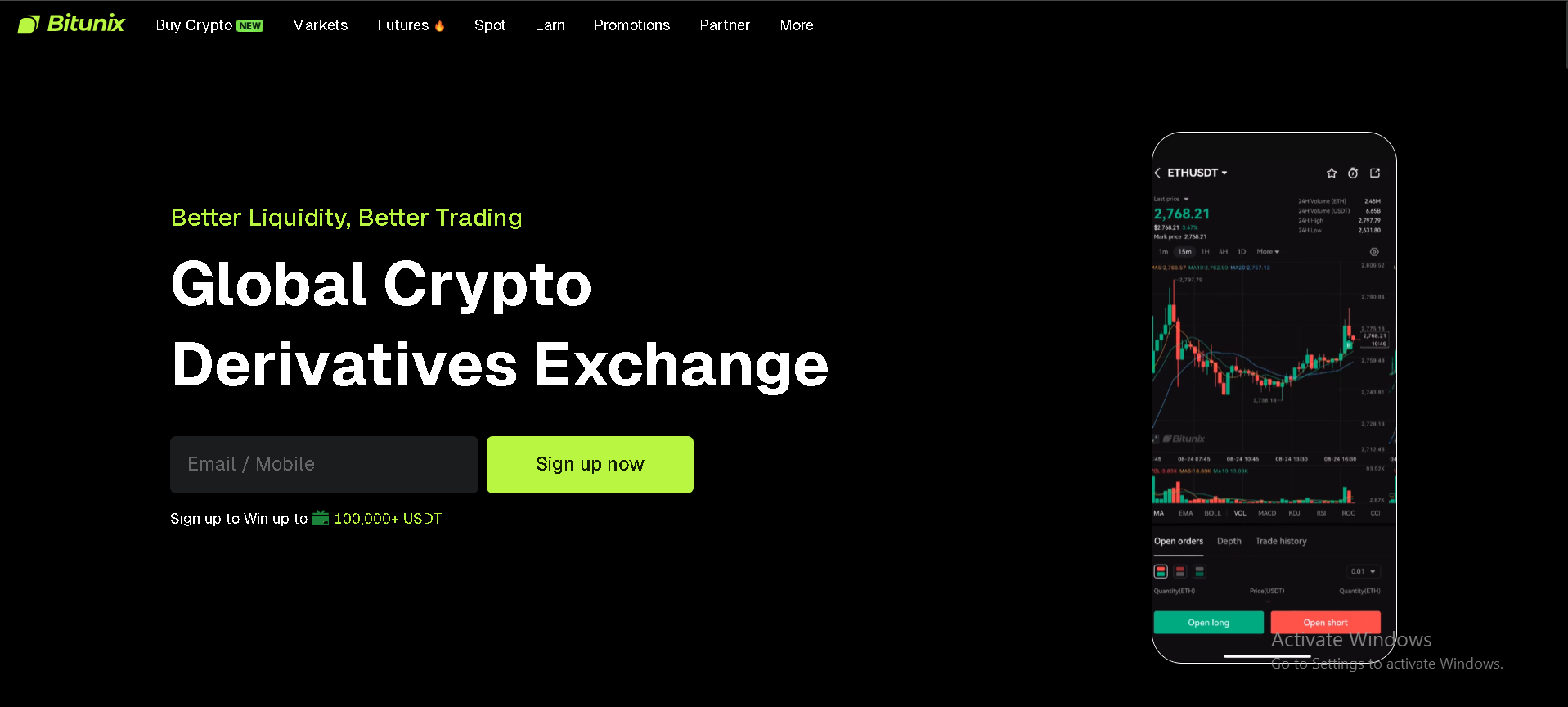
Bitunix was founded in Hong Kong in 2021. It was designed to bring a breadth of crypto features to beginner and intermediate traders.
It supports over 700 cryptocurrency trading pairs in more than 100 countries. It offers spot, P2P, and derivatives trading. With copy trading, new traders can copy the trades of successful users, with them earning a cut.
The exchange offers a myriad of new user bonuses and lotteries, letting new traders jumpstart their experience.
Rewards and tournaments are also available for existing users. Bitunix Splash gives rewards for investing in new tokens, while regular competitions in categories like trading volume or monthly profits carry up to USDT 675,000 in rewards.
Licenses
- United States (IRS)
- Canada (CRA)
- Phillipines
Cryptocurrencies
- Bitcoin
- Ethereum
- Tether
-
+78
Available countries
- Albania
- Algeria
- American Samoa
-
+233
Languages
- English
- Uzbek
- Polish
-
+12


Bitget is a reputable cryptocurrency exchange known for its user-friendly interface and advanced trading features. With a focus on security and customer satisfaction, Bitget offers a wide range of digital assets for trading and investment opportunities.
Year Founded
- 2018
Headquarters
- Cayman Islands
Licenses
- United States (IRS)
- Australia (ATO)
- Canada (CRA)
Cryptocurrencies
- Bitcoin
- Ethereum
- Tether
-
+93
Available countries
- Afghanistan
- Albania
- Algeria
-
+246
Languages
- English
- Japanese
- Vietnamese
-
+16
Features
- API Trading
- Vote to List
-
+13


- An advanced trading platform
- Low fees and high liquidity
- Supports lots of different payment options
- Efficient and dedicated phone and email support
- Lots of charting tools
- No live chat customer support
- Slow verification process
- International wire transfer takes 2 to 5 days to clear
- A few number of coins on offer
- Was hacked in 2015
Year Founded
- 2011
Headquarters
- Virgin Islands, British
Licenses
- Luxembourg
- United States (IRS)
- Spain
-
+1
Cryptocurrencies
- Bitcoin
- Ethereum
- Tether
-
+52
Available countries
- Afghanistan
- Albania
- Algeria
-
+244
Languages
- English
Features
- Institutions
- Pro Traders
-
+4
Enjoy US$50 worth of CRO as sign-up bonus when you sign up with a referral link.


- Extensive list of supported cryptocurrencies
- Hardware wallet support
- With its Visa cards, you can spend your crypto and earn rewards
- Easy to purchase NFTs on the platform using either fiat or certain cryptos
- Higher fees for those who don't hold and use CRO
- Poor customer service
- Lack of educational resources
- Slow in-app live support
Year Founded
- 2016
Headquarters
- Singapore
Licenses
- United Arab Emirates
- Brazil
- United Kingdom (HMRC)
-
+19
Cryptocurrencies
- Bitcoin
- Holo
- Litecoin
-
+157
Available countries
- Afghanistan
- Algeria
- American Samoa
-
+200
Languages
- Danish
- Spanish
- French
-
+13
Features
- Supercharger
- Trading Arena
-
+2
YouHodler Crypto Exchange, launched in Cyprus in 2018, stands as a versatile platform offering a plethora of crypto-fiat financial services including lending, trading, and savings accounts.
Year Founded
- 2017
Headquarters
- Cyprus
Licenses
- Italy
- Switzerland
- European Gaming and Betting Association (EGBA)
-
+2
Cryptocurrencies
- Bitcoin
- Ethereum
- Tether
-
+57
Available countries
- Belgium
- Canada
- Germany
-
+12
Languages
- English
- French
- Italian
-
+3
Features
- Conversion
- Turbocharge
-
+10
Enjoy up to 30,000 USDT Bonus when you sign up and complete tasks. Get a 10 USDT coupon when you sign up, and link your phone number and email.


Year Founded
- 2018
Headquarters
- Singapore
Licenses
- United States (IRS)
- Canada (CRA)
Cryptocurrencies
- Bitcoin
- Ethereum
- Tether
-
+96
Available countries
- Philippines
- United Kingdom
- United States
Languages
- English
- Simplified Chinese
- Chinese (Traditional)
-
+15
Features
- Futures Demo
- Copy Trading
-
+18
Get Free Bitcoin everyday upto Rs2000 INR on Sign Up, Referral, Deposit & Bitcoin Trading.
Year Founded
- 2025
Headquarters
- India
Licenses
- India
- Estonia
Cryptocurrencies
- Bitcoin
- Ethereum
- Tether
-
+77
Available countries
- China
- India
- Kenya
-
+5
Languages
- English
Features
- Free Bitcoin
- APIs
-
+9

Year Founded
- 2018
Headquarters
- Seychelles
Licenses
- Seychelles
- Estonia
- Switzerland
-
+2
Cryptocurrencies
- Shiba Inu
- Bitcoin
- PAX Gold
-
+72
Available countries
- Afghanistan
- Albania
- Algeria
-
+246
Languages
- English
- Russian
- Turkish
-
+14
Features
- Leveraged ETFs
- Copy Trading
-
+8
Get up to 1,000 USDC on your Trading Fee Balance when you register, complete identity verification, and place your first spot trade.


CEX.IO is a reputable cryptocurrency exchange known for its user-friendly interface and extensive range of supported cryptocurrencies.
Year Founded
- 2013
Headquarters
- United Kingdom
Licenses
- United States (IRS)
- Lithuania
- Spain
Cryptocurrencies
- Bitcoin
- Ethereum
- Tether
-
+81
Available countries
- Australia
- France
- India
-
+5
Languages
- English
- Spanish
Features
- Exchange Plus
- API
-
+9

Disclaimer
The information provided on this website is for informational purposes only and should not be considered as financial, investment, or legal advice. Cryptocurrency investments are volatile and high-risk in nature. Consult with a qualified financial advisor and/or tax professional before making any investment decisions. We are not responsible for any loss incurred due to the use of information on this website. Do your own research and exercise caution. Don’t invest unless you’re prepared to lose all the money you invest.
Why Trust Us?
Our recommendations are based on real testing, in-depth analysis, and transparent research. We opened accounts, compared APYs, checked withdrawal policies, and evaluated security features across the leading platforms.
At CryptoManiaks, we don’t just list numbers; we verify them. Our team consults with industry experts, monitors regulatory updates, and stays informed about market shifts to ensure our reviews remain accurate and unbiased.
When we say a platform offers the best Bitcoin savings account or the best crypto interest account, it’s because we’ve tested it, compared it, and found it reliable, not just today, but for the long term.
How We Rated the Best Accounts for Crypto Savings
Choosing the right crypto savings account depends on more than just the interest rate. Our team used a structured set of criteria to evaluate every platform fairly.
Our Key Criteria
We assessed each platform based on the following:
| Criteria | Why It Matters | What We Looked For |
|---|---|---|
| APY (Annual % Yield) | Determines how much you can earn from your deposits. | High but realistic APYs without hidden lockups or misleading promotions. |
| Security | Protects your funds from hacks, fraud, or mismanagement. | Cold storage, insurance policies, audits, and transparency of reserves. |
| Supported Assets | Affects your flexibility and diversification. | Availability of Bitcoin, Ethereum, and major stablecoins (USDT, USDC, DAI). |
| Liquidity & Access | Determines how easily you can withdraw or move funds. | Flexible vs. fixed terms, withdrawal limits, and payout frequency. |
| Regulations & Trust | Shows whether the platform operates under a credible legal framework. | Licensing, KYC/AML compliance, and company track record. |
| Ease of Use | Impacts whether both beginners and pro users can use the platform effectively. | Mobile apps, intuitive dashboards, and customer support quality. |
| Reputation | Reflects how trustworthy the provider is over time. | User reviews, past incidents, and response to market volatility (e.g., 2022 crash). |
What is a Crypto Savings Account?
A crypto savings account lets you deposit Bitcoin, Ethereum, or stablecoins and earn interest, similar to a traditional bank savings account, but with higher passive income yields and increased risk. These accounts come in two main types:
Fixed-Term Crypto Savings Accounts
Fixed accounts require you to lock up your funds for a set period (e.g., 1 month, 3 months, or 12 months).
- Higher APY compared to flexible accounts
- Good for long-term holders who don’t need immediate liquidity
- Funds are inaccessible until the term ends
- Early withdrawals often carry penalties
Flexible Crypto Savings Accounts
Flexible accounts allow you to withdraw your crypto at any time while still earning interest.
- Instant liquidity; withdraw whenever you want
- Great for traders who might need access to funds
- Lower APY than fixed-term accounts
- Rates can fluctuate more frequently
Quick Comparison
| Feature | Fixed-Term Accounts | Flexible Accounts |
|---|---|---|
| Interest Rate (APY) | Higher (often 6–15% on stablecoins) | Lower (typically 2–6%) |
| Liquidity | Locked until maturity | Withdraw anytime |
| Best For | Long-term investors | Short-term or active traders |
| Risks | Locked funds in volatile markets | Lower yield, volatile APYs |
How Do Bitcoin & Crypto Savings Accounts Work?
A bitcoin savings account or crypto savings account works by lending your deposited assets to borrowers, generating returns that are shared with you. Follow the step-by-step guide below:
Step 1 – Deposit Your Crypto
You transfer Bitcoin, Ethereum, or stablecoins into your chosen platform’s wallet.
Step 2 – Platform Lends or Stakes Assets
The platform lends crypto to vetted borrowers (e.g., institutions) or deploys it in DeFi protocols.
Step 3 – Borrowers Pay Interest
Borrowers or protocols pay interest, typically at a higher rate than traditional markets, due to crypto’s higher risk profile.
Step 4 – Platform Shares Profits
A portion of this interest is returned to you as Annual Percentage Yield (APY).
Step 5 – Withdraw or Reinvest
Depending on whether you opt for fixed or flexible terms, you can withdraw your funds or let them compound for additional returns.
Where do the Yields Come From?
There are 4 total sources where your yields could come from, so it pays to know which ones exactly the service provider uses, so you can have a better understanding of what you’re doing.
Lending to Borrowers (CeFi Lending)
How it works: The platforms pool available tokens, usually stablecoins like USDC and USDT and then lend it out to retail or institutional borrowers. The borrowers provide collateral in the form of BTC or other coins larger than the loan they are taking and then pay the interest on it every month. The platform takes the spread from the interest and the rest is attributed to you as APY based on how much of your funds you made available to be lent.
Typical rates: In most cases, expect mid to high single digit interest rates on these stablecoins. Some exchanges have up to 6.5% on balances up to $100,000 and 8% above that. This type of APY is usually the highest in terms of interest rates you can earn on your crypto.
Main risks:
- Default: if the borrower defaults on their loan and their collateral is too small to cover it, then the platform would have to absorb the cost, and so would you.
- Custody: your tokens are pretty much off the platform’s balance sheet while the loan is in place, so technically they are not within your custody.
- Bankruptcy: There are documented cases of Celsius, BlockFi and others in 2022 when they had to file for bankruptcy and lose their users their tokens.
What to check:
- The lenders: who are they? Retail or institutional? Maybe even the platform’s own trading desk?
- The collateral: Is it too much or too low?
- PoR: does the platform have a proof of reserves, or a loan book you can check?
Staking
How it works: staking works fully on a proof-of-stake basis. Chains like Ethereum, Polkadot, Cardano and Solana pay rewards to validators that lock up their tokens that secure the networks. Exchanges act as an intermediary for you to do this, and simply takes commission out of the rewards you are given.
Typical rates: the rates are mostly dictated by the protocols, so there’s usually little room the exchange can wiggle around with. The most common rates you will find are between 1 and 15%. For example, Coinbase has a 1.7% reward after commissions on ETH and a 13% reward on Cosmos, it all depends on the protocol.
Main risks:
- Price: Your rewards are in the same token you stake, so even if you get a 10% reward, it doesn’t matter if the price falls 50%.
- Waiting time: In many cases the waiting time is days to weeks, so the final reward may not be as big as advertised.
What to check:
- Commissions: How much does the platform take from your rewards?
- Unbounding period: how long does it take for you to un-stake your tokens?
DeFi Protocols
How it works: In some cases, your deposit can be routed to on-chain vaults, which are then accessible via smart contracts. The users take the tokens from the vaults as a loan and the protocol then adjusts the interest rates based on demand.
Typical rates: The rates are very volatile, but to give you an example, Coinbase’s USDC loan had an interest rate of 10.3% in September 2026.
Main risks:
- Smart contracts: Any technical exploits may apply to your tokens as well
- Liquidity: If the pool you’re contributing to is borrowed fully, you may not be able to withdraw your tokens for a while, at least until enough of the interest has been paid to improve liquidity.
What to check:
- Which protocol is receiving the funds?
- What’s the protocol’s reputation? Have there been security breaches?
Platform Rewards
How it works: in this case, the platform does not rely on any external factors, it just pays you directly for your service of keeping your balance on their platform. This has been gaining ground a lot since the US GENIUS Act of 2025 when yield payments were banned. So now, the payout, although pretty much exactly as a yield payment, is labeled as a reward for loyalty.
Typical rates: Expect between 1% and 5% based on the platform. For example, Coinbase has a flat 3.5% USDC rewards system.
Main risks:
- No guarantees: rewards are not a feature, they’re more of a marketing trick for exchanges to create incentive not to change operators. They can disappear anytime if the exchange thinks they’re not bringing any benefit.
- Solvency: if the exchange goes, your rewards go with them.
What to check:
- Conditions in the T&C document
- Which coin is paid out as the reward
Benefits of Earning Interest on Crypto
A crypto interest account or bitcoin savings account allows you to grow your holdings passively, unlocking returns beyond simple price appreciation.
Key Benefits
- Passive Income Stream – Earn steady returns on idle crypto without active trading.
- Higher Yields than Banks – APYs often range from 3% to 12%, compared to less than 1% at most banks.
- Compounding Growth – Reinvested earnings help accelerate portfolio growth over time.
- Diversification – You can earn on Bitcoin, Ethereum, and stablecoins, reducing reliance on price movements alone.
- Flexibility – Platforms offer both flexible and fixed-term options depending on your liquidity needs. In 2026, many platforms incorporate automated yield optimization strategies, smart routing, and AI-based capital allocation.
- Financial Inclusion – Global access means anyone with crypto can start earning, regardless of location or banking access.
Earning interest on crypto helps investors maximize returns, build long-term wealth, and diversify their strategies.
Safety and Risks of Using Crypto Interest Accounts
A crypto interest account offers attractive yields, but it also carries risks that investors must carefully weigh before depositing funds.
Key Risks
- Platform Insolvency – If the provider fails financially, your funds may be frozen or lost entirely.
- Lack of Insurance – Unlike banks, most crypto platforms don’t offer government-backed insurance on deposits.
- Hacks & Security Breaches – Even with strong security, exchanges and lending platforms remain prime targets for hackers.
- Regulatory Uncertainty – Rules governing crypto lending differ across regions and can impact availability or legality. In 2026, crypto interest-bearing products face significantly stricter regulatory oversight compared to previous years. Several jurisdictions now classify yield-bearing accounts as investment products or securities, requiring licensing and investor disclosures. As a result, availability may vary by country, and KYC compliance is now standard across most centralized providers.
- Counterparty Risk – Your crypto is lent out to borrowers; if they default, returns (and principal deposits) may be affected.
- Withdrawal Restrictions – Some platforms impose limits or delays on accessing funds, particularly during periods of market stress.
While Bitcoin savings accounts and crypto savings accounts can be lucrative, understanding and managing these risks is critical before committing your assets.
Crypto Savings Account Interest Rates in 2026
Interest rates for a crypto savings account vary widely, influenced by market demand, asset type, and platform policies. In 2026, yields remain higher than traditional banking, but they are also more volatile.
What Affects Rates?
- Asset Type – Stablecoins, such as USDT, USDC, and DAI, typically offer higher interest rates than Bitcoin or Ethereum.
- Platform Demand – Platforms adjust rates based on borrowing demand and available liquidity.
- Fixed vs. Flexible Terms – Longer lockups generally reward investors with higher APY.
- Market Volatility – During bull runs, borrowing demand rises, pushing up yields; bear markets often lower them.
- Platform Risk Profile – New or less established providers may offer unusually high APYs to attract users.
Average Interest Rates in 2026
| Asset Type | Flexible APY Range | Fixed-Term APY Range | Notes |
|---|---|---|---|
| Stablecoins (USDT/USDC/DAI) | 2% – 8% | 4% – 10% | Highest demand, widely used for lending |
| Bitcoin (BTC) | 0.5% – 2.5% | 2% – 4% | Lower APY but less volatility in rates |
| Ethereum (ETH) | 1% – 3% | 3% – 5% | Strong DeFi demand supports mid-range yields |
| Altcoins (e.g., SOL, DOT) | 2% – 6% | 5% – 10% | Riskier, with more volatile interest rates |
APY rates listed above are indicative and based on historical data. Cryptocurrency is a highly volatile investment instrument, and rates can fluctuate rapidly.
Are Crypto Savings Accounts Regulated?
Crypto savings accounts that net you interest or rewards or sort of a gray zone. They’re not bank accounts that fall under the regular fiscal laws in the country, nor are they capital gains through trading, so they’re their own thing with in many cases, no set of rules. But there are some rules that do apply based on where you’re located.
United States
- GENIUS Act (July 2025) – This act, in its Section 4(a) (11) bans stablecoin issuers from paying yields to any holders of their tokens. Due to the loophole of only naming “issuers”, exchanges can technically pay out yields if they don’t call them that, which is why they pay out “rewards” instead.
- Enforcement is no joke:
-
-
- 2022 – BlockFi fined $100M for interest accounts
-
- 2023 – Nefo fined $45M and Kraken fined $30M for interest products and staking services
- NYDFS – The New York authority forced Gemini to return a little over $1 Billion to customers in 2024 that were using the platform’s “Earn” feature.
European Union
- MiCA (July 2026) – This regulation bans all Crypto Asset Service Providers (CASPs) from paying interest on tokens as well as asset-referenced tokens. Although lending is not yet named in the legislation, it most likely will be added in 2027.
How to Open an Account for Crypto Savings
Opening a crypto savings account in 2026 is straightforward. Follow these steps to start earning interest on Bitcoin and other digital assets.
Step 1: Choose a Platform
Research trusted providers offering strong APYs, transparent terms, and robust security. Compare supported assets, withdrawal flexibility, and regulatory compliance. Select a platform that balances yield with safety, avoiding those that advertise unrealistically high rates. Always verify user reviews, security audits, and licensing information before making a deposit.
Step 2: Create an Account & Complete KYC
Register with your chosen platform by providing an email and password. Most providers require Know Your Customer (KYC) verification, which involves submitting identification documents and proof of address. This process ensures compliance with global regulations. Depending on the platform, verification can take anywhere from a few minutes to a few days.
Step 3: Deposit Your Crypto
Once verified, transfer Bitcoin, Ethereum, or stablecoins from your wallet or exchange account into the savings platform. Some providers support direct purchases using fiat currencies. Be mindful of deposit limits, supported tokens, and network fees. Ensure you use the correct deposit address to avoid irreversible transaction errors.
Step 4: Select Savings Terms
Choose between flexible and fixed-term accounts depending on your goals. Flexible terms allow you to withdraw at any time with a lower APY, while fixed terms lock in funds for higher yields. Platforms typically provide calculators to help users preview their expected earnings. Align your choice with your risk tolerance, liquidity needs, and long-term strategy.
Step 5: Start Earning Interest
Once deposited, your funds are automatically lent or deployed into protocols. Interest is credited daily, weekly, or monthly, depending on the platform. You can withdraw or reinvest earnings to benefit from compound growth. Monitor your account regularly, stay informed about rate changes, and reassess platforms as market conditions evolve.
Alternatives to Crypto Savings Accounts
While a crypto savings account is popular for earning passive income, it’s not the only option. Investors may also consider:
- Staking: Locking tokens like ETH or SOL in proof-of-stake networks for rewards.
- DeFi Lending: Using decentralized protocols (Aave, Compound) for higher but riskier yields.
- Liquidity Mining: Providing funds to decentralized exchanges in return for fees and token incentives.
- Traditional Bonds or Dividend Stocks: Lower risk but also lower returns compared to crypto.
- Tokenized real-world assets as yield opportunities.
Each alternative carries unique risks and benefits, making diversification essential.
Best Practices for Beginners
Starting with a Bitcoin savings account or crypto savings account can be rewarding, but following best practices ensures safer investing.
Beginner Safety Rules
- Start small and test platforms with a limited deposit before committing larger amounts.
- Research providers thoroughly by checking audits, security practices, and user reputation.
- Diversify and spread funds across multiple platforms and assets to reduce risk.
- Avoid “too good to be true” APYs, which often signal unsustainable business models.
- Enable two-factor authentication (2FA) on all accounts.
- Keep long-term holdings in cold storage, only allocating surplus to interest accounts.
- Monitor interest rates and adjust strategy as markets shift.
 DON’T GET REKT
Curated drops, testnets and red flag alerts straight to your inbox ✌️
 You’re in. Thanks for joining our newsletter.

Our Final Tips: Top Crypto Savings Accounts Platforms
Choosing the right crypto interest account comes down to balancing yield with safety. Always verify platform security, reputation, and withdrawal policies before depositing.
Diversify between assets and providers, and don’t chase unsustainable APYs. By following best practices, you can safely earn interest on Bitcoin and crypto while growing long-term wealth.
Ready to grow your crypto holdings with high-yield interest? Check out our toplist and find the best platform that fits your goals, risk tolerance, and preferred assets.
Frequently Asked Questions
-
01.
Is earning interest on crypto taxable?
Yes. In most jurisdictions, interest earned from a crypto savings account is treated as taxable income and must be reported for tax purposes.
-
02.
Do stablecoins earn higher interest than Bitcoin or Ethereum?
Generally, yes. Stablecoins like USDT, USDC, and DAI often earn higher rates because they’re in high demand for lending and trading liquidity.
-
03.
Can I lose money in a crypto savings account?
Yes. Risks include platform insolvency, hacks, and borrower defaults. Unlike bank accounts, most crypto interest accounts lack government deposit insurance.
-
04.
How do crypto savings account interest rates compare to banks?
Crypto platforms usually offer far higher APYs, ranging from 3% to 12%, while banks typically pay less than 1% on savings accounts.
-
05.
What’s the difference between staking and a crypto savings account?
Staking involves locking tokens to secure a blockchain and earn rewards. A Bitcoin savings account instead generates yield by lending assets.