


 6 min read
Solana Seeker Review: Can You Really Earn 24% APY With SKR?




 AI Overview
Solana’s Seeker is a mid-range Android phone built for native Web3 use, pairing on-device wallets, a curated dApp store, and the $SKR token/airdrop to reward active users and stakers. It costs around $500.
-
Seeker is a crypto-friendly smartphone that works like a normal phone but comes with built-in wallets, apps, and rewards for using Solana.
-
The SKR token is how users earn, and it can be staked directly from the phone in a few taps, with early rewards currently around 24% APY.
-
Early users benefit the most, but long-term value depends on how many people use the phone, the apps, and the Solana Mobile ecosystem over time
Solana is no stranger to hardware. From the Saga phone experiment to Play Solana, the network has consistently explored how physical devices can plug directly into crypto-native ecosystems.
With the launch of the Solana Seeker, Solana is doubling down on that thesis.
After months of anticipation, Seeker preorders have now reached a key milestone. For many early buyers, the upfront cost of the phone has been partly, fully, or even more than repaid through the launch of the $SKR token, its TGE, and the accompanying airdrop.
What Is the Solana Seeker?
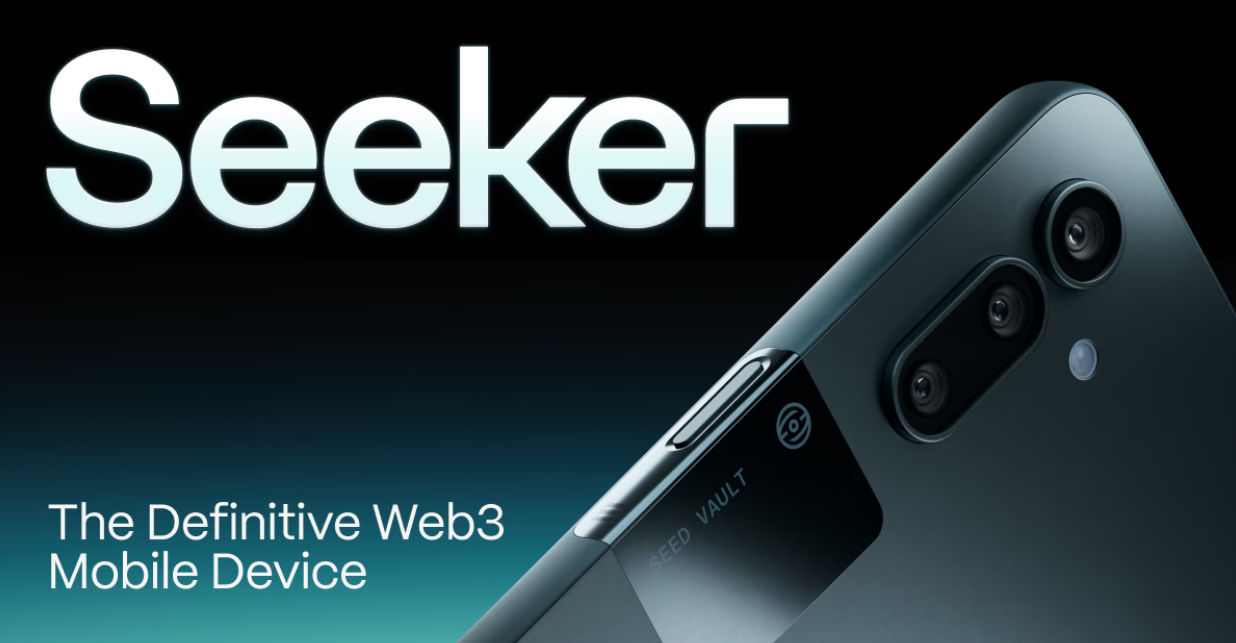
At its core, the Solana Seeker is a capable mid-range smartphone with deep native Web3 integration. It’s priced at around $500 at the time of writing. It functions like any modern Android device, but is designed from the ground up for on-chain activity, identity, and rewards.
Around 150,000 devices were preordered in the first wave, and additional units are now available as Seeker Season 2 begins. This next phase introduces new app-level rewards, partner incentives, and future $SKR distributions tied to user activity.
 DON’T GET REKT
Curated drops, testnets and red flag alerts straight to your inbox ✌️
 You’re in. Thanks for joining our newsletter.

Seeker Smartphone Unique Features
Several features distinguish Seeker from a standard smartphone:
- Seed Vault: A hardware-level wallet that secures private keys and supports biometric transaction signing. Users can stake $SKR and SOL natively from here.
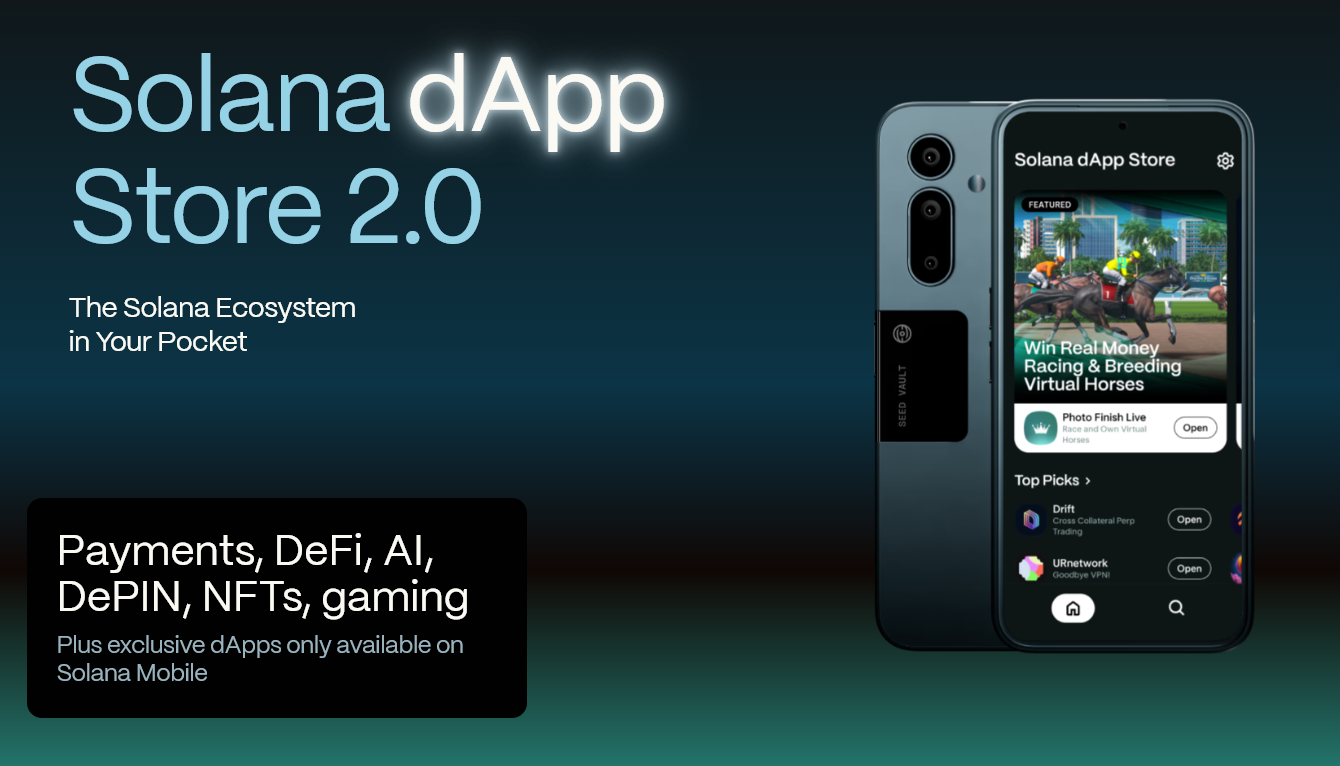
- Solana dApp Store 2.0: A curated, fee-free app store focused on Solana-native applications, with growing coverage across DeFi, gaming, payments, and DePIN.
- Genesis Token: A soulbound-style activation NFT that unlocks eligibility for airdrops and ecosystem rewards.
- Seeker ID: A persistent on-chain identity used across apps and services.
- Earn with Solana Mobile Validator / Guardian Access: Native access to staking flows connected to the Seeker network and its Guardians.
From a pure hardware perspective, Seeker is not a flagship phone. That’s fine—the value proposition here is not raw specs but on-chain participation from a pocket device. A future price cut or Saga-holder discount would likely accelerate adoption further.
Author’s note: I own a Seeker and received the Vanguard allocation of 40,000 $SKR. That context may influence my perspective.
The $SKR Token Launch: Why the Hype?
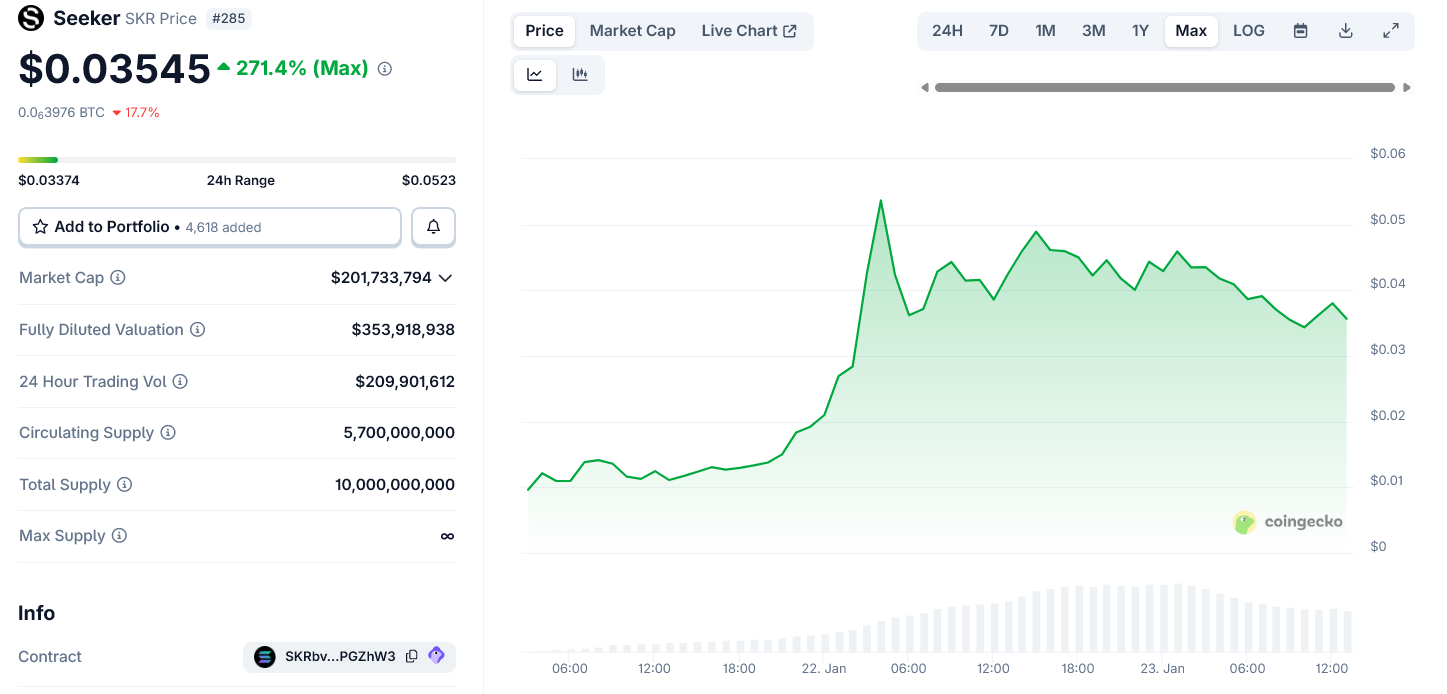
$SKR is the native token of the Solana Mobile ecosystem. Its launch was one of the most anticipated airdrops of early 2026, alongside names like Jupiter and Moonbirds.
Airdrop Structure
- Developers: up to 750,000 SKR
- Top-tier users: up to 125,000 SKR
- Total supply: 10 billion SKR
- Airdrop allocation: ~30% of total supply
Claims were handled directly through the Seeker’s Seed Vault Wallet, with immediate staking available at launch—a key design choice that shaped early price action.
The token is still early—less than 48 hours live at the time of writing. But the structure clearly favored supply compression rather than instant sell pressure.
How $SKR Staking Actually Works (And Is the 25% APY Real?)
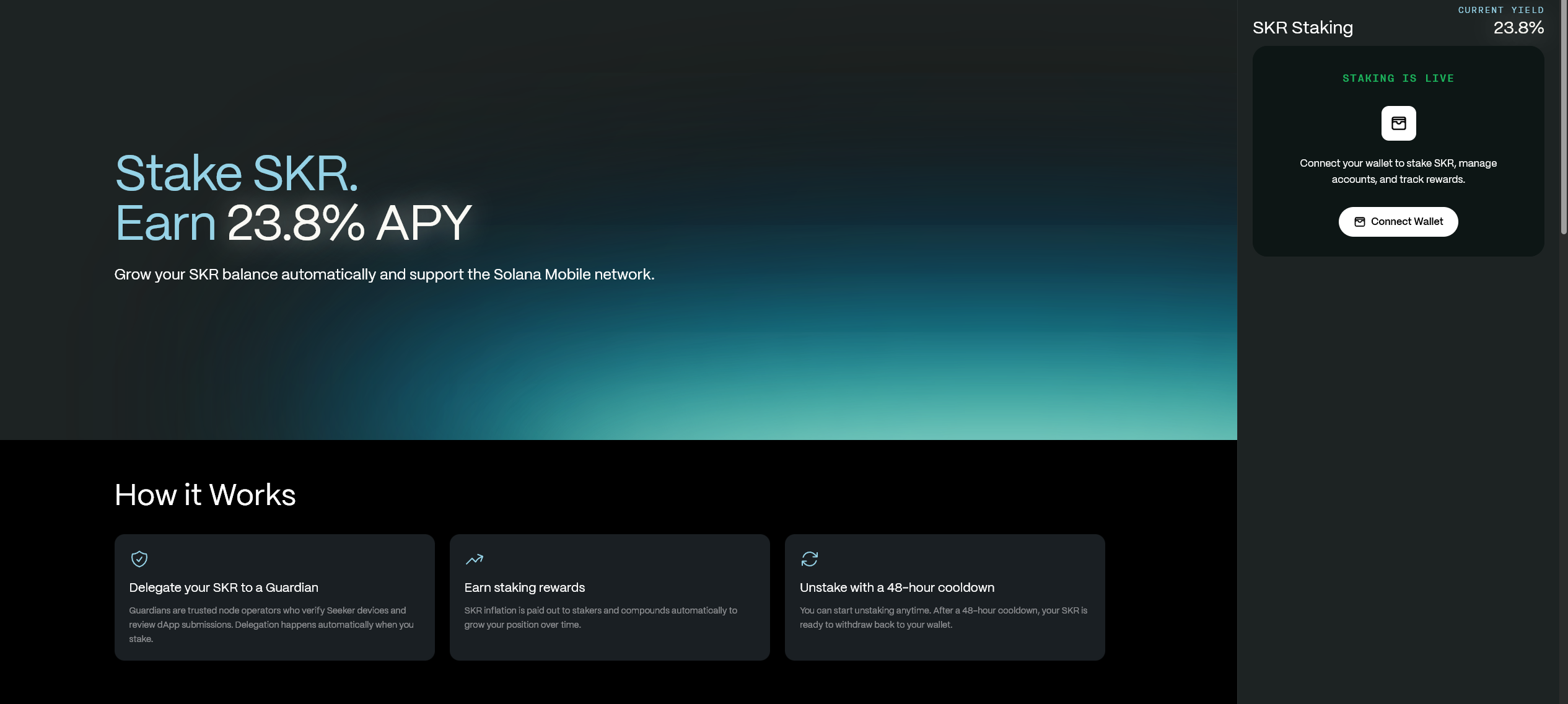
Yes, $SKR staking is live, and anyone who owns a Seeker today can stake immediately after buying or claiming tokens. The headline APY of around 23–25% is real, but it’s important to understand where that yield comes from and what to expect going forward.
Can You Stake If You Buy Seeker Now?
Yes. If you buy a Seeker phone now and activate it, you can:
- Buy $SKR on an exchange or
- Earn it through future Seeker Seasons and app rewards
- Stake directly from the Seed Vault Wallet on the device or via the official web staking page
There is no lock-up period to start staking, and staking is open to all holders.
How Staking Works
When you stake $SKR, you are delegating your tokens to a “Guardian.”
Guardians are entities that help run and secure the Solana Mobile ecosystem by:
- Verifying Seeker devices
- Reviewing and curating apps in the Solana dApp Store
- Maintaining network standards
At launch, Solana Mobile itself runs the first Guardian, with third-party Guardians expected to join later.
What “Inflation-Based Rewards” Actually Means
The staking rewards do not come from app fees or revenue.
Instead:
- New $SKR tokens are created on a schedule (this is the “inflation”)
- These new tokens are distributed only to stakers
- If you don’t stake, your share of the total supply slowly gets diluted
Right now:
- Annual inflation starts at 10%
- Inflation drops by 25% each year until it reaches 2%
- Rewards are paid every 48 hours and auto-compound
This structure strongly encourages holders to stake early.
So Is the 25% APY Sustainable?
Short answer: No — and it’s not meant to be.
- The ~24% APY reflects early-phase incentives
- As more people stake and inflation declines, APY will come down
- Over time, returns will depend more on ecosystem growth than emissions
Unstaking Rules
- You can unstake at any time
- There is a 48-hour cooldown
- You earn no rewards during the cooldown
- After 48 hours, tokens are fully liquid again
What Should New Users Expect?
If you buy Seeker now and stake:
- Expect high-teens to low-20s APY initially
- Expect that yield to gradually decline over time
- The real long-term upside depends on whether Seeker adoption and $SKR utility expand
In other words, staking $SKR today is about early participation and ecosystem exposure, not permanent high yield.
Seeker Activity Tracking: How Users Earn More
Eligibility for Season 1 rewards was opaque, and Season 2 is unlikely to become fully transparent either.
Based on official guidance and observed patterns, activity likely includes:
- Installing and testing new apps
- Leaving app store reviews
- On-chain transactions
- Daily device usage
- Possibly additional hidden engagement metrics
The system clearly favors consistent, real usage, not passive holding.
Team and Backing
Solana Mobile is a subsidiary of Solana Labs, with leadership tied closely to Solana co-founder Anatoly Yakovenko. The team combines mobile, security, and blockchain expertise.
With Seeker now live, major Solana ecosystem players are lining up as future Guardians, reinforcing the project’s credibility and long-term intent.
Roadmap: What Comes Next?
The roadmap centers on:
- Expanding the Guardian set beyond Solana Mobile
- Growing the Solana dApp Store
- Increasing $SKR utility
- Scaling incentives for users and developers
Decentralization is the stated end goal, though meaningful governance will take time.
Verdict
If you actively use Solana and can afford the upfront cost, Seeker makes sense. It simplifies on-chain interaction, turns daily usage into rewards, and offers exposure to an ecosystem-level token with real backing.
I’m currently using mine as a lightweight node and reward hub, earning ongoing incentives beyond the initial $SKR drop—literally from my pocket.
If your activity is mostly Ethereum-centric, you can safely skip this.
But for Solana users, Seeker is less a gimmick and more an early glimpse of how crypto-native hardware ecosystems might actually work.



 Thank you for your feedback! We’re glad you found this article helpful.
 An error occurred while sending the form, please try again.
 We are sorry. You've already sent a message within the last 60 seconds. Please wait before sending another.
 Thank you for letting us know! Our team will review your feedback to help improve our content.
We're sorry you did not find what you were looking for. Please select the reason this article was not helpful.