


 4 min read



 AI Overview
Analysis finds PedroCoin presale (PEDRO) exhibits multiple severe red flags—anonymous team, conflicting tokenomics, heavy FOMO marketing and unverifiable exchange/audit claims—creating a very high‑risk profile for prospective investors.
- High-risk profile: Multiple severe red flags align with common presale scams; treat participation as highly risky.
- Token confusion: Contradictory supply/distribution claims plus many unrelated “Pedro” tokens create valuation and ownership ambiguity.
- Lack of transparency: Vague white paper, undisclosed team, opaque domain/WHOIS and paid promotions undermine accountability and verifiability.
PedroCoin is a meme coin presale that claims to have raised $4.5million so far for its $PEDRO token. The token is being promoted via realpedro.com.
According to the project’s claims, PEDRO is an ERC-20 token on Ethereum, leveraging the ‘Pedro the Dancing Raccoon’ meme. The presale is active (claims end 31 May 2025) at $0.02/token, accepting ETH, USDT, USDC, with bonus offers and a referral system. A $1m+ marketing budget is claimed.
So, is PedroCoin a real project or just another presale scam? Let’s analyze.
Red flags summary
The Real PEDRO Coin project exhibits a concerning alignment with common indicators of meme coin and presale scams. The following table summarizes key red flags and their assessed severity:
| Red flag | Observed? | Severity | Brief explanation |
| Unrealistic promises (e.g., 1000x gains) | Yes | High | “Next 1000x Meme Coin!”; $0.50 target (25x presale). Highly speculative. |
| Lack of transparency (Anonymous team, vague project details) | Yes | High | Team is anonymous; project details superficial, relying on meme appeal. |
| No clear use case (beyond hype/speculation) | Yes | High | Primary purpose is meme coin status, community via branding. No unique utility. |
| Manipulative marketing & excessive hype | Yes | High | $1m+ marketing, influencer mentions, FOMO tactics, sponsored articles as news. |
| Unclear white paper | Yes | High | The white paper makes vague claims like airdrops and exchange listings, but without any real details. |
| Inconsistent information (e.g., tokenomics) | Yes | High | Two different versions of tokenomics presented in promotional materials. |
| Unverified claims (e.g., CEX listings) | Yes | High | Claims of Gate.io, KuCoin, Bitget listings not independently verifiable. |
| Lack of professionalism (website, communication) | Yes | Medium-high | Website lacks key info; confusing landscape of similar tokens not addressed. |
| High potential for investor confusion | Yes | High | Multiple unrelated ‘Pedro’ tokens exist, project does little to clarify. |
The following are more details of these red flags.
Tokenomics analysis: Inconsistencies found
A critical red flag is the presence of conflicting tokenomic structures across different promotional materials for Real PEDRO Coin. Legitimate projects typically present a single, clear, and consistent token distribution plan.
According to its white paper, $PEDRO will have a total supply of 777,777,777, with the following distribution:
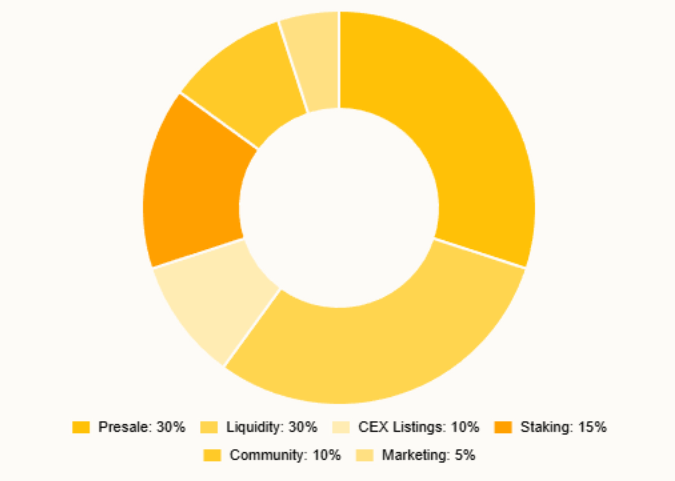
However, there is another version of the tokenomics across paid-media articles and press releases, which claims 40% of $PEDRO tokens are reserved for the public sale, and 20% for the liquidity pool. This is contradictory to its white paper.
Team and project transparency
A major red flag is the complete lack of transparency regarding the project team and essential documentation.
The individuals behind Real PEDRO Coin are not publicly disclosed. No names, roles, or backgrounds are provided. This significantly reduces accountability and is common in scam projects.
Although the project has a white paper, it’s vague and lacks clear details. For instance, the roadmap claims $PEDRO airdrops, DEX and CEX listing claims, influencer campaign etc. but these are just short bullet points. There are no details for each of these claims.
The official website primarily functions as a presale marketing page. It lacks essential sections like:
- Detailed ‘About Us’ or ‘Team’ information.
- A comprehensive ‘Roadmap’ with clear milestones.
- An in-depth FAQ addressing potential concerns.
- Clear ‘Terms of Service’ or ‘Privacy Policy’.
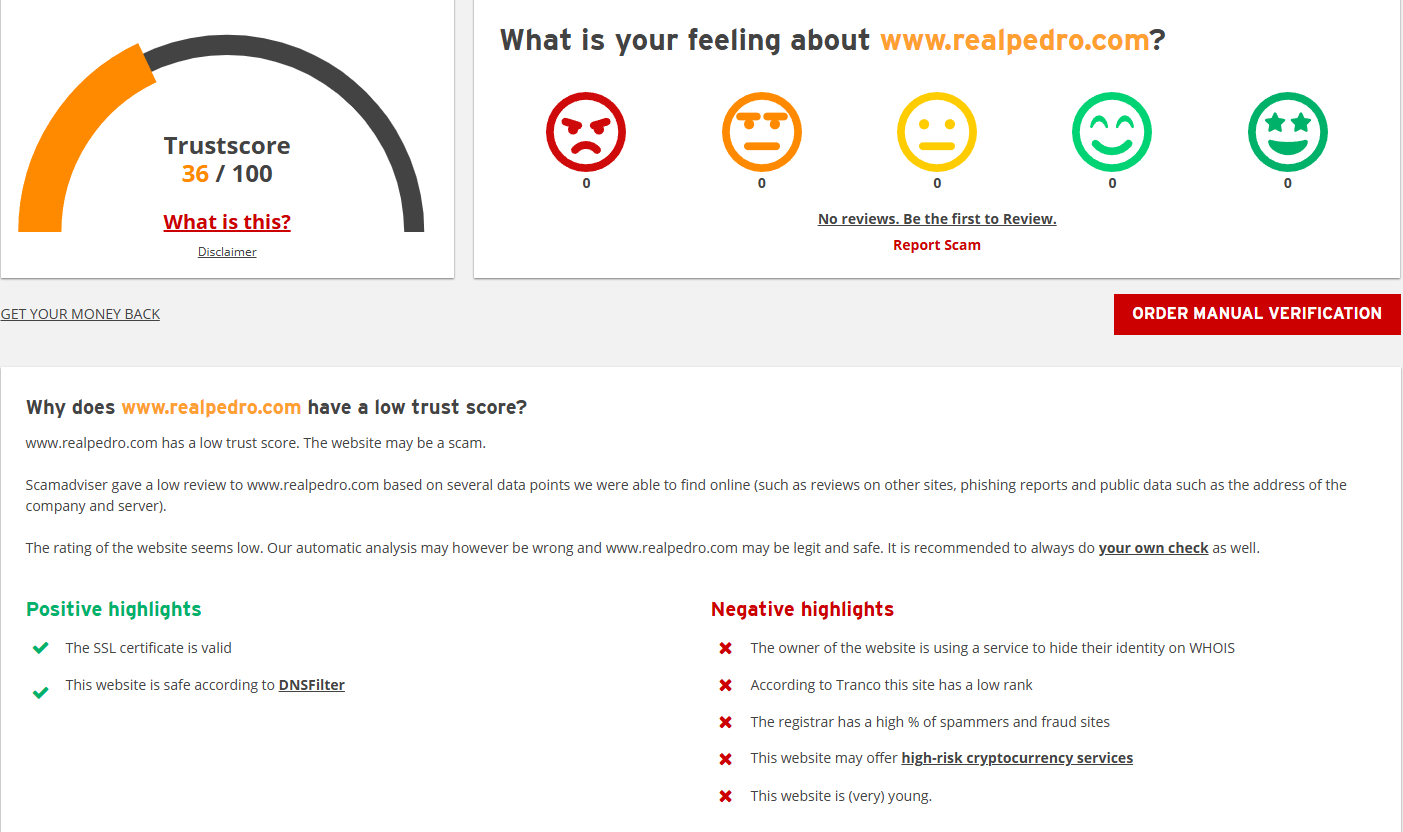
WHOIS information for the domain was also not retrievable from research, adding to the opacity.
Marketing, community and exchange listing claims
The project claims a $1m+ marketing budget and emphasizes community building, alongside assertive claims of upcoming listings on major centralized exchanges (CEXs).
Marketing relies on viral trends, influencer engagement, and paid ads. Importantly, many promotional articles on crypto news sites are marked as ‘sponsored content’, meaning they are paid advertisements, not independent reviews.
The project is active on X (@realpedroeth, ~4.3k followers) and Telegram (t.me/realpedroeth, ~5.5k subscribers). However, communication is heavily promotional, often using FOMO tactics like ‘Next 1000x Meme Coin!’, ‘Final Call’ etc.
The confusing landscape of ‘Pedro’ tokens
A significant risk factor is the existence of multiple, unrelated cryptocurrency tokens sharing the ‘Pedro’ name, ticker, or theme on both Ethereum and Solana. This creates a high potential for investor confusion and misdirection.
The ‘realpedro.com’ project does not appear to be actively clarifying these distinctions, which a diligent project typically would.
| Token name/variant | Ticker | Blockchain | Key distinctions/notes |
| Real PEDRO Coin | $PEDRO | Ethereum | ERC-20, presale by realpedro.com, claims SolidProof audit. Subject of this analysis. |
| Pedro The Raccoon | PEDRO | Solana | Trading on DEXs (e.g., Raydium, Orca). Low market cap. Different project (pedrotheraccoon.org). |
| Pedrocoin (Phantom wallet) | PEDRO | Solana | Marked ‘unverified’ on Phantom. ~$7.93m market cap claim. 777.78m supply (similar to realpedro.com claim). |
| Pedro Raccoon (Coinbase) | GINGER | Solana | Different ticker (GINGER), ‘Ginger the Raccoon’ theme. |
| monkey puppet (Gate.io) | PEDRO | Solana | ‘Monkey puppet’ theme, associated with Gate.io announcements (pilot/delist). |
| PEDROCOIN (0xb9e9…0e4f) | PEDRO | Ethereum | Open source, 0% tax, 97% tokens in dead address. Distinct contract. |
| PEDRO Token (0xb7d7…7F8d) | PEDRO | Ethereum | Created Dec 2023, specific owner address. Distinct contract. |
| Pedro Token (0xbE06…581f) | PEDRO | Ethereum | 1 trillion supply, owner likely renounced. Distinct contract. |
Conclusion
While a single red flag might be explainable, the presence of multiple, interconnected red flags (anonymous team, no white paper, inconsistent tokenomics, unverified audit, unverified CEX claims, hype marketing) creates a very high-risk profile, strongly resembling fraudulent schemes.



 Thank you for your feedback! We’re glad you found this article helpful.
 An error occurred while sending the form, please try again.
 We are sorry. You've already sent a message within the last 60 seconds. Please wait before sending another.
 Thank you for letting us know! Our team will review your feedback to help improve our content.
We're sorry you did not find what you were looking for. Please select the reason this article was not helpful.

 You’re in. Thanks for joining our newsletter.
