


 6 min read
What Is Litecoin (LTC)?




 AI Overview
A Bitcoin‑derived altcoin launched in 2011 to enable faster, lower‑fee payments, Litecoin combines 2.5‑minute blocks, Scrypt mining and an 84M supply cap. Its strategic upside depends on merchant adoption, integrations and ongoing protocol and wallet upgrades.
- Design & advantages: Faster block times, lower fees, Scrypt mining and merge‑mining with Dogecoin make LTC a practical payments rail vs. a pure store of value.
- Adoption & use cases: Supported by PayPal, BitPay and other processors; Nexus Wallet will replace Litewallet with MWEB privacy, Flexa payments and .ltc support.
- Risks & valuation drivers: High volatility, reputation hits (founder sell‑off, dark‑web use) and crypto cycles; wider merchant acceptance is the clearest path to price upside.
Litecoin (LTC) is one of the earliest altcoins and was launched soon after Bitcoin (BTC) had started to really take off. Litecoin is often called the “digital silver” complementing Bitcoin, which is known as the “digital gold.”
It was launched in 2011, and the code is based on Bitcoin. However, Litecoin is not a copy of Bitcoin.
In fact, it was initially designed to fix some of the issues the developers noticed in the Bitcoin network.
Take a closer look at Litecoin to see how it compares to other cryptocurrencies, what are its pros and cons, and what you can do with it once you start investing in Litecoin.
Litecoin History
Some of the most common questions about LTC are ‘Who created Litecoin?’ and ‘When was Litecoin created?’ As we know, anonymous individuals or groups have created Bitcoin and many other cryptocurrencies. But that is not the case here.
Former Google engineer Charlie Lee started Litecoin in October 2011. It was designed to be faster than Bitcoin, with lower transaction fees. Lee was concerned that Bitcoin might become too centralized, so he started developing a more decentralized alternative.
Litecoin was listed on many of the early cryptocurrency exchanges. The value started to gain momentum in 2013, but it took a few more years before it settled on a higher level.
In 2014, Litecoin and Dogecoin began merge mining, and the added security for Dogecoin is arguably one of the reasons why the meme coin has also seen great success over the past few years.
Recently, the Litecoin Foundation announced that Litewallet, the official Litecoin wallet, will be retired on 31 Dec 2025. It will be succeeded by Nexus Wallet, which offers enhanced features such as Flexa payments, MWEB privacy improvements, and support for .ltc domains.
Litecoin Privacy Upgrade (MWEB)
Litecoin activated MWEB (MimbleWimble Extension Blocks) in 2022. By 2026, it is now one of Litecoin’s most used features.
MWEB allows:
- Confidential transaction amounts
- Shielded balances
- Optional privacy
- Fungible LTC (coins can’t be blacklisted)
This makes Litecoin:
- More private than Bitcoin
- Still compliant because MWEB is optional
This is one of Litecoin’s biggest adoption drivers in 2024–2026.
Litecoin Price History
The Litecoin lowest price ever was in January 2015, when the token hit $1.11. The all-time high so far was over $410 in May 2021. Since then, the value has dropped significantly, but it is still much higher than the all-time low.
By 2026, Litecoin has gone through:
- 2021 bull run
- 2022–23 bear market
- 2024 Bitcoin halving cycle
Litecoin has proven cyclical resilience, surviving multiple bear markets and remaining one of the longest-running top-25 cryptocurrencies.
The Real Benefits of Litecoin
Now that you know the most important facts about Litecoin, you might wonder how Litecoin works? We’ll give you a quick run-through, so you’ll understand all the Litecoin news today, tomorrow, and beyond. So here is Litecoin explained!
Litecoin is an open-source cryptocurrency that can be traded from one user to another without using any intermediaries, such as banks. But what is the difference between Litecoin and Bitcoin?
Speed
Compared with Bitcoin, one of the benefits of Litecoin is its speed. Bitcoin can create a new block in 10 minutes, but Litecoin only takes two and a half minutes, so it is approximately four times faster.
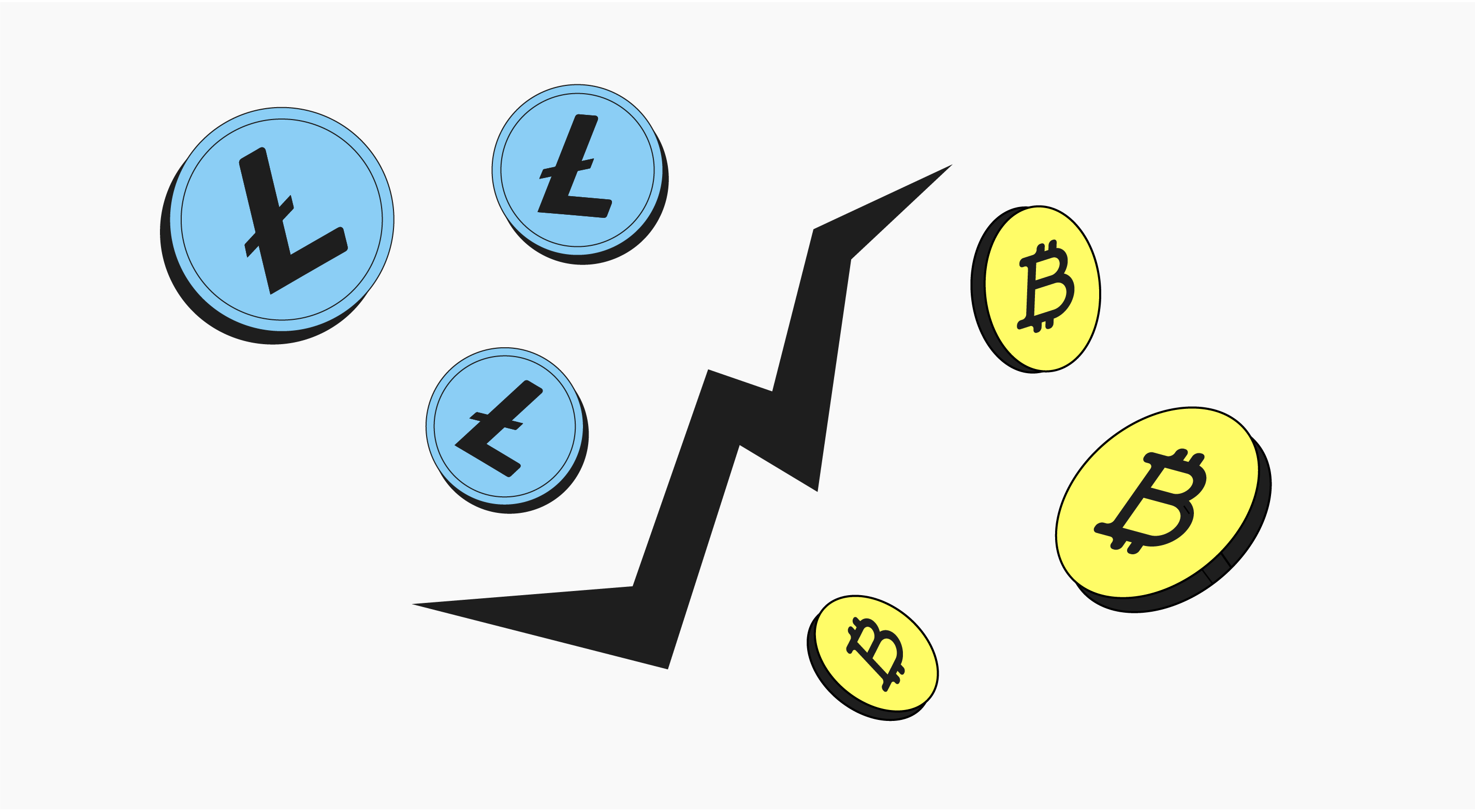
Of course, many faster cryptocurrencies are now available, but that doesn’t change the fact that it’s still considerably faster than Bitcoin.
Mining
Litecoin can only be mined using special software and hardware because of its algorithm, Scrypt. Mining LTC is easier than mining bitcoin, but the rewards might also be lower.
If you want to start mining Litecoin, you can either join a mining pool or go solo to mine on your own.
Litecoin is secured by Scrypt proof-of-work and is now one of the most secure PoW chains in the world due to merged mining with Dogecoin. Over 95% of Dogecoin hashpower also protects Litecoin, making attacks economically infeasible.
Litecoin Is Safe
The algorithm was designed to withstand massive attacks on Litecoin, making it a safer alternative to many other cryptocurrencies.
There have not been any serious security issues with Litecoin in the past. Thanks to its security features, it does not seem likely that we will encounter any real trouble in the future, either.
Litecoin has a Finite Supply
Litecoin tokens cannot be created indefinitely, as there is a maximum circulating supply of 84,000,000. As Bitcoin’s maximum supply is 21,000,000, it means Litecoin is not only four times faster, but there are also four times more tokens available.
Litecoin goes through an event called halving every four years. Halving means that the mining rewards are reduced by half, slowing the creation of new tokens. With fewer tokens being created, the value of the existing ones may rise. As of 2025, the current block reward is 6.25 LTC per block. The next halving is scheduled for 2027. Litecoin now has lower inflation than Bitcoin did at the same stage of development, which reinforces its “digital silver” narrative.
The Real Drawbacks of Litecoin
Litecoin shares some of the same drawbacks that other cryptocurrencies also experience. Here are some disadvantages you should be aware of before investing.
Highly Volatile
One of Litecoin’s drawbacks is its volatility. At the time of writing, the value is far from its all-time high, and it could drop further in the future.
Of course, volatility works both ways, so the value could also rise in the future.
Reputation
Litecoin’s reputation took a big hit in 2017 when the founder Charlie Lee, sold a massive amount of his holdings. Why would anyone else believe in this project if the founder was not willing to hold on to his tokens?
Litecoin’s high liquidity and exchange support have made it a neutral payment rail, similar to Bitcoin and stablecoins.
What Makes Litecoin Go Up/Down?
Litecoin’s value is determined by its users. Like most other cryptocurrencies, the value increases when there is more demand and falls when people dump their coins.
Bitcoin has often been called digital gold, and many investors treat it as such: they only invest in it to benefit from the increasing value, or at least so their investment will not lose its value.
Litecoin is different: it was intended to be fast and easy to use so that it could be used to pay for all kinds of goods and services. This has not yet fully happened, but if some major retailers start accepting Litecoin, it could make the price rise significantly.
What Is Litecoin Used For?
Several international payment providers have adopted Litecoin. For example, Verifone, Bitpay, Coingate, and PayPal support Litecoin. Some charities, like the American Red Cross, also accept donations in Litecoin, so you can do some good with your LTC.
Many online casinos and betting sites also accept Litecoin, allowing gamblers to make deposits and withdraw their winnings in LTC. Litecoin can be used to play all types of games, from slots to classic casino table games to sports betting.
Litecoin is widely used for:
- Crypto debit cards
- PayPal & Venmo crypto payments
- Cross-exchange settlement
- Low-fee transfers between wallets and exchanges
It is one of the most commonly supported coins on payment rails, even when merchants don’t realize they’re using it.
As cryptocurrencies become increasingly common among retailers, it seems likely that Litecoin will also become a more widely accepted currency. Even though the news about Litecoin and Walmart starting a collaboration was a hoax, it might not be too far-fetched for some bigger retailers to start accepting it.
Why Litecoin still matters in 2026?
LTC is not just a veteran altcoin but has transitioned into a reliable payment mechanism.
- One of the oldest blockchains (since 2011)
- No downtime in 14+ years
- Lower fees than Bitcoin
- Faster settlement
- MWEB privacy
- Massive exchange and payment support
- Merge-mined security with Dogecoin
What Is The Future Of Litecoin in 2026 and beyond?
Predicting the future of any crypto is probably more difficult than ever, so there are no certainties for Litecoin either.
Judging by market cap, it is still one of the biggest cryptocurrencies out there, so temporary market turmoils have not deterred investors. While nothing is certain, Litecoin will likely remain prominent in the crypto world for years to come. Considering Litecoin’s price history, there is still room for its value to grow.



 Thank you for your feedback! We’re glad you found this article helpful.
 An error occurred while sending the form, please try again.
 We are sorry. You've already sent a message within the last 60 seconds. Please wait before sending another.
 Thank you for letting us know! Our team will review your feedback to help improve our content.
We're sorry you did not find what you were looking for. Please select the reason this article was not helpful.

 You’re in. Thanks for joining our newsletter.
